Clash of the Titans
2004 NLCS featured seven Hall of Famers and unending drama.
Carlos Beltrán and Jeff Kent have more in common than membership in the Hall of Fame Class of 2026. They are co-stars in one of the greatest postseason series ever played, an October 2004 epic cherished by historians as a theatrical clash of legendary rosters.
The St. Louis Cardinals defeating the Houston Astros, of course.
Oh, you had another matchup in mind?
While Hollywood producers and multipart documentaries have focused on that autumn’s other seven-game bout, the National League Championship Series provided more plot twists and pivotal moments than its American League counterpart.
Memories and Dreams
This story previously appeared in Memories and Dreams, the award-winning bimonthly magazine exclusively available to supporters of the Museum's Membership Program.
Consider:
- Game 5 was scoreless until the bottom of the ninth inning, when Kent hit a walk-off home run high above the Crawford Boxes at Minute Maid Park. In the next game, Jim Edmonds saved the Cardinals’ season with a majestic, 12th-inning walk-off homer of his own. That is the only instance of teams trading walk-off home runs in consecutive postseason games, according to research by Lee Sinins of MLB Network.
- Every game in the 2004 NLCS was decided by three runs or fewer. The 2020 ALCS is the only other seven-game series about which that is true.
- If you’re a fan of comebacks, the 2004 NLCS was for you. The team that scored first lost six of the seven games. That never happened before or since, according to Frank Labombarda of the Elias Sports Bureau.
- And as of this summer, the Cooperstown count favors the 2004 NLCS participants over the 2004 ALCS by a 7-6 margin.
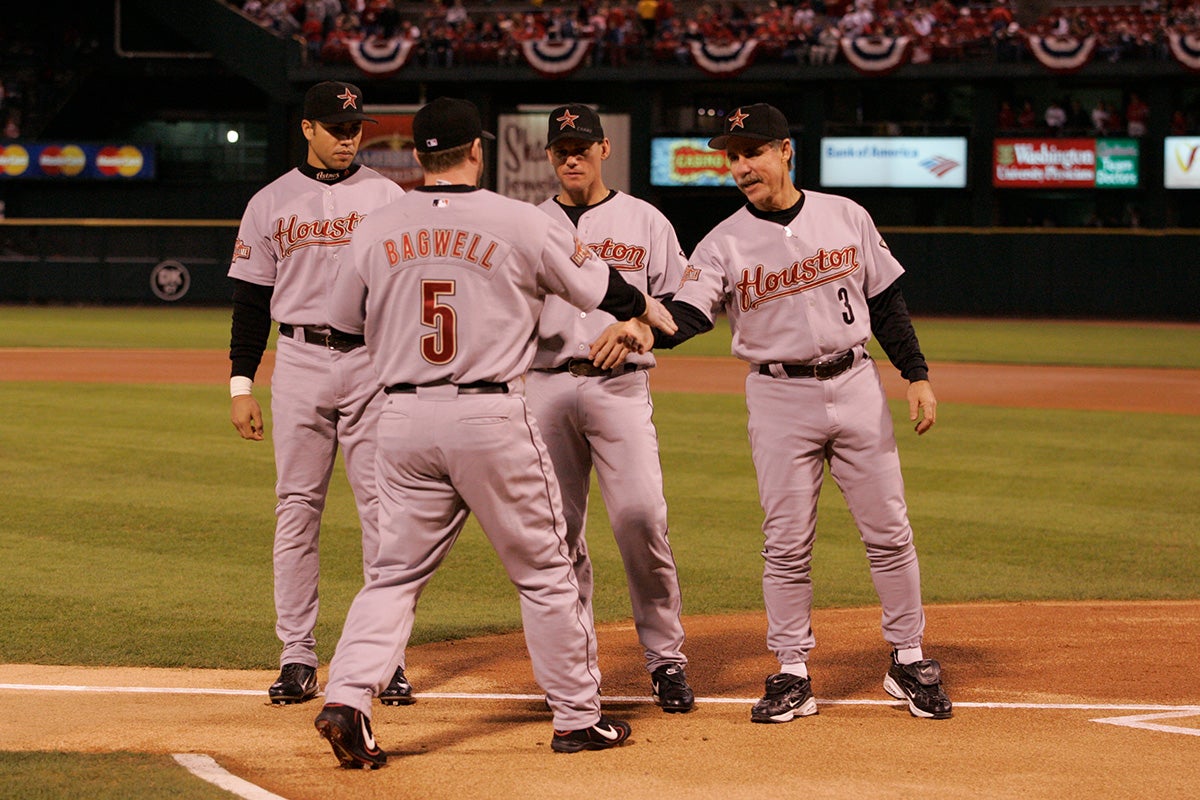
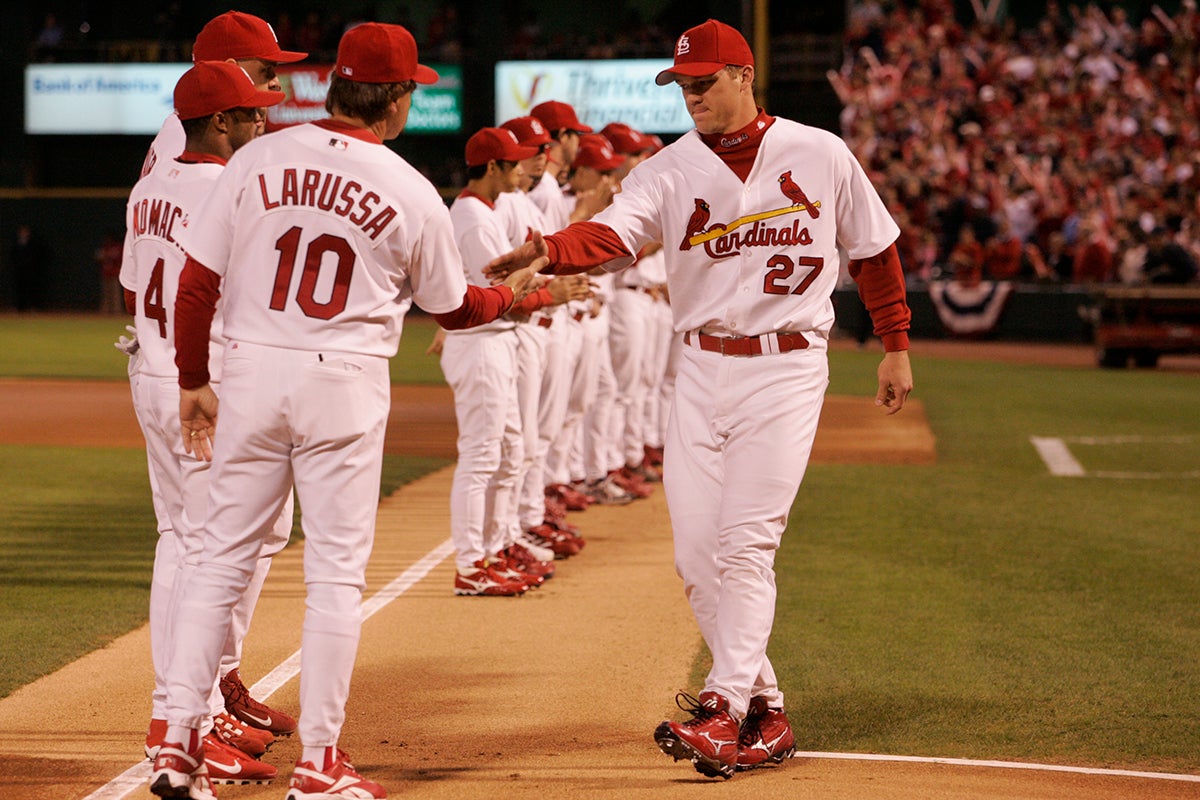
With Beltrán and Kent joining Jeff Bagwell and Craig Biggio, the 2004 Astros boast four Hall of Famers. The pennant-winning Cardinals have three: Manager Tony La Russa, third baseman Scott Rolen and outfielder Larry Walker.
The 2004 ALCS featured Pedro Martínez and David Ortiz with Boston and Derek Jeter, Mike Mussina, Mariano Rivera and manager Joe Torre on the New York side.
If you wish to say Boston’s comeback from a 3-0 deficit was more historic, especially given the Red Sox odyssean quest for a World Series title, you will have little argument. But the NLCS was more dramatic on an inning-by-inning, game-by-game basis.
La Russa is happy to see the inductions of Beltrán and Kent affirming the historic relevance of those Astros and Cardinals teams, even though neither one prevailed in that year’s Fall Classic.
“It’s probably the (series) that deserves the credit, but it gets lost because Boston came back against the Yankees and then swept us,” La Russa said. “We’re (still) haunted by getting swept. But if you look at the Cardinals and Astros, it was really outstanding baseball. There were no cheap shots. We just played hard. If they beat us, we would tip our caps. They were all great games, with late heroics by the home team.”
La Russa is right: While home teams were undefeated in the series, none of the victories seemed inevitable in the moment. The winning team didn’t move ahead to stay until the sixth inning or later in every instance but Game 3 in Houston; even then, the Astros carried a one-run lead into the eighth before home runs by Beltrán and Lance Berkman made for a slightly more comfortable 5-2 triumph.
“There was a ton of adrenaline and anxiety every night,” remembered Brad Lidge, who shined over eight scoreless innings as Houston’s relief ace. “It was so tight. I feel like we knew each other so well. As pitchers, we knew who we were going to pitch around and who we were going to attack.”
Rolen, not one to engage in hyperbole, calls it “probably the greatest series” he ever experienced. When Rolen sees Bagwell and Biggio at the Leatherstocking Golf Course in Cooperstown, the conversation invariably returns to those October nights.
“That was the best team I’d ever played on, without question,” Rolen said during a 2025 interview for The Road to Cooperstown podcast. “You can go around the outfield and infield . . . It was an All-Star team.
“The unbalanced schedule was being played at that time (with both teams being members of the NL Central), so we played each other – it seemed like – every other week. They’re running out (Roger) Clemens and (Andy) Pettitte. We’re running out (Chris) Carpenter and (Matt) Morris. Every game is a fight. Biggio is playing every day. Bagwell is playing every day. Berkman’s there, playing every day. Beltrán’s there at the time. Jeff Kent was there, as well. It was a fight, and that series showed it.”
The greatest collision – as respectful as it was competitive – occurred between Beltrán and Albert Pujols, who, along with teammate Yadier Molina, will become eligible for the Hall of Fame in 2028.
Beltrán hit four home runs in the series; Pujols did, too. Beltrán batted .417; Pujols hit an even .500. Beltrán led the Astros with 12 runs scored; Pujols paced the Cardinals with 10. As the series went along, it became apparent that there were two correct answers for NLCS MVP. The choice would be determined by which team celebrated near the mound at the very end.
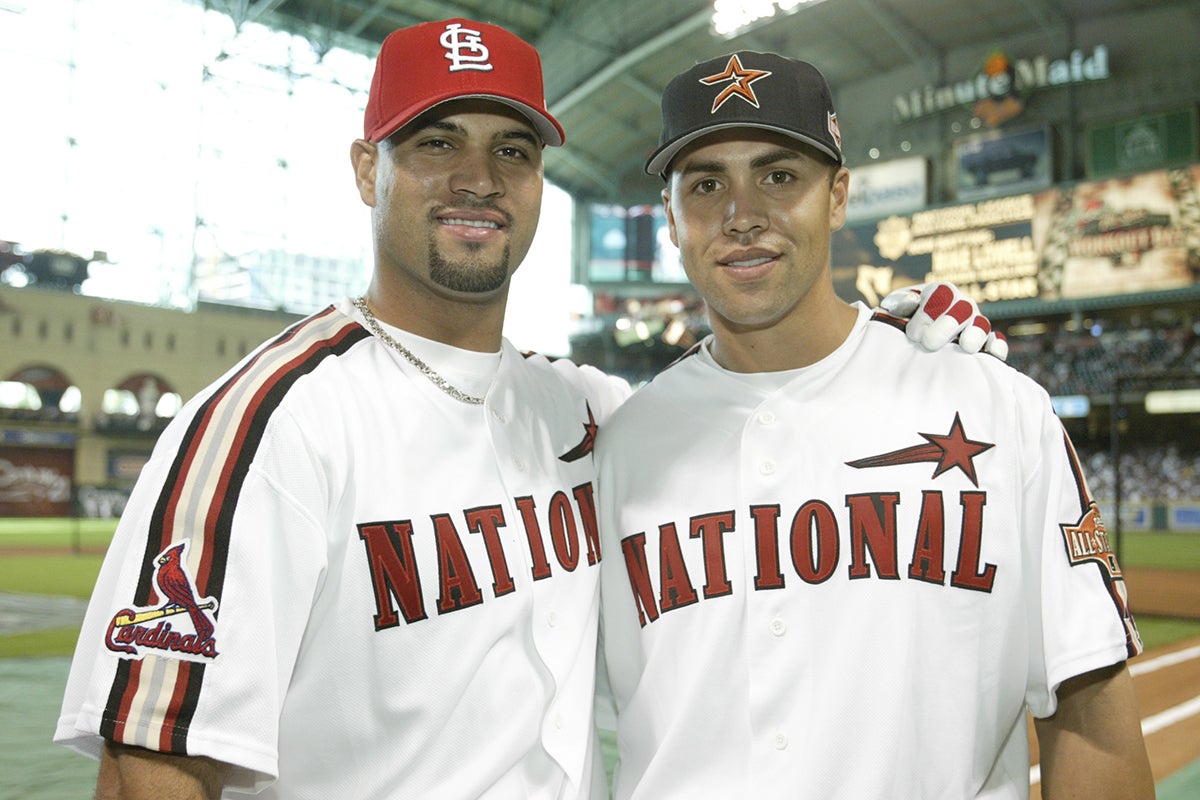
John Lowe, recipient of the 2023 BBWAA Career Excellence Award, covered that series for the Detroit Free Press. One of his favorite moments occurred in the 12th inning of Game 6. Beltrán led off with a smash to the right side. Pujols fielded it cleanly, but momentum took him toward the hole. Beltrán smelled an infield single and dove headfirst into the bag. But Pujols was hustling, too. Pujols slid feet-first and arrived a split-second before the Astros’ incandescent star. Out.
In baseball, unlike playoff basketball, we rarely see series superstars in close physical proximity to one another. As Lowe likes to say, that was a Chamberlain vs. Russell moment.
Beltrán was 27. Pujols was 24. Two legends who helped define a generation of the game were at the peak of their powers.
“Albert Pujols was this great player everyone was already aware of,” Lidge said. “That NLCS was Carlos Beltrán’s time to come out as a superstar player, not just a great athlete with 30-30 potential. He was so locked in, and so on fire, that entire series.”
Beltrán’s initial tenure with the Astros was brief but extraordinary. He arrived in June of that year in a blockbuster trade with the Royals. By January 2005, he’d signed a free-agent contract with the Mets. In between, then-Astros third baseman Morgan Ensberg said, “I have never seen, in my life, a better baseball player than Carlos Beltrán.”
Yet the tale of Beltrán’s playoff superstardom almost didn’t happen. On the penultimate Saturday of the regular season, the Astros suffered a sluggish 8-0 loss in Milwaukee and fell 2.5 games out of a Wild Card position. In the clubhouse afterward, manager Phil Garner criticized Beltrán in front of the team for a perceived lack of urgency on a play in center field.
Beltrán and the Astros responded by winning their final seven regular-season games; they finished one game ahead of the Giants for the final NL playoff spot.
“Carlos flipped the switch,” then-Astros shortstop Adam Everett recalled. “He was the best player on the field for the rest of the year.”
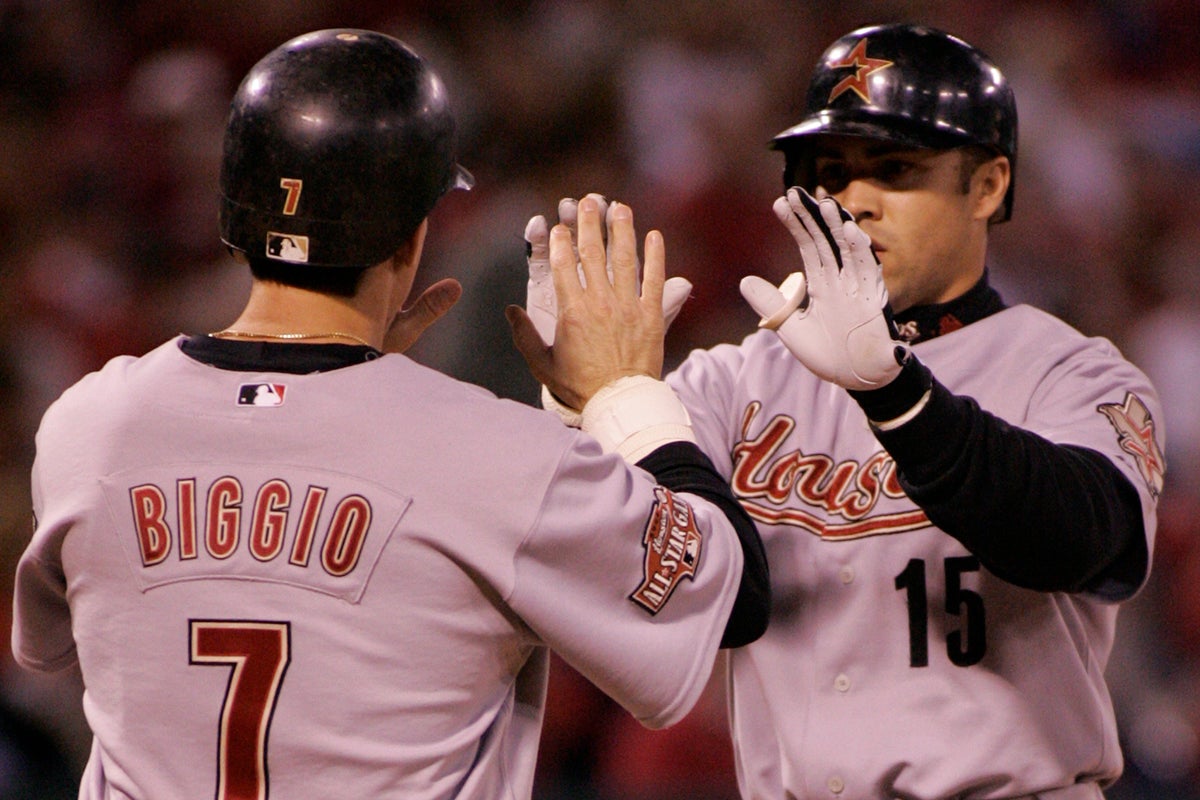
The arc of Houston’s baseball history added to the lore. In reaching that year’s NLCS, the Astros earned the first postseason series victory in franchise history, defeating Class of 2026 inductee Andruw Jones and the Atlanta Braves in the divisional round.
At the time, no Texas-based team had reached the World Series. Houstonians believed their moment had arrived. Walker, whom the Cardinals acquired from Colorado that Aug. 6, sensed the emotion pulsating through Minute Maid Park during one particular conversation with Bagwell.
To be fair, it wasn’t much of a conversation.
“I was on first base, and we were talking to each other,” Walker said in an interview for The Road to Cooperstown podcast. “I don’t know what he said. There’s no way he knew what I said. It was so, so loud. It was like, ‘Oh, my God. This is so cool.’
“As an athlete, there’s nothing better than a full house of people just going bonkers. It was pretty exciting. It was a heavyweight fight every time somebody took the mound or stepped into the box. There was some serious talent being thrown around in that series.”
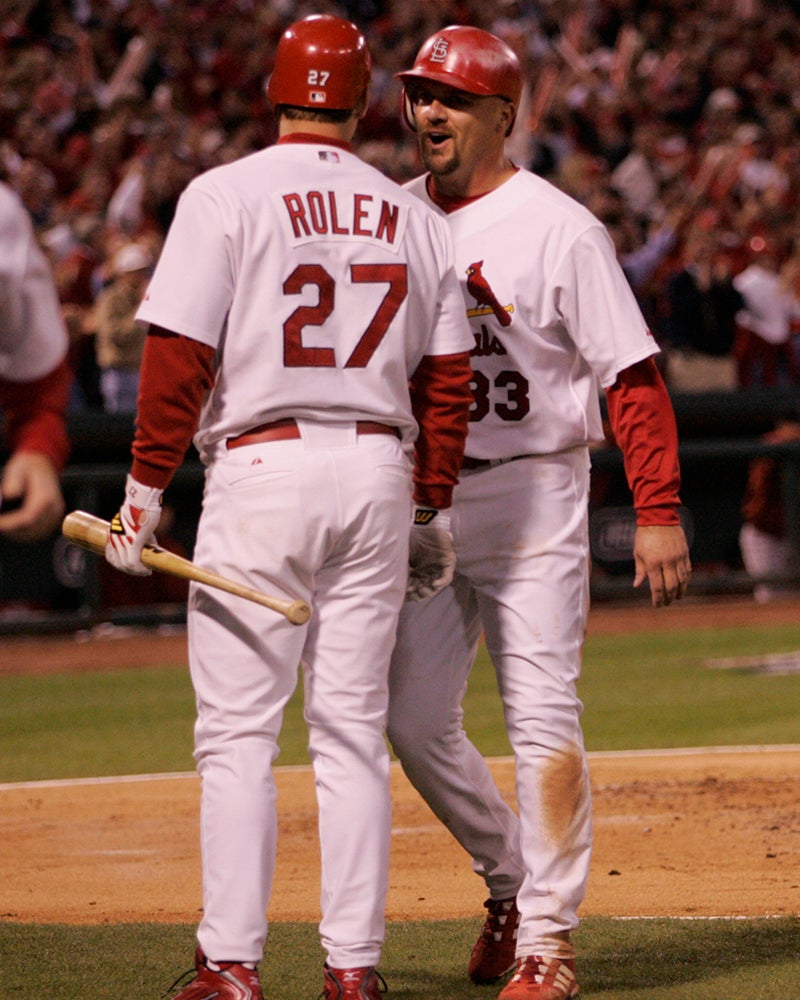
The star-studded rosters made for excruciating managerial decisions. Every Astros pitcher in the series was right-handed, which meant Garner wasn’t deploying left-handed specialists to neutralize Walker and Edmonds. We’ll never know if a southpaw could have kept Edmonds in the ballpark during the seminal Game 6 at-bat.
If the Astros had gone to a left-handed reliever, La Russa could have summoned the 22-year-old Molina as a pinch hitter; Molina appeared in one game during the series as the backup to Mike Matheny.
Of course, La Russa faced his own dilemmas.
“That lineup was dangerous from beginning to end,” he said. “You had Biggio, Beltrán, Bagwell, Berkman and Kent. Who was the toughest out? They all were.”
The series opener, a 10-7 St. Louis victory, was uncharacteristically high-scoring. The winning team would not produce more than six runs in any of the remaining games. After the Astros’ 6-4 defeat in Game 2, an unexpected voice was heard within the visiting clubhouse.
“Jeff Kent never said anything,” Everett recalled, “but after the game he was telling us, ‘Keep your heads up. We’re going to get back into the series.’”
He was right.
“Obviously we’re not counting them out, but we got punched in the face the next three,” Rolen says. “They punched us square in the face. It was like, ‘Uh-oh. This is happening.’”
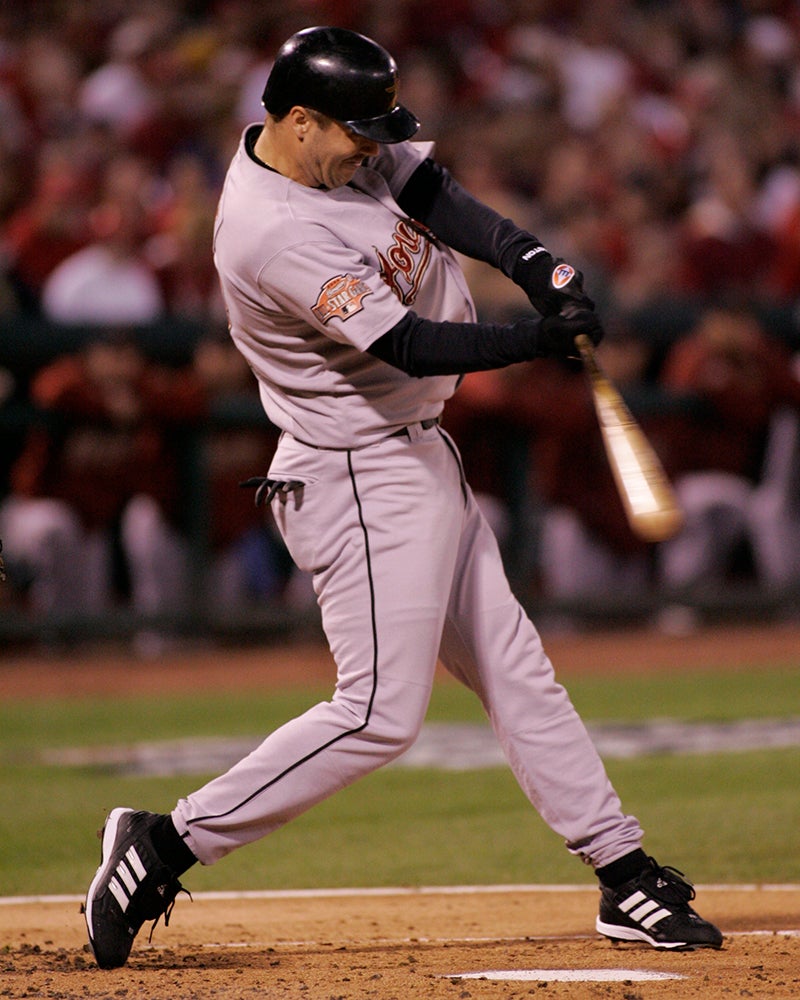
The Astros nearly won the pennant in Game 6, which they rallied to tie in the ninth on a Bagwell single after La Russa ordered an intentional walk to Beltrán. (“Nice managing,” La Russa quips now.) Edmonds rescued his manager three innings later by pulverizing a pitch that was nearly shoulder-high.
Clemens, who won his seventh Cy Young Award that season, awaited the Cardinals in Game 7. In preparing his team, La Russa relayed a philosophy he attributes to Jim Leyland, his close friend and fellow Hall of Fame manager.
“His advice was the one way (to match) a great competitor — Bob Gibson, Clemens, Tom Seaver — is that your nine hitters, as a group, have to compete against him like he competes against them,” La Russa says. “That way, it’s nine against one, and you can find a way to break through. That was our challenge: We were going to grind every at-bat for nine innings.”
Houston scored once in the first inning and would’ve added more runs later on if Edmonds hadn’t soared into the gap to catch a possible triple off the bat of Brad Ausmus. “An unbelievable play,” Rolen remembers.
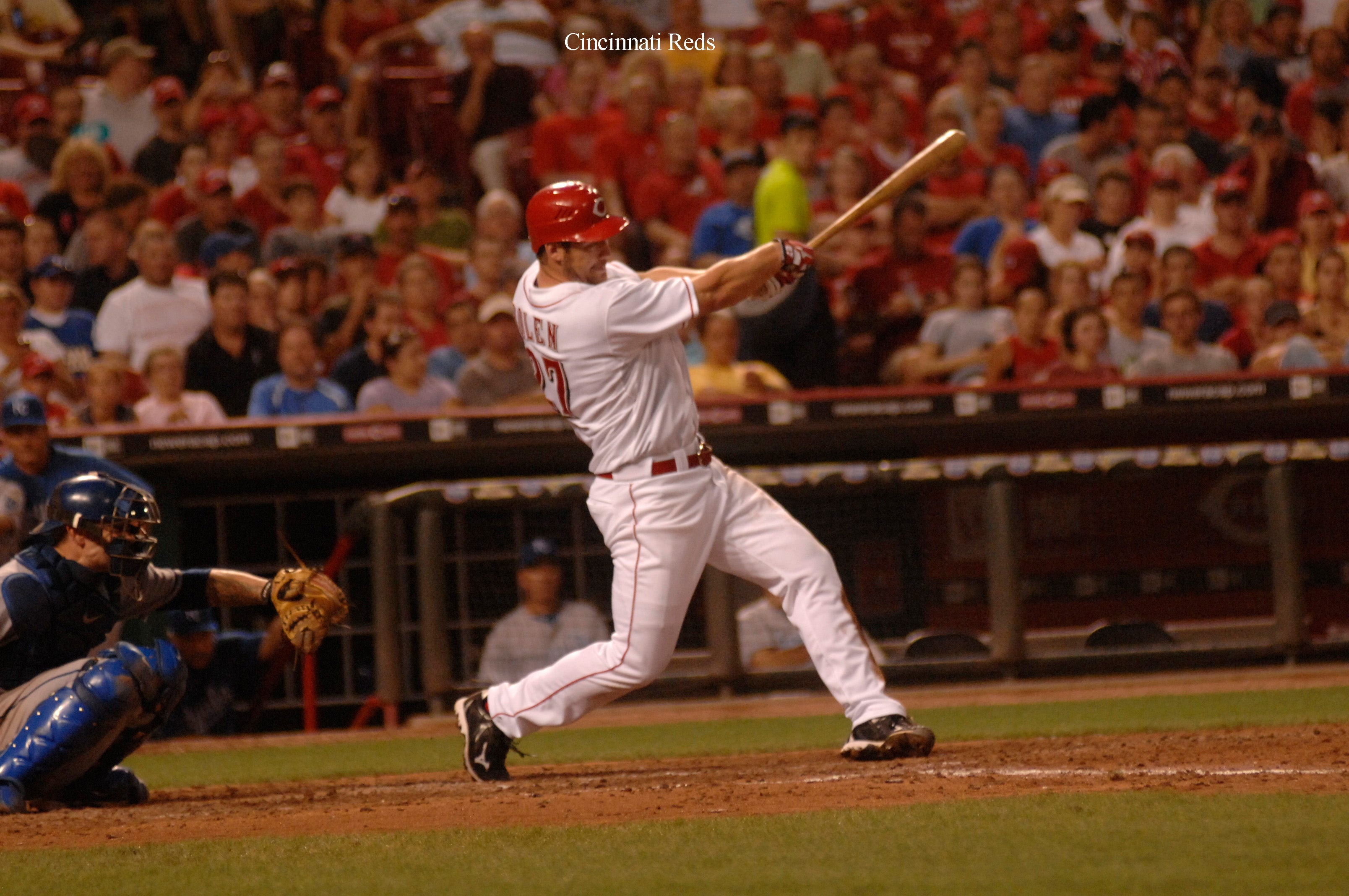
Clemens was one strike from taking a 2-1 lead into the seventh when Pujols pulled the game-tying double to left. Clemens then tried to get ahead of Rolen with a first-pitch fastball. The Cardinals’ cleanup man was ready. He sent a laser over the wall in left, just inside the pole, for his third homer of the series. St. Louis moved ahead to stay and won, 5-2.
One pitch. One swing. One game-changing moment. That's October for you. Scott Rolen’s go-ahead Game 7 home run #OTD in 2004 would ultimately send the @Cardinals back to the World Series for the first time in 17 seasons. https://t.co/xTfJaViJAD https://t.co/Jvd05ol4vG
— National Baseball Hall of Fame and Museum ⚾ (@baseballhall) October 21, 2025
The Game 7 box score provides visual evidence of the perfect coda to a classic series. The Cardinals’ five runs were driven in by legendary hitters Rolen (two), Pujols, Walker . . . and starting pitcher Jeff Suppan, on a squeeze bunt for the first St. Louis run.
“The best game, the best series you could ever play,” Rolen said. “I remember afterwards, standing by second base with Matheny. The confetti’s coming down everywhere. I looked at Matheny and said, ‘Let’s just look at this for a second and not talk. Look at this. This is something different.’”
After the celebration moved to the Cardinals’ clubhouse, La Russa received word that Clemens wanted to speak with him in the hallway outside. Clemens had heard about the pregame philosophy La Russa shared with his team, about needing to match his competitiveness, nine against one.
Clemens wanted to say thank you.
“He said it was one of the nicest compliments he’d ever received,” La Russa recalled.
The clubs met again one year later, with the Astros clinching their first pennant in the final game at old Busch Stadium. The 2005 rematch remains the most recent postseason meeting between the teams. The Astros moved to the American League before the 2013 season.
But a rivalry doesn’t need to live forever in order for it to be historic. Ensberg remembers hearing stories about the 1992 Dream Team and its famous scrimmage between Team Jordan and Team Magic in a closed gym. Competitive integrity, mutual respect and measuring oneself against the world’s best mattered more than performing before millions.
At third base for Astros-Cardinals, Parts I & II, Ensberg felt the same way.
“I realize there were fans [watching us], but there was something else going on out there,” he said. “Yeah, we would love for people to watch, but who cares? Close the gym. It was just a dogfight and ultimate respect for two teams.”
With so many Hall of Famers from those series – and perhaps a few more on the way – Doubleday Field could be the perfect venue for a summertime reunion.
MLB Network’s Jon Paul Morosi is the host of The Road to Cooperstown podcast, which can be heard on SiriusXM Channel 89.