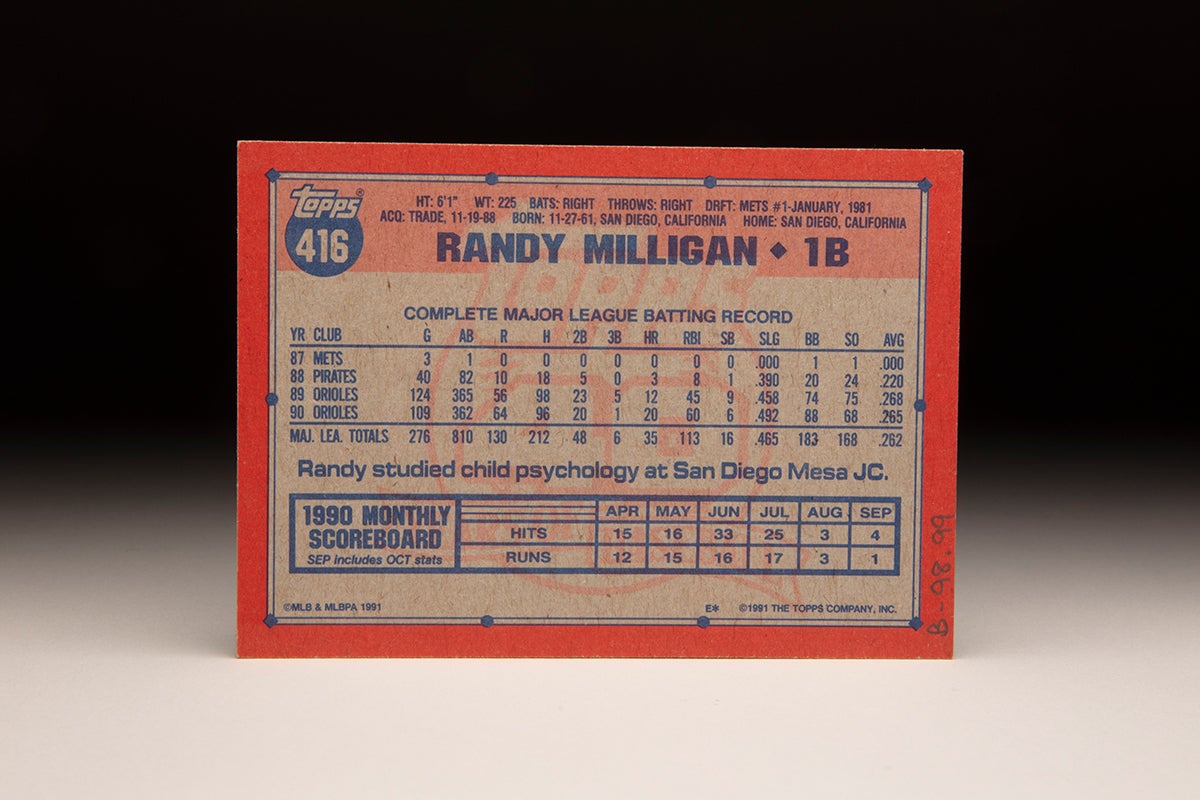
#CardCorner: 1991 Topps Randy Milligan
Randy Milligan was a product of the talent-rich Mets farm system of the 1980s, which relegated him to multiple seasons with the same minor league team more than once.
But after nearly winning the International League Triple Crown in 1987, Milligan made it to the majors. His eight-year big league career – like others from his era – looks a lot stronger thanks to modern statistical analysis.
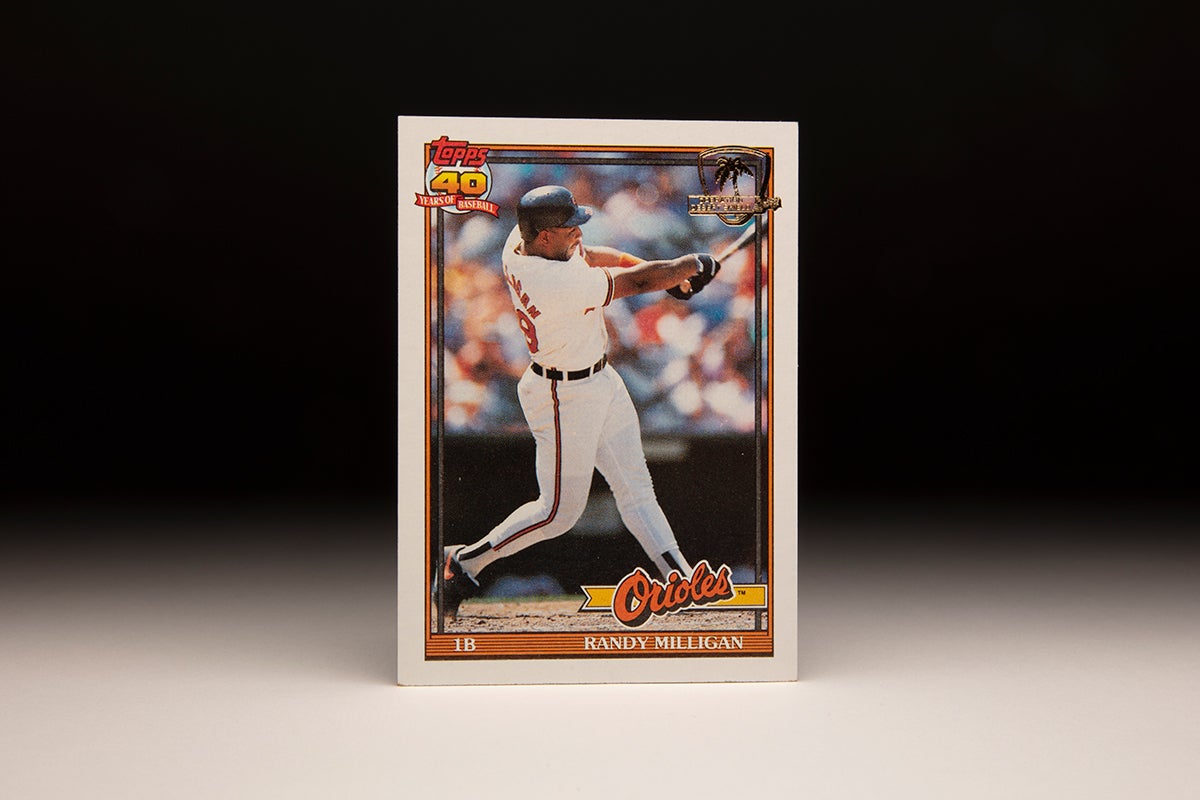
Born Randy Andre Milligan on Nov. 27, 1961, in San Diego, Milligan was a star in football – where he got his lifelong nickname, Moose – and baseball but went undrafted out of San Diego High School and enrolled at San Diego Mesa College. He wasted no time in impressing scouts and was selected with the third overall pick in the January 1981 MLB Draft – a selection process targeted at college players.
The Mets sent Milligan to Shelby of the Class A South Atlantic League in 1981, starting him on his long minor league journey. Playing most of his games in right field or at designated hitter, the 6-foot-2, 225-pound Milligan hit .283 with 16 doubles, six triples, seven homers, 58 RBI, 49 steals and 98 walks in 130 games.
Promoted to Class A Lynchburg of the Carolina League in 1982, Milligan began the transition from outfield to first base.
“The Mets have a lot of great outfielders and they had to take somebody out of the outfield,” Milligan told the Daily Advance of Lynchburg, Tenn., referring to teammate Herm Winningham as well as fellow prospects Lenny Dykstra and La Schelle Tarver. “I’m happy they put me at first base – it makes me more of an asset to the team.”
Milligan hit .269 with five homers, 55 RBI, 25 steals and 54 walks in 118 games in 1982 but struck out 101 times – a high number for the era. He returned to Lynchburg in 1983, improving his batting average to .292 with a .430 on-base percentage while showing more speed (41 steals) than power (five home runs among a total of 23 extra base hits).
In 1984, Milligan made the jump to Double-A Jackson. He was hindered by a back injury but still hit .275 with a .437 OBP while totaling nine home runs, 34 RBI, 15 steals and 53 walks in 62 games – earning a spot in the Texas League All-Star Game.
Returning to Jackson in 1985, Milligan hit .309 with a .394 OBP, 13 homers, 77 RBI and 11 steals. He started the season in a slump but got red hot in August, compiling a 13-game hitting streak where he went 20-for-35 (for a .571 batting average).
“When you’re hitting in a groove, that baseball looks like a balloon,” Milligan told the Jackson (Miss.) Clarion-Ledger. “You don’t have to think. You just see it and hit it. I’ve never been this hot before.”
Though a knee injury bothered him throughout the season – he would never again flash the speed he did in the low minors – Milligan was earning praise from the Mets’ instructors.
“When the pitcher makes a mistake, Randy doesn’t,” Jackson Mets manager Sam Perlozzo told the Clarion-Ledger about the right-handed-hitting Milligan. “His strong suit is going up the middle and to right-center field. Randy’s chances will improve that much more when he takes off some weight. He can run for a big guy.”
The Jackson Mets won the Texas League title in both 1985 and 1986, a testament to the big league club’s commitment to the farm system. With competition at nearly every position, the Mets had the luxury of sending Milligan back to Jackson in 1986, where he hit .316 with seven homers and 53 RBI in 78 games. The Mets promoted him to Triple-A Tidewater in August, and Milligan struggled against more experienced pitching – hitting .083 (5-for-60) in 21 games.
But in 1987, Milligan put it all together at Tidewater. He was named the Sporting News Minor League Player of the Year after hitting .326 with a .438 on-base percentage, 29 home runs and 103 RBI in 136 games – missing the Triple Crown by just two homers. But with Keith Hernandez still in his prime and Dave Magadan as the heir apparent, Milligan had little chance to get at-bats with the Mets at first base.
New York brought Milligan to the big leagues in September and gave him two plate appearances. But the big first baseman knew his future was in another city.
“A trade would probably be in my best interest,” Milligan told the New York Daily News that fall when he was blistering the baseball in the Puerto Rican Winter League. “I’d be disappointed to leave the Mets. I grew up with them. It’s the only organization I know, and it’s the best. But the only role I see for myself with them is as a pinch-hitter and spot starter. I could be satisfied with that if it meant playing in the big leagues. I proved myself in the minors.”
On March 26, 1988, the Mets sent Milligan to Pittsburgh along with minor leaguer Scott Henion in exchange for pitcher Tim Drummond and catcher Mackey Sasser.
“First of all, we look at this as an opportunity for Randy to play in the big leagues,” Mets vice president Joe McIlvaine told Gannett News Service. “He wouldn’t have gotten that here unless there was an injury.”
The Pirates had been trying to acquire Milligan since October 1987 with the idea of platooning him with lefty-hitting Sid Bream at first base. With lefty Shane Rawley on the mound for the Phillies, Milligan started at first base for Pittsburgh on Opening Day in 1988. But after hitting .220 with three home runs and eight RBI in 40 games, Milligan was sent to Triple-A Buffalo in June.
“I had been in (the Mets’) system for seven years, and I knew I was getting nowhere fast,” Milligan told the Miami Herald in 1991. “It was time for me to move on. I needed a trade.”
Milligan spent the rest of the 1988 season with Buffalo, hitting .276 with two homers and 30 RBI in 63 games in the same league that he dominated the year before.
“He was up there looking for a ball to take instead of a strike to hit,” Pirates manager Jim Leyland told the Pittsburgh Post-Gazette.
The Pirates decided another change was in order, and on Nov. 9, 1988, Pittsburgh sent Milligan to the Orioles in exchange for minor league pitcher Pete Blohm, who would never make it to the big leagues. But for Milligan, the trade was the break he needed.
The 1988 Orioles lost 107 games, including a record 21 in a row to start the season. In 1989, the team brought veteran first baseman Bob Horner to Spring Training, a move that seemed to threaten Milligan’s roster spot. But injuries forced Horner to retire on March 9, and Milligan took advantage.
Looking for an injection of young talent, manager Frank Robinson installed Milligan in a platoon with Jim Traber to start the 1989 season. But Milligan soon earned more and more playing time with his consistent approach at the plate.
By the end of the year, Milligan was the unquestioned starter after hitting .268 with 23 doubles, 12 homers, 45 RBI and 74 walks (good for a .394 OBP) in 124 games.
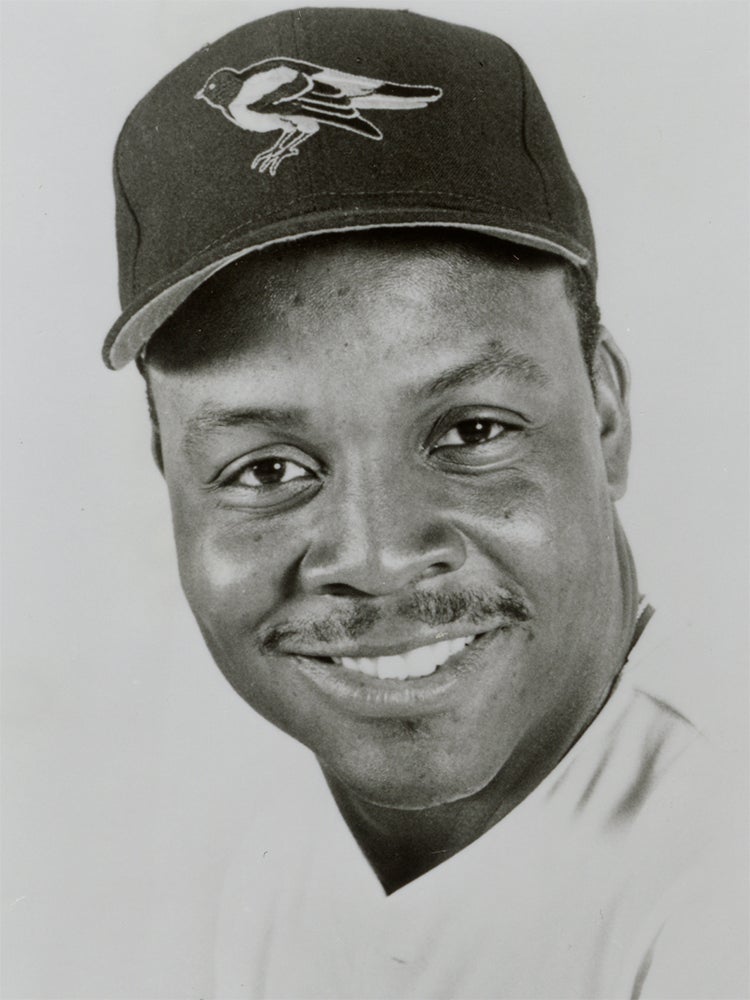
Still, the Orioles brought in lefty first basemen Randy Bass – who had totaled 200 homers for the Hanshin Tigers of the Japan Central League from 1983-87 – and Sam Horn in the spring of 1990.
“They’ve put the pressure on me,” Milligan told the Baltimore Sun in late February of 1990. “And with two big guys. I guess they’re starting to worry more about the designated hitter spot.”
Bass, however, did not make the team, leaving Horn to platoon with Milligan at first base. And while Horn hit 14 homers in 79 games that season, it was Milligan who grabbed the majority of the playing time. He posted a three-homer game against the Yankees on June 9 and was batting .280 through July 23.
Two weeks later, Milligan crashed into Athletics catcher Ron Hassey on a play at the plate on Aug. 7, sustaining a badly bruised shoulder that kept him out of the lineup for all but three games at the end of the season. Milligan had a team-leading 20 home runs when he was injured, and only his injury and a late-season push by Cal Ripken Jr. left Milligan one short of the team lead (Ripken’s 21) when year ended. His .408 on-base percentage (fueled by 88 walks) would have ranked second in the AL behind Rickey Henderson’s .439 had Milligan had enough plate appearances to qualify.
The Orioles went 20-28 while Milligan was sidelined, including a stretch where they won just six times in 26 games.
“The frustrating thing is not being able to do something I love to do,” Milligan told the Baltimore Sun while he was recovering from the injury.
But despite his work in 1990, Milligan once again found himself competing for time in the spring. On Jan. 10, 1991, he was traded for slugging first baseman Glenn Davis, sending top prospects Steve Finley, Pete Harnisch and Curt Schilling to Houston in return. Baltimore’s front office then asked Milligan to move to left field to accommodate Davis.
“When they got Glenn, he was a good addition to our team,” Milligan told the Miami Herald in the spring of 1991. “I knew I would have to change positions, but that’s what happens when you have to better yourself as a ballclub.
“Whatever it takes to help this club win, I’ll do it.”
Milligan started in left field on Opening Day in 1991 and played nine games there before Davis was sidelined with a nerve problem in his neck. Milligan returned to first base, remaining there until Davis got healthy in August. The duo shared the first base/DH spots for the rest of the year, with Milligan finishing the season with a .263 batting average, 16 homers, 70 RBI and 84 walks in what turned out to be a career-best 141 games.
Milligan’s play that year would also be immortalized on the big screen. On June 17, 1991, Milligan hit a walk-off, two-run double against Minnesota’s Rick Aguilera at Memorial Stadium in Baltimore. The play was featured in the 1992 movie “A Few Good Men” in a scene where actor Tom Cruise was watching baseball while relaxing following his work on a court case.
Two weeks after his game-winning double, Milligan was honored with the American League Player of the Week Award where he totaled 18 hits and 12 RBI in eight games.
Johnny Oates had replaced Frank Robinson as Orioles manager during the 1991 season, and Oates became one of Milligan’s biggest supporters. Davis was believed to be healthy heading into the 1992 campaign, but Oates promised to find at-bats for Milligan, who avoided arbitration by agreeing to a contract that would pay him $1.2 million that year.
“I wouldn’t hesitate for a second to bat him leadoff,” Orioles manager Johnny Oates told the Baltimore Sun about Milligan in in the spring of 1992. “If Brian Downing can hit leadoff for 15 years, and do a good job of it, then anybody can hit leadoff.”
At that point, Milligan’s .390 career on-base percentage ranked fifth among all active players.
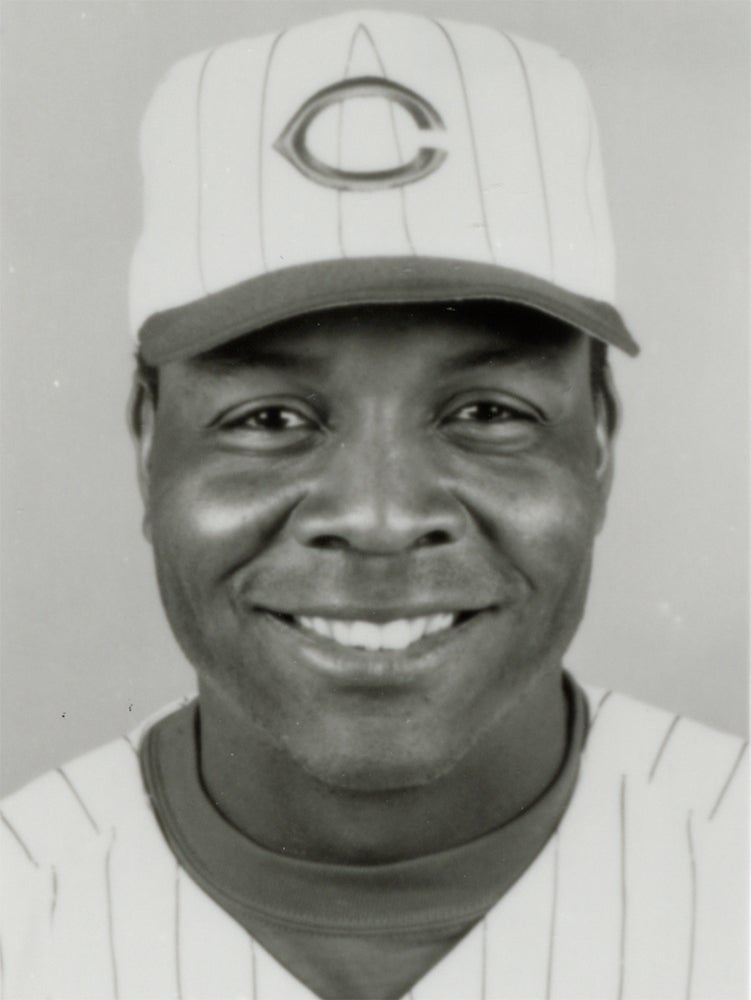
Still, with Davis having signed a two-year, $7 million extension following the 1991 season, Milligan has his work cut out for him.
“I’ve done nothing to hurt myself,” Milligan told the Sun in the spring of 1992. “But look, I’ve gone from being a starter who hits 20 homers to being out of a job. I know these things happen, but it doesn’t make it any better. It doesn’t seem right.”
Davis, however, was only able to play on Opening Day that year before his neck problem flared up again. Milligan again took over at first base, and when Davis returned in May, he was relegated to DH duty for most of the rest of the year in an attempt to relieve strain on his neck.
“My guy (Milligan) has been playing pretty well,” Oates told the Washington Post. “If we’re winning and Randy’s playing well, Randy will keep playing.”
Milligan drew a career-high 106 walks in 1992 (fourth-best in the American League) but saw his batting average drop to .240 with 11 homers and 53 RBI.
A free agent following the 1992 season, Milligan signed a one-year deal worth a base salary of $475,000 with the Reds on Feb. 1, 1993. He was expected to back up first baseman Hal Morris, but Morris suffered a separated shoulder in a brawl with Cleveland during a Spring Training game and did not return to action until June.
As a result, Milligan found himself at first base for the Reds on Opening Day.
“I’ve got to help this team out as long as I can until (Morris) gets back,” Milligan told the Tampa Tribune. “He’s the starter. When they say, ‘Randy, grab a little pine,’ I’ll grab a little pine.”
Milligan started for the first two months of the season but was forced to the bench when Morris returned. He was hitting .274 with 46 walks (good for a .394 OBP) through Aug. 16 when the Reds traded him to the Cleveland Indians for outfielder Thomas Howard.
Milligan put up fantastic numbers down the stretch for a Cleveland team that was just beginning to realize its potential. He hit .426 (with a .557 OBP) over 19 games, totaling seven doubles, seven RBI and 14 walks. But with the Indians on the cusp of contending, general manager John Hart went shopping for veterans in the offseason and signed future Hall of Fame first baseman Eddie Murray and pitcher Dennis Martínez. To make room on the 40-man roster, Milligan was designated for assignment.
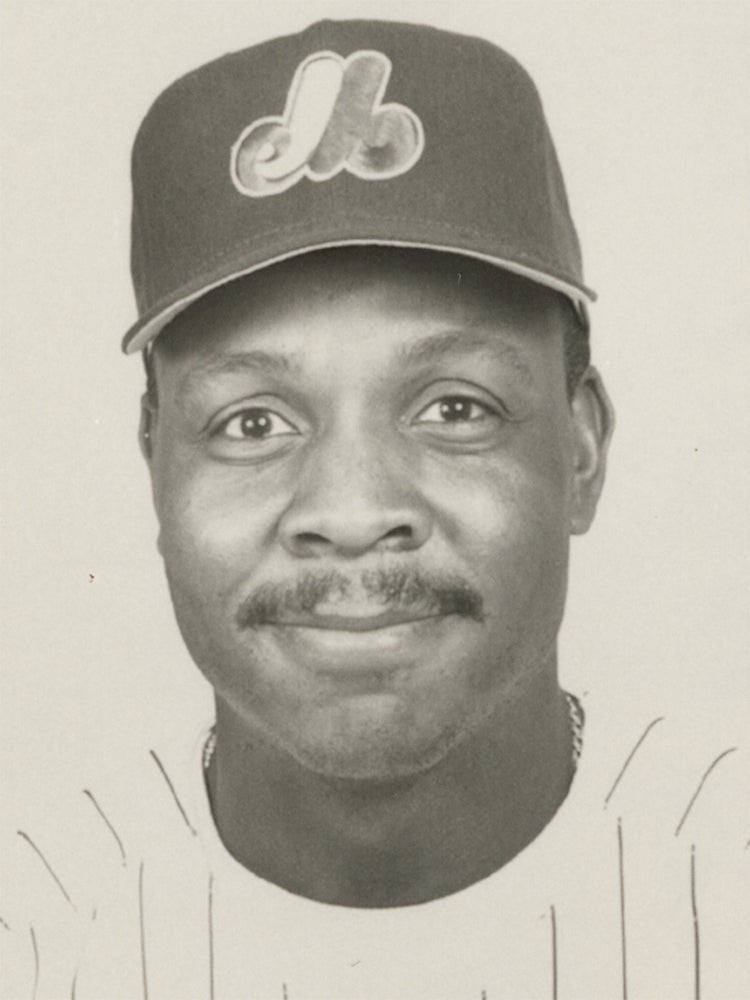
Days later, Cleveland traded Milligan to the Expos for pitcher Brian Barnes. But the Expos did not make Milligan feel welcome during tough contract negotiations that eventually saw the parties go to arbitration. Milligan was awarded the Expos offer of $600,000 rather than his $1 million request.
“All (the Expos) had to do was wait half an hour, even less, and I would have become a free agent,” Milligan told the Toronto Globe and Mail about the trade. “Then we could have said what we wanted and they could have told us what they were willing to give. I would have had no quarrels about signing with the Expos as a free agent. I like the town.
“In this case, I just didn’t feel welcome.”
Milligan started at first base for Montreal on Opening Day in 1994 but soon found much of his playing time taken by top prospect Cliff Floyd. Then over the summer, Floyd moved to the outfield while right fielder Larry Walker – who was batting a rotator cuff tear in his right (throwing) arm – moved to first base.
Milligan’s playing time decreased as the Expos got hot, and he was denied a chance at playing in the postseason when the strike ended the season in August. At the time, the Expos had the best record in baseball at 74-40.
“I see a 90 percent chance of a strike,” Milligan told the Associated Press in the spring of 1994.
When he was proven right, Milligan also saw his big league career come to an end. He finished the 1994 season batting .232 with two homers and 12 RBI in 47 games. When he found no offers to continue his big league career, he hooked on with a Mexican League team in 1996 before transitioning into his post-playing career.
Milligan worked for several years as a scout after his playing days, evaluating talent for the Mets and Orioles. He finished his eight-year big league career with a .261 batting average, 106 doubles, 70 homers and 284 RBI in 703 games. He also walked (447) more than he struck out (431), leaving him with a .391 on-base percentage that would have been an eye-catcher to most teams had he played a decade later.
But for a player who endured a long journey though the minor leagues, Milligan had no regrets about his career – except one.
“It’s funny,” Milligan told the Baltimore Sun in the spring of 1992 when the Orioles were trying to trade him. “Everything I always wanted, I got, except for one thing – a home.”
Craig Muder is the director of communications for the National Baseball Hall of Fame and Museum