Dream Baseball joins Yakyu exhibit in Cooperstown
A rare baseball with a lineage going back nearly a century has now become an important addition to one of the National Baseball Hall of Fame’s most recent exhibitions.
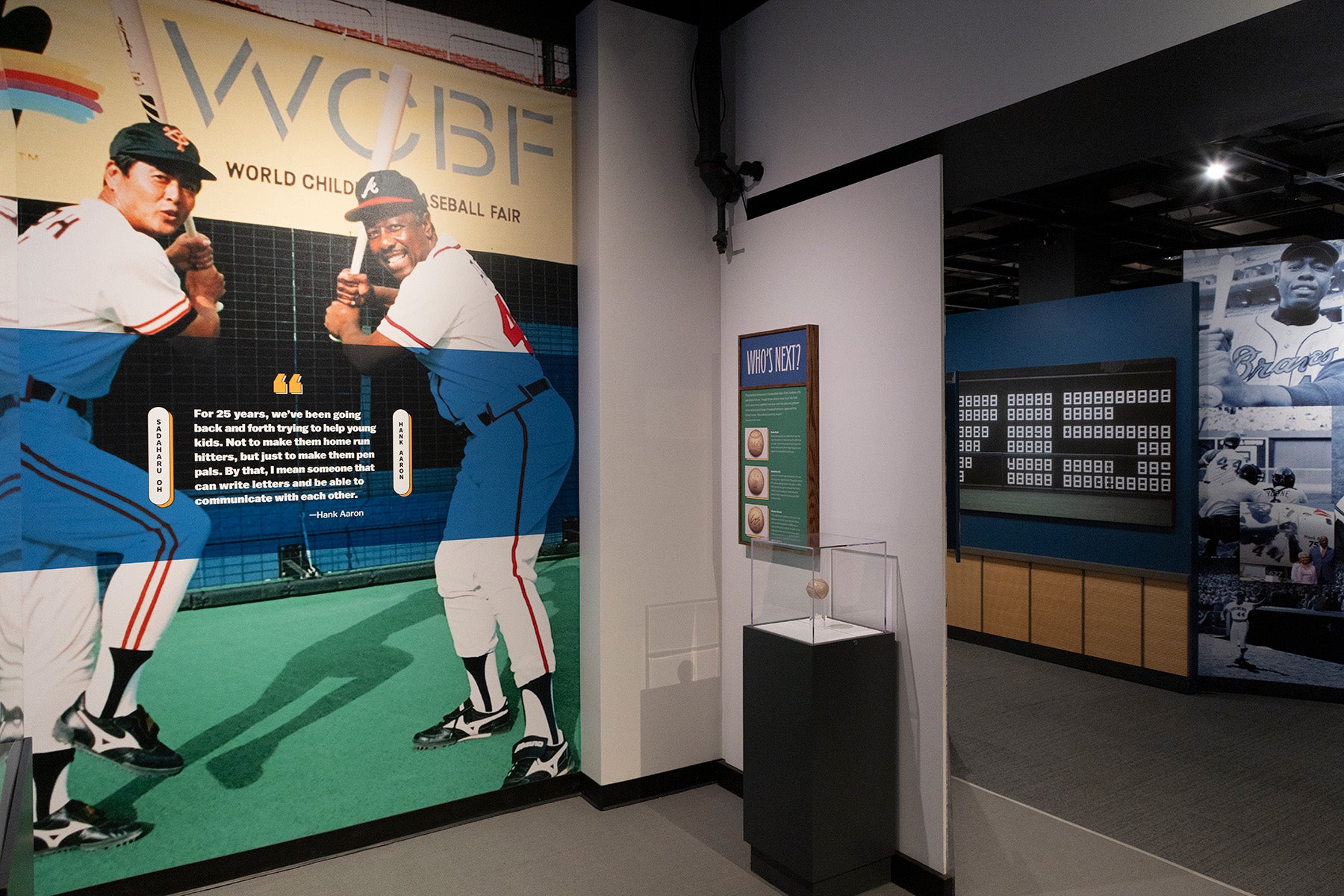
On Sept. 28, the “Dream Baseball,” signed by a trio of the game’s most impressive sluggers – Babe Ruth, Sadaharu Oh and Shohei Ohtani – and on loan from Hideki Tomita, was added to Yakyu | Baseball: The Transpacific Exchange of the Game.
Yakyu | Baseball, opened in July 2025, explores the longstanding exchange of teams and players in the more than 150 years since baseball was introduced to Japan.
“Baseball in the United States and Yakyu in Japan exist and thrive as a result of more than 150 years of exchange between the two nations,” said the Hall of Fame’s RJ Lara, the lead curator on Yakyu | Baseball. “Since the early 1870s, the sport has served as a powerful cultural bridge, fostering countless individual friendships and strengthening ties between the United States and Japan. This loan brings together three of the game’s greatest superstars from both sides of the Pacific, connecting their stories of exchange and making it a wonderful addition to the Yakyu | Baseball exhibition.”
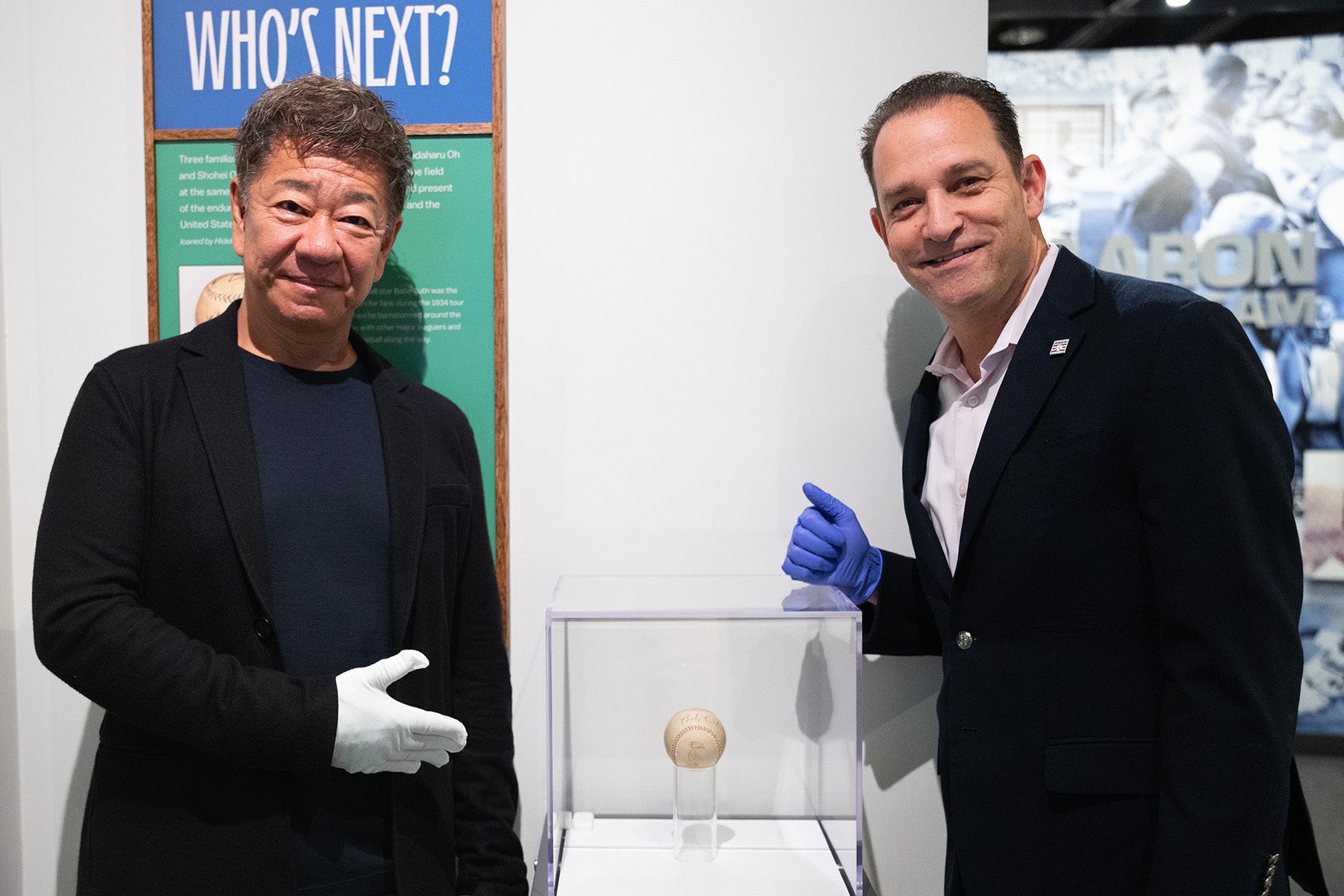
At an event placing the ball on exhibit, with Tomita in attendance, Hall of Fame President Josh Rawitch said, “We are so grateful that you are helping us share this baseball, believed to be the only one in the world that is signed by all three guys. And this is a perfect example of the transpacific exchange of baseball.
“Thank you so much for being here and for letting us share this with all of our visitors.”
Tomita, prior to his arrival in Cooperstown, shared with Rawitch his reasons for wanting the rare baseball at the Hall of Fame.
“For me, the ‘Dream Baseball’ represents much more than three extraordinary signatures,” Tomita wrote. “It represents how baseball has connected Japan and the United States across generations and through nearly a century of history.
“Baseball transcends wins and losses. It connects people, nations, and generations – carrying dreams across time. I believe these words express what this baseball means to me and why I wanted it to be shared with the public at the National Baseball Hall of Fame rather than simply kept in a private collection. I am very much looking forward…to finally seeing the ‘Dream Baseball’ begin this new chapter at the Hall of Fame.”
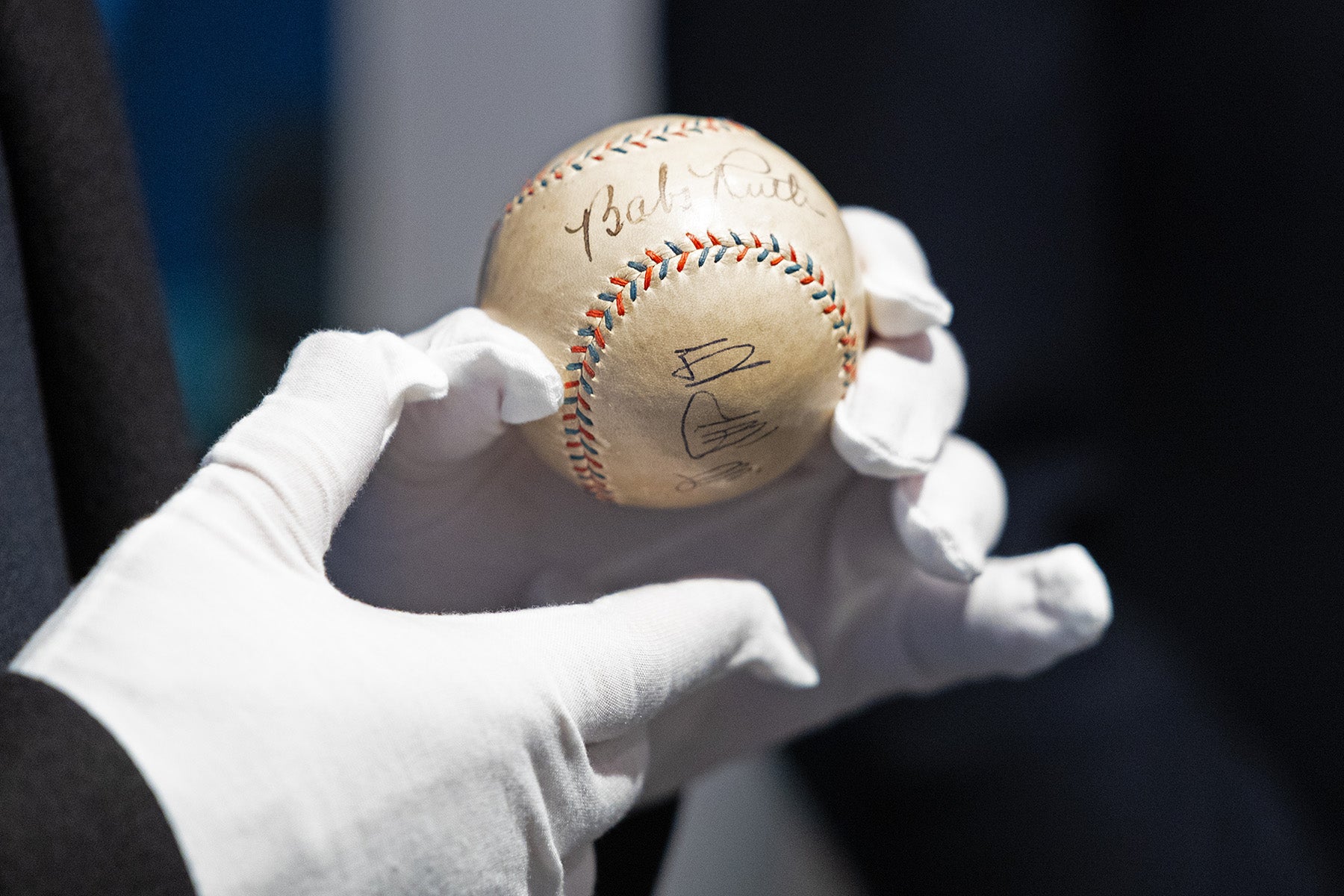
While three familiar names – Ruth, Oh and Ohtani – adorn the baseball, these players never took the field at the same time. But together they span both the past and present of the enduring exchange of baseball between Japan and the United States.
Ruth, a member of the Hall of Fame’s inaugural Class of 1936, was the main attraction for fans during a 1934 tour to Japan, when he barnstormed around the island nation with other major leaguers and signed this baseball along the way.
Oh, the Japanese baseball legend, was the second to sign this ball. Though his entire 22-season playing career took place in Nippon Professional Baseball, his love for the game crossed the Pacific many times, including in 2006 when he piloted Team Japan to the inaugural WBC championship.
The most recent addition to this ball is the signature of modern icon, Ohtani, who played five seasons in NPB before making the switch to MLB. His skills at the plate and on the mound have catapulted “Sho-time” to international superstardom.
After the event, Tomita shared additional background through an interpreter: “In 1934, when Babe Ruth came over to Japan to play baseball, a lady living in Nagoya got invited to a game and she gets the ball signed by him. In 1977, when Sadaharu Oh broke Hank Aaron’s home run record, the lady tried to get Oh to sign the baseball but he first refused, thinking he was not worthy to be on a ball with the legendary Ruth. Eventually, with the help of the owner of the Tokyo Giants, Oh finally agreed, but asked for a pen that drew lighter than the signature of Babe Ruth.”
According to Tomita, years later the woman wanted Ohtani to sign the ball, which proved difficult to arrange. After she passed away, Tomita purchased the ball, and with Oh’s blessing, Ohtani added his signature.
MLB Japan’s Keishiro Jubaru, also at the event, then added: “Right after (Tomita) purchased the baseball from the family, their wish was that this baseball is not just put in a storage room. This is something that we want to create the opportunity for as many baseball fans possible to see it. So, that’s why after Ohtani signed the ball, he decided to loan this to the Hall of Fame.”
As for the name “Dream Baseball,” Tomita said: “I really love the word ‘Dream’ so that’s the reason. And baseball is a dream, and dreams connect baseball and the people. So that’s why I named it the ‘Dream Baseball.’”
Bill Francis is the senior research and writing specialist at the National Baseball Hall of Fame and Museum