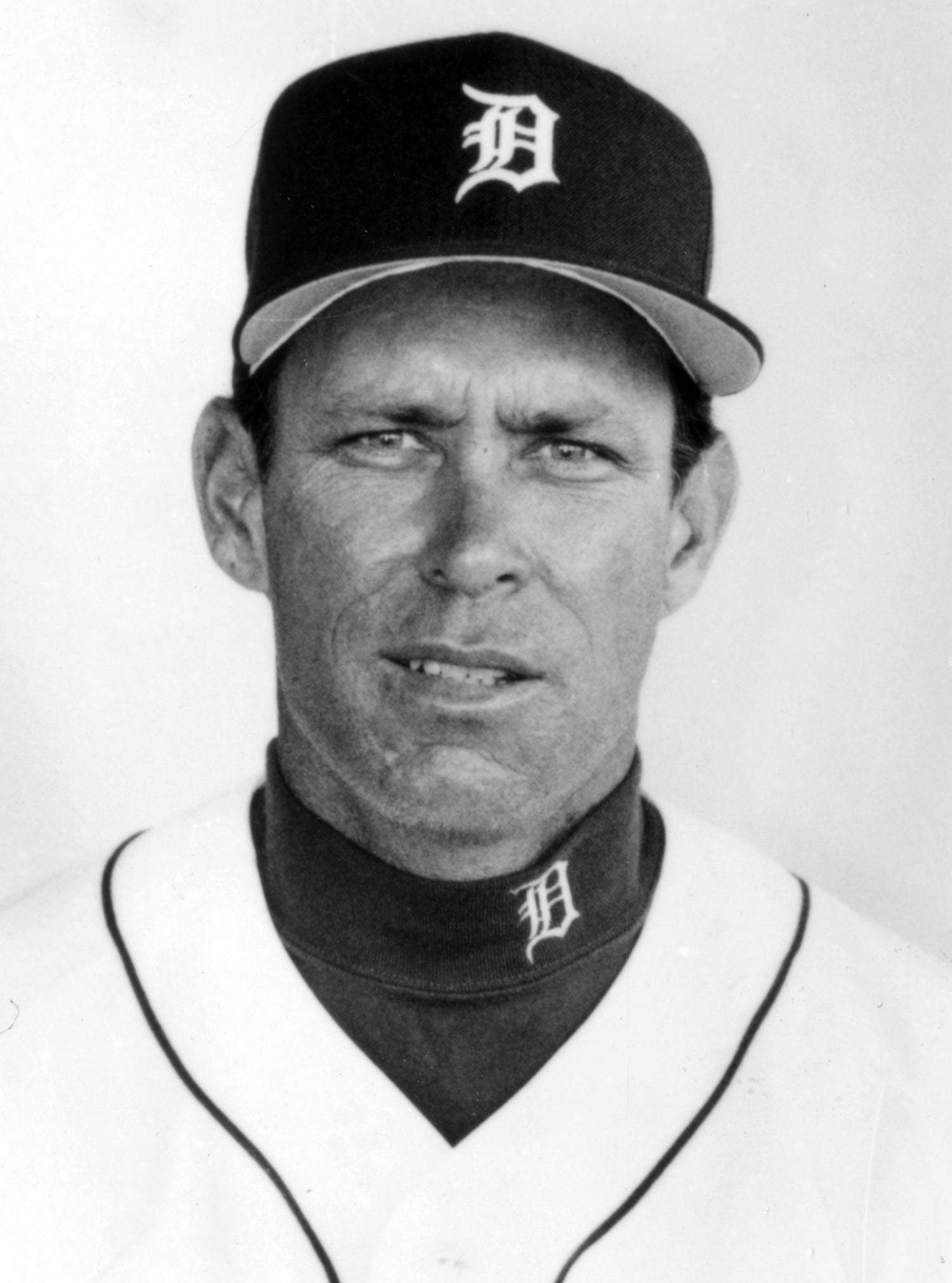
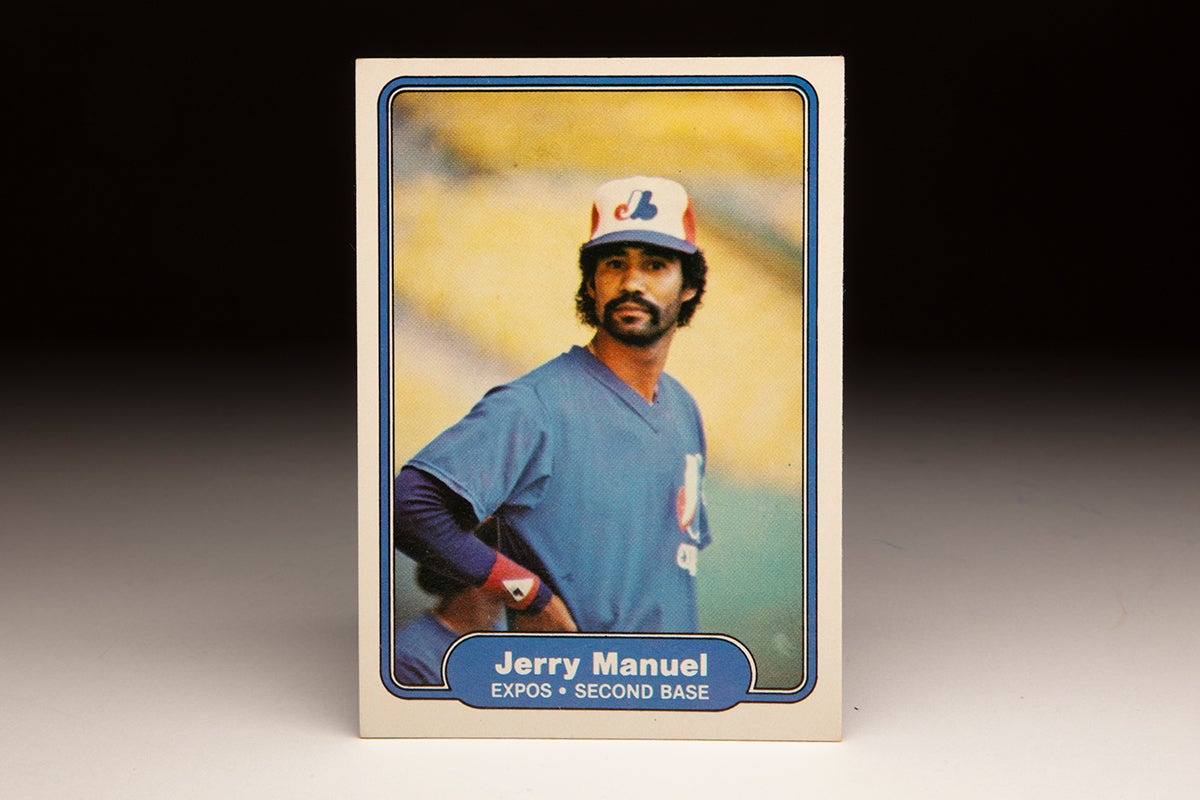
#CardCorner: 1982 Fleer Jerry Manuel
A first-round draft pick of the Detroit Tigers following a decorated high school career, Jerry Manuel found his path to the big leagues impeded by one of the most famous double play combos in history.
But Manuel found another way to big league glory – as a respected coach and manager.
Born Dec. 23, 1953, in Hahira, Ga., Manuel was one of seven children born to Lorenzo and Mildred Manuel. Lorenzo was a cook in the Air Force – he also pitched for the Atlanta Black Crackers of the Negro Leagues – and the family soon moved to the Sacramento area.
Jerry Manuel starred in football, basketball and baseball at Cordova High School in Rancho Cordova, Calif., just outside Sacramento. He scored 38 touchdowns over three years on the gridiron as a flankerback for the Lancers and was named an All-American by Coach & Athlete Magazine in 1972.
“Much as I liked baseball, I was more into football and basketball,” Manuel told the Sporting News in 1975. “Jim Brown and Gayle Sayers were my idols. I looked forward to getting an education and seeing what it’s like to be in college.”
But despite almost three dozen football scholarship offers, Manuel – who topped out at 6-foot and 165 pounds during his career – turned his attention to baseball. On the diamond, Manuel hit .467 in 28 games as a high school senior, scoring 43 runs and stealing 23 bases as a shortstop.
“He’s the best all-around athlete I’ve ever coached, and we’ve had some good ones at Cordova,” Guy Anderson, Manuel’s baseball coach at Cordova, told the Sacramento Bee. “Jerry was always a heady player and a quality person.”
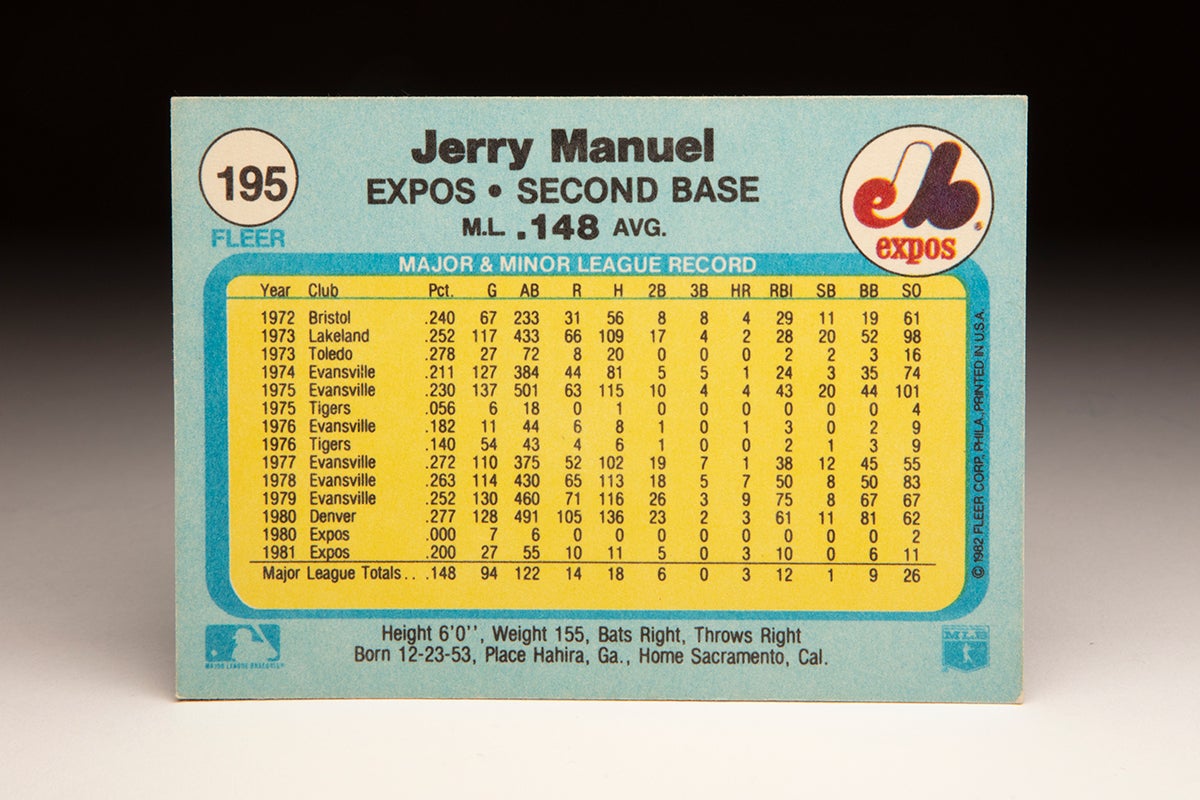
The Detroit Tigers selected Manuel with the 20th overall pick in the June 1972 MLB Draft – and the bonus money convinced Manuel to forgo his football dreams. Manuel signed a week after being drafted and was sent to Bristol of the Appalachian League, where he hit .240 with eight doubles, eight triples and four home runs in 67 games to help his team finish first in the league.
Promoted to Class A Lakeland of the Florida State League in 1973, Manuel hit .252 with 66 runs scored and 20 steals in 117 games before being called all the way up to Triple-A Toledo in August. He hit .278 in 20 games for the Mud Hens, finishing the year with a combined .255 average and 22 steals in 144 games.
Convinced Manuel could handle top minor league pitching based on his 1973 cameo, the Tigers started Manuel at Triple-A Evansville in 1974 while moving him to second base.
“I played very little second base until this spring,” Manuel told the Evansville Courier and Press.
Manuel made the adjustment quickly, leading the American Association in double plays while hitting .211 in 127 games. He returned to Evansville in 1975 after spending Spring Training with the Tigers, and this time had more success at the plate – batting .230 with 10 doubles, five triples, five homers and 20 steals after becoming a switch-hitter. In the field, Manuel again led American Association second baseman in double plays.
“Jerry is the best (defensive second baseman) I’ve seen,” Fred Gladding, Evansville’s pitching coach and a 13-year MLB veteran, told the Sporting News.
At the plate, Manuel’s decision to become a switch-hitter fast-tracked him to the big leagues.
“(Tigers coach) Dick (Tracewski) came down to (the Florida Instructional League) last fall and said I should give switch-hitting some thought,” Manuel told the Courier and Press. “I started taking some practice swings left-handed (and) found I could swing pretty good that way. I hit both ways my junior year in high school but my senior year I decided to do everything right-handed.
“Hitting both ways had always been in the back of my mind. I guess I just needed some encouragement.”
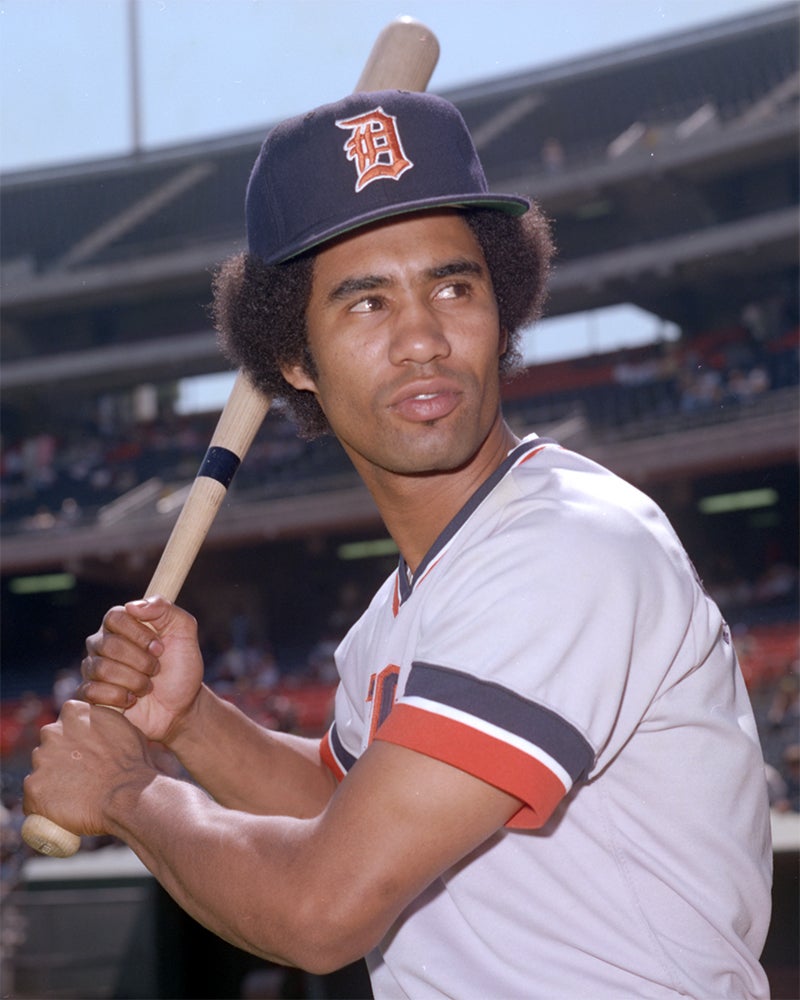
On Sept. 17 – after Evansville had won the American Association title and the Junior World Series against Tidewater – the Tigers brought Manuel to the big leagues. He played six games over the last two weeks of the season, going 1-for-18 (.056) at the plate.
Manuel made the Tigers’ Opening Day roster in 1976 and – save for a brief 11-game stint in Evansville – stayed with Detroit all season. Veteran Gary Sutherland opened the season at second base for the Tigers but did not hit and was traded to the Brewers in June in exchange for Pedro Garcia, who spent the rest of the season as the starter at second.
Manuel, meanwhile, hit .140 in 54 games off the bench.
Following the 1976 season, Manuel decided he wanted to remain in Detroit for the winter. To that end, he told Tigers teammate Willie Horton that he needed a job. Horton then contacted his brother-in-law, who was a supervisor at Ford Motor Company’s parts redistribution center in nearby Brownstown Township.
Working the 6:30 a.m. to 3 p.m. shift for $6.86 an hour, Manuel handled parts heading to one of many Ford plans around the country.
“Jerry’s a real good worker,” Robert Barnett, Horton’s brother-in-law, told the Detroit Free Press, “and he’s just one of the guys.”
Manuel used the labor as a way to put on muscle.
“The more I work, the more (weight) I gain,” Manuel told the Free Press. “My muscles are very taut and hard.”
But despite Manuel’s decision to sink roots in the Detroit area, he would never again play for the Tigers.
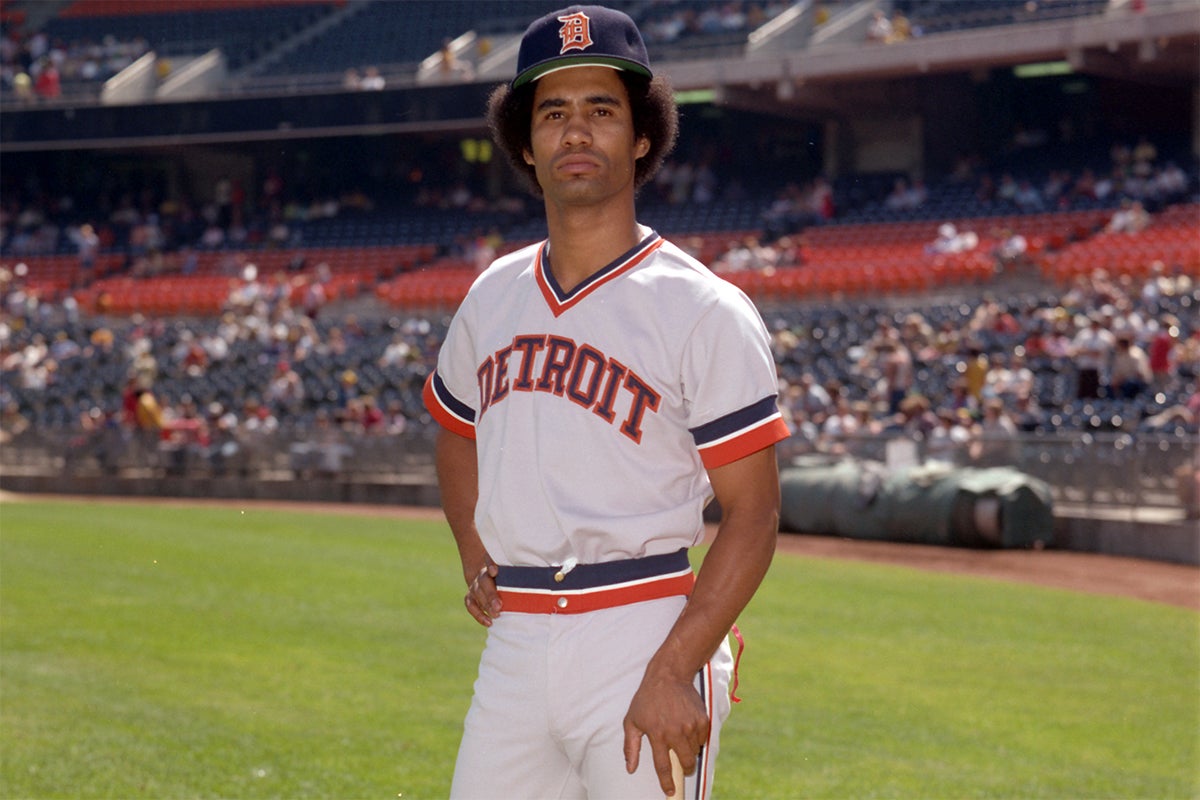
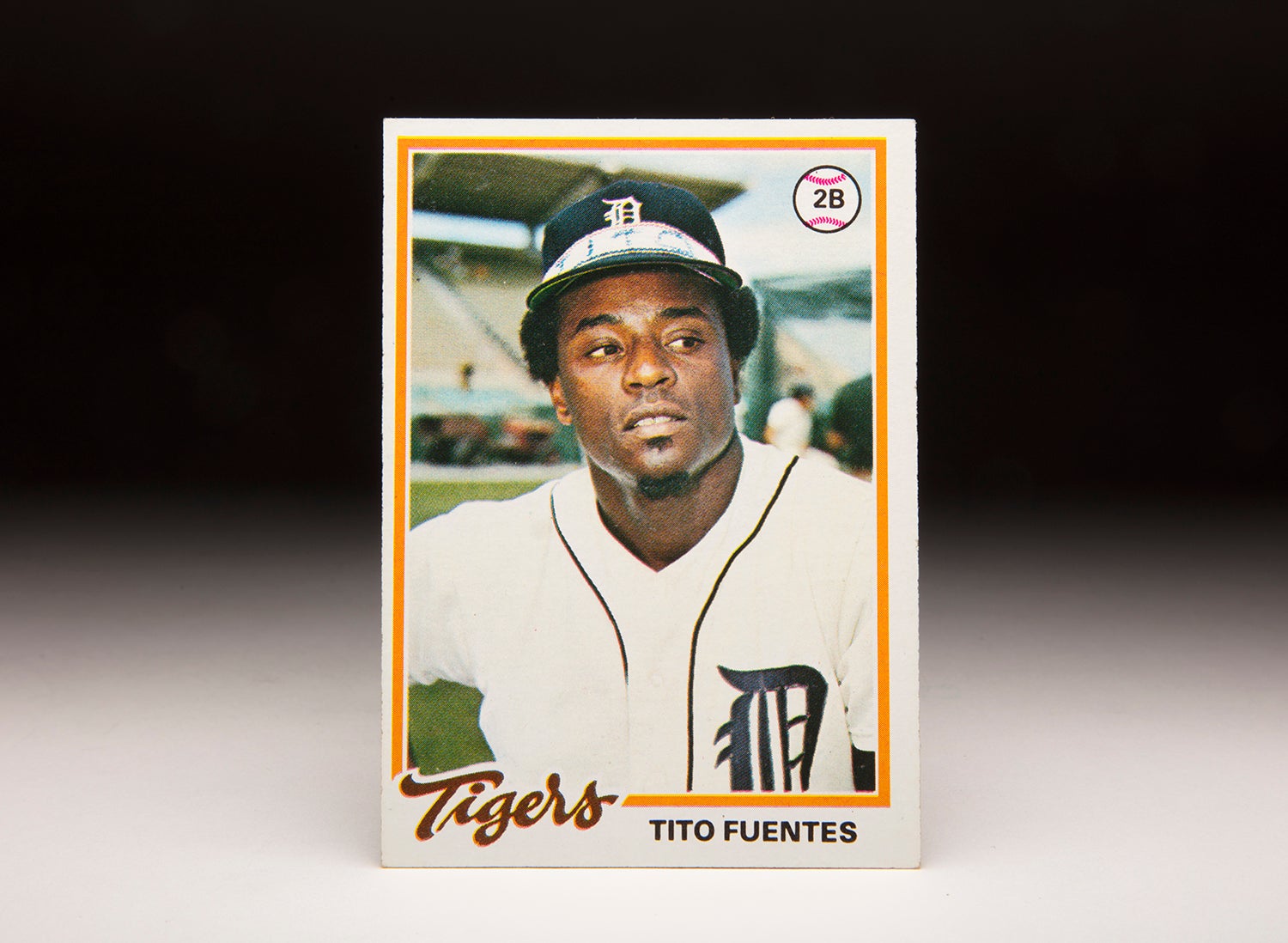
In 1977, Detroit signed veteran Tito Fuentes, who had spent the 1975 and ’76 seasons as the Padres’ second baseman after a nine-year run with the Giants. Fuentes would have what was arguably his best big league season in 1977, hitting .309 with 190 hits, 83 runs scored and 10 triples in 151 games – 149 of which came at second base.
Manuel spent the entire season with Evansville, batting .272 over 110 games. And though Fuentes was clearly not in the Tigers’ long-term plans – his contract was sold to the Expos in January of 1978 – Manuel would face another obstacle.
In 1978, 20-year-old Alan Trammell and 21-year-old Lou Whitaker took over at shortstop and second base, respectively, for the Tigers. This left Manuel without a path to regular playing time in Detroit.
He was named to the American Association All-Star team in 1978 after hitting .263 with 50 RBI in 114 games for the Triplets. But Manuel could see that Trammell and Whitaker were the future for the Tigers.
“You can look at their age and figure it that way,” Manuel told the Bee in 1979 when he was playing for Triple-A Evansville. “The fact that they’re young guys makes a difference. The Tigers are probably keeping me around for insurance because there’s no (other infielders) left.
“My chances are probably slim moving up right now.”
Manuel spent one more season in Evansville in 1979, putting together his best all-around numbers with a .252 batting average, 71 runs scored, 75 RBI and 67 walks in 130 games while being voted the team’s most valuable player. It would shape his later career as his manager was future Hall of Famer Jim Leyland, who would recruit Manuel onto his staff with the Marlins in the fall of 1996.
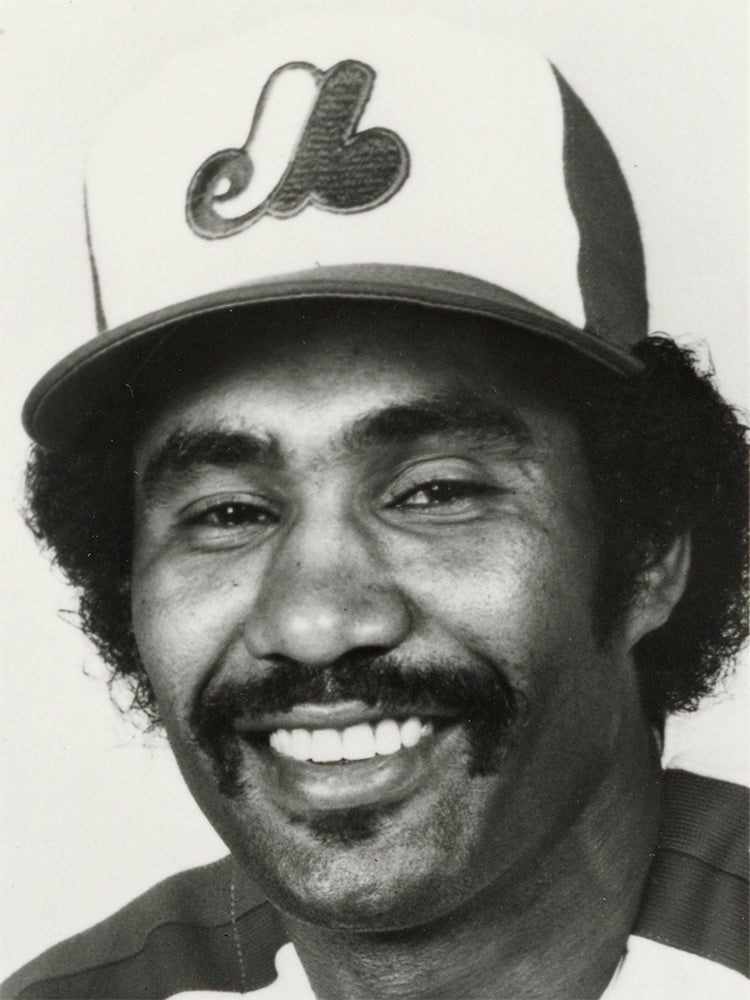
On March 15, 1980, the Tigers parted with their former No. 1 draft pick when they traded Manuel to the Expos in a deal for catcher Duffy Dyer.
The Expos sent Manuel to Triple-A Denver and put him at shortstop, and he handled the position change while batting .277 with 105 runs scored, 61 RBI and 81 walks in 128 games. He looked to be ticketed for the big leagues in June when the Expos made several roster moves, but Manuel was not recalled until September – when he appeared in seven games (going 0-for-6) as Philadelphia edged the Expos for the National League East title on the next-to-last day of the season.
Manuel made the Expos’ Opening Day roster in 1981 as a utility infielder and was thrust into the lineup at second base when starter Rodney Scott sprained his thumb in late April. In his second day as a starter, Manuel went 4-for-8 with two doubles and a home run as Montreal swept the Mets in a doubleheader on April 26.
“I promise you, Rodney Scott’s left thumb is going to get better awfully fast,” Expos manager Dick Williams told the Montreal Gazette as “Wally Pipp” signs appeared in Manuel’s locker.
But in a May 1 game against the Dodgers, Manuel suffered a left knee injury – Mike Scioscia slid into him at second base – that would eventually require surgery. He did not return to action until Sept. 2.
Six days later, the Expos fired Williams and replaced him with team executive Jim Fanning. It proved to be the spark that put Montreal on track to win the second half NL East title and send the team to the postseason for the first time.
In Fanning’s first game on Sept. 8, Manuel came off the bench and hit a two-run home run in a 10-5 loss to Philadelphia. Fanning soon put Manuel in the starting lineup and benched Scott – and Scott later hurt his shoulder against Pittsburgh on Oct. 1.
STORIES OF BLACK BASEBALL
Stories that highlight the lives and experiences of Black ballplayers through key moments in history, artifacts and baseball cards.
Suddenly, Manuel – who played in a total of 27 regular season games that year – was the team’s starting second baseman in the Division Series vs. the Phillies. He went 1-for-14 while starting all five games as the Expos beat Philadelphia to advance to the National League Championship Series.
But with Scott recovered from his injury, Fanning put Manuel back on the bench in the NLCS vs. the Dodgers. He appeared in just one game – pinch-running for Gary Carter in the bottom of the ninth of Game 5 after Carter drew a two-out walk off Fernando Valenzuela. With the Dodgers, clinging to a 2-1 lead, Valenzuela then walked Larry Parrish to push Manuel – who represented the tying run – to second.
Dodgers manager Tommy Lasorda then called on Bob Welch to face Jerry White, and White grounded out on the first pitch to give the Dodgers a win and send them to the World Series.
For Manuel, it marked the end of his tenure as a player in Montreal. He began the 1982 season with Triple-A Wichita after being designated for assignment over the winter – and losing his utility infielder spot to Frank Taveras in Spring Training – before the Expos traded him to the Padres on May 22 for pitcher Kim Seaman. He played in two games for San Diego on May 24 and May 30 before being sent to Triple-A Hawaii. Then on June 8, the Padres sent Manuel back to the Expos for a player to be named later that became pitcher Mike Griffin.
In 97 games at Triple-A in 1982, Manuel hit a combined .239 with Wichita and Hawaii. He would never play in a big league game again.
On Feb. 7, 1983, the Expos traded Manuel to the Cubs for catcher Butch Benton. Manuel spent the entire season with Chicago’s Triple-A team in Iowa, then joined the White Sox and played the 1984 campaign with Triple-A Denver. With no big league jobs looming, Manuel retired and took a job scouting for the White Sox.
It would mark the beginning of the second act of Manuel’s baseball career.
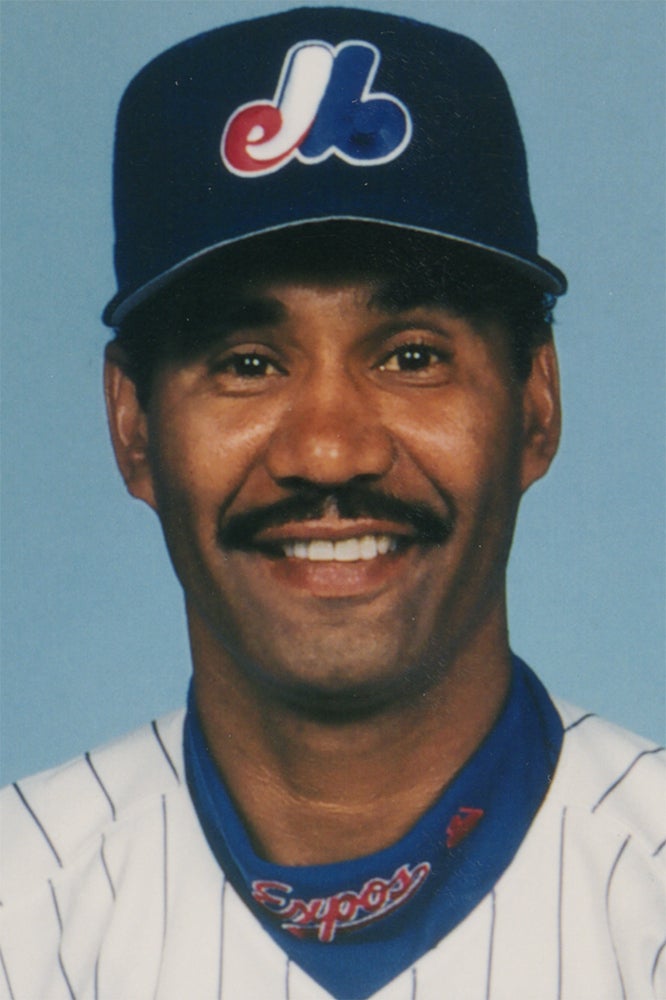
In 1986, Manuel returned to the Expos organization as a player/coach with Triple-A Indianapolis. He hit .390 in 22 games but more importantly mentored future big leaguers like Casey Candaele and Luis Rivera.
“Played 13 years and I got five (minor league) championship rings. That’s not bad,” Manuel told the Ottawa Citizen. “I do all right…that’s including the big year (1981) with the big club.”
Manuel moved through the Expos system the next few years before debuting as minor league manager in 1990 with Jacksonville of the Double-A Southern League. He went 84-60 and earned the league’s Manager of the Year honors.
In 1991, Manuel was promoted to Triple-A Indianapolis but was there only about two months before Expos manager Buck Rodgers was fired on June 3. Rodgers was replaced by Expos third base coach Tom Runnells, and Manuel was called on to replace Runnells.
“I’m happy for this great opportunity, but I also feel emptiness over leaving (Indianapolis),” Manuel told the Indianapolis News. “I was very attached to this club, very excited about its future.”
Many of Manuel’s Indianapolis players – like Wil Cordero, Mel Rojas and John Vander Wal – would soon join Manuel with the Expos.
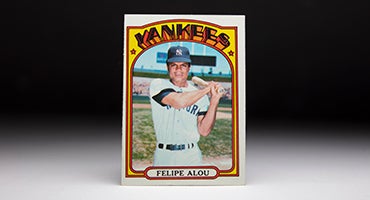
The Expos would endure another managerial change in 1992 when Runnells was replaced by Felipe Alou. Manuel remained the third base coach after the change and stayed in Montreal through the 1996 season – withstanding another team heartbreak in 1994 when the strike ended the season with the Expos in first place in the NL East.
When Jim Leyland was hired as the Marlins manager on Oct. 4, 1996, he waited less than a week before naming Manuel as his bench coach. It would be a move that would finally bring Manuel a World Series ring.
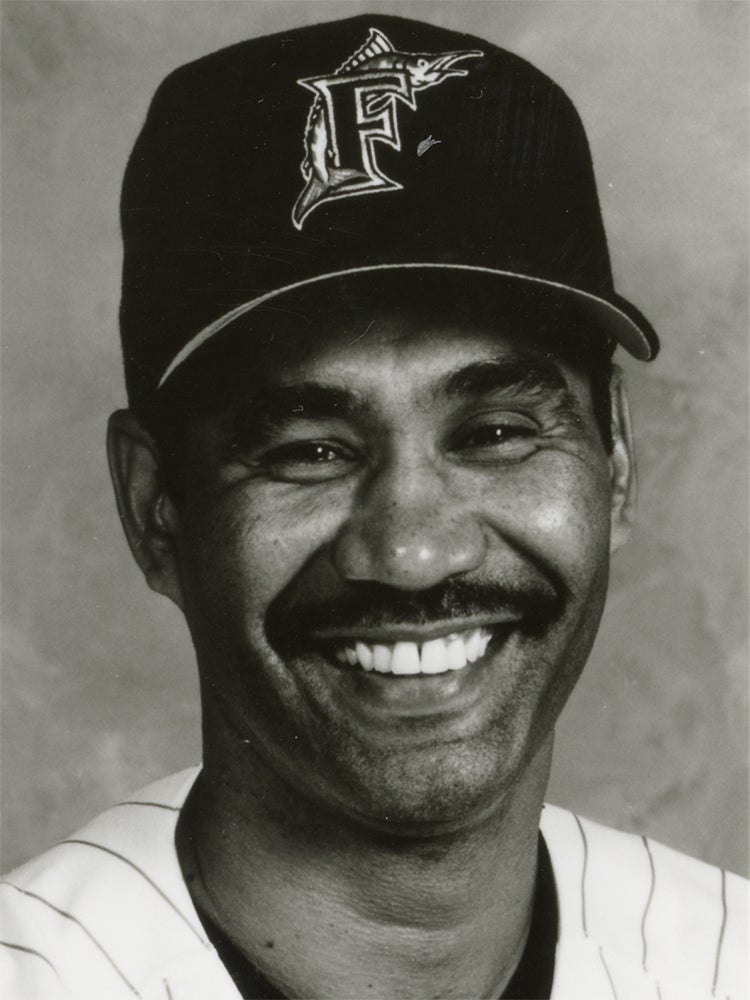
The Marlins’ star-packed roster finished second in the NL East in 1997, winning the Wild Card spot. Florida then dispatched the Giants in the NLDS and the Braves in the NLCS before besting Cleveland in seven games to win the Fall Classic.
“Jerry is a very quick, very bright guy,” Leyland told the Chicago Tribune.
A little more than five weeks after the World Series ended, Manuel signed on as the White Sox manager, agreeing to a three-year contract worth a reported $1 million after also interviewing for the Tampa Bay Devil Rays job. He re-joined the only organization that had ever fired him – as he was dismissed as a scout by the White Sox following the 1985 season.
“I tell guys that I’m not here to challenge you; I’m here to change you,” Manuel told the Chicago Tribune after taking over a White Sox team that featured stars like Frank Thomas and Albert Belle but had gone 80-81 under Terry Bevington in 1997. “Challenge is a mind thing. Change is from the heart. If you can get it in your heart, you can change.”
The deeply spiritual Manuel, who lost his father three days after the end of the World Series, was willing to put his values to the test.
“I’m here to change their hearts to the commitment it takes to win a championship,” Manuel told the Tribune, “and it’s going to be uncomfortable for a while.”
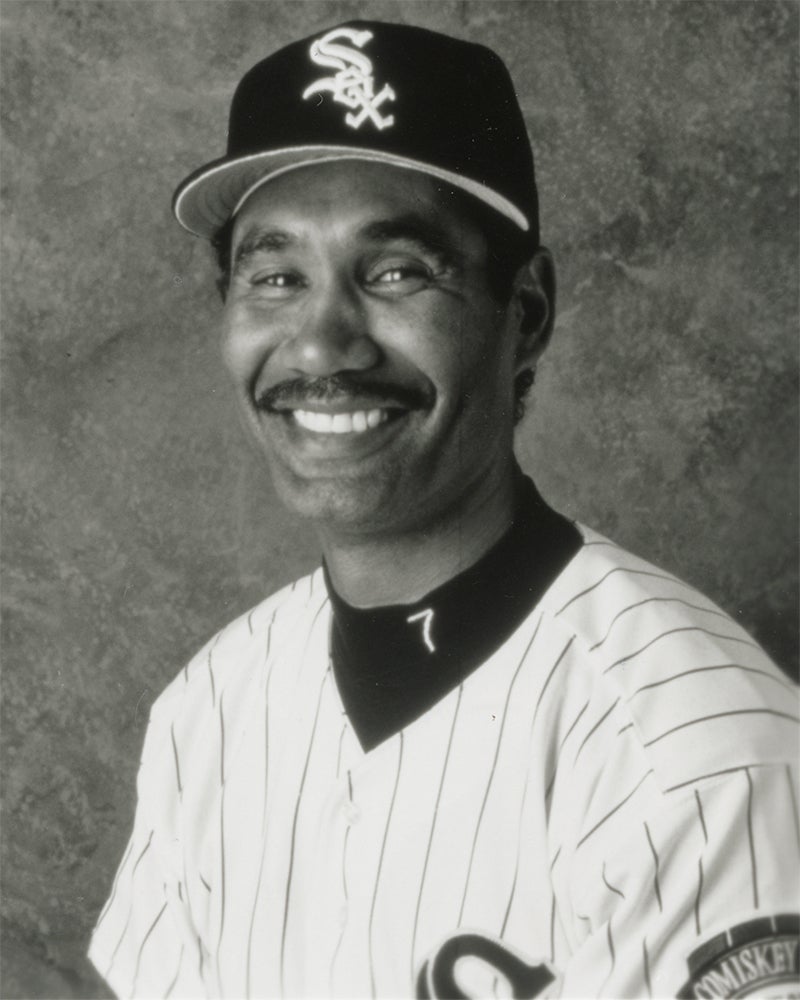
The White Sox went 80-82 in Manuel’s first season in 1998 and slipped to 75-86 a year later. But in 2000, Chicago stormed to the AL Central title with 95 wins – powered by a lineup that scored an AL-best 978 runs and featured Paul Konerko, Carlos Lee, Maggio Ordóñez and Thomas.
The Mariners, however, put an end to that season by sweeping Chicago in the ALDS. But Manuel was still a landslide winner of the AL Manager of the Year Award following the season.
“I’ve always said I’d rather have my players run through a wall for me rather than have me push them through a wall,” Manuel told the Tribune after being named Manager of the Year. “It’s a credit to the entire organization – the scouting, the player development – that the guys we got were those types of people anyway. Our staff was just happy to kind of stay out of the way.”
But the White Sox were unable to repeat their division title in 2001 after Thomas suffered a torn rice triceps that limited him to just 20 games. Thomas returned in 2002 but Chicago slipped to 81-81.
Then in 2003, Manuel found himself on the hot seat for most of the season as critics questioned his laid-back style.
“If anyone says you can’t win with that style, it’s not true because we won in 2000,” Konerko told the Tribune. “(Manuel) makes decisions. Sometimes they work out and sometimes they don’t. But I know for a fact that he’s the same person when he walks through the door every day. He’s always been positive.”
By the final weekend of the season, it was clear that Manuel would be dismissed. On the day after the season ended, the White Sox made it official.
“It was a tremendous growth experience for me personally to go through that in Chicago,” Manuel told the Sacramento Bee in 2005. “To be a manager in that city and everything that comes with it, it’s never easy. To be Manager of the Year, going to the playoffs, not quite meeting expectations, people souring on things. You learn. That’s part of the industry, the business.”
Two years after Manuel was fired, the White Sox won the World Series with a roster of players nurtured by Manuel.
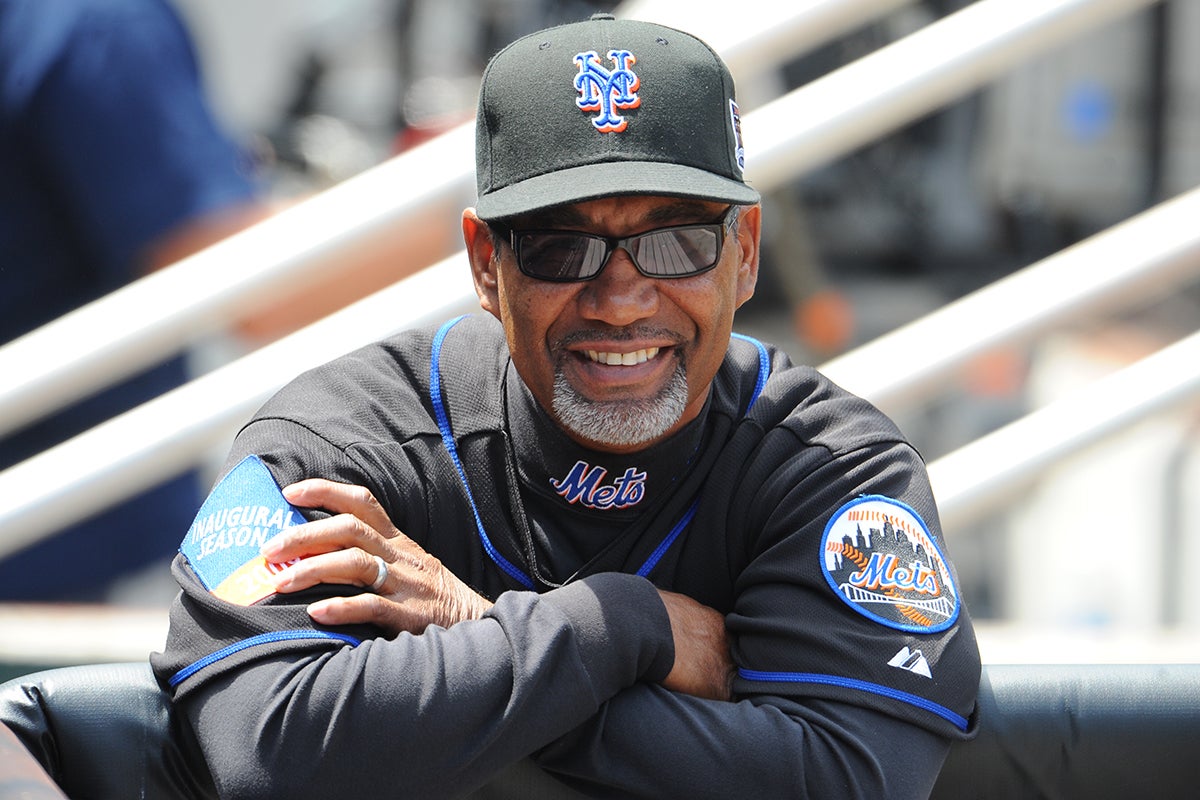
Following the 2004 season, Manuel joined the Mets and became the bench coach for new manager Willie Randolph. He remained in that role until June 17, 2008, when Randolph was fired and Manuel was named the Mets’ manager. He went 55-38 to end the season but were unable to hold on a playoff spot in the last week of the season and were eliminated in the final game of the year.
But the Mets brought Manuel back with a two-year deal worth $2 million with an option year for 2011.
“What Jerry’s done has been remarkable,” Mets third baseman David Wright told the Associated Press. "You won't find a guy in the clubhouse that doesn’t look up to Jerry, that doesn’t respect Jerry and think that Jerry’s one of the best baseball minds in the game.”
The Mets, however, struggled to a 70-92 record in 2009. Manuel faced constant criticism the next year as New York went 79-83 – and the day after the season ended the Mets fired Manuel and general manager Omar Minaya.
Manuel, however, continued to remain in the game – both as a broadcaster and as a bench coach for Team USA manager Mark DeRosa at the 2023 World Baseball Classic as well as an MLB DREAM Series instructor.
And Manuel’s family legacy continues. His son, Jerry Lorenzo Manuel – whose professional name is Jerry Lorenzo – is a fashion designer who has incorporated Negro Leagues concepts into his clothing lines.
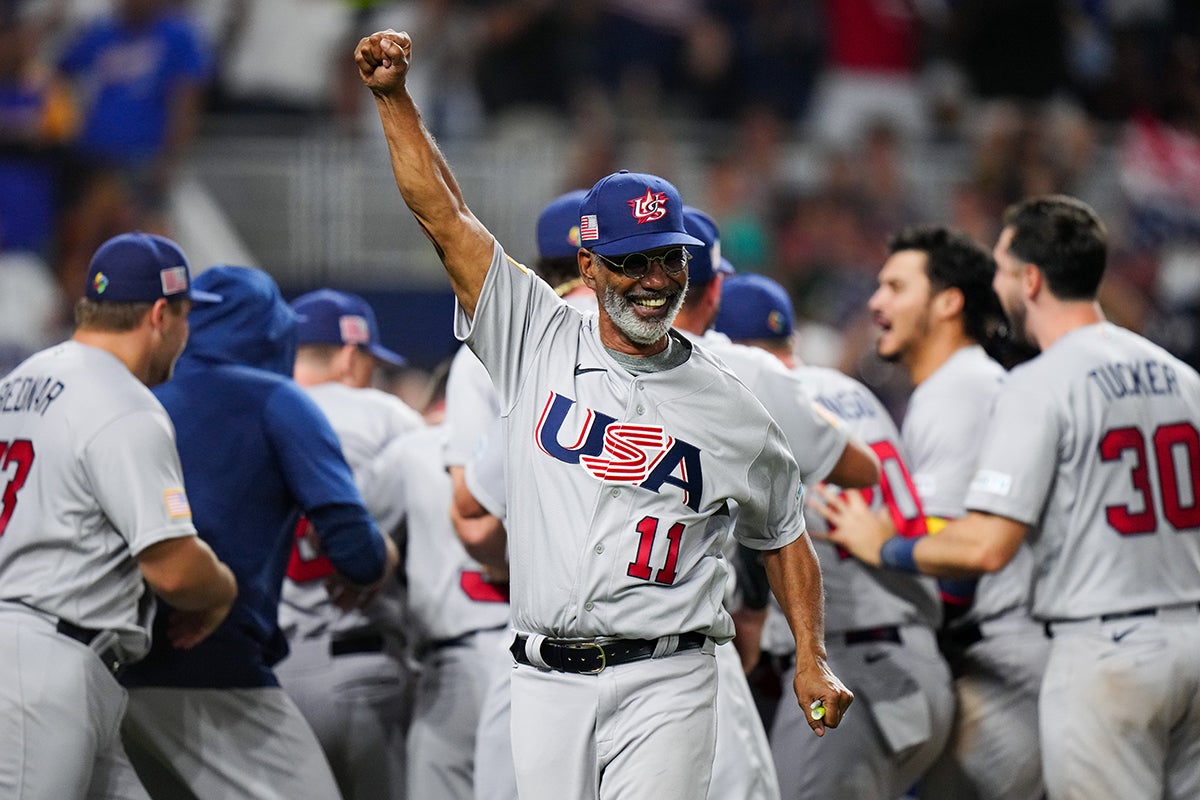
In 96 big league games as a player, Manuel hit .150 and never appeared in more than 54 games in one season. But he never let his limited success as a player – and being blocked in his younger days in Detroit by Trammell and Whitaker – inform his personal belief or vision.
“When I was in Triple-A, I was a good defensive player and clutch hitter,” Manuel told the Chicago Tribune right after he was hired as the White Sox’s manager. “When I went to the big leagues, I wasn’t a good hitter at all.
“Those guys (Trammell and Whitaker) were extraordinary players. I was a guy who was hoping to get a chance. But I loved to play baseball.”
As a manager, Manuel posted a 704-684 record over nine seasons with the White Sox and Mets. And though he made it to the postseason just once as a skipper, his centered demeanor – which earned him the nickname “The Sage” – was felt on his teams long after he left the dugout.
“Oh, I love the pressure,” Manuel told the Sacramento Bee in 2005. “(Managing) is the closest thing to playing. If you can’t play, why not enjoy the great moments of managing, the stuff that leaves you sleepless at night?
“I know it doesn’t always look like fun, but it is. We love this.”
Craig Muder is the director of communications for the National Baseball Hall of Fame and Museum