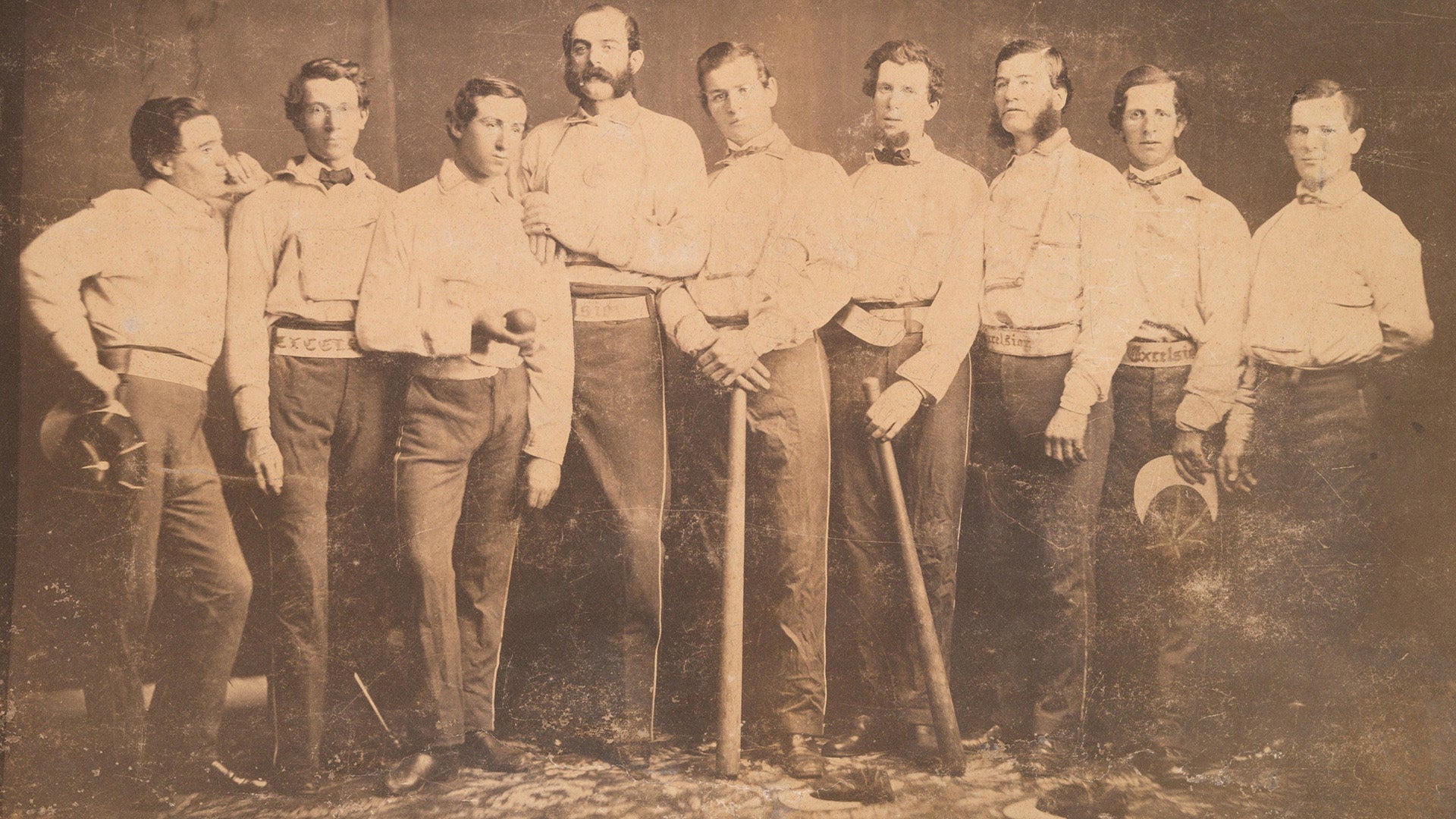
Laws of Base Ball
PAGE 3 OF 3 – FRONT
In the menu below, click the + icon to see a portion of the document. Bold text denotes additions and insertions, while strikethrough text denotes deleted words.
READ TRANSCRIPTS
Top
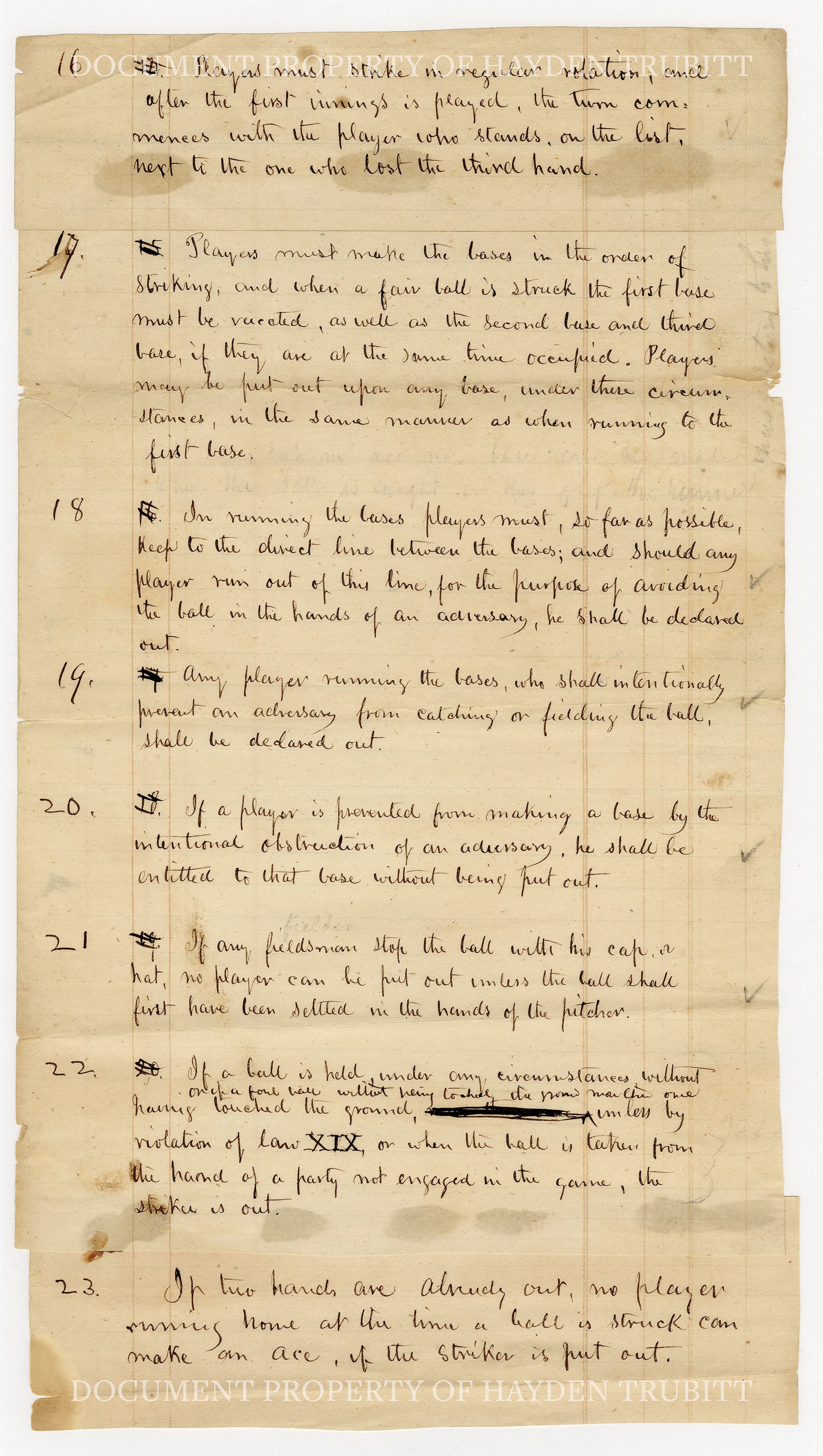
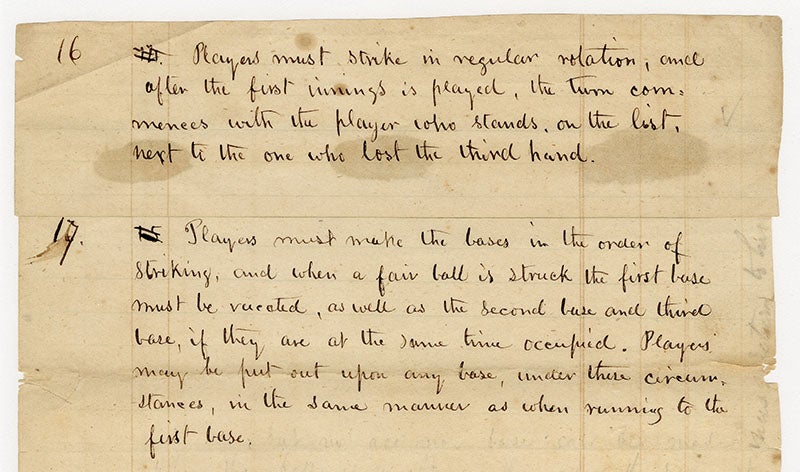
16. 14. Players must strike in regular rotation, and after the first innings is played, the turn commences with the player who stands, on the list, next to the one who lost the third hand.
17. 15. Players must make the bases in the order of striking, and when a fair ball is struck the first base must be vacated, as well as the second base and third base, if they are at the same time occupied. Players may be put out upon any base, under the circumstances, in the same manner as when running to the first base.
Middle
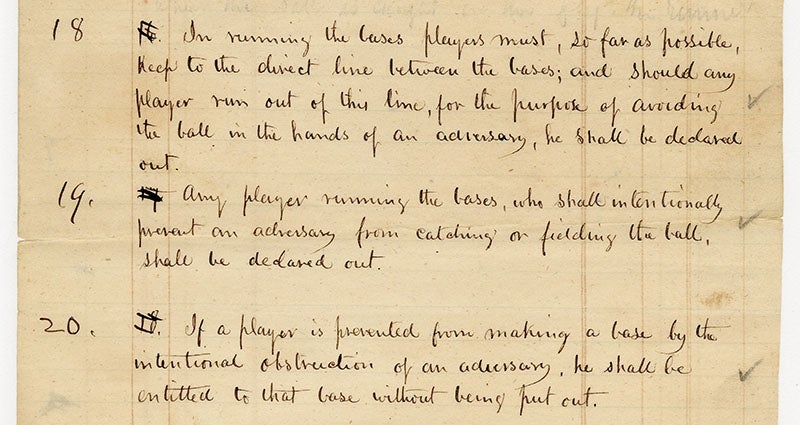
18. 16. In running the bases players must, so far as possible, keep to the direct line between the bases; and should any player run out of this line, for the purpose of avoiding the ball in the hands of an adversary, he shall be declared out.
19. 17. Any player running the bases, who shall intentionally prevent an adversary from catching or fielding the ball, shall be declared out.
20. 18. If a player is prevented from making a base by the intentional obstruction of an adversary, he shall be entitled to that base without being put out.
Bottom
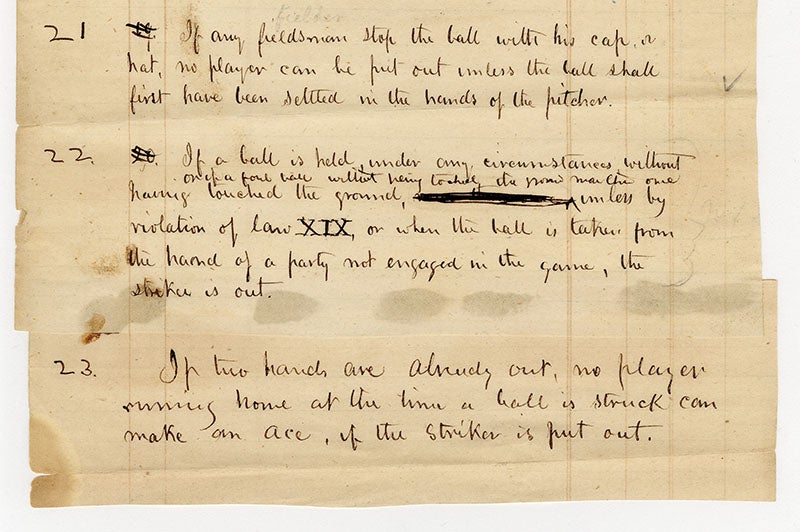
21. 19. If any fieldsman stop[s] the ball with his cap, or hat, no player can be put out unless the ball shall first have been settled in the hands of the pitcher.
22. 20. If a ball is held under any circumstances without having touched the ground, or if a foul ball without having touched the ground more than once, [illegible] unless by violation of law XIX, or when the ball is taken from the hand of a party not engaged in the game, the striker is out.
23. If two hands are already out, no player running home at the time a ball is struck can make an ace, if the striker is put out.