Santana celebrates Venezuelan heritage at Hall
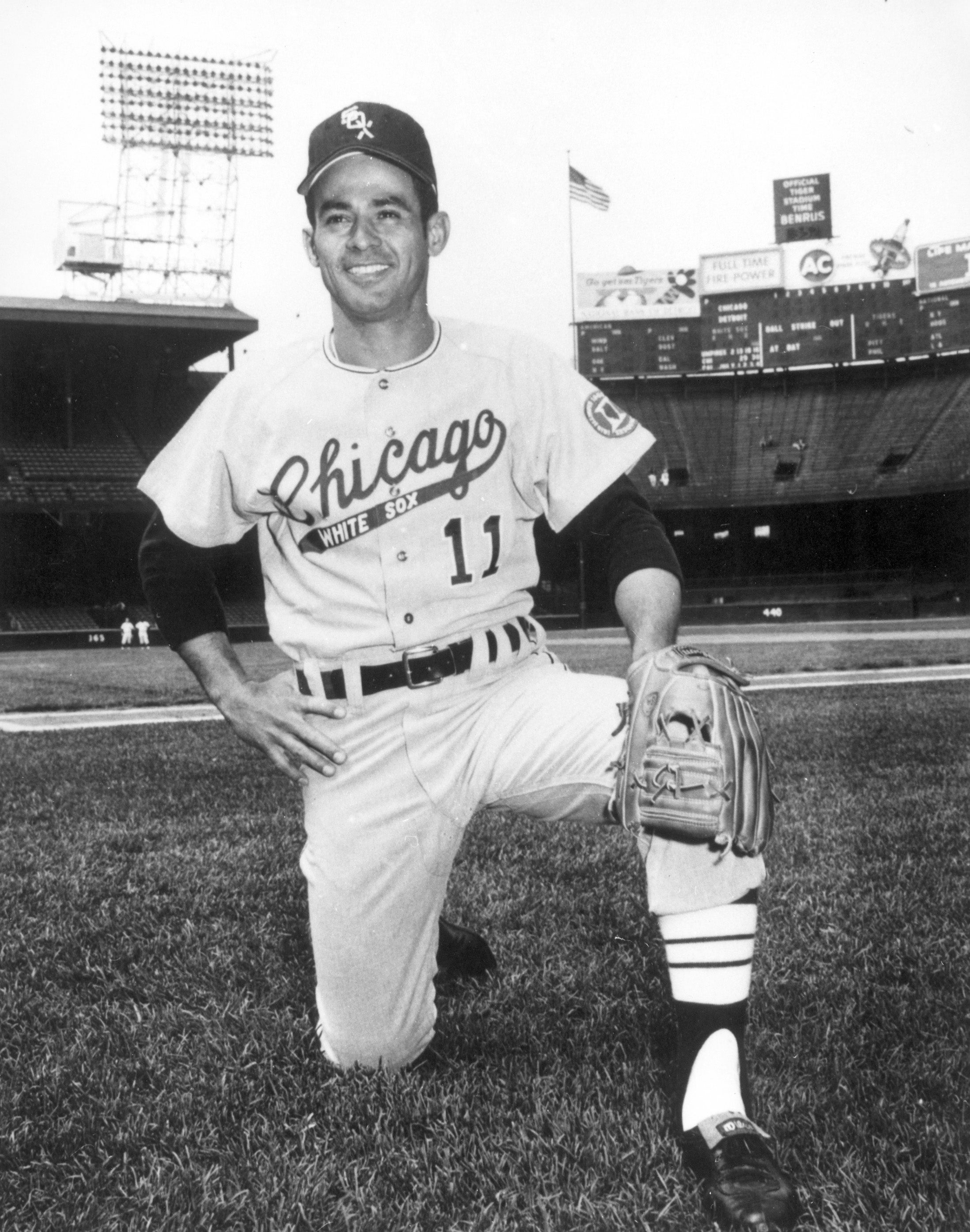
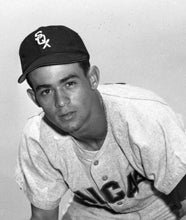
Johan Santana arrived in Cooperstown to celebrate the legacy of Hall of Famer Luis Aparicio, a fellow Venezuelan idolized by his countrymen.
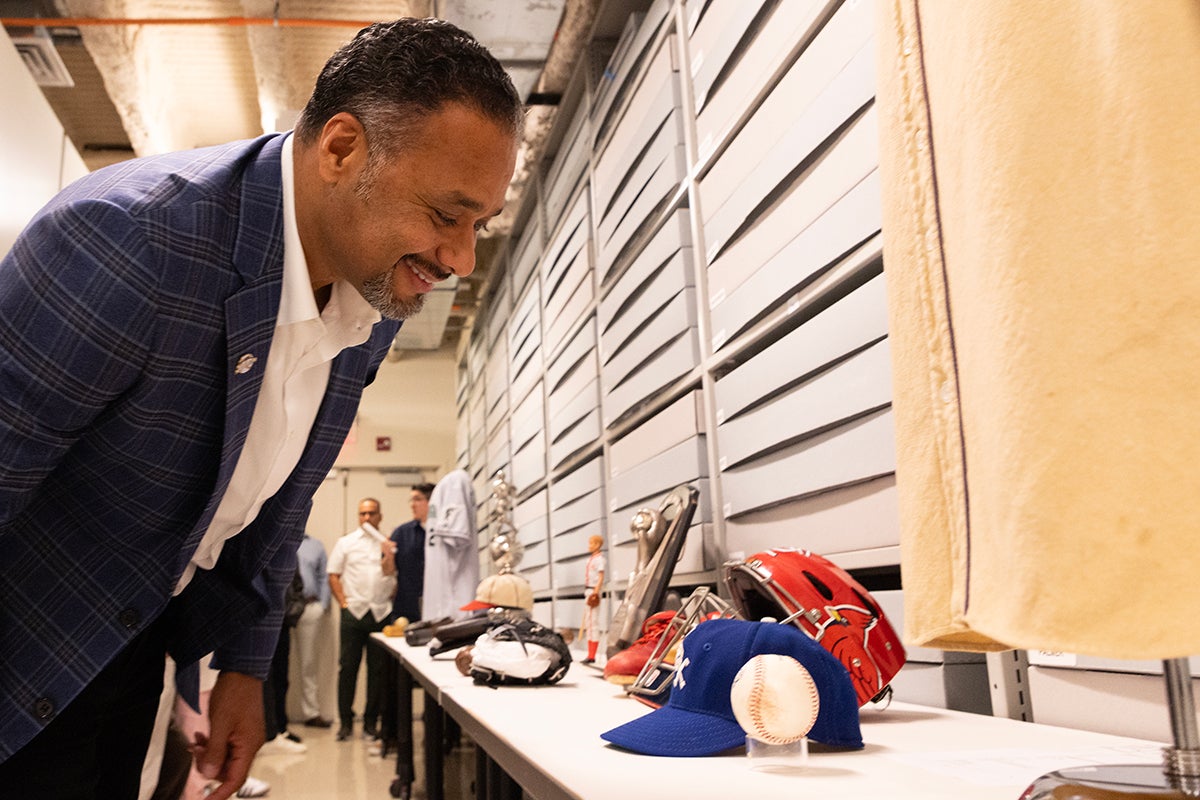
On Aug. 12, the 42nd anniversary of Aparicio’s induction into the National Baseball Hall of Fame, the longtime shortstop’s Luis Aparicio Award was displayed in the Museum. It’s presented annually to a Venezuelan player who is judged to have recorded the best individual performance in that year.
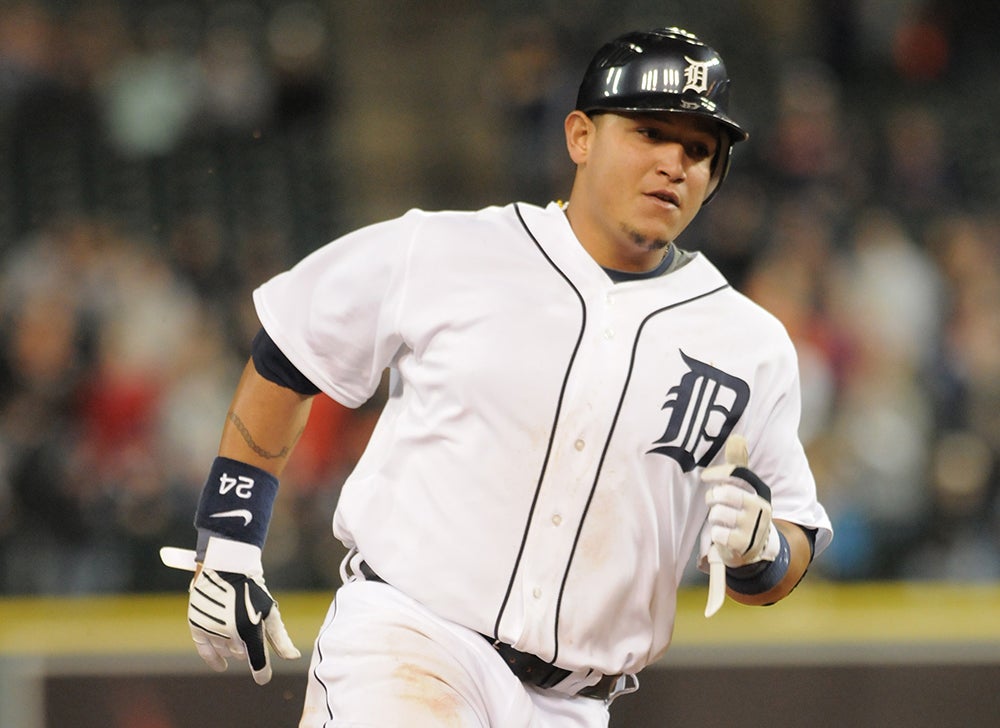
Although Aparicio, at 92 and the oldest living member of the Baseball Hall of Fame, was not able to attend the festivities, members of his family were present, as well as Santana – the award’s first recipient in 2004 who won it again in 2006. Others who’ve been honored multiple times over the years include Miguel Cabrera, Jose Altuve and Ronald Acuña Jr.
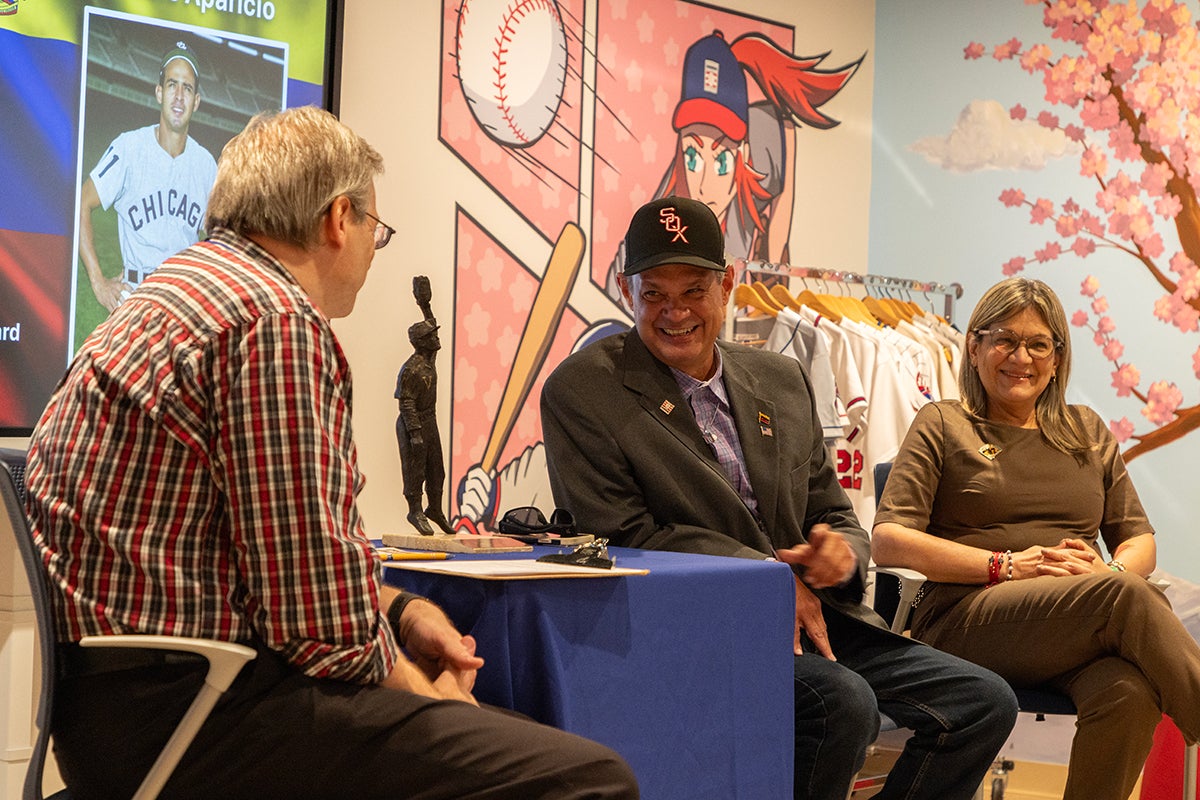
Santana, a southpaw known for his devastating changeup, spent a dozen seasons in the majors as a starting pitcher for the Minnesota Twins (2000–2007) and New York Mets (2008–2012). The four-time All-Star won two Cy Young Awards, pitched the first no-hitter in Mets history and was widely considered one of the best pitchers in baseball during his mid-2000s peak.
Santana, 47, who suffered a number of injuries during his Mets tenure, ended his career with a 139-78 record, leading his league in strikeouts and ERA three times apiece.
At a Voices of the Game event held at the Hall of Fame’s Bullpen Theater, Santana talked about his career, growing up in Venezuela, and his admiration of Aparicio, the only native of Venezuela elected to the Hall of Fame.
“I didn’t have a chance to actually watch him play, but what he means to the whole baseball world in our country is everything,” Santana said about Aparicio. “We are very passionate about the game in our country, and then when you’re passionate about our game, you love everything. You learn how to be one of the baseball citizens. And he’s the one that opened the doors for all of us. To be here today at the sanctuary of baseball, and understanding that he’s the only (Hall of Famer) from Venezuela, that tells you how difficult it is, but how important his presence is.”
Although the Aparicio Award was brand new when Santana captured it the first time, he remembers the occasion fondly.
“It meant everything because just to be considered the best player that year is an honor,” Santana said. “It’s the legacy that he left in the game. I took it very seriously and very important because I thought at the time that it was a great honor. There’s one thing nobody’s going to take away from me that I’m the first one ever to win it. That, for me, is very special.
“As a Venezuelan, you really want to go out there and perform and do your best to try to earn this award because it’s not given. You have to earn it. And then I had the opportunity to win it twice. For me, that’s very important.”
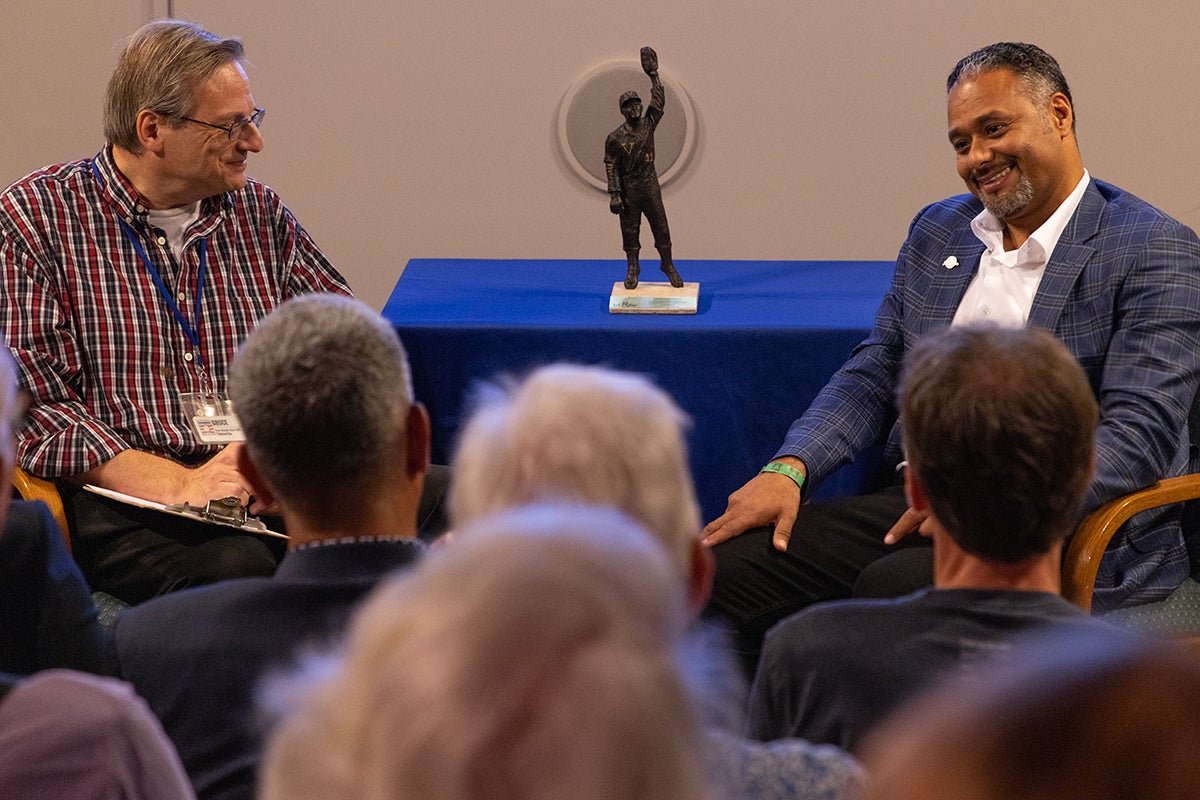
Arguably Santana’s most memorable game took place on June 1, 2012 – with the Mets against the visiting St. Louis Cardinals at Citi Field, when the southpaw tossed the first no-hitter in franchise history.
The 8-0 victory, in which Santana whiffed eight and walked five, took 134 pitches. After missing the entire 2011 season due to anterior capsule surgery on his left shoulder, he would pitch 10 more times that season before more injuries ended his career.
“I remember that day warming up and doing all my stuff. Nothing was there. Absolutely nothing. Everything was all over the place. It’s just that as the game goes, you make adjustments and everything started coming back,” Santana remembered. “That’s why you’ve got to trust all your pitches. You’ve got to trust your defense. And I remember as the innings were going by, it was happening. And as you go deeper in the game, in the sixth inning, and that’s when you start noticing that nobody wants to talk to you.
“I remember when manager Terry Collins asked me, ‘Johan, how you feel?’ I told him, ‘I’m fine. I’m fine. If something happens, you do your job, but I’m fine.’ So, I go back out there, and I remember him telling me, ‘You’re my hero.’ When he told me that, I was like, I cannot let him down. How could I? I have an opportunity to do something special. Not only for me, but for the entire organization. That was very important.”
Did Santana think the toll of so many pitches contributed to the subsequent arm troubles that curtailed his career?
“I was coming back from surgery, so I was supposed to throw about 125 to 150 innings for the season. But the Mets were right there in the race,” he said. “Me personally, I didn’t think about injuries, surgeries, or none of that stuff. So, blaming that game for the injuries, I don’t think so.
“But also, if that’s the price I have to pay, it worked, because I think it’s something that’ll last forever.”
Did Santana – whose lone year on the Baseball Writers’ Association of America Hall of Fame ballot took place in 2018 – experience any “what if” moments strolling through the Hall of Fame Plaque Gallery?
“It is always there, but I mean, unfortunately, those are things that I don’t control. In fact, the only thing I controlled was me when I was working and doing my stuff. Everything else is just around you,” Santana said. “Unfortunately, injuries took me out of the game, but every moment I won’t change for anything. I think every time I took the field, I gave everything I have, even when I didn’t have it. I gave everything because I loved the game and I had that commitment with the game and also with our fans.”
Bill Francis is the senior research and writing specialist at the National Baseball Hall of Fame and Museum