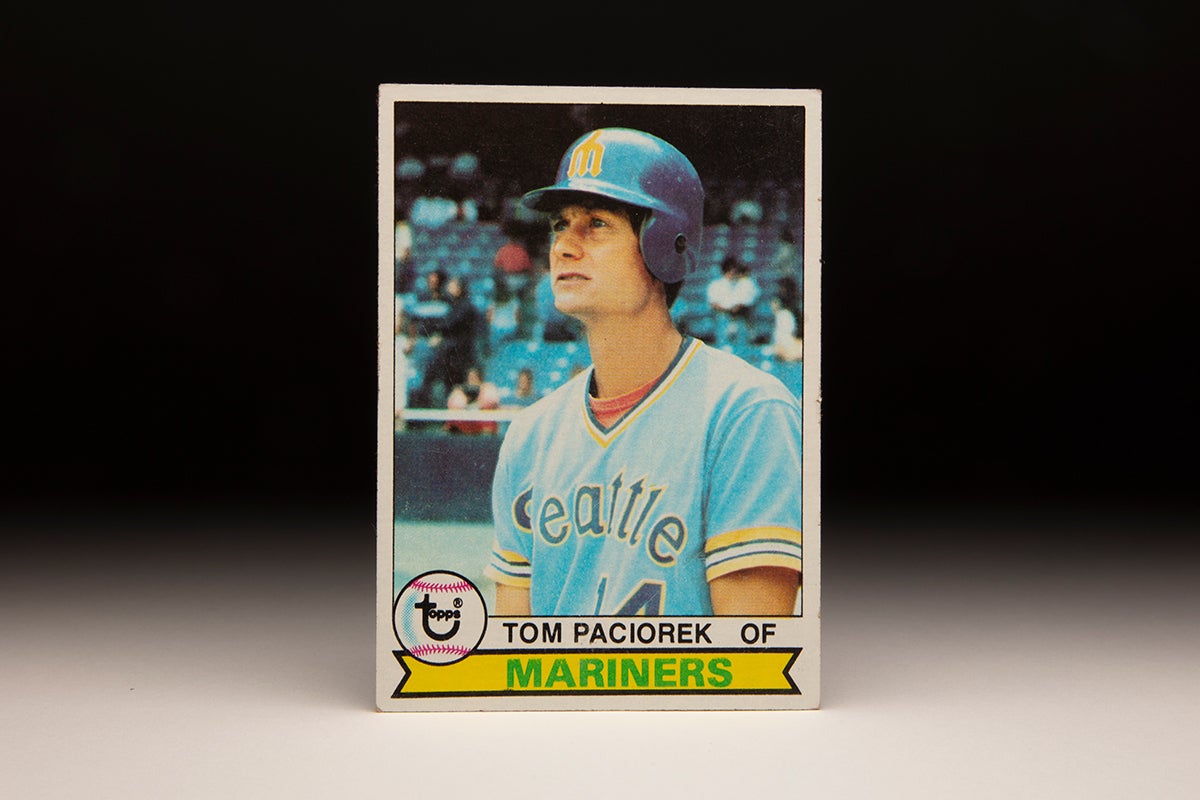
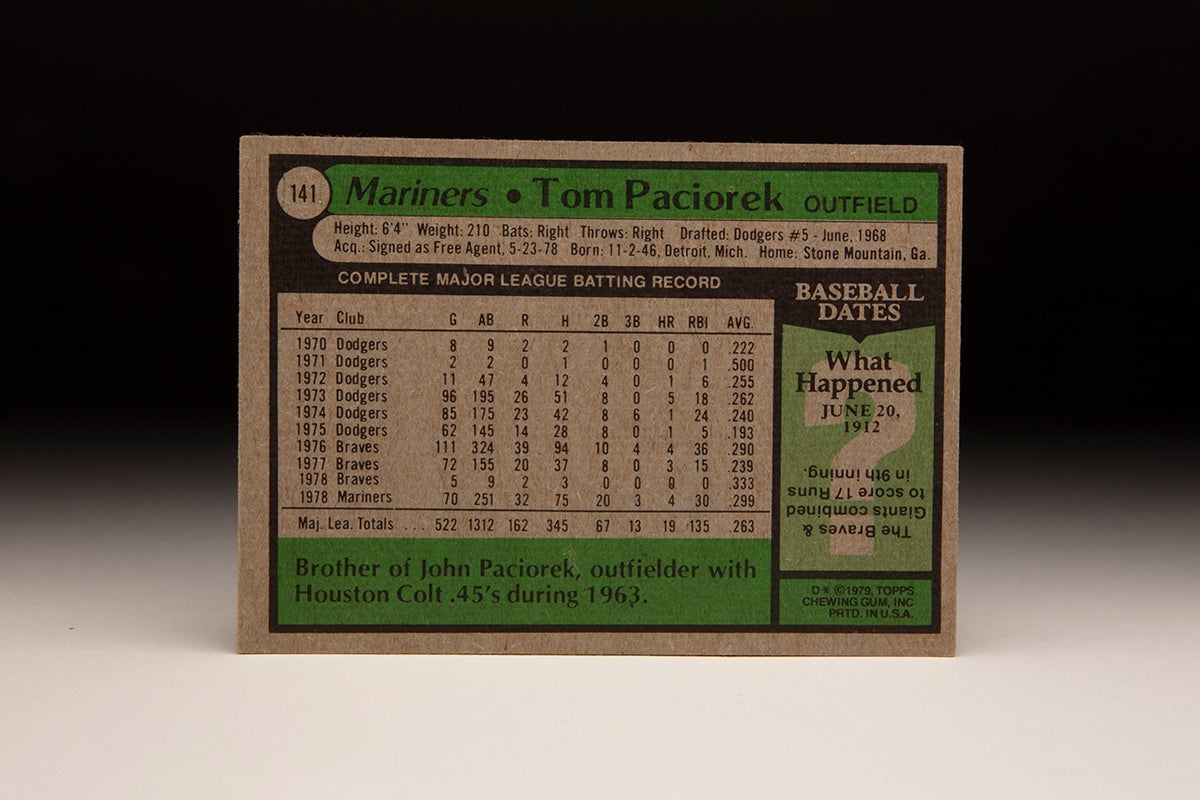
#CardCorner: 1979 Topps Tom Paciorek
Another in the long line of Dodgers prospects from the early 1970s, Tom Paciorek was well into his 30s before he became one of the game’s best bat-to-ball hitters.
Those skills kept him in the majors for 18 seasons, and his broadcasting talents kept him around stadiums for another two decades as he worked with some of the most decorated announcers in the game.
Born Thomas Marian Paciorek on Nov. 2, 1946, in Detroit, Paciorek grew up in a sport-oriented family as one of eight children. Two of his brothers, John and Jim, played in the big leagues – with John famously going 3-for-3 in his only game for the Houston Colt .45s in 1963 while Jim played 48 games with the Brewers in 1987.
But while a back injury derailed John’s career, Tom was a two-sport star at St. Ladislaus High School in Hamtramck, Mich. He had led the Hamtramck team to the Pony League World Series championship in 1961 and then continued to excel in high school, earning a football scholarship to the University of Houston while also playing baseball for the Cougars.
Paciorek helped Houston advance to the College World Series in Omaha, Neb., in 1967 – where the Cougars were national runners-up behind Arizona State – while earning All-American honors that same year, batting .435. He repeated his All-American honors in 1968 when he hit .364 to finish his three-year career with the Cougars with a .375 mark.
In 1968, Paciorek, a safety on the football field, was selected in the ninth round of the NFL Draft by the Dolphins – the same draft that produced Larry Csonka, Jim Kiick and Dick Anderson, all of whom would star for the 1972-73 teams that won Super Bowl titles. Paciorek, however, went a different route – signing with the Dodgers after Los Angeles took him in the fifth round of the 1968 MLB Draft.
“I had sort of felt that football was my sport,” the 6-foot-4, 215-pound Paciorek told the Houston Post. “I hurt my knee before the opener in my senior year, then hurt some muscles in my leg later. I believe that kind of cooled off the pros on me as a prospect.
“Miami made me an offer, but I signed with the Dodgers simply because they made me a better one. I have no regrets. (Baseball has) been good to me.”
Sent to rookie ball in Ogden, Utah, Paciorek torched Pioneer League to the tune of a .386 batting average in 29 games before earning a promotion to Class A Bakersfield of the California League. With Ogden, Paciorek led the team in batting average on a squad that also included future big leaguers Bill Buckner, Steve Garvey and Bobby Valentine.
Paciorek returned to Bakersfield in 1969, batting .318 over 91 games. The Dodgers added him to their 40-man roster following the season and invited him to Spring Training in 1970. He was given uniform No. 53, the former number of Hall of Famer Don Drysdale, who had retired in 1968.
Paciorek impressed the Dodgers enough to earn a promotion all the way to Triple-A Spokane, where he hit .326 with 36 doubles, 12 triples, 17 homers and 101 RBI (becoming the first Spokane player to record 100 RBI in a decade) in 146 games. On Sept. 12, Paciorek made his big league debut, starting in right field and going 1-for-4 at the plate against the Giants. He played in eight total games as the season wound down, recording two hits in nine at-bats.
Paciorek – who had already been tagged with his enduring nickname, Wimpy, by minor league manager Tom Lasorda for his affinity for hamburgers – faced a massive uphill battle to make the Dodgers’ roster in 1971 as Los Angeles’ outfield featured veterans Willie Crawford, Willie Davis and Manny Mota as well as newly acquired Dick Allen – plus other prospects like Buckner, Von Joshua and Bill Russell.
“We won’t keep a youngster of Paciorek’s promise up here just for part-time playing,” Dodgers manager Walter Alston told the Houston Post. “We want him to play every day.”
Assigned to Triple-A Spokane once again, Paciorek virtually duplicated his 1970 season – batting .305 with 31 doubles, 14 triples (best in the Pacific Coast League), 15 homers and 105 RBI. In September, he appeared in two games with the Dodgers.
Then in 1972, the Dodgers moved their Triple-A team to Albuquerque – and Paciorek went to New Mexico as well. He increased his power output with 27 home runs while batting .307 with 125 runs scored and 107 RBI to earn Sporting News Minor League Player of the Year honors. He made a third-straight September cameo for the Dodgers, batting .255 in 11 games while hitting his first big league home run on the season’s final day against Atlanta’s Larry Jaster.
Now out of minor league options, Paciorek knew the 1973 season would determine his big league fate.
“It was now or never,” Paciorek told the Detroit Free Press about making the Dodgers’ Opening Day roster in 1973.
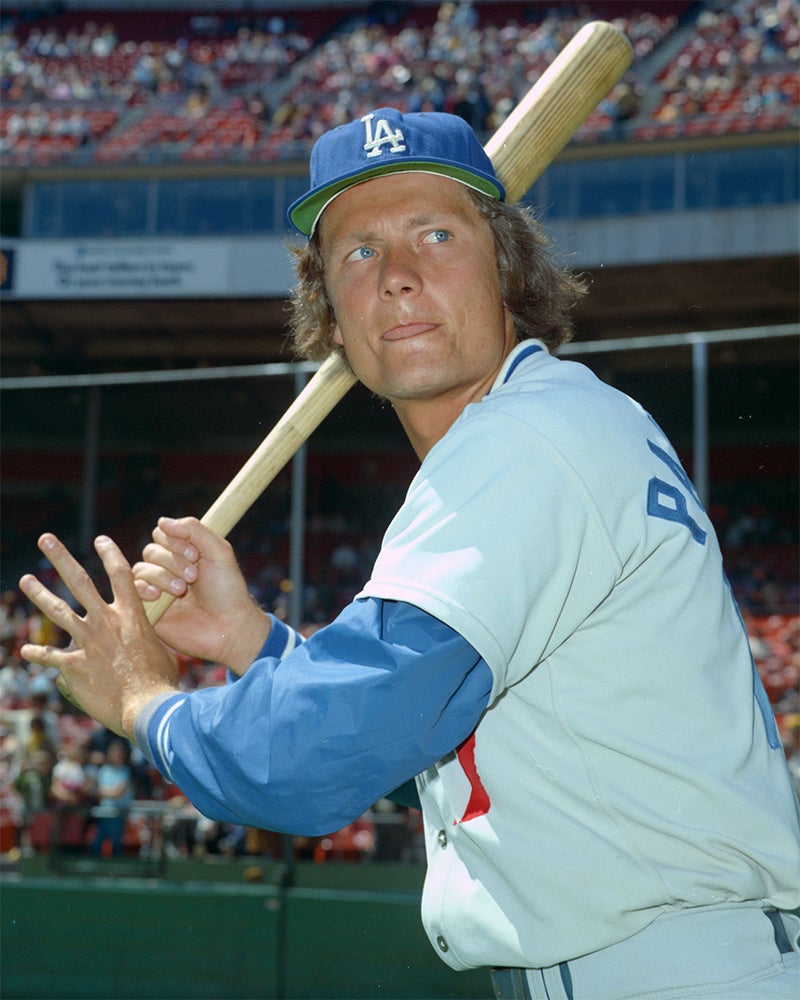
Alston and the Dodgers kept Paciorek as a bench bat and reserve outfielder, and he appeared in 96 games that year – batting .262 with five home runs and 18 RBI. The Dodgers had moved Buckner to first base to clear out some of the outfield logjam but still had Crawford, Davis, Joshua and Mota on the roster along with Paciorek. At one point in 1973, a frustrated Paciorek requested to be traded.
Following the season, the outfield became more crowded when Los Angeles acquired All-Star Jim Wynn from the Astros on Dec. 6. The Dodgers had made room for Wynn by trading Davis to the Expos the day before while also trading for Tommie Agee on the same day. And though Agee was released before the end of Spring Training, the moves did Paciorek no good when Buckner returned to the outfield with the emergence of Steve Garvey at first base in 1974.
“I would rather make it with this club because the Dodgers have been wonderful to me,” Paciorek told the Houston Post. “(But) I feel if I don’t make it here, then I’ll get a chance with another team.”
Paciorek reprised his bench role in 1974, batting .240 with a homer and 24 RBI in 85 games. His one home run was a pinch-hit, three-run blast on April 23 that walked off the Phillies in a 5-3 Los Angeles win.
It was one of 102 victories for the Dodgers during the regular season that year as L.A. won its first National League West title.
Paciorek appeared in one game in the NLCS vs. the Pirates, recording a single in his only at-bat in Game 3 as the Dodgers won the series in four games. Then in the World Series against the Athletics, Paciorek appeared once as a pinch-runner and twice as a pinch-hitter, doubling in Game 5 off Vida Blue to spark a two-run rally as the Dodgers tied the game in the sixth inning. But Oakland took the lead on Joe Rudi’s home run off Mike Marshall in the seventh and went on to win the game 3-2 to capture its third straight Fall Classic title.
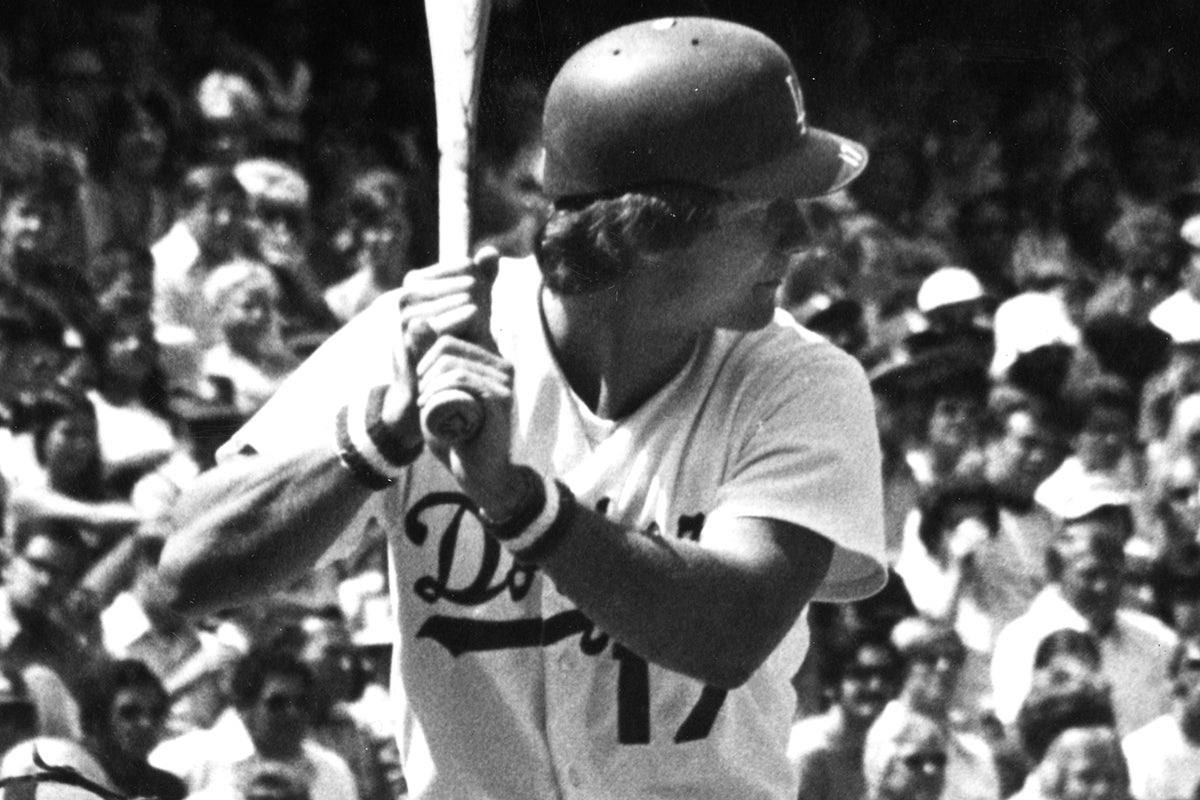
By the time the 1975 season arrived, Paciorek understood that he would never be a regular with the Dodgers.
“I’ve learned to accept the (bench) role through maturity,” Paciorek told the Anaheim Bulletin during the spring of 1975. “And I am fully aware that the only way I can expect to play regularly is if someone gets hurt.
“I’m resigned to the fact that I’m not going to be in the Hall of Fame, but I’m satisfied with making a good living and I want to stay in Southern California.”
Paciorek, however, believed that eventually his time would come.
“I’m the best outfielder on the club,” Paciorek told the Bulletin. “I have more range and a better arm than anyone else – and I’m in better shape than anyone.
“I have to get a break one of these days. Honestly, I can say I deserve one.”
The break finally came after a 1975 season where Paciorek hit .193 in 62 games. On Nov. 17, 1975, the Dodgers sent Paciorek, Lee Lacy, Jerry Royster and Wynn to the Braves in exchange for Dusty Baker and Ed Goodson. The deal was said to have been first broached three months earlier.
Paciorek made his first Opening Day start in 1976, going 1-for-4 as the Braves’ right fielder on April 9 against the Padres. He did not start again for another two-plus weeks as Braves manager Dave Bristol used Rowland Office, Ken Henderson and Dave May in the outfield with Darrell Evans at first base. But Paciorek continued to play off the bench and began to see regular starts at first base, right field and left field beginning in June.
“When I was traded, I knew I would have the opportunity to play more and get a chance to show what I could do,” Paciorek told the Palm Beach (Fla.) Post at the end of Spring Training. “So I was happy with the trade.”
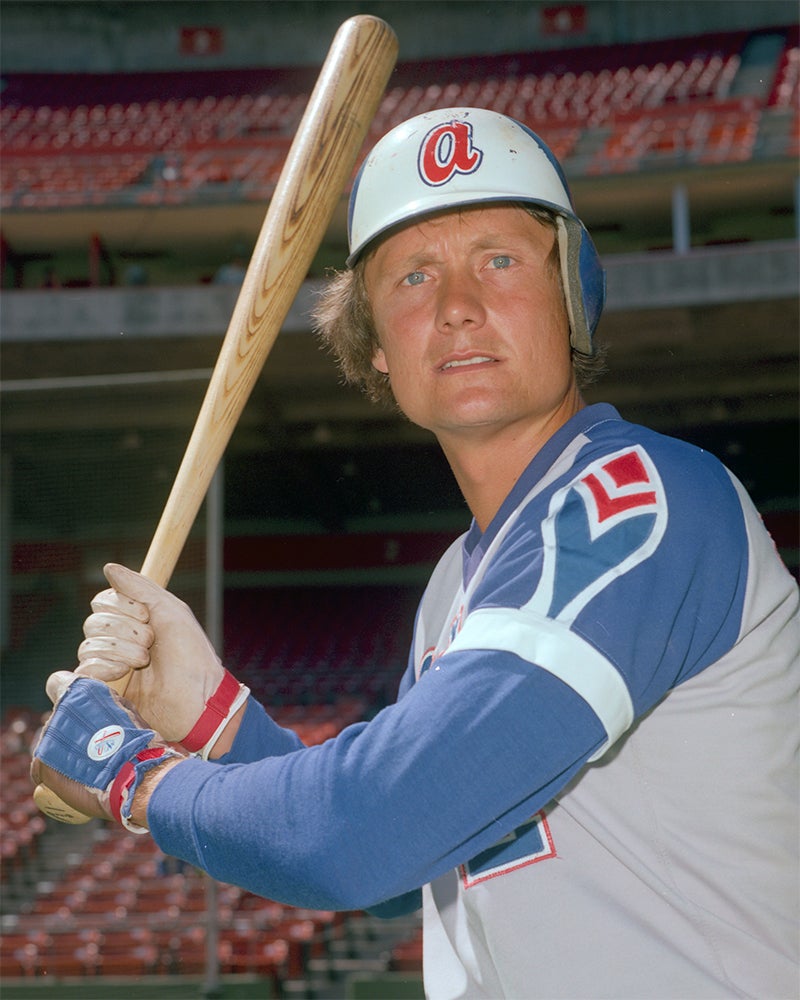
Paciorek finished the season hitting .290 with four home runs and 36 RBI in 111 games. But things went south for Paciorek in 1977 when he hit just .239 in 72 games for a Braves team that finished with 101 losses.
On March 30, 1978, the Braves released Paciorek before re-signing him a week later with the intention of sending him to Triple-A Richmond as a player/coach. Recalled in late April, Paciorek appeared in five games before the Braves tried to send him back to Richmond. This time, Paciorek refused and was released again.
“I didn’t want to go back to Richmond because I didn’t feel I had much future in the Braves’ organization,” Paciorek told the Spokane (Wash.) Chronicle.
At 31 years old, Paciorek signed with the Mariners on May 31. He reported to Triple-A San Jose, where he hit .281 in 16 games before Seattle called him up in June.
“I’ll give it this year and Spring Training (of 1979),” Paciorek told the Chronicle while he was with San Jose. “Then if I’m not in the big leagues, I’ll call it quits.”
Finally with the right team at the right time, Paciorek strung together an 11-game hitting streak starting on July 2. He played mostly in left field for the rest of the season, batting .299 in 70 games with Seattle. A free agent after the season, Paciorek was selected by the Dodgers with their first pick in the free agent re-entry draft. But Paciorek opted to re-sign with Seattle.
In 1979, he started on Opening Day in left field and began platooning with lefty hitters Joe Simpson and Dan Meyer. In 103 games that year, Paciorek hit .287 with six homers and 42 RBI. It was the start of a stretch that would see Paciorek became one of the game’s right-handed hitting specialists as he compiled a career batting average of .296 against lefties.
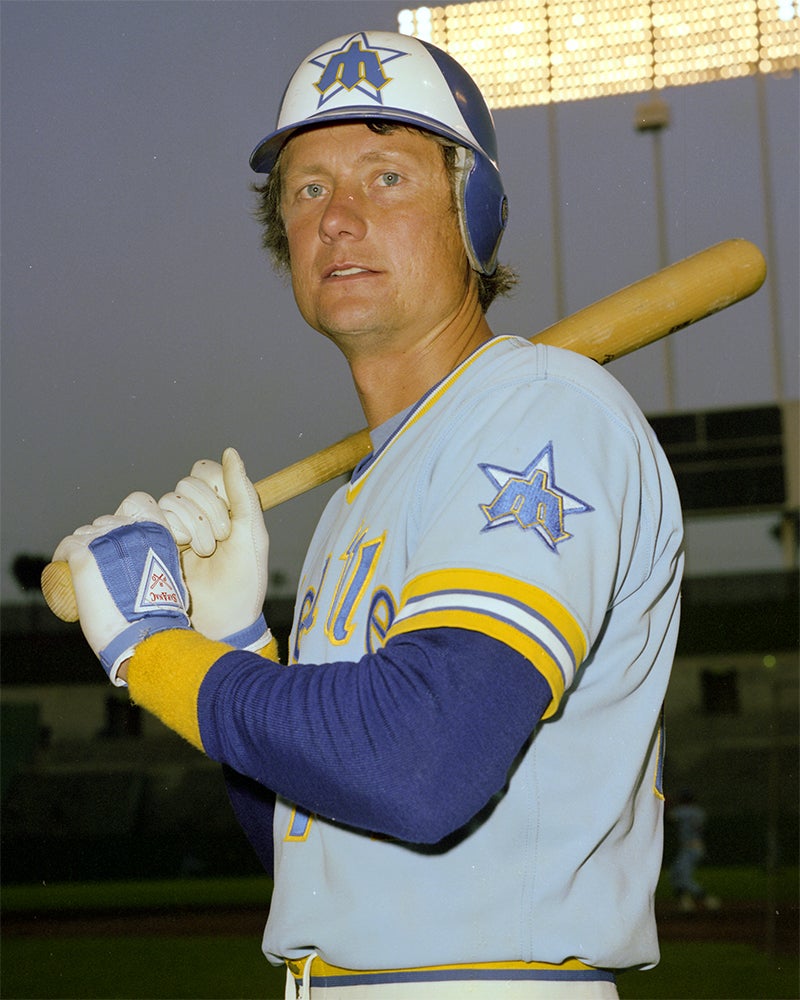
The start of the 1980 season, however, saw Paciorek go 0-for-12 in his first 13 games. He quickly decided a change in his plate approach was in order and adopted an open stance, with his left leg pointing toward third base and his bat held low like Rod Carew.
The change improved his contact rate, and by the middle of June his .350 batting average trailed only Paul Molitor among big league hitters.
“I was oh-for-April, so I decided a change was inevitable or I’d be in the unemployment line,” the ever-quotable Paciorek told United Press International. “My stance is completely different now than it was when the season started. I’ve opened it up more and I’m crouching more so I can see the ball better, particularly the breaking ball. I’m also choking up on the bat, which I didn’t do before.”
Paciorek finished the 1980 season batting .273 with 15 homers and 53 RBI in 126 games – counting-number totals that were all career-bests to that point. It set the stage for his 1981 campaign, where he hit .326 (second in the American League) with 28 doubles, 14 homers and 66 RBI in 104 games during a strike-shortened season.
Playing every day in the outfield (85 games in left field, 14 in right field and 11 in center), Paciorek was named to the All-Star Game and singled off Tom Seaver in his only at-bat.
“This All-Star thing is something I never thought possible, especially in my waning baseball days,” the 34-year-old Paciorek told the Associated Press. “This is the first time 10 years that I began the season as a regular.”
But while Paciorek realized the end of his career was approaching, he also realized his newfound value. After the Mariners rebuffed Paciorek’s offer of a two-year, $260,000 extension prior to the 1981 season, Paciorek revised his stance and asked for a three-year deal worth $1 million in the final days of the campaign.
When the Mariners refused, Paciorek asked for a trade. On Dec. 11, 1981, Seattle sent Paciorek to the White Sox in exchange for Rod Allen, Todd Cruz and Jim Essian.
“The only thing I regret about coming to the White Sox,” Paciorek told a hot stove crowd at Comiskey Park in January 1982, “is that I’ll have more gray hair than the manager.”
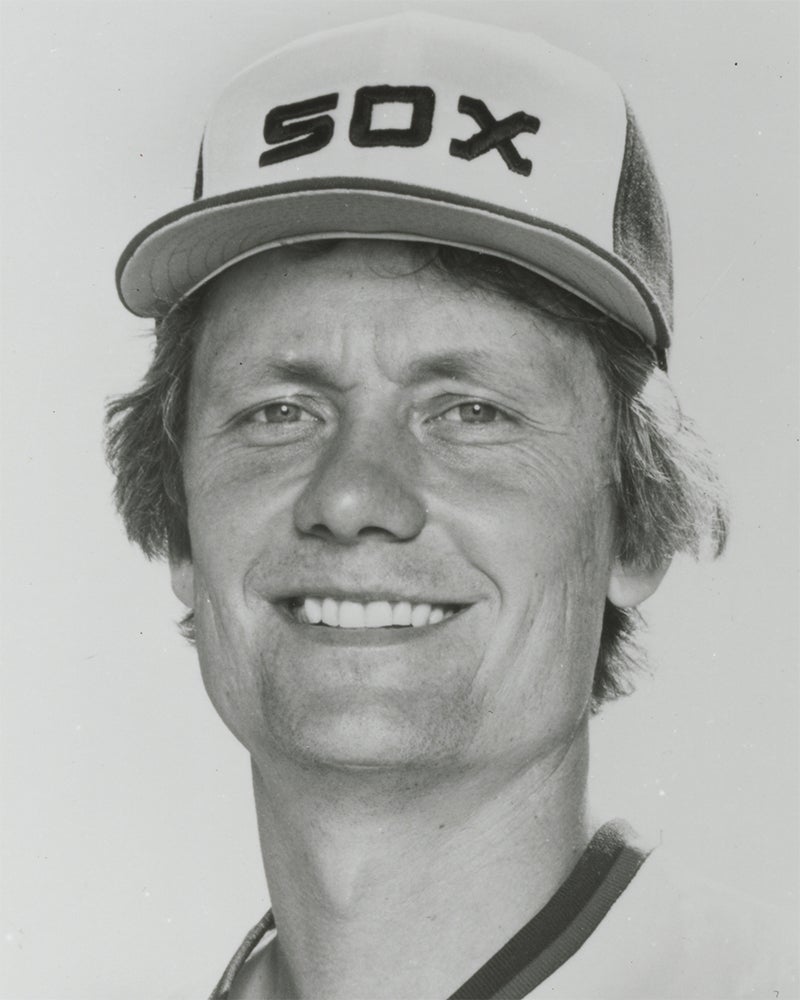
The 35-year-old Paciorek was indeed grayer than 37-year-old Tony La Russa. But his acquisition did cause La Russa to have to make a tough decision as incumbent first baseman Mike Squires was the AL Gold Glove Award winner at first base in 1981. Paciorek, however, started at first on Opening Day in 1982 and played there for most of the season save for a couple stints on the disabled list.
“I don’t think the White Sox are counting on me to come up with 40 or 50 home runs,” Paciorek told the South Bend (Ind.) Tribune in 1982. “They got me to provide some punch – doubles or a single with men on base. Whatever, I’m here to produce for them. I don’t care where I play.”
Paciorek finished the season batting .312 with 27 doubles, 11 home runs and 55 RBI in 104 games. But toward the end of the season, first base prospect Greg Walker made his debut with the White Sox. Combined with the emergence of Ron Kittle in left field, Walker’s presence would cut into Paciorek’s appearances in 1983.
Though the White Sox’s success in ’83 helped soothe Paciorek, he pleaded with La Russa for more playing time.
“I don’t accept anything,” Paciorek told the Detroit Free Press in August of 1983, “unless I’m playing.”
Often platooning with the left-handed hitting Walker, Paciorek hit .307 with 32 doubles, nine homers and 63 RBI in 115 games in 1983 as the White Sox rolled to the AL West title. Playing in the postseason for the first time since 1974, Paciorek started all four games in the ALCS vs. Baltimore: Two in left field and two at first base. He batted .250 with an RBI – driving in the first run of the series with a third-inning single in Game 1 as the White Sox defeated the Orioles 2-1. He later scored what would become the winning run in the seventh after drawing a leadoff walk, advancing to third on an error and scoring on a double play ball hit by Kittle.
But the Orioles won the next three games to deny Paciorek another chance to play in the World Series.
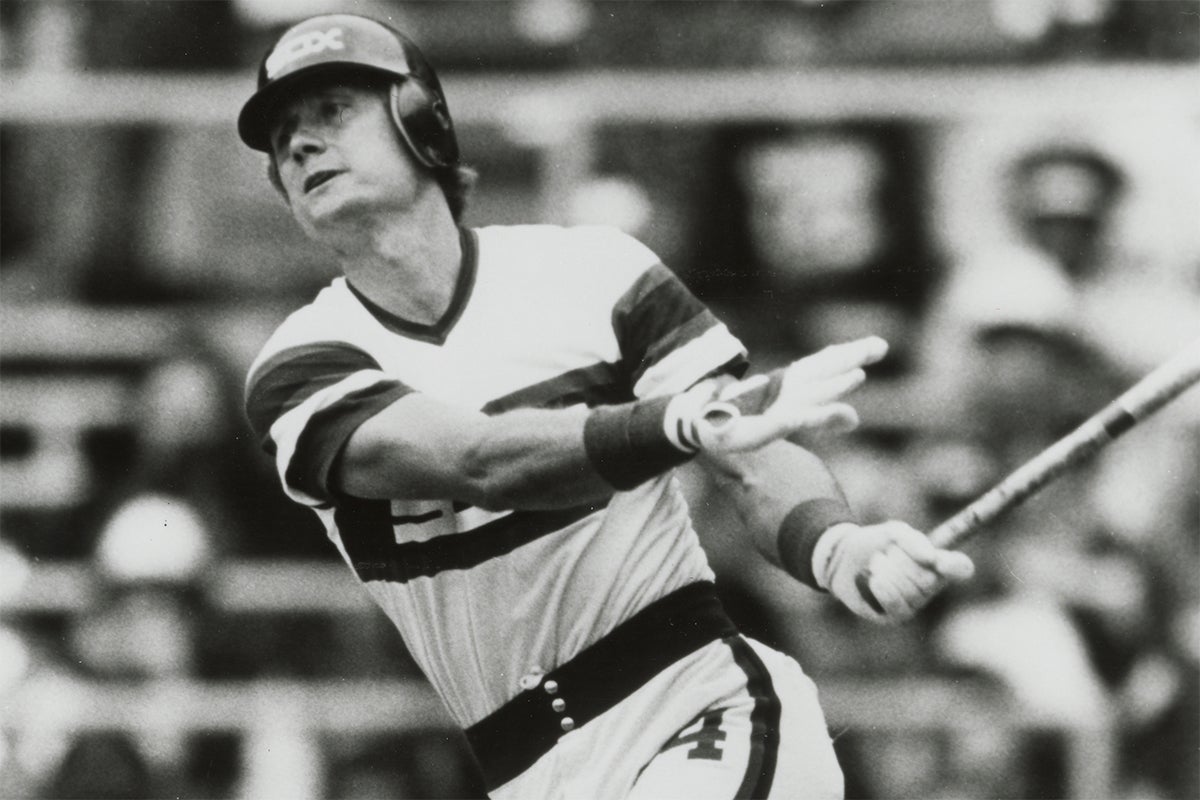
In 1984, Walker saw more and more playing time as the 37-year-old Paciorek transitioned back into a bench role. Paciorek hit .256 with 21 doubles in 111 games as the White Sox fell to fifth place in the AL West. But Paciorek also made history that year: On May 8, he entered Chicago’s game against the Brewers in the fourth inning in place of Kittle in left field. The game ended up lasting an AL-record 25 innings, and Paciorek went 5-for-9 at the plate. Among non-starters in any game in history, only the Athletics’ Danny Murphy, who went 6-for-6 on July 8, 1902, vs. Boston, had as many or more hits than Paciorek.
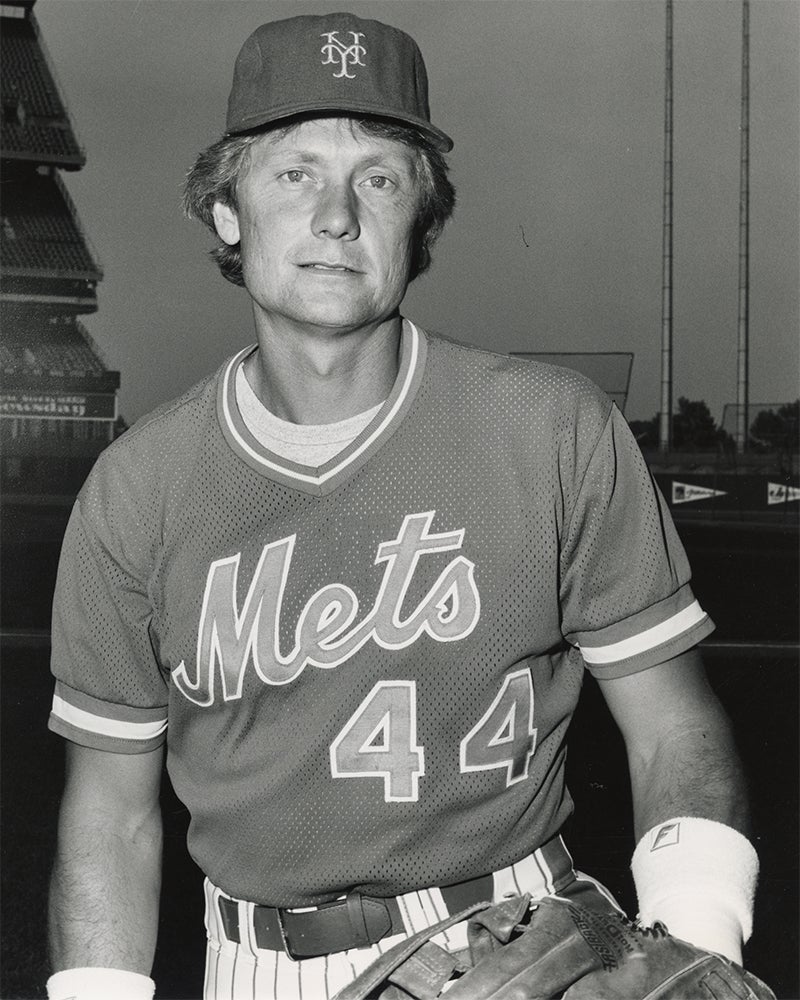
In 1985, Paciorek was hitting .246 with just two extra base hits (both doubles) and nine RBI through 46 games when the White Sox designated him for assignment on July 12. Four days later, Chicago traded Paciorek to the Mets in exchange for Dave Cochrane.
Paciorek hit .284 for the Mets over 46 games, helping New York down the stretch as the Mets won 98 games but fell short of catching St. Louis for the National League East title.
A free agent once again, Paciorek signed a one-year deal with the Rangers worth a reported $200,000 on Dec. 10, 1985. The Red Sox reportedly offered Paciorek more money, but Paciorek chose to reunite with his longtime friend Bobby Valentine, who was the Rangers’ manager.
“I really felt that money was not a major consideration,” Paciorek told the Fort Worth Star-Telegram. “After I studied the advantages of playing in (Boston and Texas), I thought I knew what I wanted to do. Talking to Bobby (the day before signing) was the last straw. That was the thing that convinced me that Texas was the right place.”
As a utility player in 1986, Paciorek hit .286 with four home runs and 22 RBI in 88 games for the Rangers. He chose not to file for free agency (as was his right) after the season, instead agreeing to another one-year deal with Texas worth $235,000.
But injuries limited Paciorek to just 27 games in 1987. He homered in each of his last two contests on Oct. 3 and Oct. 4 – knowing that his career was coming to an end.
“I’m 90 percent sure I won’t play (in 1988),” Paciorek told the Star-Telegram. “Twenty years of this stuff is probably enough.”
Paciorek did retire – but wasn’t away from baseball for long. On Dec. 15, the White Sox announced that Paciorek would team up with John Rooney on the team’s television broadcasts for 1988. He was soon paired with Ken Harrelson and stayed with the White Sox through 1999 before calling games for the Tigers (2000), Braves (2001-05) and Nationals (2006).
The affable Paciorek began calling games in 1984 and again in 1987 while on the disabled list with the White Sox and Rangers, respectively. He was always candid on the air – and his willingness to open up to his audience was demonstrated in the last half of his broadcasting career.
In 2002, Paciorek reported that he had been molested by a priest over a period of years in his teens when he was a student at St. Ladislaus High School. Some of his brothers made similar claims.
“When you’re a kid and you’re not able to articulate, who’s going to believe you,” Tom Paciorek told the Detroit Free Press. “The church back then was so powerful, there’s nothing that a kid could do.”
In 18 seasons as a big league player, Paciorek hit .282 with 1,162 hits, 232 doubles, 86 home runs and 503 RBI. And though he never approached his minor league hitting level in the majors, Paciorek savored every day he spent at baseball’s highest level.
“The way I look at it, baseball is a great way of making a living,” Paciorek told UPI in 1980. “I think I’ve had as much fun in it as anyone who ever played the game, you know, goofing around and all that. If it wasn’t for all the fun, I don’t think I’d still be in it.”
Craig Muder is the director of communications for the National Baseball Hall of Fame and Museum