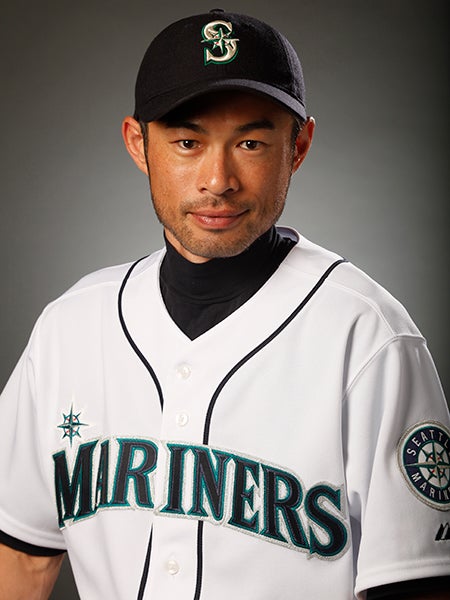
#CardCorner: 2025 Topps Now Ichiro Suzuki
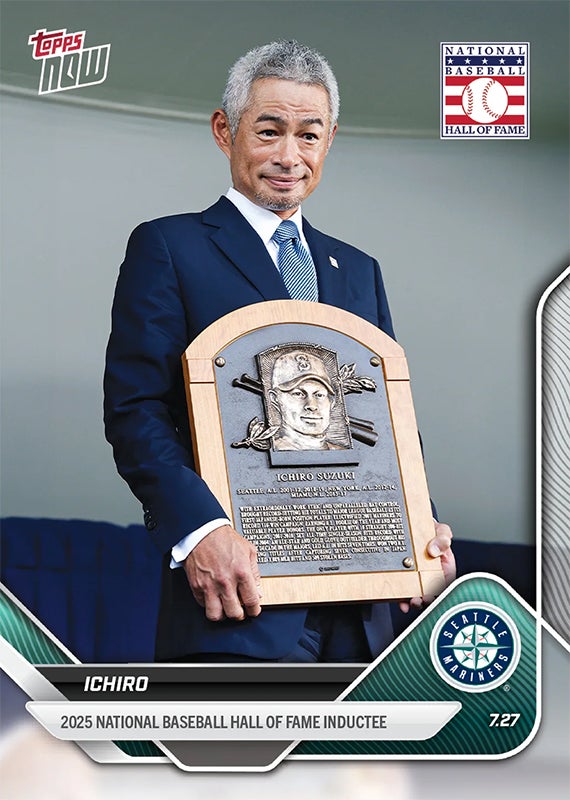
Ichiro Suzuki is one of the most celebrated players in baseball history. During his time in Nippon Professional Baseball, he won seven consecutive batting titles and Gold Glove Awards. Excelling in hitting, speed and defense, he stands among the most outstanding players in the history of the sport, and his popularity remains immense even after his retirement.
Ichiro was born on Oct. 22, 1973, in Aichi Prefecture, Japan. He began playing baseball at the age of three, and by his elementary school years he was both the ace pitcher and cleanup hitter, leading his team to national tournaments.
He and his father would visit a local batting cage called “Airport Batting” almost every day, honing his batting skills. His father’s guidance – “Don’t worry about the money and never swing at a bad pitch” – helped develop the exceptional plate discipline that would become one of Ichiro’s trademarks. “Airport Batting” has since become a go-to site for Ichiro fans and was chosen as one of three Ichiro-related locations commemorated when his National Baseball Hall of Fame election was announced.
In junior high school, Ichiro played as both the ace pitcher and a middle-of-the-order hitter for a nationally competitive team. Aiming for an appearance at Koshien Stadium where the national high school championship is held every spring and summer, and a career in NPB in the future, he entered Aikodai Meiden High School, a high school with one of Japan’s top baseball programs.
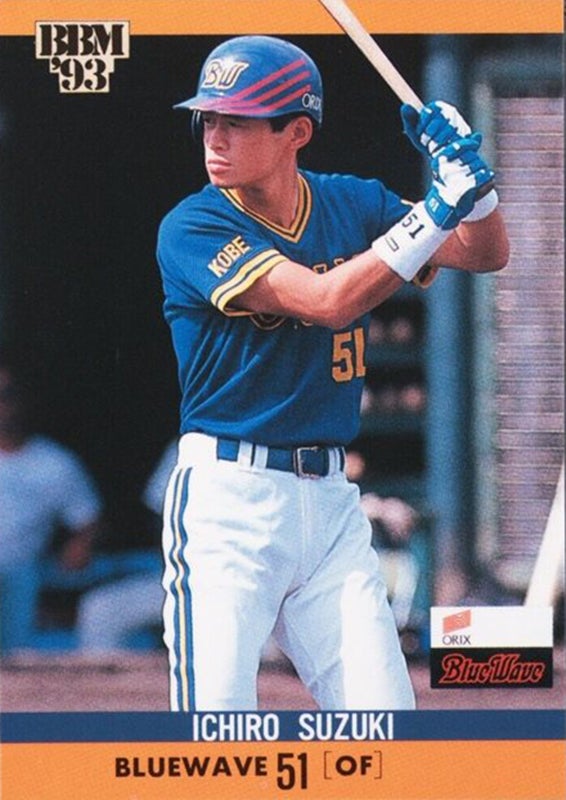
As a high school freshman, Ichiro immediately earned a starting spot on the roster and also drew high praise as a pitcher. However, a traffic accident during his commute affected his pitching mechanics, forcing him to give up a career on the mound. Still, he finished his high school career with 269 hits in 536 at-bats, a .502 batting average, and batted over .600 in the regional tournament of his final year of high school. His performance was so extraordinary that legendary coach Go Nakamura dubbed him “The Alien.”
Ichiro later said that overcoming the hardships of dormitory life during those years helped him face challenges throughout his baseball career. Around this time, he also met Hideki Matsui – who would later play Major League Baseball during the same era – and the two often fondly recall an encounter in the dormitory bathhouse during a high school training camp.
After graduation, Ichiro hoped to join his hometown team, the Chunichi Dragons. However, the team’s scouting of Ichiro was not favorable. It was Orix BlueWave’s scout Katsutoshi Miwata who recognized Ichiro’s talent, recommending the team to draft Ichiro. The BlueWave selected him in the fourth round, marking the start of his professional career of “Ichiro Suzuki.”
Ichiro began adapting to professional baseball in his first year quickly, winning the Western League (a NPB minor league) batting title with a .366 average. In the Junior All-Star Game for top prospects, he hit a decisive pinch-hit home run to earn MVP honors. Despite making his big stage debut, his unique “pendulum” batting motion was not yet embraced by team management, and he did not secure a permanent spot.
In 1993, Ichiro hit his first NPB home run off Hideo Nomo, later thanking him at his Hall of Fame press conference: “Thank you, Nomo-san.” Nomo’s stoic style and being the pioneer of moving to MLB would later heavily influence Ichiro’s own career path. That year, Ichiro’s swing mechanics improved, and he batted .371 in the Western League. In the offseason, he excelled in the Hawaii Winter League as well, winning MVP honors.
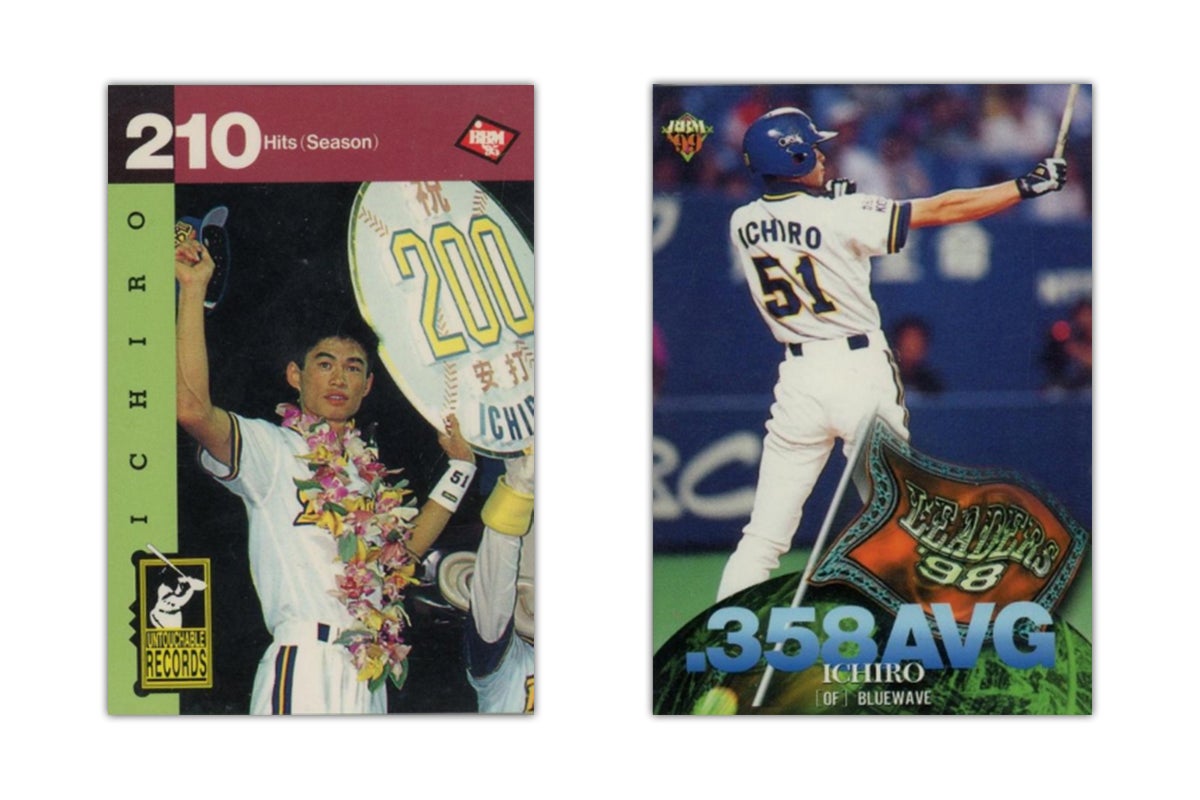
In 1994, Ichiro’s career took a major turn when Akira Ogi – whom Ichiro would later call “a man I can never thank enough”– became the BlueWave’s manager. That same year, the single-name “Ichiro” debuted on the lineup card. Ichiro set a new Japanese single-season hit record with 210 hits, batted .385 and swept awards such as MVP, batting title, most hits, Best Nine and Golden Glove, among others. Ichiro would later say, “Baseball was only purely fun until then,” reflecting how he had become the face of the league while constantly carrying expectations from then on.
In 1995, following the devastating Great Hanshin-Awaji Earthquake that directly struck Kobe, the team entered the season under the slogan “Ganbarou KOBE” (“Let’s keep going, Kobe”). Ichiro responded with another MVP season, achieving the highest batting average, RBI, stolen bases, hits, OBP, Best Nine and Golden Glove – leading Orix to a pennant while lifting the spirits of his second hometown.
In 1996, Ichiro delivered one of the most famous moments in NPB history with a pennant-clinching walk-off hit. One of Ichiro’s exceedingly rare moments showing his raw emotions, leaping with his fist above his head, made front-page headlines the very next morning. That year, he also excelled in the Japan Series, winning the Outstanding Player Award and helping Orix claim its first championship in 19 years. Another unforgettable moment came in the All-Star Game, when he took the mound for the first time as a professional baseball player, jogging in from right field with a smile like his childhood days playing baseball.
In 1997, Ichiro set a record with 216 consecutive plate appearances without a strikeout, proving his exceptional bat control and plate discipline. He won both the batting title and most hits for the fourth straight year. In 1998, he became the first player in NPB history to win five consecutive batting titles. Selected for the MLB–NPB exhibition series that offseason, he was named the series’ most outstanding player, further fueling his MLB ambitions.
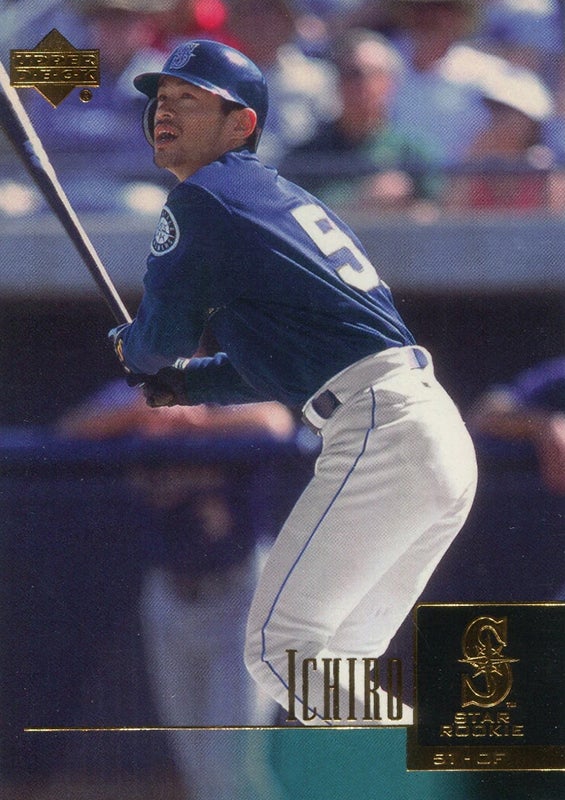
In 1999, Ichiro participated as an invite player for the Seattle Mariners’ spring camp for two weeks, the team with which he would eventually start his MLB career. During the same season, Ichiro reached 1,000 career hits in just 757 games, a never-before-seen record-breaking pace. Despite missing the final month of the season after being hit by a pitch in August, he claimed his sixth straight batting title. Ichiro later described the years from the 1996 championship to April 11, 1999, as a “slump”, a remark that underscored his impossibly high standards.
In 2000, Ichiro served as the cleanup hitter, and maintained an average above .400 through August, and in October he announced his intention to move to MLB via the posting system. The next day, he played his final NPB game in Kobe, acknowledging the fans’ cheers and farewells, and secured his seventh consecutive batting title.
From 2001, Ichiro took his talents to MLB. At the time, no Japanese position player had appeared in the majors, and even with his dominance in NPB, many questioned whether he could achieve any success. Ichiro proved himself immediately – excelling in all facets of the game, breaking records and earning both American League MVP and Rookie of the Year honors. His success paved the way for future Japanese position players and his once-subtle pre-at-bat routine evolved into a deliberate, respected ritual.
Ichiro played for Japan in the first two World Baseball Classic tournaments in 2006 and 2009, answering the call from legendary manager Sadaharu Oh. As a core member of the lineup, he played a crucial role in Japan’s back-to-back championships. Among the many dramatic moments, his game-winning hit in the 2009 finals stands as the most iconic. The hit itself was spectacular, but his composed demeanor afterward reflected his belief that “If you lose your composure, you lose the game.” It was a perfect encapsulation of Ichiro’s approach to the game, and a beautiful moment in every respect.
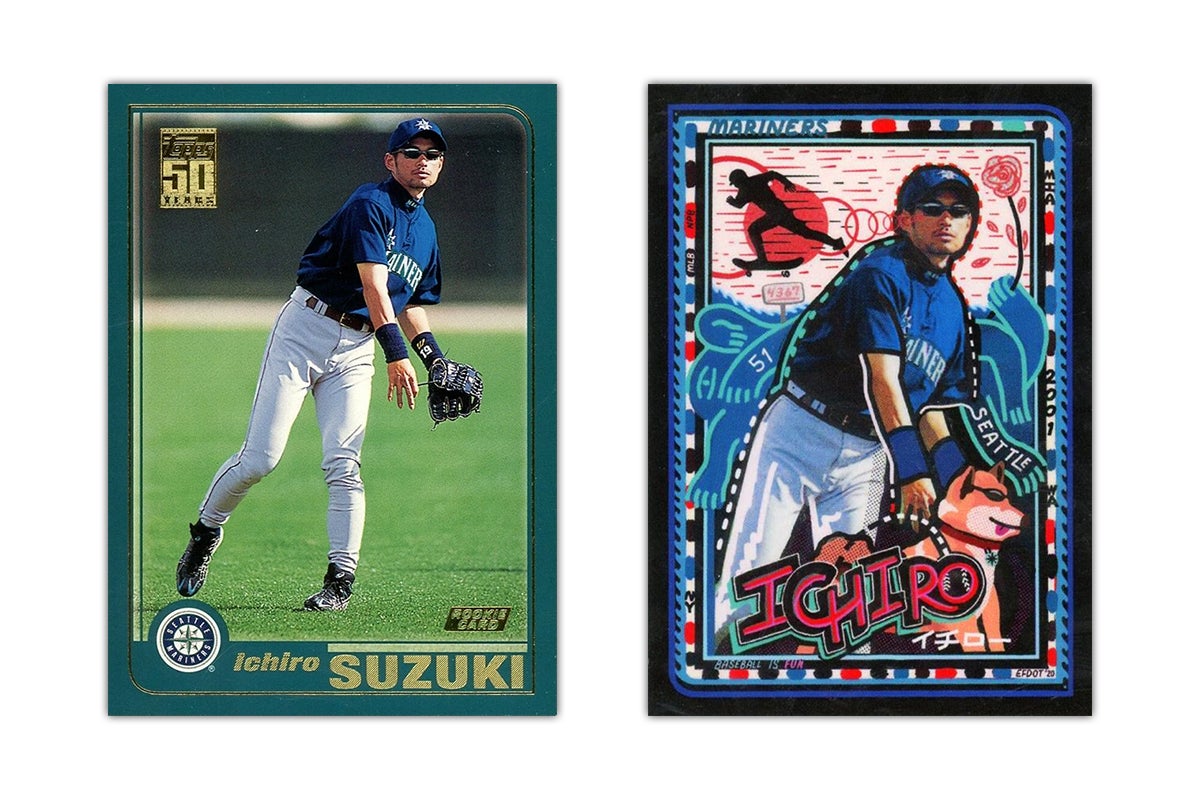
Ichiro returned to Japan as an active MLB player three times. The first was in 2002 for the MLB–NPB All-Star Series, and as the reigning MLB MVP, every move he made thrilled the nation.
The second was in 2012 for the MLB Opening Series. Ichiro went 4-for-5 in the first game. This was a special Opening Day, coming just a year after the Great East Japan Earthquake, and carried deep personal meanings for Ichiro.
The third appearance came in 2019, for the first MLB Opening Series in Japan in seven years. Everyone sensed that “the time” was near. In those two games, every pregame warm-up, every moment in the dugout and every movement on the field drew the unwavering eyes of fans who sought to burn them into their memory. Every play carried unmatched intensity; each time he stepped into the batter’s box or made contact, the stadium erupted.
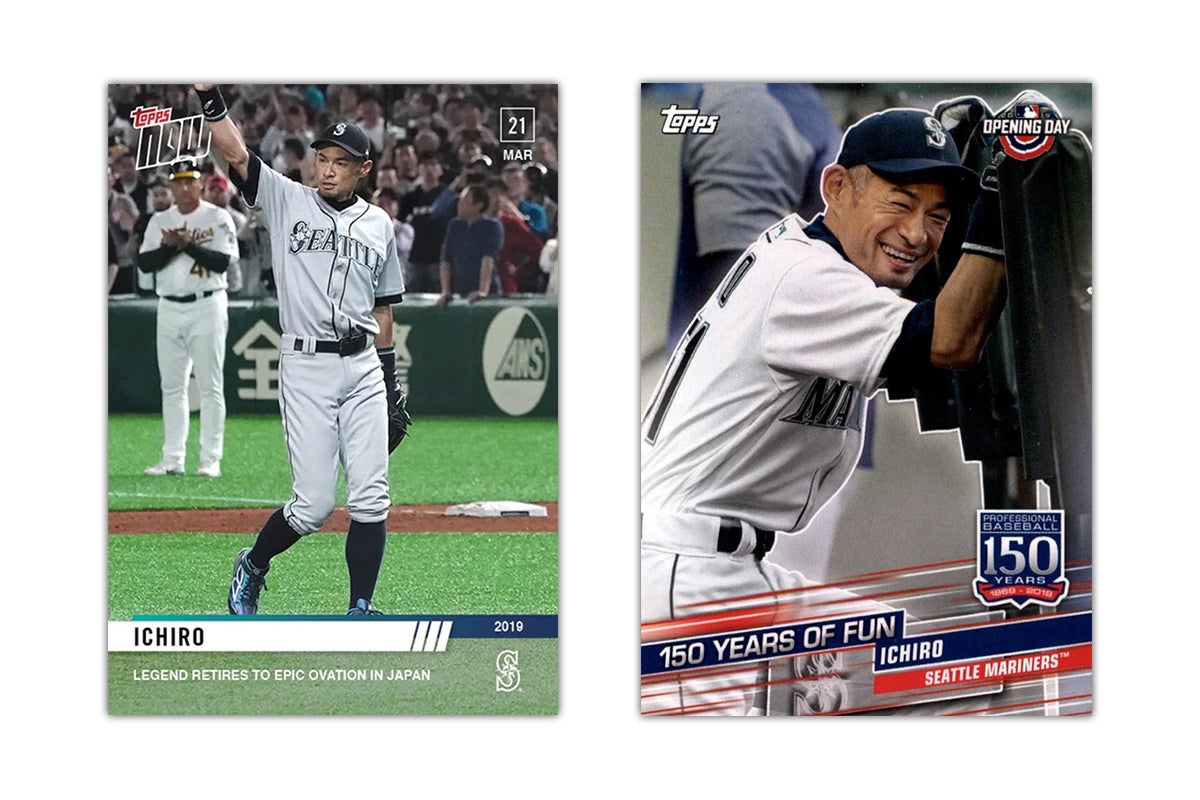
The formal announcement of his retirement came in the middle of the second game. On March 21, in the bottom of the eighth, Ichiro took his position in right field as usual. Then came the manager’s signal and the moment had finally arrived.
Cheers, applause and unspoken cries filled the air as Ichiro waved toward the stands. Each fan surely felt a flood of emotions. The game went into extra innings, ending in a Mariners victory. The sight of Ichiro smiling joyfully during the celebration was unforgettable.
The 11 o’clock hour had passed by the time the game ended, a time when many spectators at a typical NPB game would have already gone home. But no one left. They stared at the field, certain that Ichiro would appear once again. And he did. Ichiro returned, greeted by a wave of heartfelt shouts – “Thank you!” “Well done!” – that washed over the ballpark.
At his postgame press conference, Ichiro’s expression was bright and at peace as he said, “There is no way I could have any regrets.”
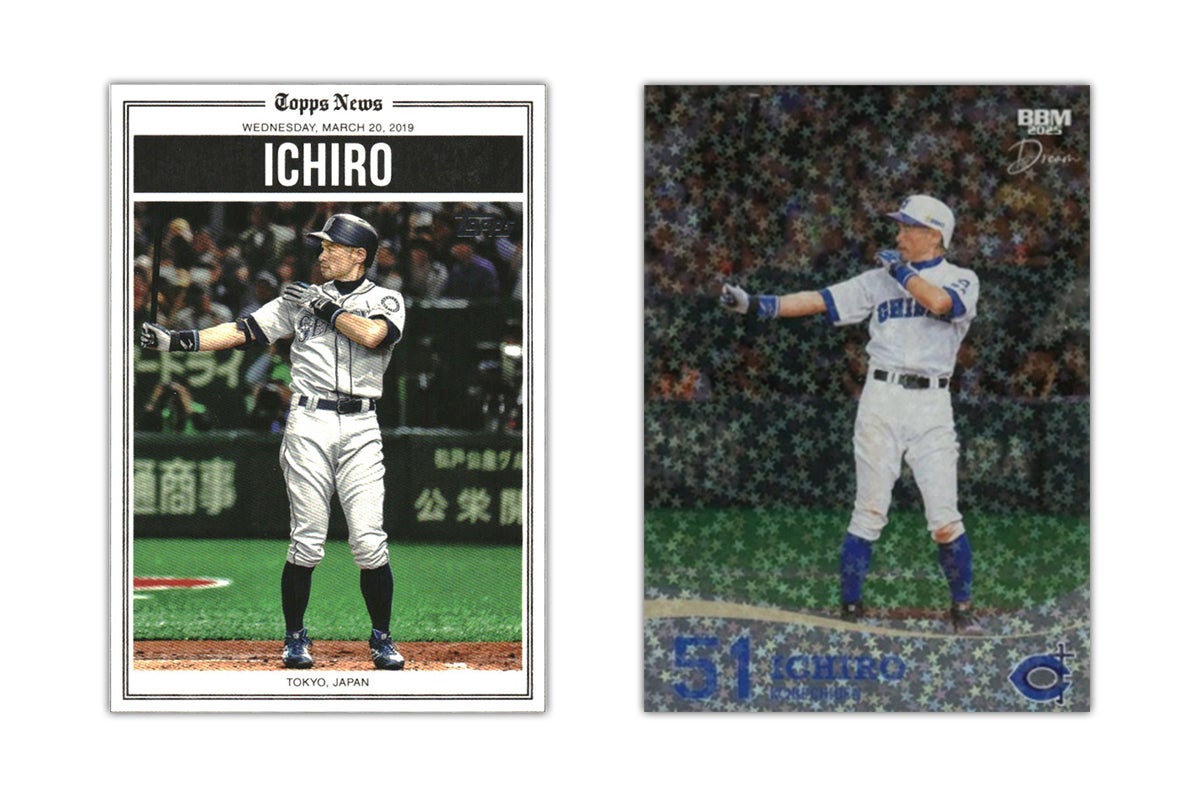
Today, Ichiro is dedicated to coaching and promoting amateur baseball, contributing to the game in mainland Japan. He blends hands-on demonstrations with instructions, passing on his experience to the next generation. Ichiro is also actively involved with his personally envisioned team, “KOBE CHIBEN,” which has gained growing recognition, even inspiring media features and commemorative card sets. On a different stage than before, Ichiro continues to play with full commitment.
In 2025, Ichiro achieved the rare recognition of being inducted into both the Japanese and National Baseball Halls of Fame and was commemorated in both Tokyo and Cooperstown.
Upon entering Japan’s Hall he said, “I want to be involved in baseball until I can no longer move and continue to support Japanese baseball.”
Ichiro, recognized as one of the greatest to ever play the game on any stage and field, will surely remain as a true baseball icon for many that have been inspired by him.
Yuichiro Fujiike is a Japanese baseball card historian and Branch Manager of MINT Nagoya