#CardCorner: 1970 Topps Bill Russell
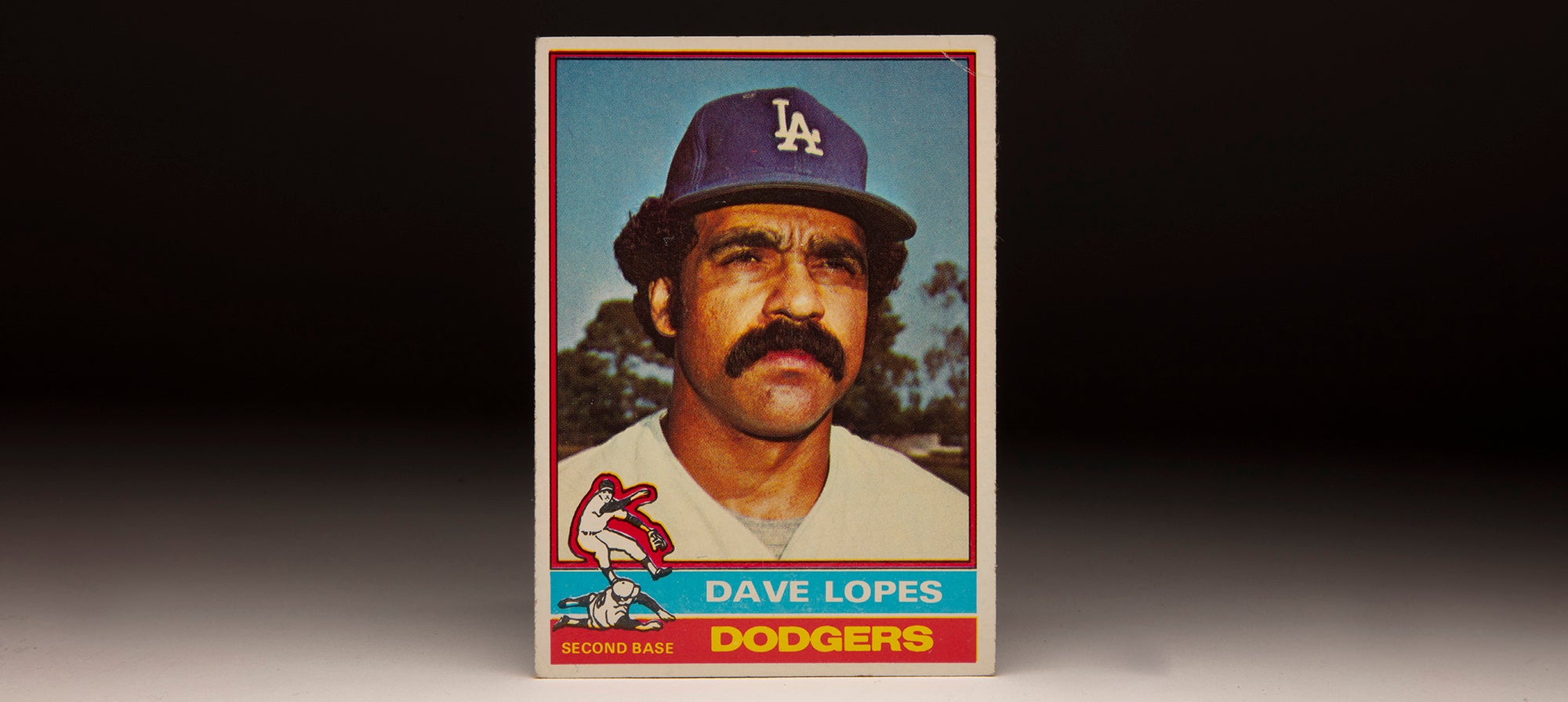
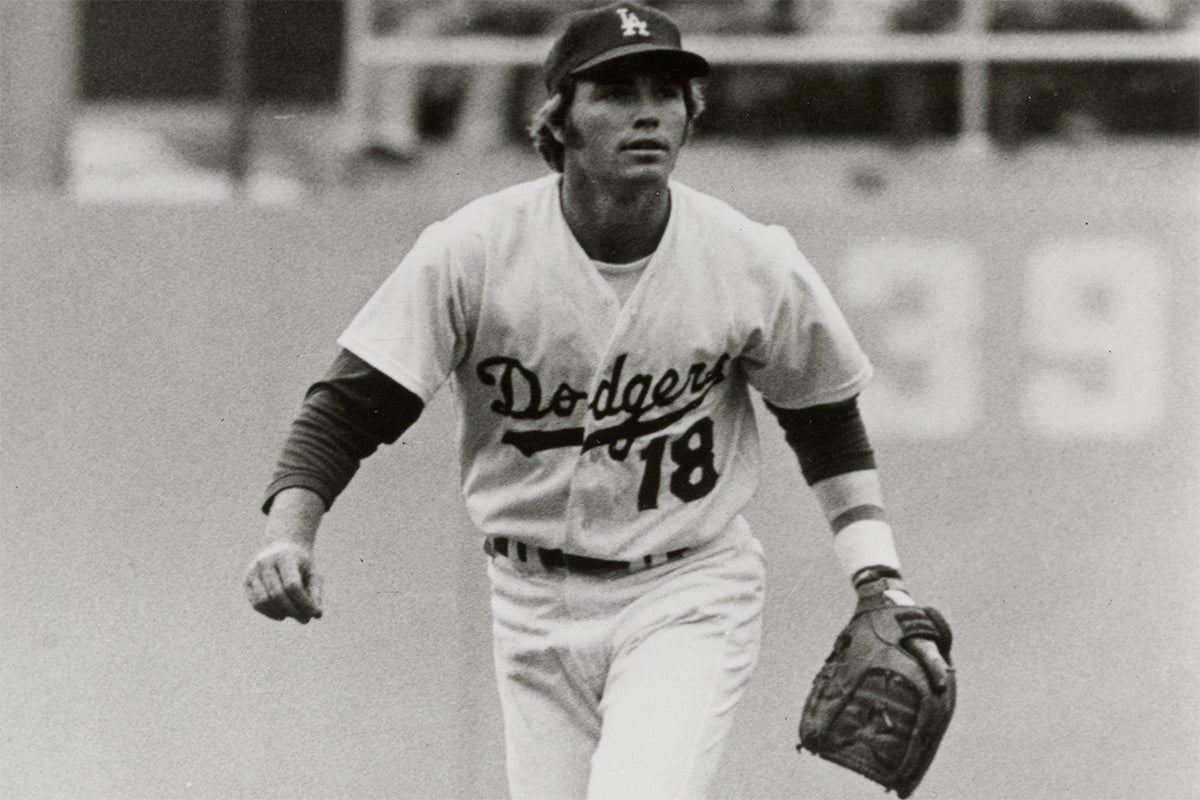
On April 28, 1972, Bill Russell stepped into the Dodgers’ lineup as the starting shortstop. He would remain there for the next 11 seasons, anchoring an infield of Steve Garvey, Davey Lopes and Ron Cey that would stay together for more than eight years.
The first of that quartet to arrive and the last to depart, Russell remained a Dodgers constant for 18 successful seasons that featured four National League pennants and the 1981 World Series title.
“I’d rather have Russell in a clutch spot,” legendary broadcaster Vin Scully often said, “than any other Dodger.”
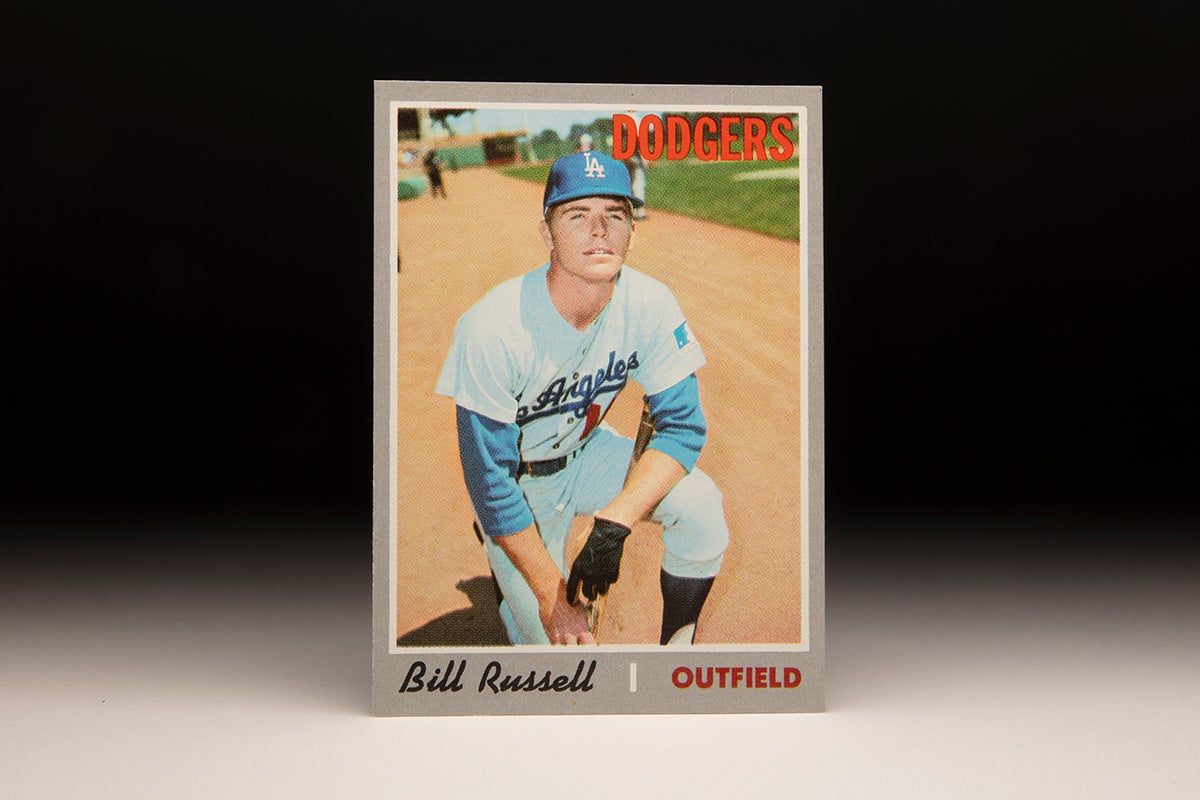
William Ellis Russell was born Oct. 21, 1948, in Pittsburg, Kan. The town is located in the southeast corner of the state, just a few miles from both the Missouri and Oklahoma borders. Pittsburg High School didn’t have a baseball team, so Russell played American Legion baseball when he wasn’t starring for the high school basketball squad (he led Pittsburg to the state finals as a senior) and track team (as a javelin thrower).
Selected in the ninth round of the 1966 MLB Draft by the Dodgers, Russell signed and reported to Ogden of the Pioneer League, where he hit .356 in 39 games as an outfielder. He moved up to Class A Dubuque of the Midwest League in 1967, batting .221 in 67 games.
In 1968, Russell was promoted to Class A Bakersfield of the California League, where he hit .280 with 17 homers, 55 RBI and 23 steals in 115 games. He was named to the honorable mention California League All-Star team, and the Dodgers placed him on their 40-man roster following the season.
In three minor league seasons, Russell played all of his games in the outfield. When an injury to Willie Davis and a labor dispute that sidelined veterans left the Dodgers shorthanded in Spring Training of 1969, Russell – who had hoped to earn a promotion to Double-A Albuquerque – found himself on the Opening Day roster.
“The players’ strike was a break for me,” Russell told the Associated Press. “There weren’t many players in shape when we played our first exhibition game and I had a pretty good afternoon.”
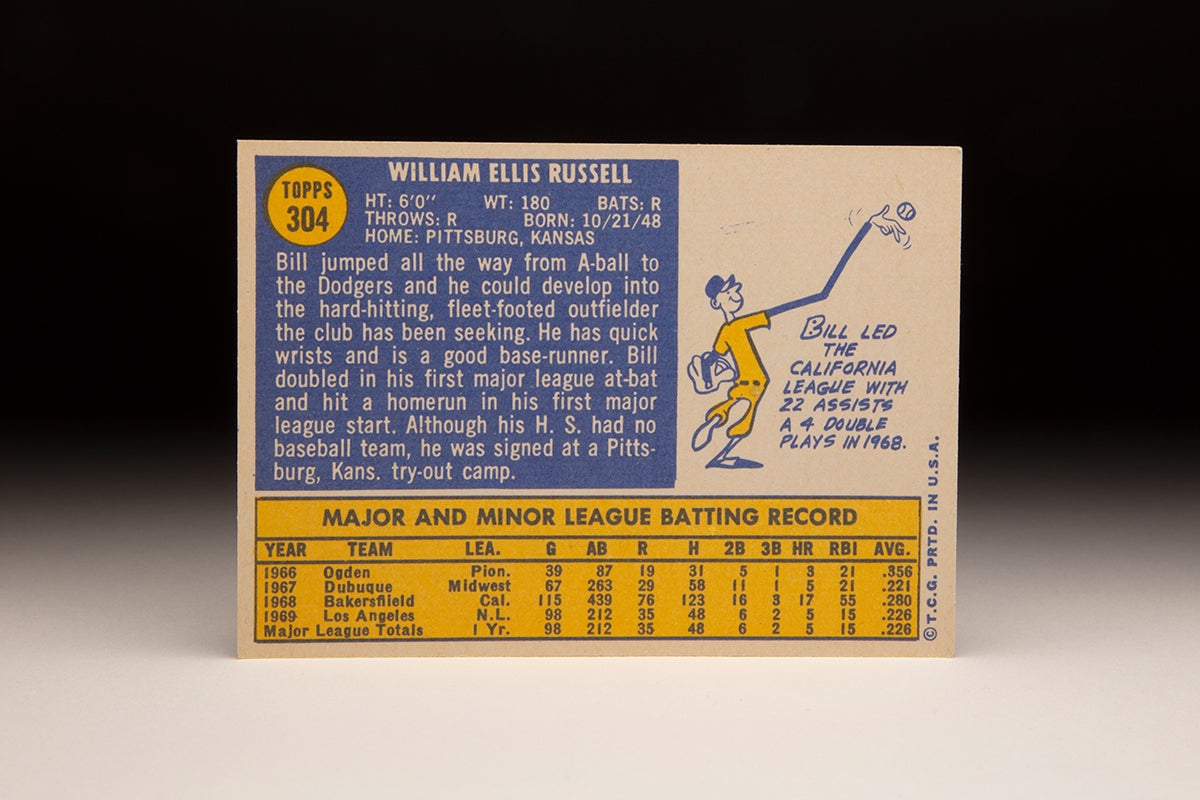
Making his big league debut in the season opener on April 7 against the Reds, Russell doubled off Jim Merritt in his first plate appearance after entering the game in the eighth inning. Four days later, Russell made his first start and had three hits, including a triple and a home run, against the Astros.
The Dodgers paired him with veteran Ken Boyer as a roommate, wanting Russell to “learn the ropes” since he was just 20 years old. Russell was called “Ropes” for the rest of his playing days.
After hitting .304 through April, Russell cooled off but saw regular playing time and finished the year batting .226 with five homers, 15 RBI and 35 runs scored in 98 games. The Dodgers sent him to the Arizona Instructional League after the season, and Russell batted .355 in 28 games.
Then in 1970, the Dodgers converted Russell into a third baseman and gave him a shot at the Opening Day job. But he hit just .111 in 16 spring games and lost the battle to Garvey, who was named the Dodgers’ third baseman. Russell, meanwhile, was optioned to Triple-A Spokane.
He was soon moved back to the outfield and was leading the Pacific Coast League in hitting in June when the Dodgers brought him back to Los Angeles. In 81 games with the Dodgers that year, Russell hit .259 with 11 doubles and nine triples (though he failed to homer) while driving in 28 runs.
The Dodgers tried another position change for Russell in 1971 as he split time between second base and the outfield. He spent the entire season in the big leagues but batted just .227 in 91 games.
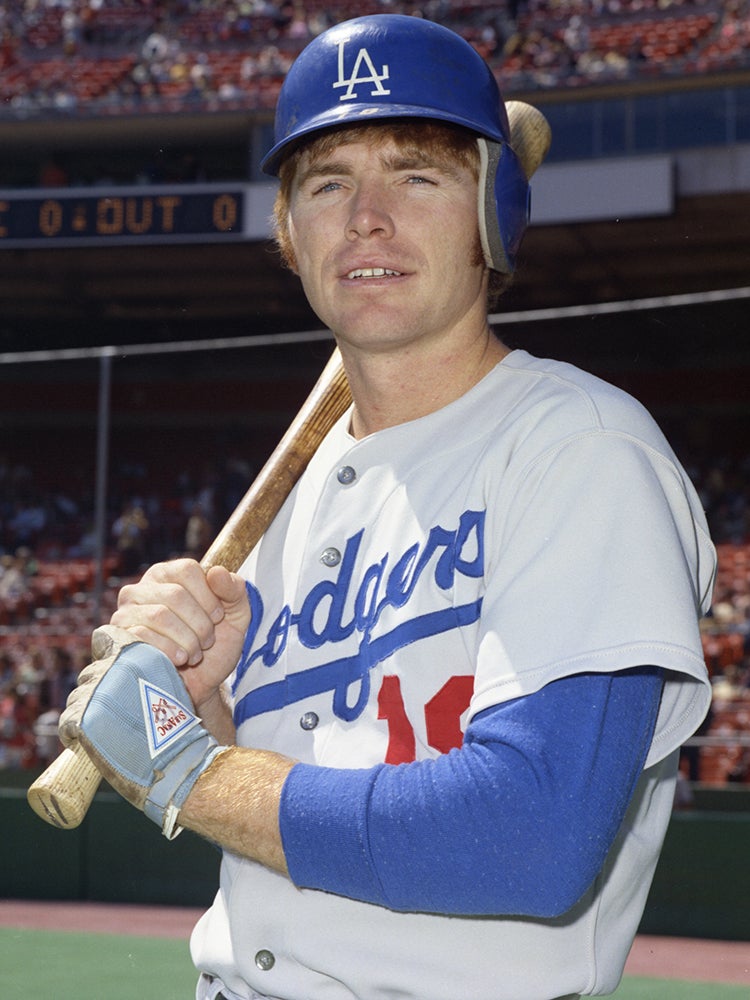
Following the season, Russell played in the Venezuelan Winter League. The Dodgers asked Russell to play shortstop for Caracas.
“But Caracas had their own shortstop and wouldn’t let me play there,” Russell told the Los Angeles Times. “So the Dodgers sent (coach Tom) Lasorda down to work with me.”
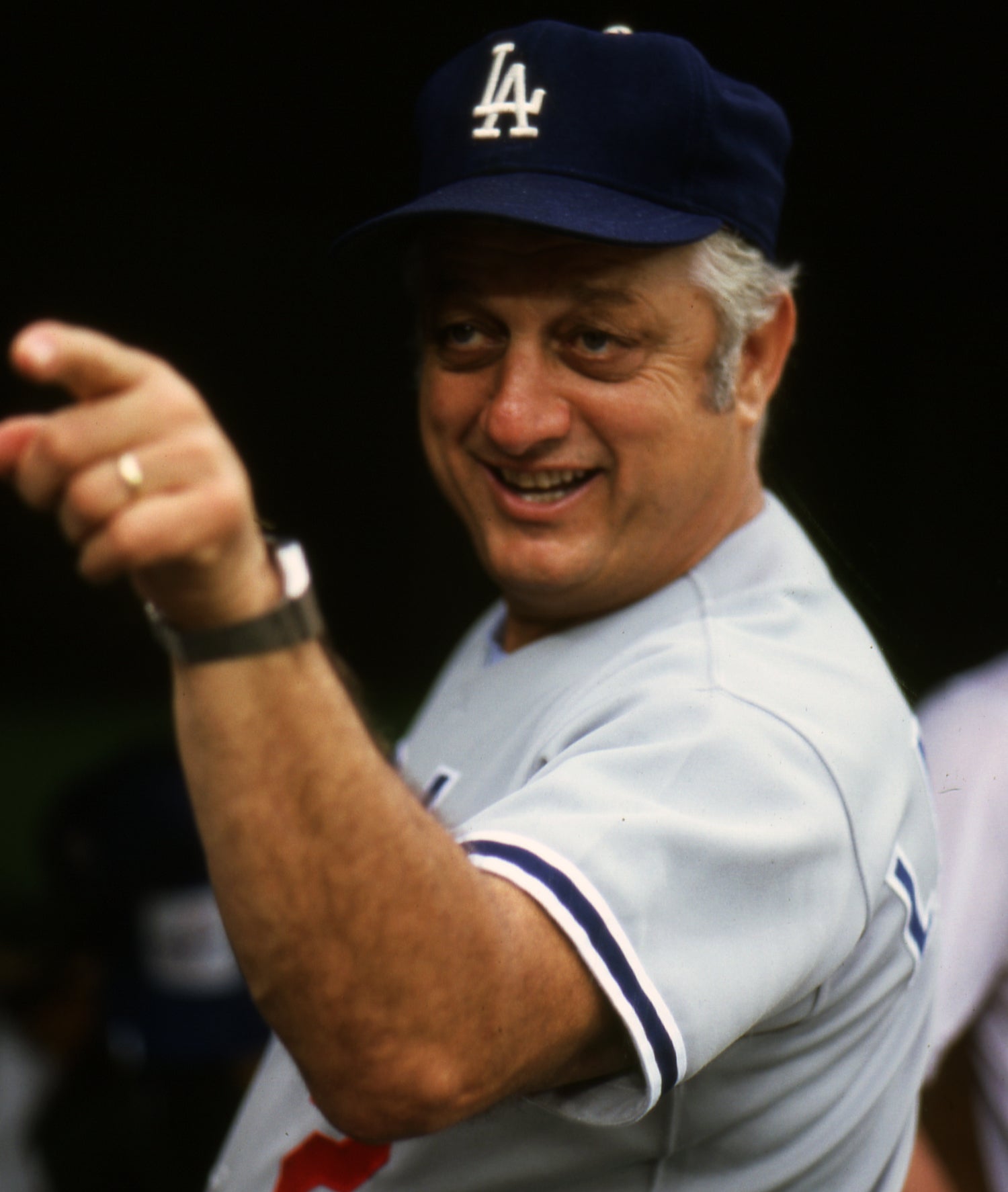
Lasorda, who was famous for pitching batting practice into his 60s, taught Russell how to play shortstop by pitching to hitters and having Russell field batted balls.
Then in the spring of 1972, Russell got some advice from Maury Wills – who was entering his final season as the Dodgers’ shortstop. Wills told Russell to draw an imaginary cutoff line in the infield so he could know the limit on where he could charge ground balls, and to aim at the first baseman’s chest when he threw.
That was the end of the lesson.
“Maury belonged to the old school. He didn’t want to help a man steal his job,” Russell told the Times.
“You might hear (advice) like this from others, but they don’t sink in. You hear it from Maury Wills, you never forget.”
Wills was the Dodgers’ Opening Day shortstop in 1972, continuing a legacy that featured two main Dodgers shortstops – Wills and Pee Wee Reese – from 1940-71. But when Wills failed to hit, manager Walter Alston turned to Russell. He hit safely in his first 13 starts, claiming the starting job and relegating Wills to a bench role.
By the end of the season, Russell was batting .272 with 19 doubles and 34 RBI in 129 games. Wills hit .129 in 71 contests and was released in October, ending his big league career.
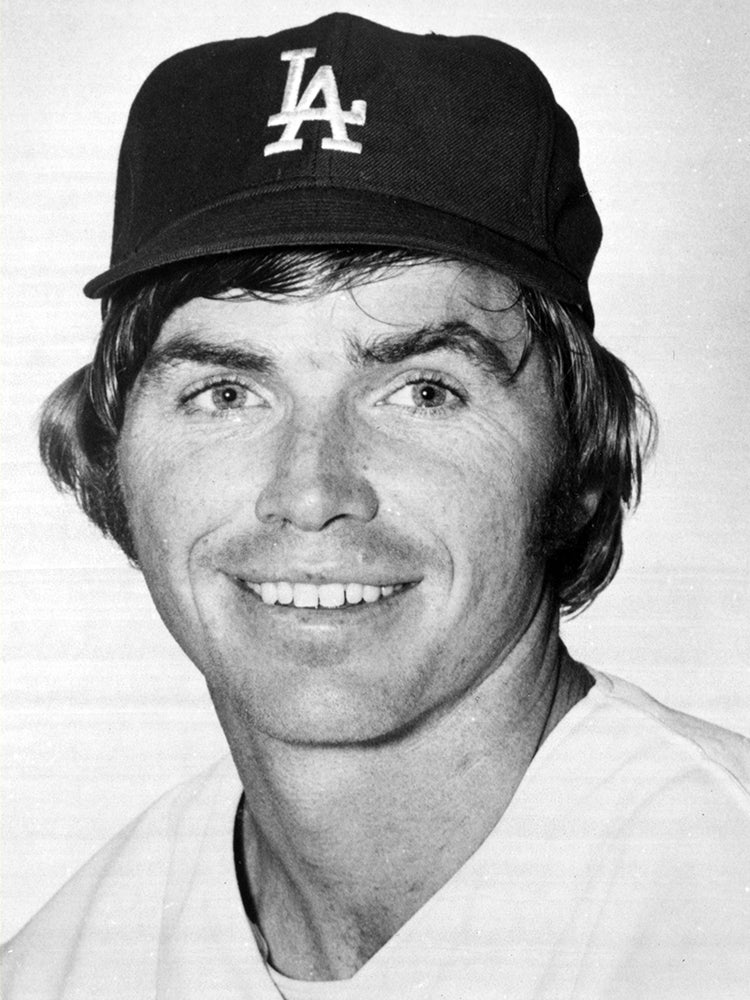
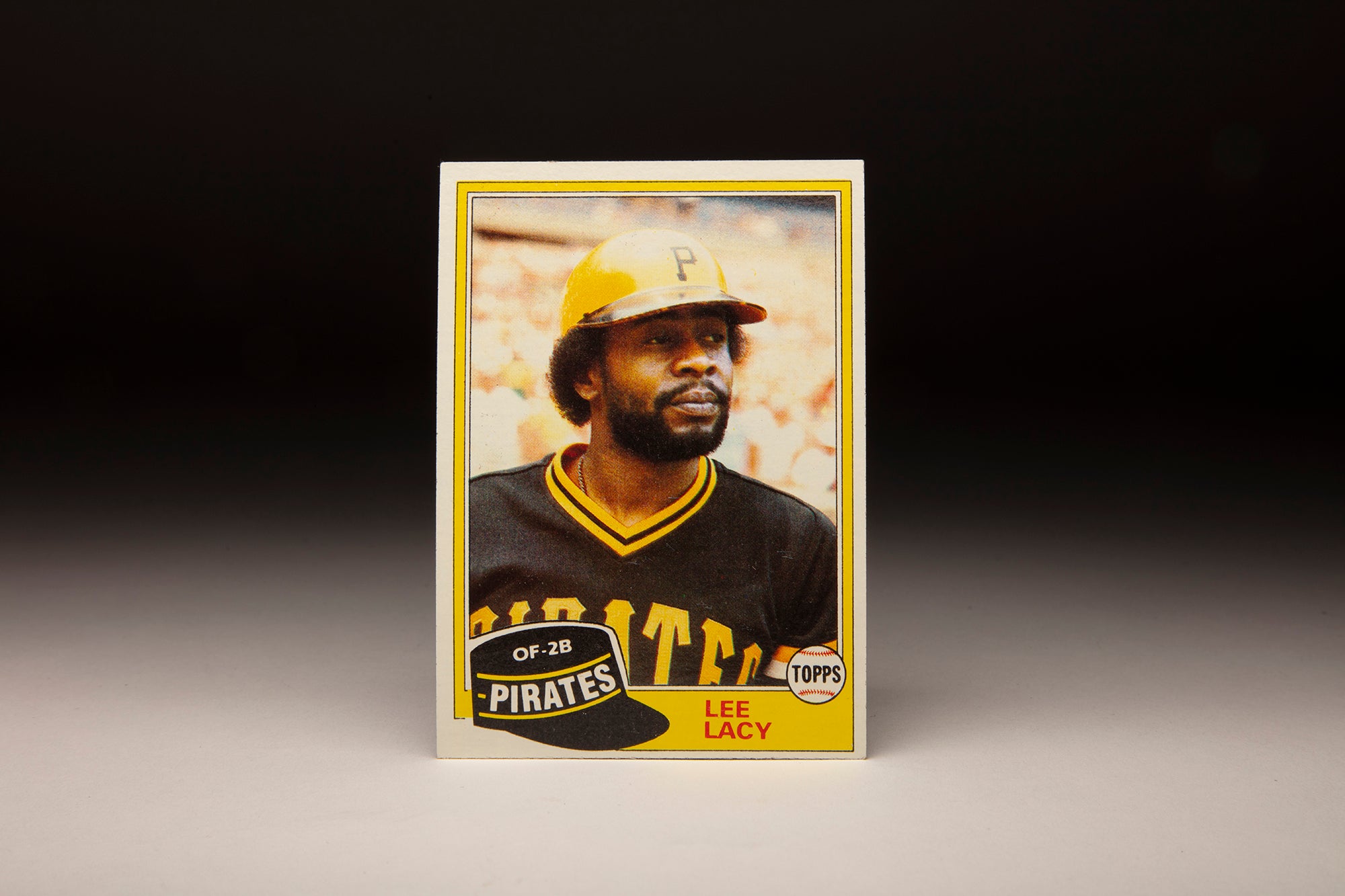
In 1973, Russell made his first Opening Day start at shortstop – a move that was not unexpected given his success the year before. The rest of the Dodgers’ Opening Day infield featured Bill Buckner at first, Lee Lacy at second and Ken McMullen at third. But by May 1, Lopes had taken over at second and Cey was entrenched at third.
Russell, meanwhile, endured boos from the fans after leading the majors with 34 errors in 1972 as he experienced on-the-job training at shortstop. But Russell’s durability and reliability eventually won over the Dodger Stadium faithful.
“I laugh at myself and all the mistakes now, but it sure wasn’t funny then,” Russell told the Daily Breeze of Torrance, Calif., in the spring of 1974. “I did things like mess up as a cutoff man, tag the bag rather than the runner, step on my glove and once I even took a throw at second and somehow managed to shovel the ball into the outfield before I reached to take it out of my mitt to throw to first.
“I was letting the ball play me. I’d get overanxious and do everything wrong. Eventually, everything fell into place.”
Los Angeles won 95 games in 1973, finishing three-and-a-half games behind the first-place Reds. Russell played in all 162 games, batting .265 with 26 doubles, four homers, 56 RBI and 15 steals. He also led all big league shortstops with 560 assists while being named to his first All-Star Game. He even received votes in the National League Most Valuable Player Award balloting.
“Everything I am I owe to the fact that (Walter) Alston and Tom Lasorda never gave up on me,” Russell told the Los Angeles Times. “Confidence is everything in this game.”
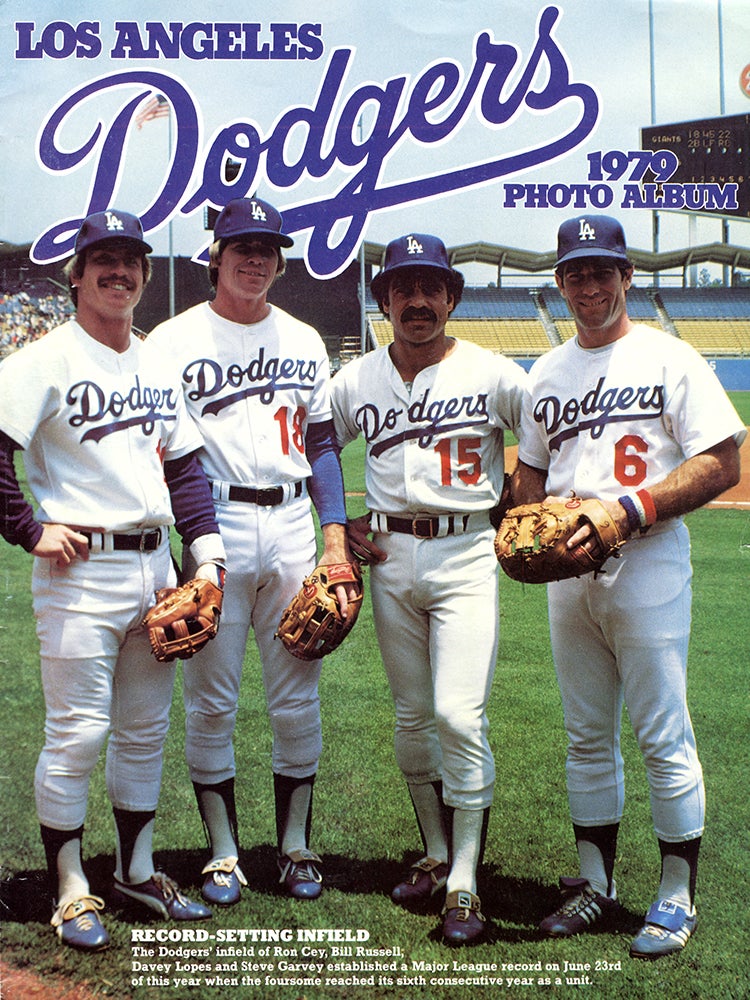
With three of their four infield spots set, the Dodgers found the missing piece in 1974 when Garvey – who had been unable to secure the third base spot for four seasons – moved into the lineup at first base in the second game of the season. He proceeded to earn National League Most Valuable Player honors and a Gold Glove Award, powering the Dodgers to their first NL pennant in eight years.
Russell hit .269 with 65 RBI and 14 steals in 160 games. And though he led the majors with 39 errors, he finished second among NL shortstops with 491 assists.
The Dodgers won the first two games of the NLCS vs. the Pirates – Russell had three hits in nine at-bats – before losing to Pittsburgh 7-0 in Game 3 when Russell set LCS marks for most putouts (six) and most total chances (13). He also had two hits in the game and then added two more with three RBI in Game 4 as Los Angeles won 12-1 to advance to the World Series.
In the Fall Classic, Russell hit safely in four of the five games – including a two-run triple in Game 4 – but the Dodgers fell to Oakland, losing three of four contests by a single run.
In 1975 – after undergoing offseason surgery on a nerve in his left elbow – Russell broke his left hand while making a tag play on the Astros’ César Cedeño at second base in the fifth game of the season, sidelining him until May 9. Injuries to catcher Steve Yeager and pitcher Mike Marshall left Los Angeles manager Walter Alston searching for answers.
“I can never recall so many major injuries in so short a time,” Alston told United Press International in April. “I’m afraid to leave the dugout – I might trip on the foul line and break a leg.”
Russell played in just two games when he returned to the lineup in May, suffering a left knee injury May 10 against Pittsburgh when he dove for a line drive and injured his left knee, putting him on the shelf until June 30. He never got back into a groove after returning, batting below .200 for much of the season before finishing at .206 in 84 games as the Dodgers fell to second place in the NL West.
He returned to regular duty in 1976, batting .274 with 65 RBI in 149 games while earning another All-Star Game selection. But the Dodgers once again finished in second place behind the Reds.
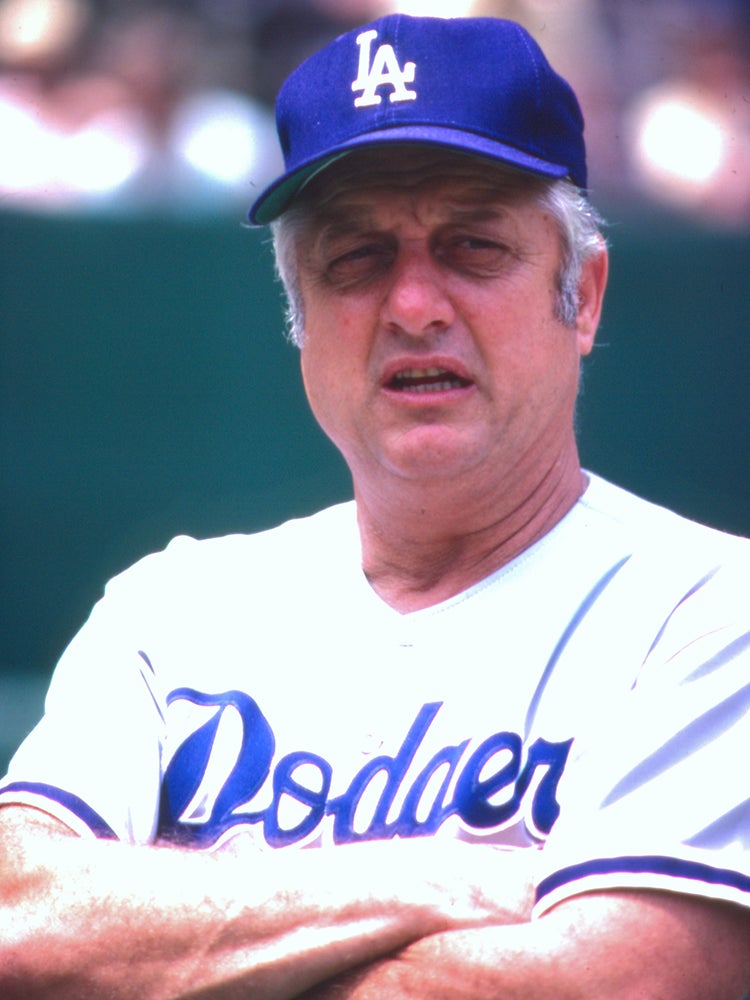
But in 1977, the Dodgers – under Lasorda, who took over for Alston late in the 1976 season – finally dethroned the Reds and returned to the top of the NL West. Russell led all NL shortstops in double plays with 102 while hitting .278 with 84 runs scored on a Los Angeles team that featured four 30-home run hitters.
In the NLCS vs. the Phillies, Russell went 5-for-18 (.278), including the go-ahead single in the top of the ninth inning of the pivotal Game 3. The Dodgers and Phillies entered that game with the series tied at one, and Philadelphia led 5-3 with two outs and no one on in the top of the ninth with Gene Garber on the mound when a bunt single by Vic Davalillo and a double by Manny Mota made the score 5-4. Lopes then followed with a grounder to third that kicked off the glove of Mike Schmidt and bounded to shortstop Larry Bowa, who fired to first. Television replays appeared to show that Lopes was out, but he was called safe as Mota scored to tie the game.
Lopes then advanced to second on an error, and Russell brought him home with a ground ball to center. The Dodgers won 6-5 and then took Game 4 to return to the World Series.
The Dodgers faced the Yankees in the Fall Classic, and in Game 1 Russell gave Los Angeles a 1-0 lead in the top of the first with an RBI triple that scored Lopes. Russell later scored on a sacrifice fly by Cey, and the back-and-forth contest eventually went to extra innings tied at 3.
Then in the bottom of the 12th, Willie Randolph doubled to open the inning against Rick Rhoden and Thurman Munson drew a walk. Paul Blair then fouled off a bunt attempt before singling to left field – right through a hole that would have usually been occupied by Russell.
“I think Russell was playing closer to second base because they expected the two-strike bunt,” Blair told the Buffalo News following the game.
The Yankees went on to win the series in six games, with Russell batting .154 (4-for-26). The next year, Russell would hit much better in the Fall Classic while once again being involved in a key play in the field.
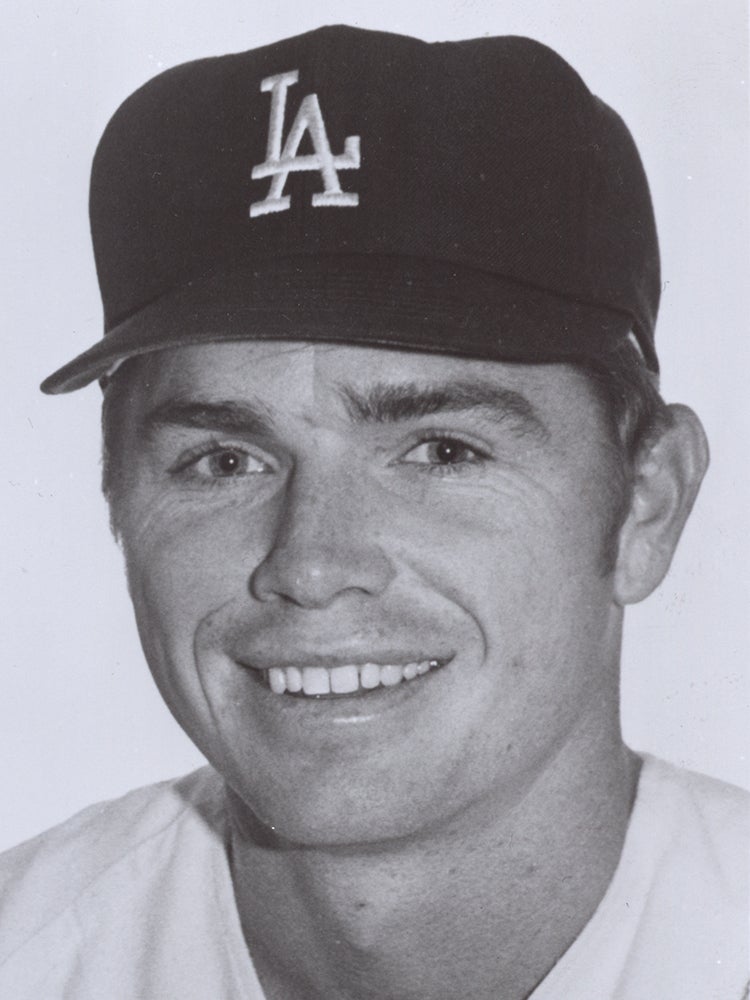
Russell hit a career-best .286 in 1978 while hitting 32 doubles. In an era where shortstops were not expected to provide much offense, Russell’s bat and durability earned him respect throughout the game.
“He’s one of baseball’s classy people,” Lasorda told the Los Angeles Times. “I’m as fond of Bill Russell as I am my own son.”
The Dodgers repeated as NL West winners and Russell went on a tear in the postseason, batting .412 (7-for-17) in an NLCS rematch against the Phillies. He singled in the winning run in the bottom of the 10th in the decisive Game 4, scoring Cey with the walk-off run against Tug McGraw.
The Phillies appeared to have the game won when Dusty Baker hit a sinking fly ball to center field with two outs and Cey on first base. But Garry Maddox, who would win eight Gold Glove Awards in center field, dropped the ball for an error, keeping the Dodgers hopes alive.
“When Maddox dropped the ball, I said ‘Thank you,’ because I knew I was going to hit the ball somewhere,” Russell told the Philadelphia Inquirer. “I told myself to relax and get a good look at it. I was going to hit the first pitch, but it was a slider inside, and I just couldn’t handle it. (McGraw) came back with a high slider. It was a good pitch. He jammed me with it. And I just hit it over the infielders far enough where they couldn’t catch it, where the outfielder had to do everything right to make a play at home.”
Maddox charged the ball and tried to scoop and throw in one motion, but the ball rolled under his glove to give the slow-footed Cey plenty of time to score the run that gave Los Angeles the pennant.
Russell would hit safely in all six games of the World Series against the Yankees, including four multi-hit efforts. But it was a play in the field that was the turning point.
Russell had three hits in Los Angeles’ 11-5 win in Game 1 and added another hit in a Game 2 win. After the Yankees won Game 3, the Dodgers were leading Game 4 by a score of 3-0 heading into the bottom of the sixth at Yankee Stadium. Paul Blair struck out against Tommy John to start the frame, but Roy White singled and advanced to second when Thurman Munson walked. Reggie Jackson followed with a single to cut the deficit to 3-1, bringing up Lou Piniella.
Piniella then hit a low liner to Russell at shortstop. With Munson retreating to the second base bag in order to avoid being doubled up, the ball bounced off Russell’s glove and landed safely in the infield. Russell picked up the ball, stepped on second to force out Jackson and then fired to first in an attempt to get Piniella and end the inning. But the throw hit Jackson in the leg and ricocheted down the first base line away from Garvey, allowing Munson to score all the way from second.
The Dodgers vehemently protested, claiming Jackson had intentionally thrust his leg into the path of the ball. But first base umpire Frank Pulli ruled no interference had occurred, allowing the play to stand. Graig Nettles then grounded out to keep the score at 3-2, but the Yankees struck for a run in the eighth and another in the 10th to win the game and tie the series.
New York won the next two games to repeat as World Series champions, handing Russell and the Dodgers their third Fall Classic loss in five seasons.
“They still show that play on TV,” Russell told the Los Angeles Times in 1984. “It’s been on more times than ‘Gone with the Wind.’
“That was Bucky Dent’s World Series,” Russell said of the 1978 Fall Classic when he hit .423 over six games but Dent was named MVP after hitting .417. “I had a shot at (the Most Valuable Player Award) if we’d won.”
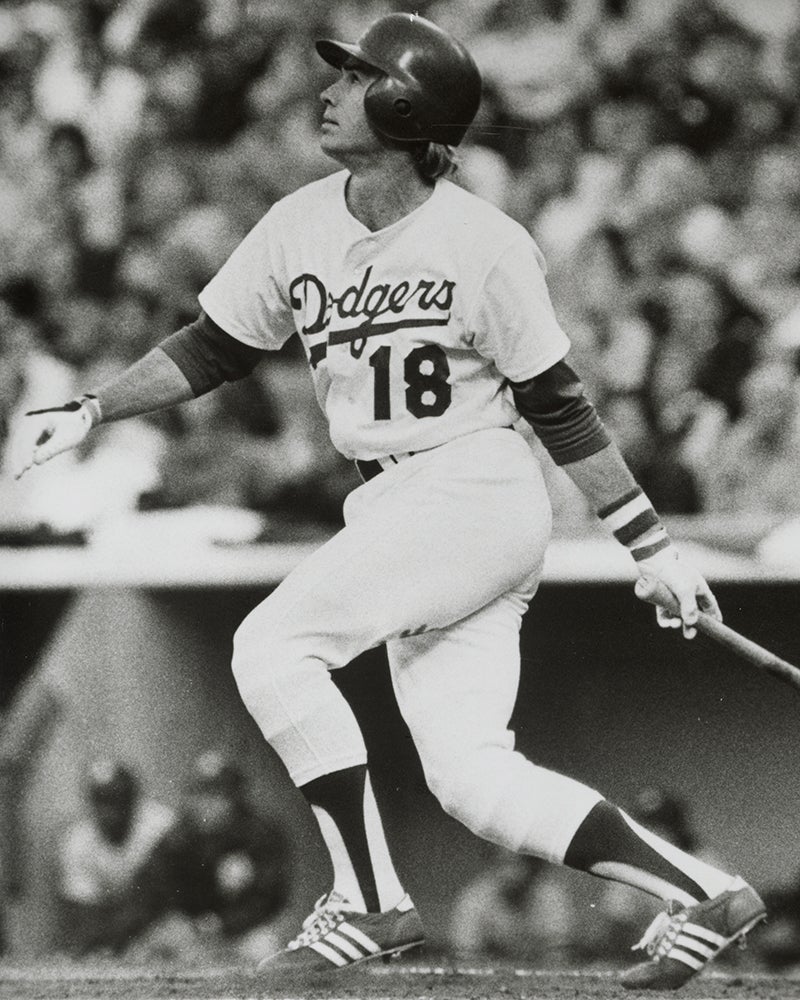
Russell put up his usual solid numbers in 1979, batting .271 with 56 RBI in 153 games. But the Dodgers finished under .500 (79-83) for the first time since 1968 and were never in contention in the NL West. But Los Angeles bounced back in 1980 and battled Houston for the division lead throughout the season. Russell was voted as the National League’s All-Star starter at shortstop and batted .264 over 130 games, cutting his errors down to a full-season low of 19. But one error proved costly: On June 27 vs. the Giants, Russell was charged with a second inning throwing error on a ground ball by Jack Clark.
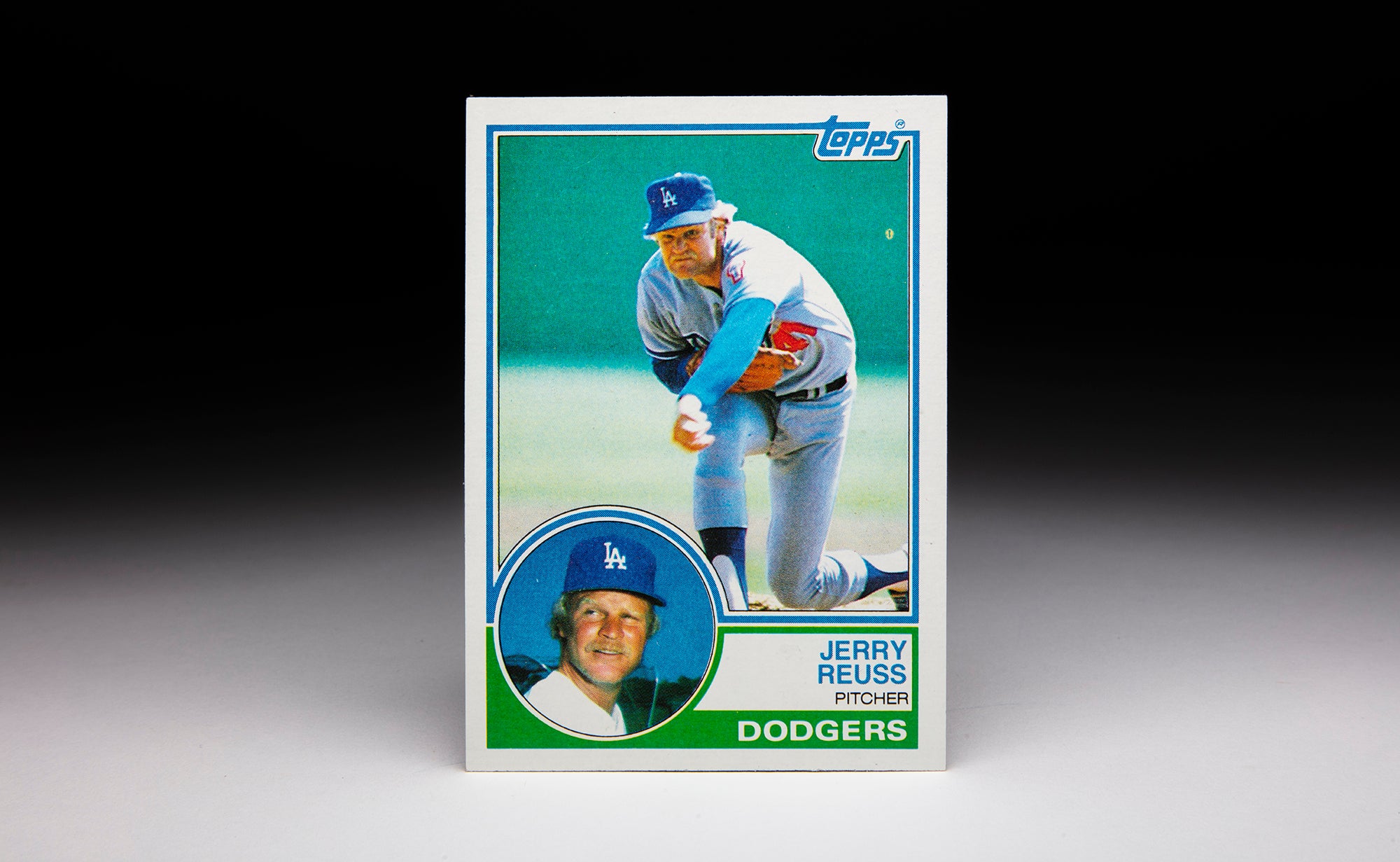
It would be the only baserunner Jerry Reuss would allow all night, giving Reuss a no-hitter instead of what would have been just the 10th perfect game in MLB history. Ironically, the error came during a season when Russell went 47 games without a miscue.
With the Dodgers and Astros fighting for a postseason berth in September, Russell suffered a fractured right index finger when he was hit by a pitch from the Reds’ Mike LaCoss on Sept. 12. Derrel Thomas filled in for Russell the rest of the way – and had the Dodgers’ final hit of the season in the ninth inning of a one-game playoff against the Astros on Oct. 6 at Dodger Stadium. Jack Perconte followed Thomas’ two-out, ninth inning single with a groundout as the Astros won 7-1.
Russell underwent two surgeries to repair his finger.
“Now you’ll see just how much Bill Russell means to this club,” Lasorda told the Long Beach Press-Telegram after Russell broke his finger, “now that we don’t have him.”
The Dodgers finally claimed their elusive World Series title in 1981. Russell hit just .233 in that strike-shortened season but was at his best in October, hitting .250 with three RBI and three walks against Houston in the NLDS and then batting .313 as the Dodgers defeated Montreal in the NLCS.
The Yankees won the first two games of the World Series in another New York vs. LA matchup, but Russell scored the game’s second run in a 5-4 Dodgers win in Game 3 and singled in the game-tying run in an 8-7 Los Angeles win in Game 4 – a contest where Los Angeles once trailed 5-0. The Dodgers won the series with a 9-2 victory in Game 6 where Russell had two more hits.
It would be the last game that would feature the Garvey-Lopes-Russell-Cey infield quartet, bringing the curtain down on an unprecedented eight-year run. On Feb. 8, 1982, Lopes was traded to the Oakland Athletics in exchange for a minor leaguer.
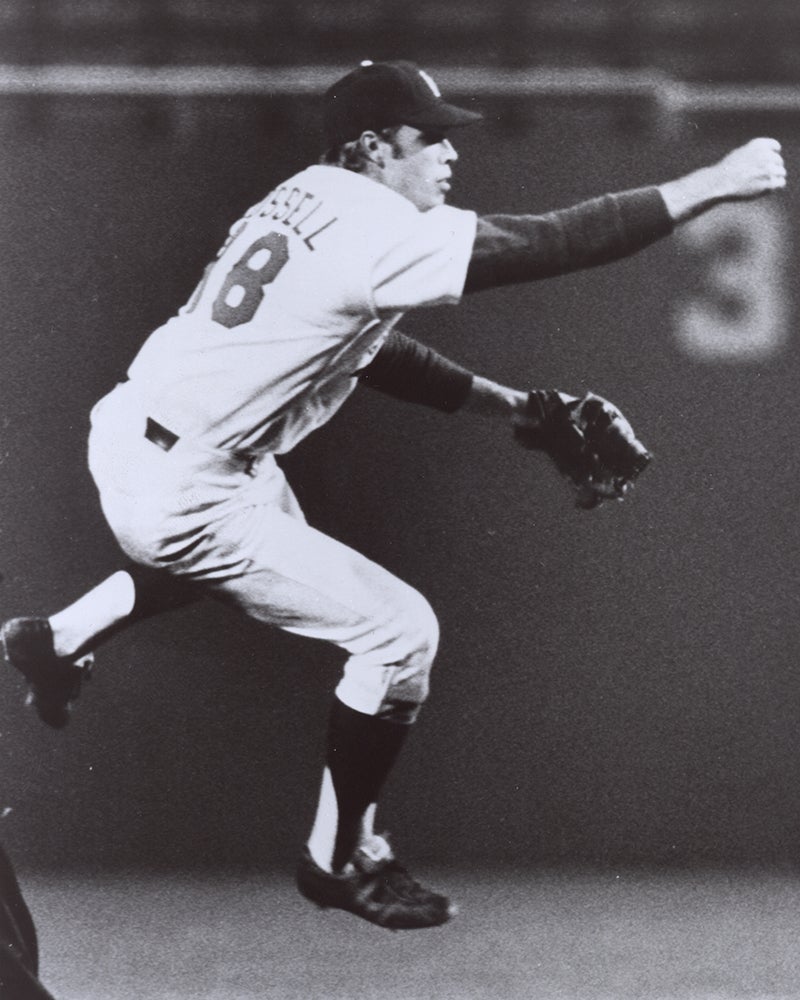
Russell underwent surgery to repair a left foot injury following the season and made national news on March 12 when he committed five errors in one exhibition game against the Tigers. But once the season began, he was his usual consistent self, batting .274 in 153 games as the Dodgers and Braves battled down to the final weekend before Atlanta clinched the NL West title. Russell’s 4.9 Wins Above Replacement figure that season came in his age-33 campaign and marked the best year of his career.
More change followed. Garvey signed with the Padres as a free agent on Dec. 21, 1982. And on Jan. 19, 1983, the Dodgers traded Cey to the Cubs in exchange for pitcher Vance Lovelace and a minor leaguer.
Russell went to Spring Training in 1983 with Steve Sax – who won the NL Rookie of the Year Award in 1982 as Lopes’ replacement – at second base, Greg Brock at first base and Pedro Guerrero at third.
“It’s just a matter of playing together for a while but I kind of know what I’m in for,” Russell told the Tampa Tribune during Spring Training about his pairing with Guerrero on the left side of the infield. “It just takes a while.”
Guerrero would be charged with an NL-leading 30 errors at third base that season and was moved back to the outfield the following year. Russell, however, once again posted a fielding percentage in the .960s (for the eighth time in the last nine seasons) while batting .246 to help Los Angeles win the NL West title.
Russell started all four games of the NLCS vs. the Phillies, recording four hits in 14 at-bats (.286) as Philadelphia advanced to the World Series. It was the final postseason games of Russell’s career, leaving him with a .294 batting average in 49 contests.
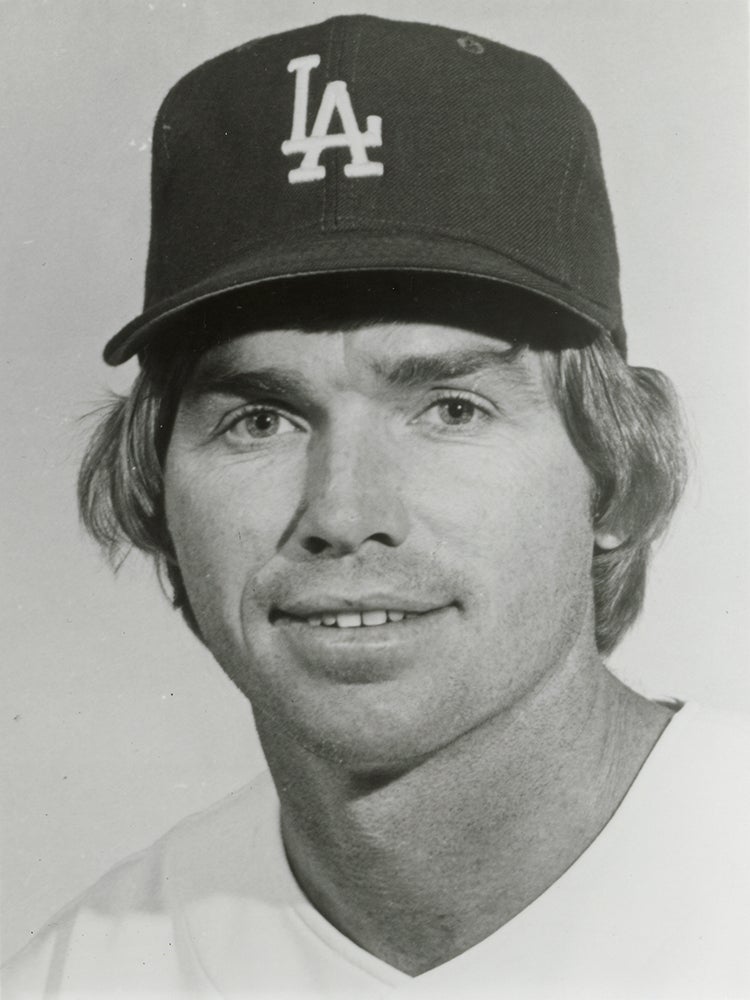
Russell made his 11th Opening Day start at shortstop (he missed Opening Day in 1980 when Thomas started at short) but saw his playing time decrease as the Dodgers integrated top prospect Dave Anderson into the lineup. Russell, however, never wavered in his team-first attitude.
“My goal is to keep the same personality every year,” Russell told the Los Angeles Times in the spring of 1984. “I try to be the same man I was when I first signed with the Dodgers.”
In 89 games in 1984, Russell hit .267 as the Dodgers finished 79-83. It was just the second time in Russell’s 16 seasons that Los Angeles posted a losing record.
Anderson started on Opening Day in 1985 as Russell adapted to a bench role. Los Angeles returned to the top of the NL West standings as Russell hit .260 in 76 games. But Russell was unable to play in the NLCS vs. the Cardinals because of inflammation in his right eye that caused blurred vision.
The Dodgers fell to the Cardinals in six games.
Russell appeared in 105 games in 1986, hitting .250 as the Dodgers fell to fifth place in the NL West. Following the season, Russell asked the Dodgers if he could become a player/coach in 1987. The team said he could become a coach for the 1987 campaign or try to make the team again as a player – but not do both.
The 38-year-old Russell chose to retire and become the Dodgers’ infield coach, replacing Monty Basgall, who helped Russell transition from the outfield to shortstop more than a decade before.
“The player is always the last to know when it’s time (to retire),” Russell told the AP while announcing his retirement. “I thought I had a good year. But they didn’t want the dual situation. So right now, I’m the infield coach.”
For the next five seasons, Russell served on Lasorda’s coaching staff, collecting another World Series ring in 1988 when the Dodgers won the title. He took over as Triple-A Albuquerque’s manager for two seasons from 1992-93 before returning to Lasorda’s staff in 1994. He wanted to be the man who replaced Lasorda in the dugout, and Lasorda openly supported that possibility.
With the Dodgers sitting at 41-35 in 1996, Lasorda drove himself to the hospital with what he thought was heartburn. He was diagnosed as having a mild heart attack and an ulcer, and Russell was named interim manager.
“It’s an opportunity for me to manage and to show my style,” Russell told the Los Angeles Times. “And hopefully, we can be successful.”
A few days later, Lasorda announced he was retiring.
“As a player, I never thought I’d coach, let alone manage,” Russell told the San Pedro News-Pilot. “(As a coach) I hoped it would happen someday. I didn’t know when it would…My hands are in my pocket wringing wet right now.
“(Lasorda) has been like a father to me. He taught me everything about the game.”
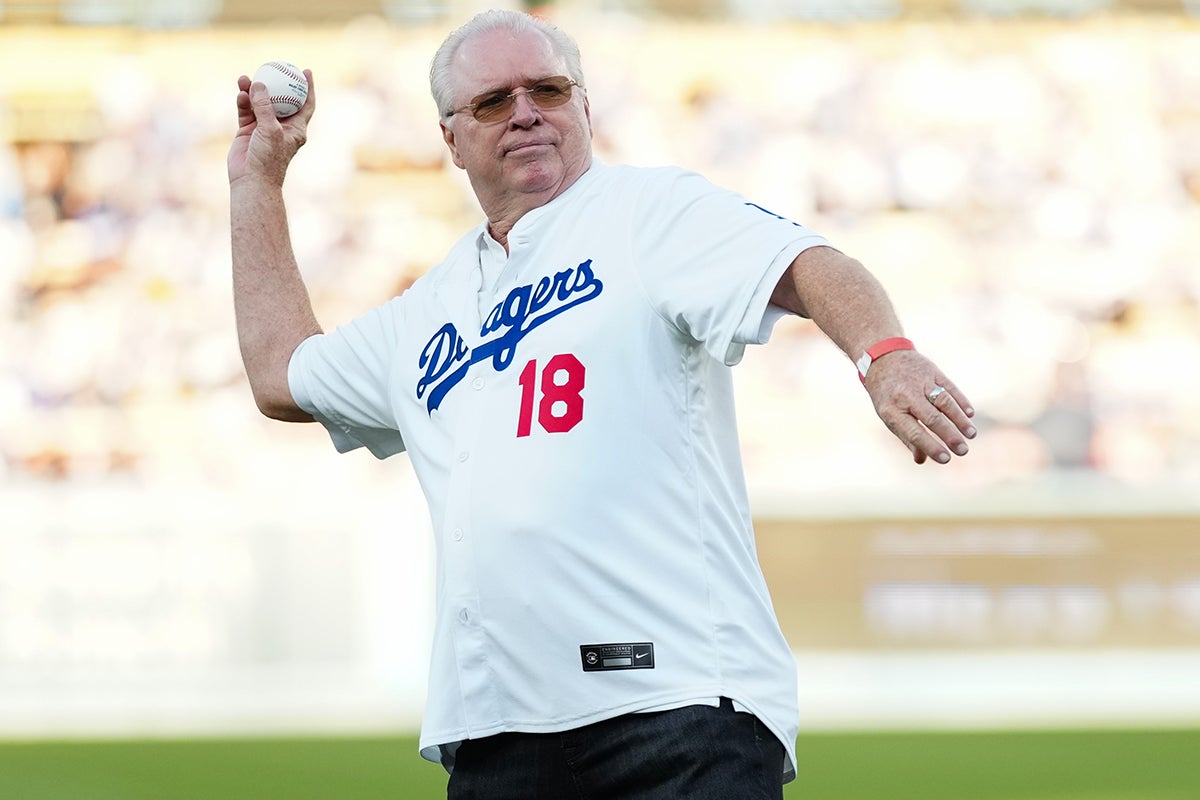
Russell led the Dodgers to a 49-37 record and second-place finish in the NL West. In 1997, Russell and the Dodgers went 88-74 and again finished in second. Then on June 21, 1998 – with the Dodgers at 36-38 – Russell and executive vice president Fred Claire were dismissed and replaced by Glenn Hoffman and Lasorda, in their respective roles.
Russell returned to coaching in 2000 as the Devil Rays’ bench coach under manager Larry Rothschild but stayed only one season. He later worked for MLB in the umpiring department.
Over 18 big league seasons, Russell hit .263 with 1,926 hits, 293 doubles, 627 RBI and 167 stolen bases. A three-time All-Star, he played on four pennant winners and was a member of 15 teams that finished with winning records.
His 2,181 games are the most in Los Angeles Dodgers history and trail only Hall of Famer Zack Wheat on the franchise’s all-time list.
From start to finish, Bill Russell was the epitome of an all-American Dodgers star.
“The day Bill put on a Dodger uniform,” Vin Scully told the Los Angeles Times in 1984, “he looked like he just stepped out of a 4-H Club poster.”
Craig Muder is the director of communications for the National Baseball Hall of Fame and Museum