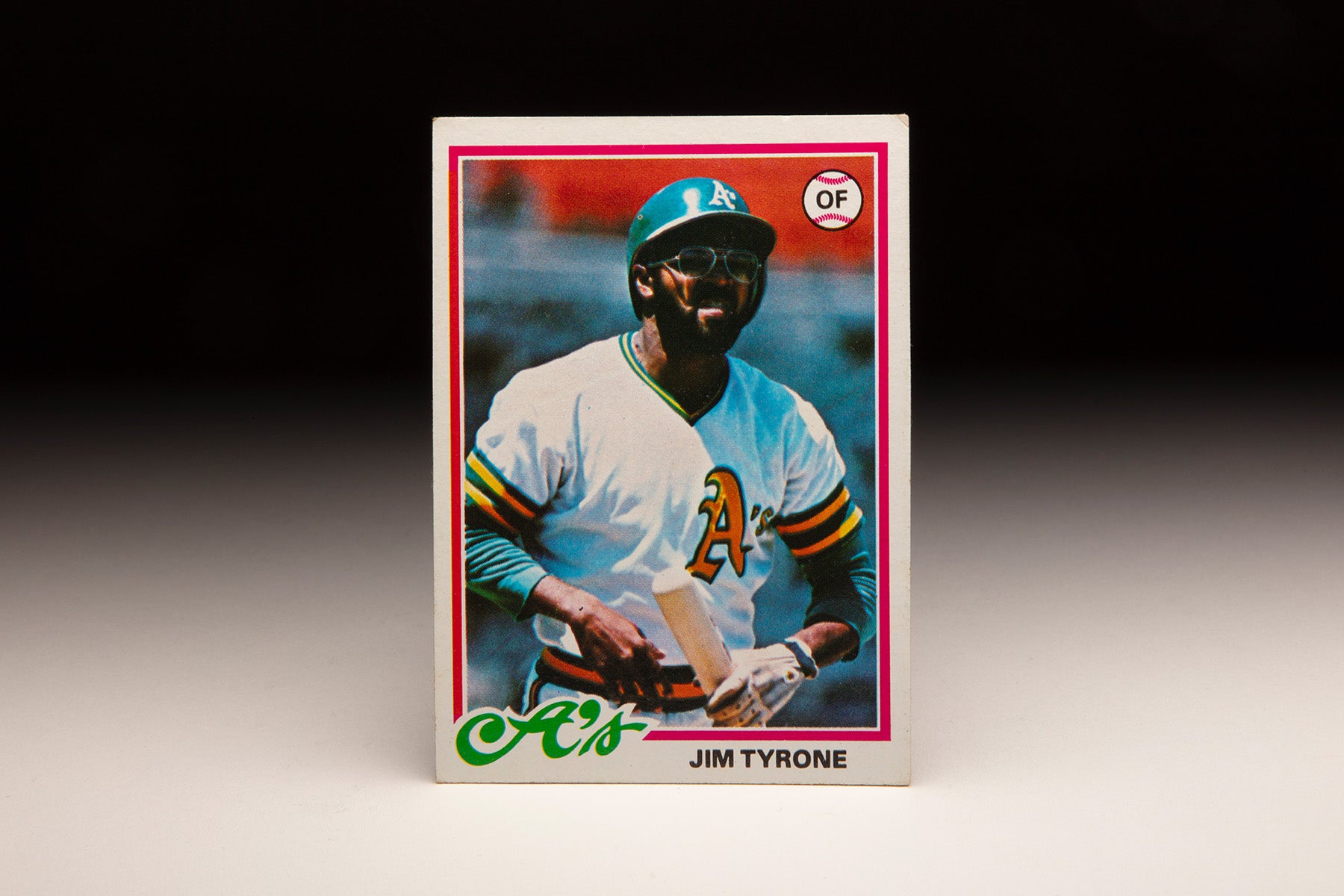
#CardCorner: 1978 Topps Jim Tyrone
The muscular man in the red shirt looked at Bob Barker and answered a query as to whether he knew the prices of cars.
“I play in Japan, so that’s a Mazda,” The Price is Right contestant, with “James” written on his nametag, told the gameshow host as he readied to play the Range Game.
“What do you play?” Barker asked the contestant.
“I play baseball,” he said.
Barker’s interest was immediately piqued, and he quickly engaged in a conversation with Jim Tyrone while America waited to see whether the red Mazda GLC had been won or lost. Viewers paying close attention were treated to an interview with a veteran of 177 big league games who went on to become a star in Japan.
James Vernon Tyrone was born Jan. 29, 1949, in Alice, Texas – a suburb of Corpus Christi. His brother Wayne Tyrone arrived in the world 18 months later, and their father, Oscar, was a youth league umpire and helped his boys learn the fundamentals of the game.
Both Jim and Wayne were good enough to earn roster spots on the baseball team at Pan American University – now the University of Texas Rio Grande Valley. Located due west of South Padre Island, Pan American University shocked the college baseball world in 1971 when it defeated the University of Texas – featuring ace pitcher Burt Hooton – in the NCAA District Six playoffs to advance to the College World Series.
Of the 30 players and coaches on the 1971 Pan American University team, all but one were Texas natives.
“It’s a credit to them and to the school and to us because they were all successful in some endeavor,” Broncs coach Al Ogletree told The Monitor of McAllen, Texas, in a 1996 story about the 25th anniversary of the 1971 team.
Jim Tyrone, however, had the most success – whether on the diamond or on television.
Tyrone hit .349 with 55 stolen bases as the Broncs’ center fielder in 1971 as Pan American finished 44-9, losing to Southern Illinois – led by future big leaguers Jim Dwyer and Duane Kuiper – in the first game of the College World Series. Pan American then defeated Seton Hall and Harvard before falling to the Salukis again in the losers’ bracket semifinals.
Tyrone was a second team All-American outfielder on American Association of College Baseball Coaches squad in 1971, and the Cubs took Tyrone with their seventh-round choice in the 1971 MLB Draft.
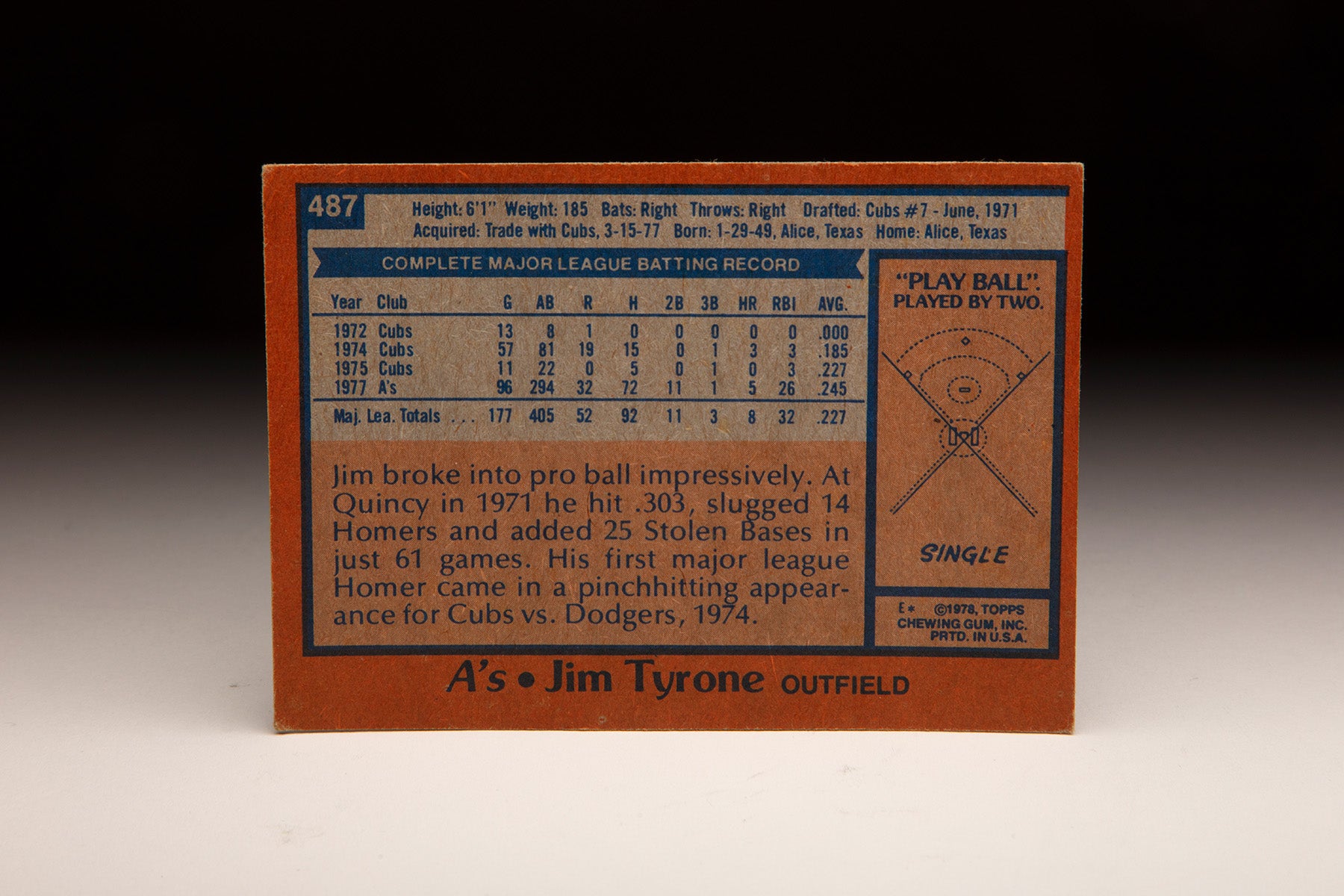
Sent to Quincy of the Class A Midwest League, Tyrone hit .303 with 48 runs scored, 14 homers, 36 RBI and 25 steals in 61 games. He advanced to Double-A Midland in 1972, batting .282 with 16 homers and 71 RBI in 128 games.
At the end of August, the Cubs called Tyrone up to the big leagues. He debuted as a pinch-runner on Aug. 27 vs. the Giants, scoring on a Don Kessinger single in the seventh inning.
“I didn’t feel nervous in my first game in the majors,” Tyrone told The Monitor after the season. “When I first pinch-hit (on Aug. 31 vs. the Dodgers), I was a little nervous. When you’re playing in the majors, you kind of feel like they’re better than you are because they’ve been up longer, they’ve been playing. But they don’t throw any harder (than in the minors). The only difference is they’re around the plate a little more.”
Tyrone immediately recognized that his path to regular playing time in the majors would be difficult in Chicago. Billy Williams was coming off a 1972 season where he was the runner-up in the National League Most Valuable Player Award voting after leading the league in batting average (.333), OPS (1.005) and total bases (348). The Cubs also had veterans José Cardenal and Rick Monday in the outfield.
“I think I have a shot at making the Cub lineup next year,” Tyrone told The Monitor. “Even if you’re sitting on the bench, being around a player like Billy Williams, you learn how he thinks, what pitches he expects in certain situations. This helps you think, too.”
Tyrone appeared in 13 games with the Cubs in 1972 but did not record a hit in eight at-bats. He spent all of 1973 in the minors in Midland and Triple-A Wichita, hitting a combined .261 with 14 homers, 73 RBI, 73 walks and 14 steals.
Tyrone hit .412 for the Cubs in Spring Training games in 1974 before being assigned to Wichita, where he started the 1973 season but struggled before being sent back to Double-A.
“I don’t really think I had a good shot at Wichita last year,” Tyrone told the Wichita Beacon in a 1974 season preview for the Aeros. “I got some tough breaks on some balls that I hit well. Besides, I am a slow starter every season.
“I think I am ready for the big leagues.”
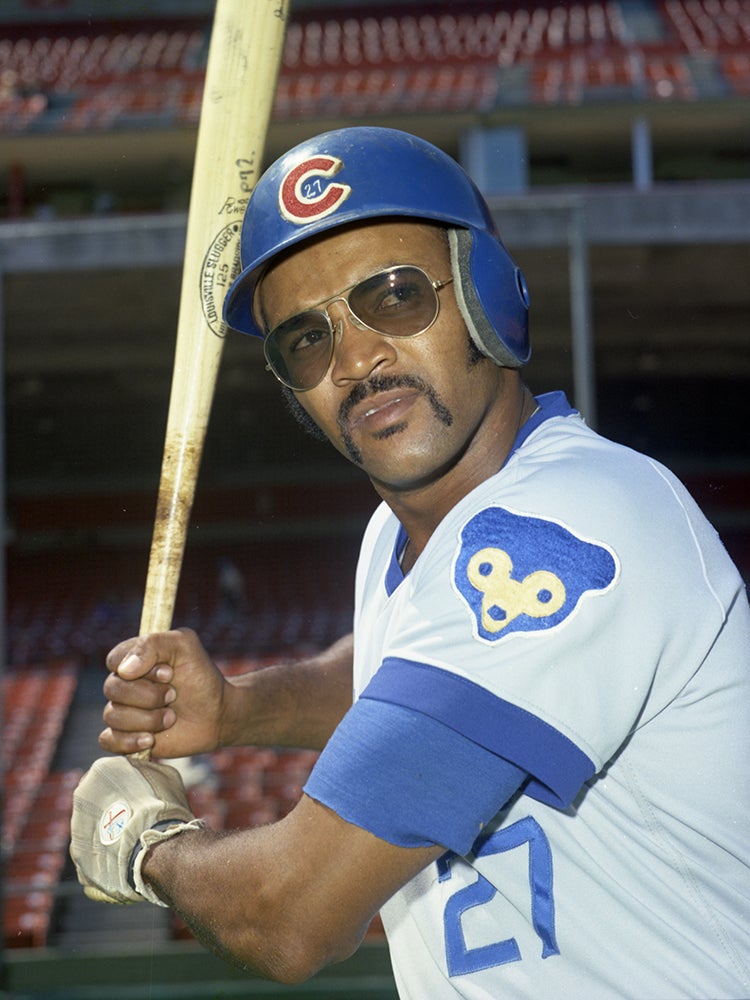
The Cubs called Tyrone up to the majors in May 1974 after he hit .366 in 18 games for Wichita, and he remained with the team for the rest of the year as a reserve outfielder. He recorded his first big league hit on May 21 vs. the Mets and hit his first home run against Andy Messersmith of the Dodgers on Aug. 21.
He finished the season batting .185 with three home runs and 19 runs scored in 57 games.
Tyrone began the 1975 season on the Cubs’ roster but appeared in only one game before being sent back to Wichita on April 26 when Chicago purchased the contract of veteran Adrian Garrett from the Aeros. Tyrone remained with Wichita throughout the summer, hitting .301 with 21 doubles, 13 homers and 73 RBI in 120 games before being recalled to Chicago when rosters expanded in September.
Tyrone played in 10 games down the stretch and finished with a .227 batting average over 24 plate appearances in 11 games. It would be his final games for the Cubs.
Tyrone spent the entire 1976 season in Wichita, batting .268 with 20 homers, 57 RBI and 17 steals in 124 games. Meanwhile, Wayne Tyrone, who had been drafted in the 20th round by the Cubs in 1972, appeared in 30 games for the Cubs that season – the only MLB appearances of a career that saw the Tyrone brothers play together at Wichita in 1976.

On March 15, 1977, the Cubs traded Jim Tyrone – who could no longer be optioned to the minors without waivers – to the Athletics in a one-for-one deal for infielder Gaylen Pitts. That same day, the A’s acquired top outfield prospects Tony Armas and Mitchell Page in a nine-player deal with the Pirates that sent Phil Garner to Pittsburgh.
But despite the apparent outfield logjam in the Oakland system, Tyrone was pleased with the change of scenery.
“I’ve still got a good chance (to play in Oakland) if I hit down here,” Tyrone told the Wichita Beacon about being assigned to the Athletics’ Triple-A team in San Jose. “Page and Armas have been hitting well (in spring games) but they’re going to have to hit right at the start of the season. If they don’t, I’ll be up there.”
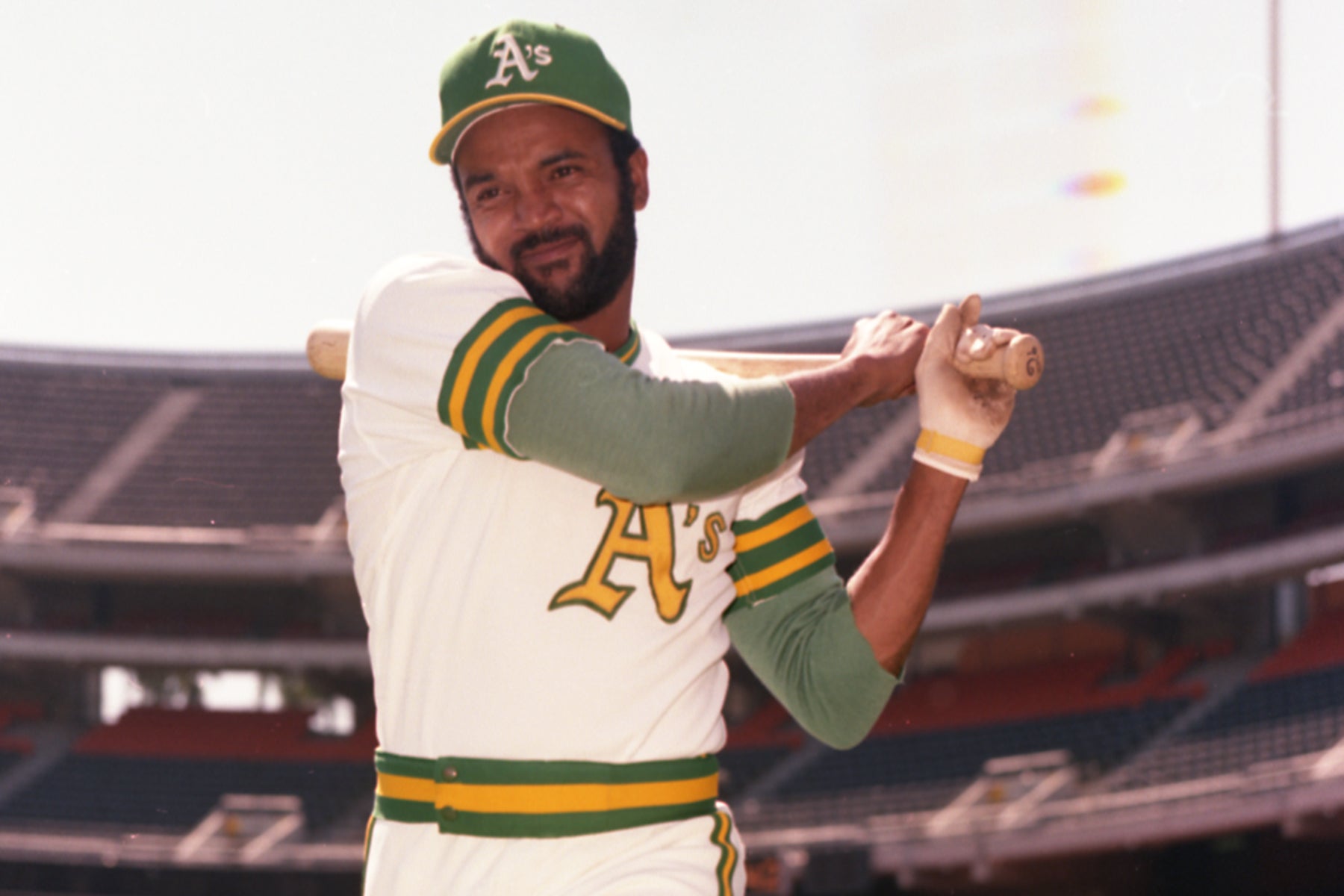
Tyrone’s prediction came true when Armas found himself hitting below .200 at the end of April. And though Page was making headlines across baseball – hitting .382 as late as May 9 en route to a runner-up finish in the American League Rookie of the Year voting – there was room for Tyrone on the revamped Oakland roster.
Tyrone was hitting .347 with six homers and 20 RBI through 30 games at San Jose when the A’s brought him to Oakland on May 16. He got regular playing time in all three outfield spots before claiming the right field job for good in August, finishing the year with a .245 batting average, 11 doubles, five homers and 26 RBI in 96 games. It would be the final season of his big league career.
The A’s lost 98 games in 1977 and were in the process of a massive rebuild as owner Charlie Finley sold or traded his stars from a team that won three straight World Series titles from 1972-74. But Tyrone was unable to crack the Opening Day roster in 1978 and was sent to Triple-A Vancouver on March 31. He appeared in 96 games for the Canadians that year, batting .269 with 10 homers and 61 RBI before being released with a month left in the season.
In 1979, Tyrone and his brother signed on with the Miami team in the new Inter-American League, a six-team loop that also featured franchises in Venezuela, Puerto Rico, Panama and the Dominican Republic. Jim Tyrone was the best hitter in the league for the entire season, which ended in June when the league folded due to financial issues.
Tyrone batted .364 with 50 runs scored, five homers, 39 RBI and 12 steals in 68 games for the Amigos. Wayne Tyrone led the IAL with eight home runs.
“I look at (Jim) Tyrone, and guys like (catcher) Larry Doby Johnson, and I wonder what the hell they’re doing here,” Hal Breeden, who was serving as Miami’s player/manager at season’s end while manager Davey Johnson was recovering from back surgery, told the Miami News. “Tyrone can hit and he has the wheels. When a major league club goes into the stretch, a guy like Tyrone could help them.”
But Tyrone was unable to find a big league job after the Inter-American League ceased operations.
“Sometimes, I feel like I’m playing out in Timbuktu,” Tyrone told the Miami News about crowds that would often number less than 1,000 fans. “No one knows you’re here. I haven’t heard about any scouts keeping an eye on me. I’m here doing well, but maybe I’m not going anywhere.
“I wonder why I’m still not up (in the big leagues) playing. I worked so hard to get there, did a decent job and then got dropped so quick.”
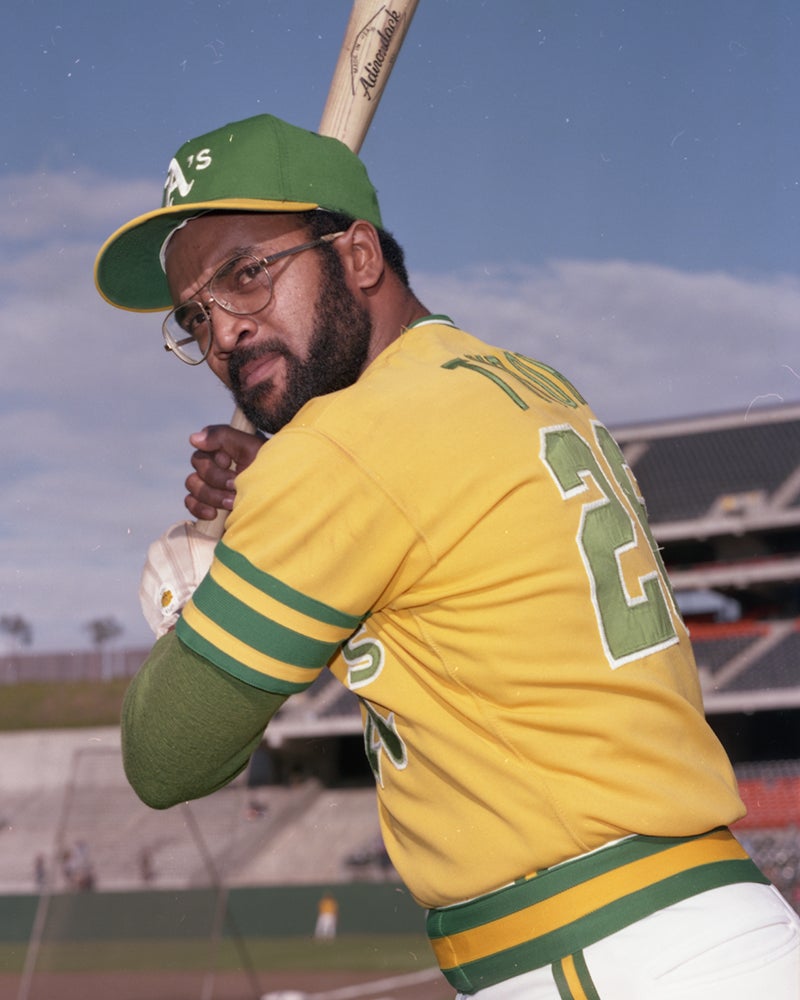
But Tyrone’s play in the IAL did earn him more time in the game. On July 16, the Amigos – who were trying to recoup some money – sold Tyrone’s contract to the Seibu Lions of the Japanese Pacific League. He reported immediately and played in 58 games for the Lions in 1979, batting .291 with eight homers and 24 RBI.
The next season with the Lions, Tyrone had his best year in pro ball when he hit .276 with 35 home runs – the sixth-best total in the Pacific League – and 68 RBI in 128 games.
Tyrone moved on to the Nankai Hawks in 1981, hitting .311 with 23 doubles, 18 homers and 60 RBI in 125 games. He played his final season in Japan in 1982 with Nankai, batting .271 with 13 homers and 48 RBI in 124 games.
Following that season, Tyrone returned home to Southern California and found the national TV spotlight that had eluded him as a player when he attended a taping of The Price is Right. He was the fifth contestant called out of the audience on an episode that aired on Feb. 9, 1983. On his fourth attempt at bidding to come up on stage, Tyrone won a sewing machine and then got the chance to win the Mazda GLC, stopping the $150 range finder almost exactly in the center of the correct price of $6,510.
Barker resumed his questioning before revealing if Tyrone had won the game.
“I’m an outfielder. I play right field,” Tyrone told Barker, who was in his 11th year of hosting The Price is Right on CBS-TV’s morning lineup. “I’ve been playing in Japan for four years.”
Barker then asked about strategy in Japanese baseball, incorrectly offering: “They don’t have long-ball hitters.”
Tyrone agreed, almost as if he was simply anxious to find out if he had won. A moment later, he learned that he had.
Click the fullscreen icon to view Jim Tyrone’s appearance on “The Price is Right” on Feb. 9, 1983. (Internet Archive)
Tyrone soon returned to the stage for the Showcase Showdown, which he won by spinning 95 cents on the big wheel. But before that game began, Barker again engaged Tyrone in another baseball conversation, asking for which team he played.
“Osaka, Japan,” Tyrone said.
“The Osaka what?” Barker asked.
“It’s called the Nankai Hawks. It’s in the city of Osaka,” Tyrone explained.
Barker then said he had heard of the Tokyo Giants, and – as the two other contestants waited impatiently – asked Tyrone about the legendary Sadaharu Oh, who had retired following the 1980 season with a pro record 868 home runs.
“What’s that fellow’s name? Oh? O-H? The home run champion?” Barker said.
“He’s a good hitter,” Tyrone said.
Then, as Tyrone stepped to the wheel, Barker asked him what the Yokohama team was called.
“The Whales – Taiyo Whales,” Tyrone said.
Barker called the team the Yokohama Whales, said Tyrone was from the “Osaka Hawks” and invited him to spin the wheel.
Click the fullscreen icon to view Jim Tyrone speaking with Bob Barker before the Showcase Showdown. (Internet Archive)
Tyrone nearly won his Showcase – which featured a trip to France, a video disc player, a color TV and a travel trailer – missing the bid by only $2,426. But the other contestant was $171 closer in her bid, giving her the win. Tyrone took home a total of $7,509 worth of prizes, including the Mazda and the sewing machine.
With that, the baseball lesson – viewed by an estimated audience of 35 million people – ended.
In four big league seasons, Tyrone batted .227 with eight home runs in 447 plate appearances. But he was a .291 hitter in the minors, and in four years in Japan he batted .287 with 74 home runs, 200 RBI and 41 stolen bases.
It was a playing career that reflected Tyrone’s love of the game – and his unwillingness to give up his dream.
“Once you get a taste of it, you miss it,” Tyrone said of his 177 games in the major leagues while he was playing with the Miami Amigos. “Everything about it – the salary, the meal money, the travel arrangements, the cities. It’s all first class. You call it the big leagues and it’s exactly that.”
Craig Muder is the director of communications for the National Baseball Hall of Fame and Museum