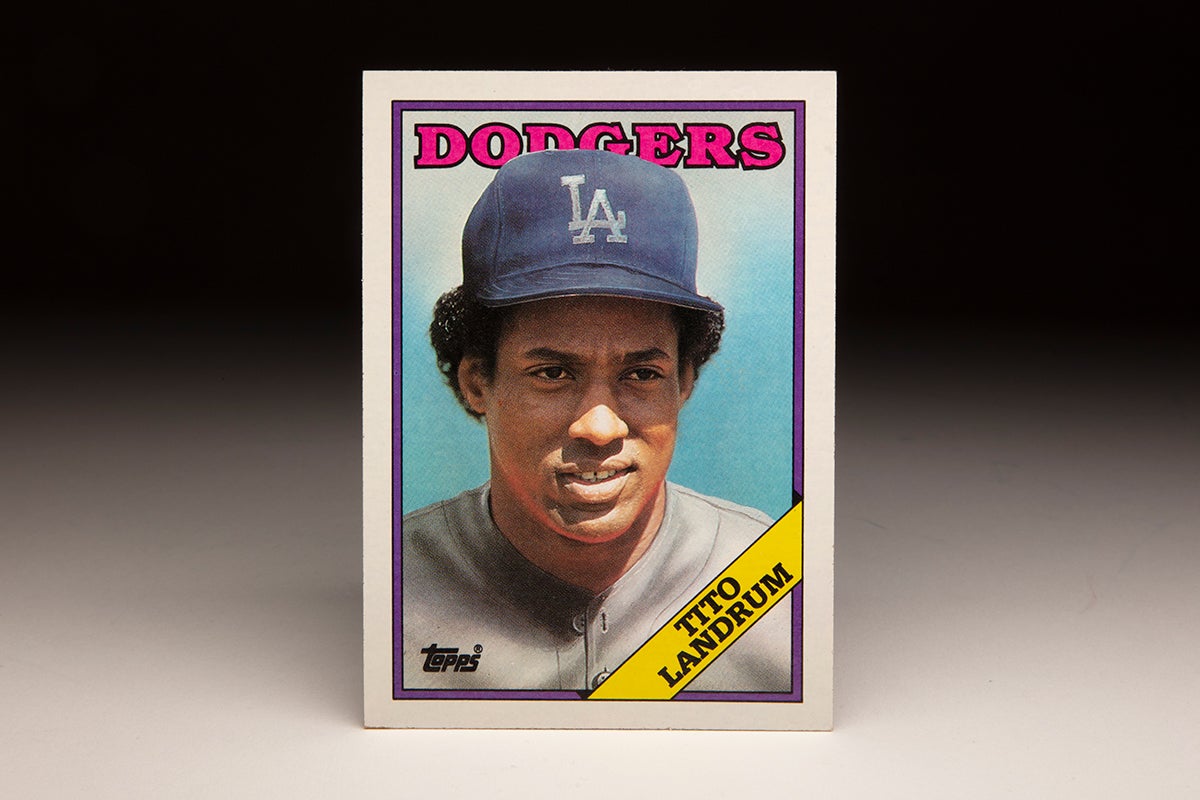
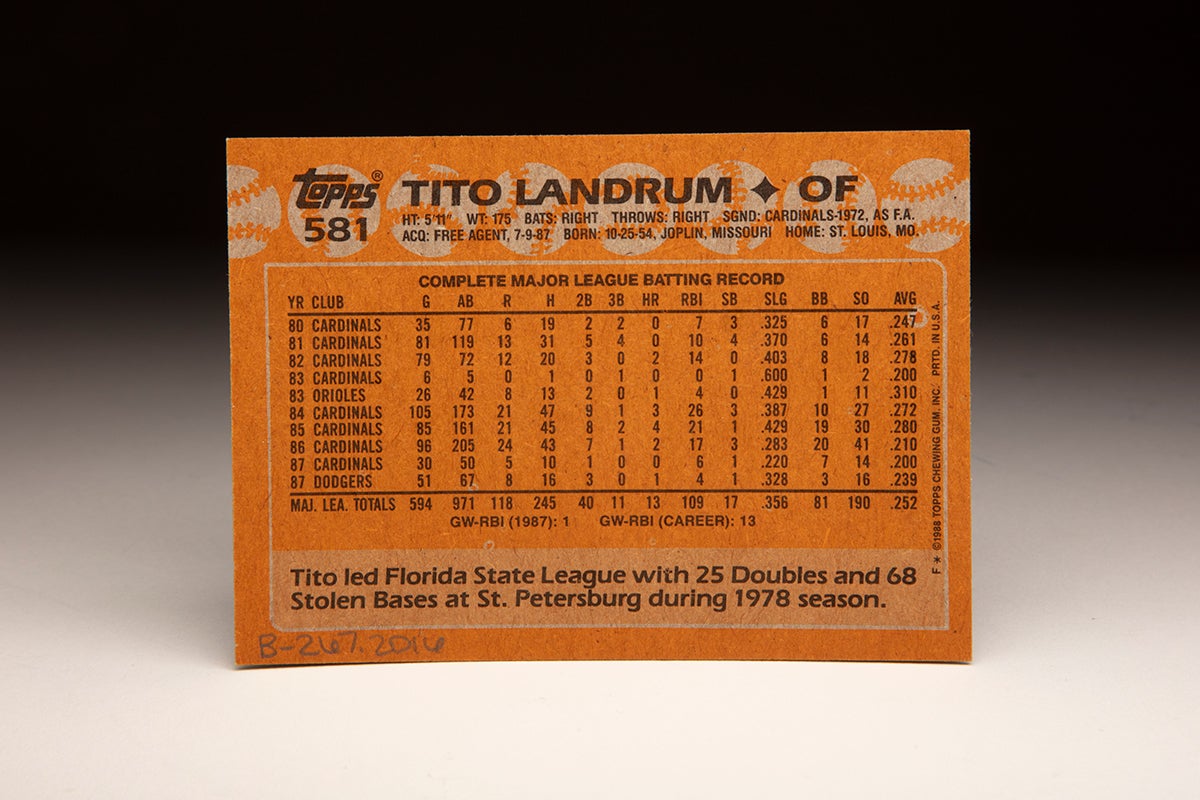
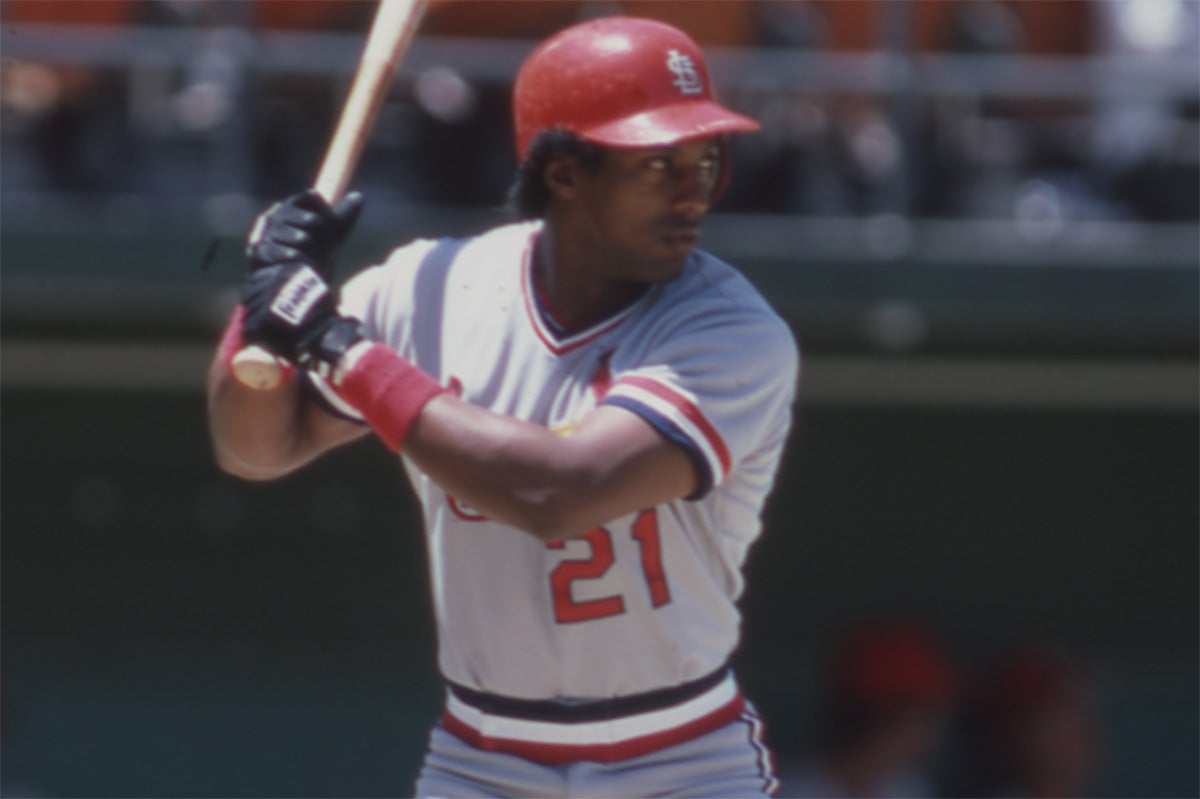
#CardCorner: 1988 Topps Tito Landrum
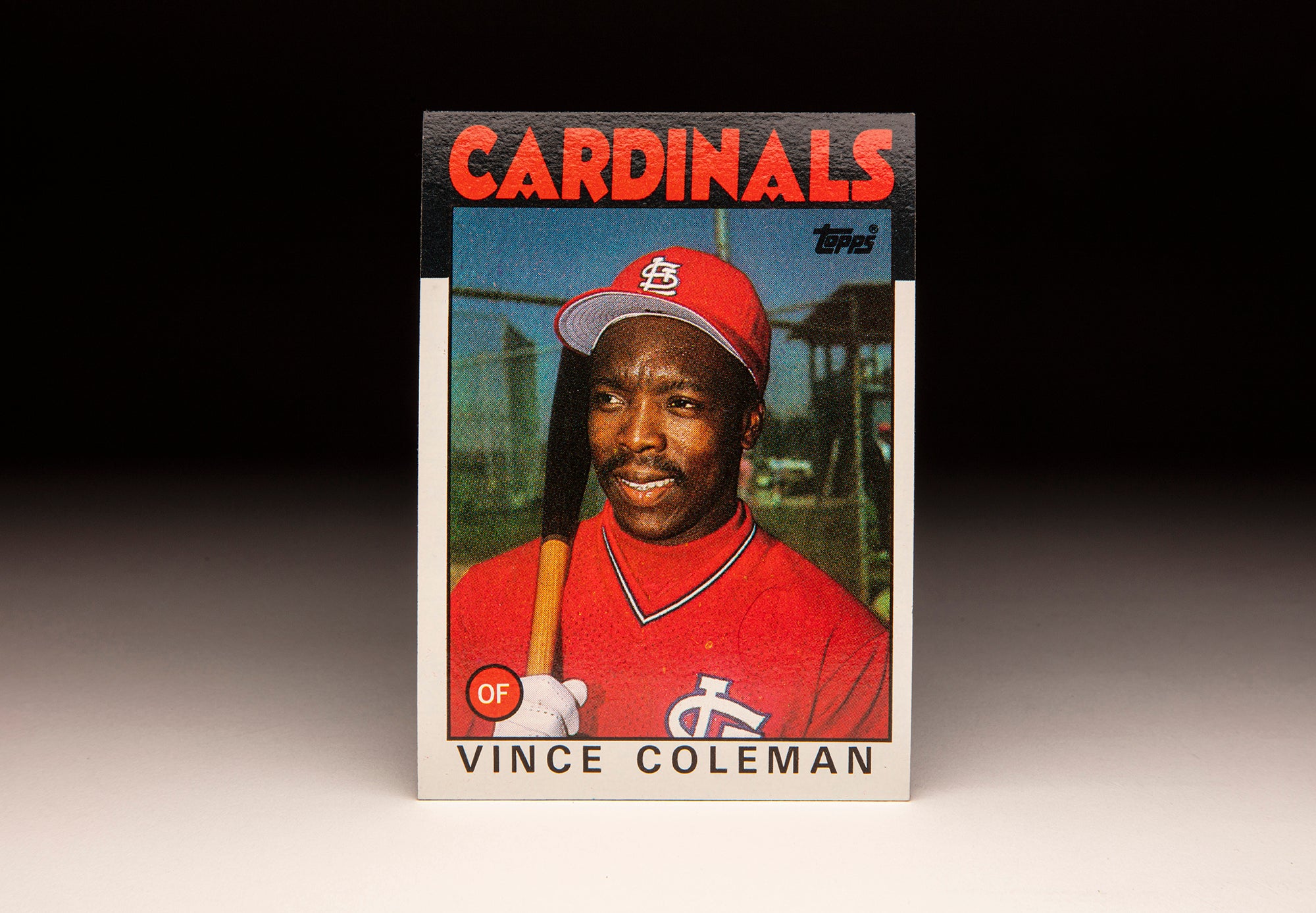
In 1985, the St. Louis Cardinals rolled into the postseason on the strength of the legs of rookie Vince Coleman, who stole 110 bases that year. But with the Cardinals trailing the Dodgers 2-games-to-1 entering Game 4 of the NLCS, Coleman was hurt in a freak accident when the automatic tarpaulin at Busch Stadium caught Coleman’s legs in pregame warmups.
Suddenly, backup outfielder Tito Landrum – who had worked through the Cardinals’ system for almost eight full seasons before making it to the majors – was called upon to replace the most exciting player in baseball. And for the next two weeks, Landrum became national sensation while nearly leading St. Louis to the World Series title.
For Landrum, it was a reward for perseverance that was almost unmatched.
Terry Lee Landrum was born Oct. 25, 1954, in Joplin, Mo. His father, Bobby, was in the Air Force, and Landrum’s family moved several times – living in Thailand, Japan, the Philippines and throughout the United States – during his childhood before settling in Albuquerque, N.M. He starred in football, basketball and track at Highland High School.
“Football was such a tremendous sport at that time as was track,” Landrum told the Albuquerque Tribune in 1985. “They were the thing to do. I never did play baseball at Highland. There was always summer for that.”
As a sophomore in 1969, Landrum won a starting spot in the Hornets’ defensive backfield. That same academic season, Landrum was part of a 400-yard relay team that won the state title.
But after skipping a two-a-day football session to play in a Connie Mack baseball tournament in the summer of 1971, Landrum was dismissed from that team and turned to basketball. He was soon named to the All-City squad as a guard and helped the Hornets Class AAAA state title over Albuquerque High School 57-55, scoring 10 points in the title game.
Despite all his success in other sports, however, Landrum ended up in baseball after taking a football recruiting trip to the University of Oklahoma and seeing the size of some of their players. The 5-foot-11, 175-pound Landrum – with the help of scout Danny Doyle – enrolled at Wilburton Junior College (now Eastern Oklahoma State College) following his high school graduation.
Before completing even one semester of college, Landrum signed with the Cardinals on Oct. 10, 1972. He was sent to Orangeburg of the Western Carolinas League in 1973, where he hit .279 with 21 steals in 70 games. One of his teammates there was Randy Poffo, who would go on to become famous as wrestler Randy “Macho Man” Savage.
But other teammates – players from Latin America – had a more lasting impact on Landrum. They were fans of the Jackson 5 rock band, and they nicknamed him “Tito” – the group’s guitarist who they said resembled Landrum.
Landrum also quickly developed a reputation for being one of the most courteous players on any roster.
“My mom and dad raised me to respect other people,” Landrum told the San Francisco Examiner in 1985.
His mother and father, however, were unable to assist Landrum with hitting breaking balls – and as he rose through the minor leagues, this challenge threatened to derail his career. Landrum hit .236 with 15 steals in 87 games for Class A St. Petersburg of the Florida State League in 1974, then returned to that team in 1975. He hit .221 that season but found a bit of a power stroke with 21 doubles and 11 home runs while stealing 29 bases.
Landrum began the 1976 season with Double-A Arkansas and spent most of the season with the Travelers, save for a short stint with Triple-A Tulsa during the summer. Combined, Landrum hit .274 with seven homers, 46 RBI and 14 steals in 108 games.
He began the 1977 campaign back with Arkansas but was demoted to St. Petersburg. He hit a combined .237 with 25 steals in 93 games that year and remained with St. Petersburg in 1978. At 23 years old, Landrum was more mature than most of his teammates – and he hit .297 with 25 doubles and 68 steals in 117 games. But it was his fourth season with St. Petersburg.
“They should erect a monument in center field for me,” Landrum told the St. Louis Post-Dispatch about his time in the Florida State League after he finally made it to the big leagues.
Landrum’s speed was buying him time in the minors. But the clock was ticking on his career.
“I was making $500 for five-and-a-half months every year,” Landrum told the San Francisco Examiner of his journey through the minor leagues. “It wasn’t easy. I worked as a security guard one winter. But I never thought of giving up baseball. I kept thinking I could make it.”
Facing what amounted to a make-or-break season in 1979, Landrum hit .268 in 71 games for Arkansas before being promoted to Triple-A Springfield, where he batted .259 in 61 games. Over 132 combined contests, Landrum totaled 28 doubles, seven triples, nine homers, 67 RBI and 23 steals.
In 1980, Landrum returned to Springfield and was in the middle of his best season when Cardinals outfielder Bobby Bonds was sidelined in July with a wrist injury. The team called up Landrum to take Bonds’ spot on the roster.
After debuting as a pinch-hitter against the Dodgers on July 23, Landrum found himself in the starting lineup two nights later in San Diego against the Padres. He went 4-for-5 with a double and a run scored, plating the team’s first run of the game in a 3-2 victory.
But Landrum approached his new role with caution.
“I still don’t know,” Landrum told the St. Louis Post-Dispatch about whether he would seek short-term housing in St. Louis. “I’ll have to play it by ear. I think I’m going to wait, I really am.”
Landrum returned to the minors after Bonds returned to the lineup in August. But with Cardinals manager/general manager Whitey Herzog set to reshape the team into a more athletic outfit, Landrum had the opportunity he had been coveting.
Recalled to St. Louis when rosters expanded in September, Landrum saw regular action in the season’s final month. In 35 games with the Cardinals, he batted .247 with two doubles, two triples and seven RBI.
In 1981, Herzog kept Landrum on the Opening Day roster as a reserve outfielder. George Hendrick was in right field nearly every day but Herzog mixed and matched the other two spots with lefty Dane Iorg, switch-hitter Tony Scott and righties Sixto Lezcano and Landrum.
“I know my role,” Landrum told the Post-Dispatch. “Hopefully, I can play someday, but it’s difficult here with such talented outfielders in the organization.
“I like to play baseball.”
Landrum’s love of the game and willingness to work impressed his coaches.
“I spent many, many hours with him, but he wanted to learn,” Cardinals coach Hal Lanier told the Dispatch of his long sessions throwing batting practice to Landrum. “There aren’t too many players who want to learn that much.”
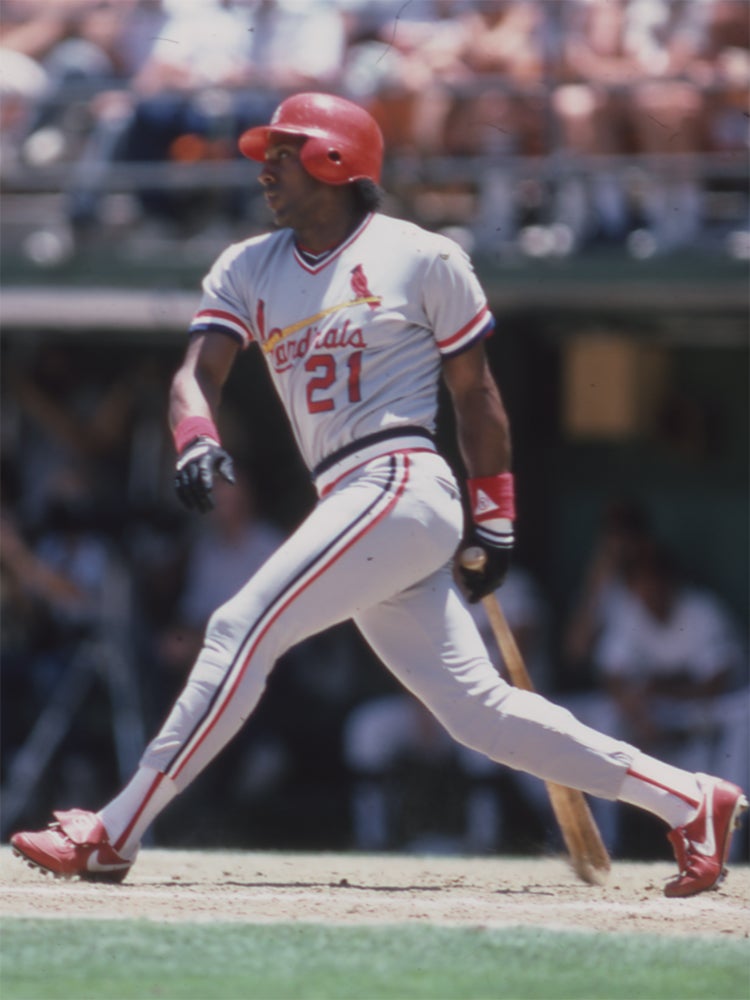
Landrum stayed with the Cardinals all season in 1981, batting .261 with five doubles and four triples in 81 games. The Cardinals posted the best record in the National League East that year at 59-43 but did not win either the first half or second half title, shutting them out of the postseason.
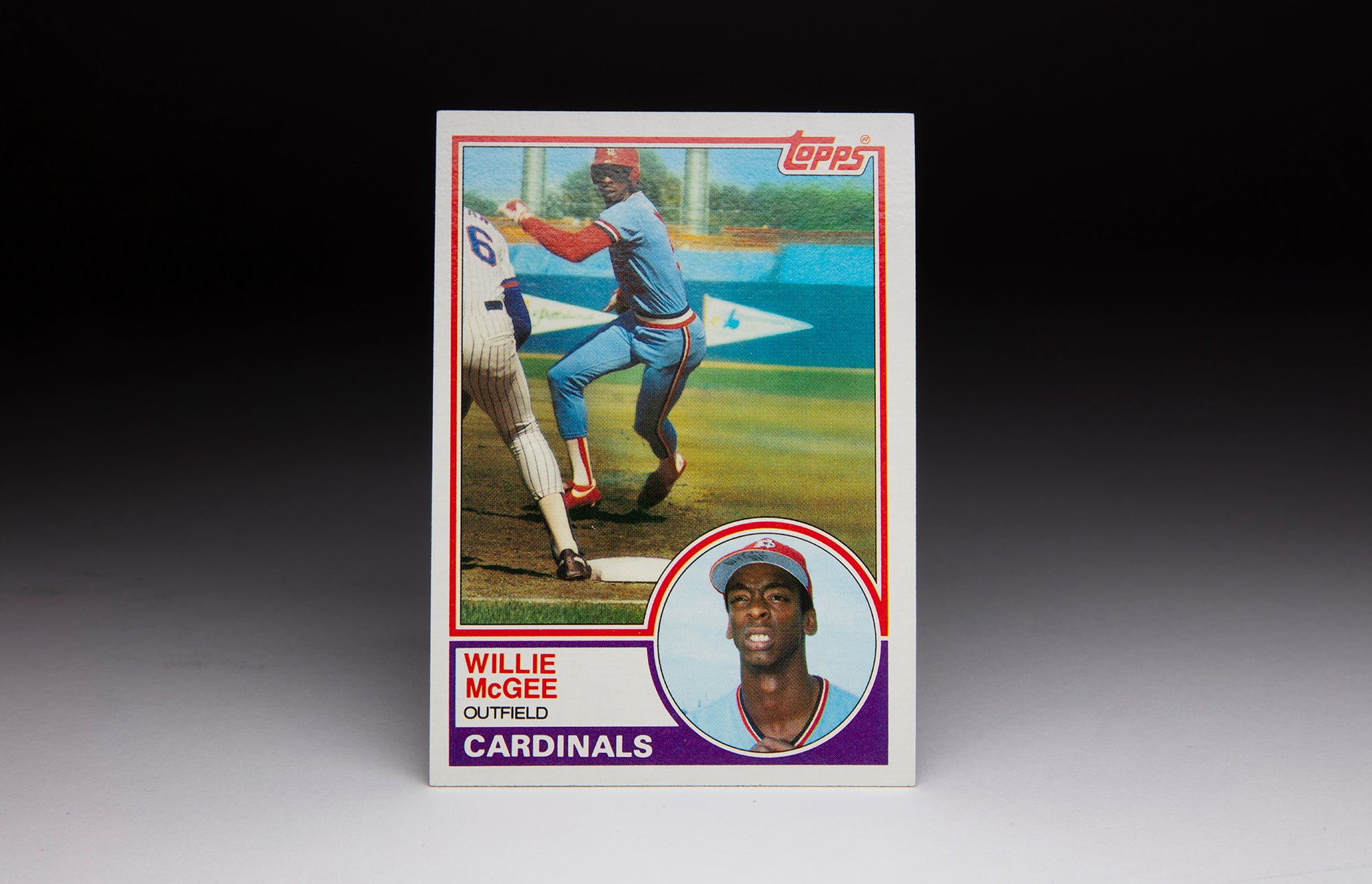
Landrum began the 1982 season on the Cardinals’ bench. But with a crowded outfield featuring new acquisitions Lonnie Smith and Willie McGee, playing time was scarce. In the season’s first month, Landrum came to the plate only 10 times.
He saw more action in May, however, as Hendrick and youngster David Green both suffered injuries. On May 13 vs. the Braves, Landrum hit his first big league home run.
“The fact that Whitey still had confidence in me…built confidence in me,” Landrum told United Press International. “I know when everybody gets healthy I’m going to go back to coming off the bench and playing in late innings and pinch-running.”
Landrum spent virtually the whole season with St. Louis – save for a month with Triple-A Louisville – and hit .278 in 79 games but came to plate just 84 times. He was not included on the Cardinals’ postseason roster as St. Louis won the National League pennant and World Series.
Now the owner of a World Series ring, Landrum still did not have a guaranteed job with St. Louis. Herzog informed him in Spring Training of 1983 that he would be outrighted off the roster but asked him to stay with the team as the Cardinals tried to work out a trade. When none materialized, Landrum was sent to Triple-A.
“I was sad about being outrighted,” Landrum told the St. Louis Post-Dispatch in the fall of 1983 when things had decidedly turned in his favor. “Whitey called me in and wanted to know if I wanted to stay in the organization. My first thought was ‘yes’ but then I realized the guys ahead of me, like Willie (McGee) and David Green, and I thought maybe it was best that I go to another organization.”
Landrum played in 111 games for Louisville that year, batting .292 with 18 homers and 77 RBI. Then on Aug. 31, the Cardinals sent Landrum to the Orioles as the player to be named later in a deal that had brought Floyd Rayford to St. Louis in June.
The Orioles immediately placed Landrum on their roster.
“He knows he has a role to play,” Orioles general manager Hank Peters told the Post-Dispatch about Landrum. “Character, attitude and dedication – it’s all part of being an Oriole.”
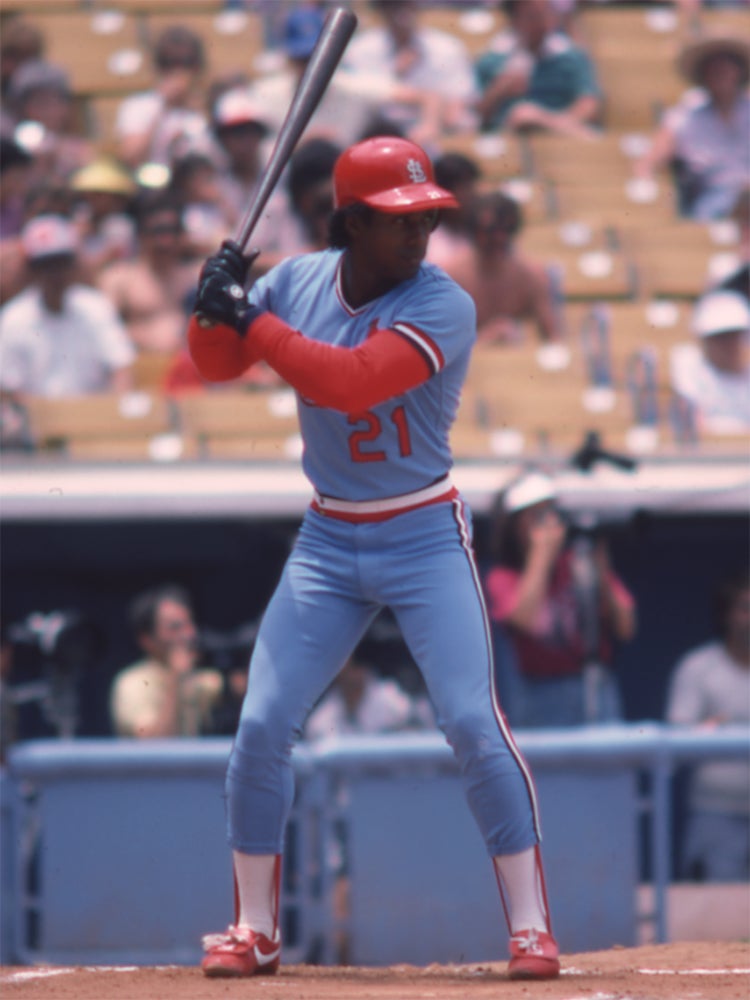
Landrum hit .310 over 26 games with Baltimore as the Orioles won the American League East. This time, he made the postseason roster – and Landrum became an overnight sensation when his top-of-the-10th home run in Game 4 of the ALCS vs. the White Sox broke a scoreless tie. Baltimore went on to win 3-0 and advance to the World Series.
“There are lots of guys who played 15 or 16 years who never got World Series rings,” Landrum told the Post-Dispatch. “And here I am with a chance for two in two years.
“Those guys are in the Hall of Fame. I’m in the Hall of I don’t know what.”
Landrum appeared in three games off the bench in the World Series, failing to come to the plate but grabbing the first out of the bottom of the ninth of Game 5 with a running catch off the bat of Gary Matthews. Two batters later, the Orioles won the title and Landrum had rings in back-to-back seasons.
But Landrum never got the chance to help the Orioles defend their title. On March 25, 1984, he was traded back to St. Louis in exchange for a minor leaguer. He appeared in 105 games that season for the Cardinals, reprising his role as a backup outfielder. He hit .272 with what turned out to be a career-best 26 RBI, setting the stage for a slightly different role in 1985.
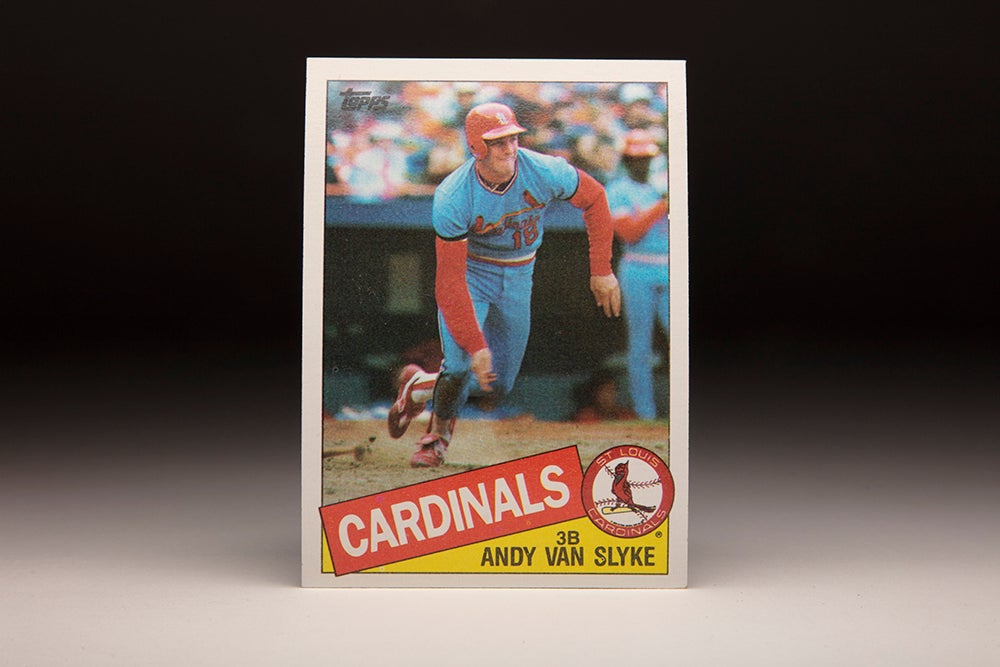
With Coleman leading the way, the Cardinals harassed opponents on the basepaths in 1985 until teams simply could not withstand the pressure. Landrum started 38 games – all in right field – as he platooned with lefty-swinging Andy Van Slyke. Landrum hit .280 with four homers and 21 RBI as the Cardinals returned to the postseason as NL East champions.
Landrum would once again shine in the limelight.
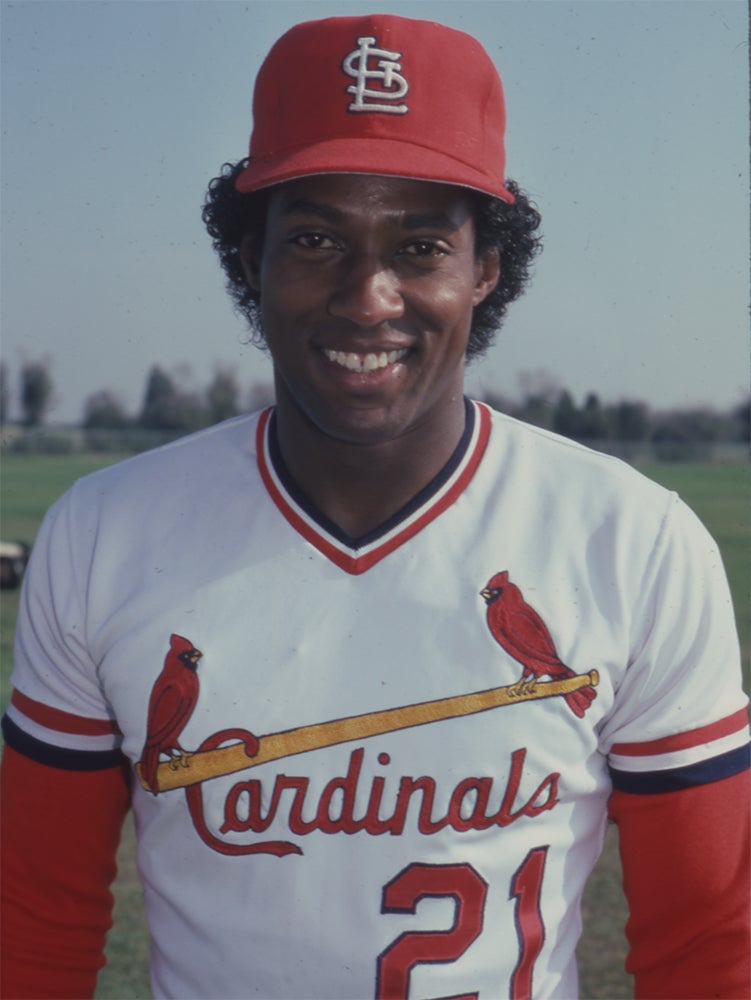
Replacing Coleman in the lineup in Game 4 of the NLCS vs. the Dodgers after Coleman’s freak injury via the tarp roller, Landrum went 4-for-5 with three RBI as the Cardinals won 12-2 to tie the series at two games apiece. He stole a base in Game 5 as the Cardinals won a memorable contest on Ozzie Smith’s bottom-of-the-ninth home run, and in Game 6 Landrum’s seventh-inning single was in the middle of a rally that saw St. Louis erase a three-run deficit to tie the game at 4.
Jack Clark’s three-run homer in the ninth inning gave St. Louis a 7-5 lead, and the Dodgers went down in order in the bottom of the ninth to send the Landrum and the Cardinals back to the World Series.
In the Fall Classic vs. the Royals, Landrum started each of the seven games in left field. He went 2-for-4 with a double and run scored in both Game 1 and 2 as St. Louis won twice to move to just two victories away from another title. Landrum followed with a hit in Game 3 before homering off Bud Black in the second inning of Game 4, giving the Cardinals the only run they would need in a 3-0 win.
“The first game of this World Series, when I saw my feet in the batter’s box, I could hardly believe it,” Landrum told the San Francisco Examiner after his Game 4 home run. “I couldn’t get out of the minors, because I couldn’t hit a curve. But people helped me work on it.
“It’s hard to believe I’m getting this chance to be a hero.”
The Cardinals were just one win away from giving Landrum his third World Series ring. And though Landrum had a hit in each of the final three games of the series, the Royals won each time to grab the title.
Landrum, who hit .385 with five runs scored during the 1985 postseason, would not appear in a playoff game again – though he would play for two more teams that won division titles.
The Cardinals were unable to repeat in 1986 as Landrum hit .210 over 96 games for a St. Louis team that went 79-82.
Then in 1987, Landrum went 3-for-3 on Opening Day against the Cubs while settling into his usual bench role before suffering a broken left foot in batting practice on May 1. He had appeared in 30 games when St. Louis released him on the Fourth of July.
“It’s a humbling game,” Landrum told the Post-Dispatch after he joined the Dodgers six days after being released. “The elevator goes up to the penthouse and all the way down to the basement.”
Landrum hit .239 in 51 games for the Dodgers. The Cardinals, meanwhile, won another NL pennant before losing to the Twins in the World Series.
In 1988, the Dodgers won the World Series but Landrum was not with the team to experience another title. The Dodgers released him on Opening Day.
Landrum joined the Orioles on April 12 but was released after hitting .125 in 13 games for the team he starred for in the 1983 postseason. It would be his last games in the big leagues.
He hooked on with the Rangers and played in 69 games with Triple-A Oklahoma City but was not recalled to the majors.
Landrum appeared in 68 games for the Reds’ Triple-A team in Nashville in 1989 and played in the Senior Professional Baseball Association before exploring independent ball in 1990 and in the Mexican League in 1991.
In retirement, Landrum returned to school and in 1998 graduated as valedictorian of his class at New York University in physical therapy.
Over nine big league seasons, Landrum batted .249 with 248 hits in 607 games. But few players endured the minors longer to reach the majors – and even fewer starred in multiple postseason series like Landrum.
His persistence proved to be his greatest asset.
“When you sit on the bench, you can watch and learn a lot of things,” Landrum told UPI in 1982. “You have to prepare yourself. You have to keep your spirits above water. I finally made it to the majors, and I really believe someday, somewhere I will get an opportunity to start every day.”
Craig Muder is the director of communications for the National Baseball Hall of Fame and Museum