Walsh Joins the No-Hit Club
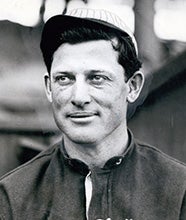
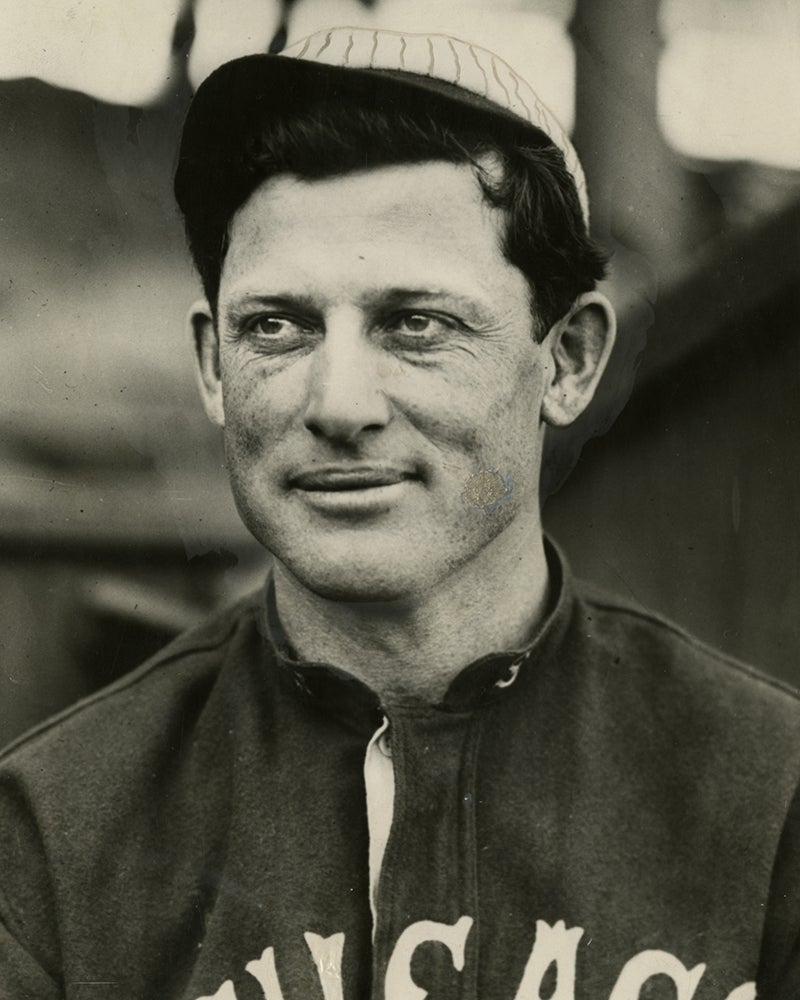
At the turn of the 20th century, Ed Walsh assembled a big league resume that continues to evade modern-day pitchers. Throwing 14 seasons for the White Sox between 1904 and 1917, the right-hander tallied 195 wins – highlighted by Major League Baseball’s last 40-win season in 1908 – and frequently found himself sitting atop leaderboards.
He led the American League in WAR in 1907 and 1908, topped all MLB in the modern metric in 1911, and he surpassed all pitchers in strikeouts in 1908 and 1911. In ERA, he led the AL in 1907 and all leagues in 1910 – en route to a career ERA of 1.82 that remains the lowest of all time.
Walsh would spitball his way to two runner-up finishes in AL Chalmers Award voting (what was then the equivalent of the Most Valuable Player Award) and five one-hit, nine-inning games. And on Aug. 27, 1911, against the Boston Red Sox, Walsh secured his most elusive accolade yet, and one that encapsulated the command that defined his career: his first no-hitter.
Walsh’s historic outing almost came 12 days earlier; in game two of Chicago’s series against Detroit, a 2-0 Sox win, Walsh nearly quieted all Tigers bats, if not for a sixth-inning single by catcher Oscar Stanage.
It was in the fifth inning of his day against the Red Sox that some 18,000 onlookers at White Sox Park realized they were witnessing another brush with history. South Siders received each cold Bostonian bat with “wild shrieks,” reported the Chicago Inter Ocean, that “increased in volume and intensity as the memorable afternoon progressed.”
By the top of the ninth, Walsh had faced a mere 25 batters, throwing a game that was just four balls short of perfect; he granted Boston its only base in the fourth inning, issuing a walk to center fielder Clyde Engle. With the White Sox up 5-0, it would be the bottom of the Boston lineup standing between Walsh and the coveted no-hitter.
Walsh defended his no-hit bid, fielding a ground ball from Red Sox shortstop Steve Yerkes and tossing it to first to open the frame. After striking out pinch hitter Leslie Nunamaker, it would be a groundout by right fielder Joe Riggert that finally granted Walsh entry into an exclusive club: Only 22 pitchers, and two White Sox pitchers, had pieced together no-hitters at that point in the Modern Era.
An emotional display from Walsh’s teammates – and a field rush of thousands of “taxpayers, voters, prominent citizens, crowned heads, suffragettes and popcorn fiends” – would cap “Big Ed’s” historic day. The White Sox win would stand as the only no-hitter of his career.
Walsh was elected to the Hall of Fame in 1946.
Abbey Dempsey was the 2026 communications intern in the Frank and Peggy Steele Internship Program for Leadership Development