#CardCorner: 1985 Topps Shane Mack
A member of the celebrated 1984 United States Olympic Baseball team, Shane Mack seemed destined for big league stardom.
Mack would eventually be a World Series champion and a career .299 hitter – but not before becoming one of the most successful Rule 5 Draft picks of his era.
Shane Lee Mack was born on Dec. 7, 1963, in Los Angeles. After his parents divorced, he was raised by his mother, Glenda – a junior high teacher in L.A. The family also included Shane’s younger brother, Quinn, who would eventually play five big league games for the Mariners in 1994.
The brothers learned baseball via their mother.
“I took them to the batting cages, helped coach their Little League teams, worked in the snack bar,” Glenda told the Los Angeles Times in 1983. “I’m just glad my two kids turned out to be boys because that is how they were going to be raised. They were going to be athletes no matter what. They also turned out to be good ones.
“It’s a good thing they turned out to be good kids, too. If I hadn’t raised good kids, I’d have gone crazy by now.”
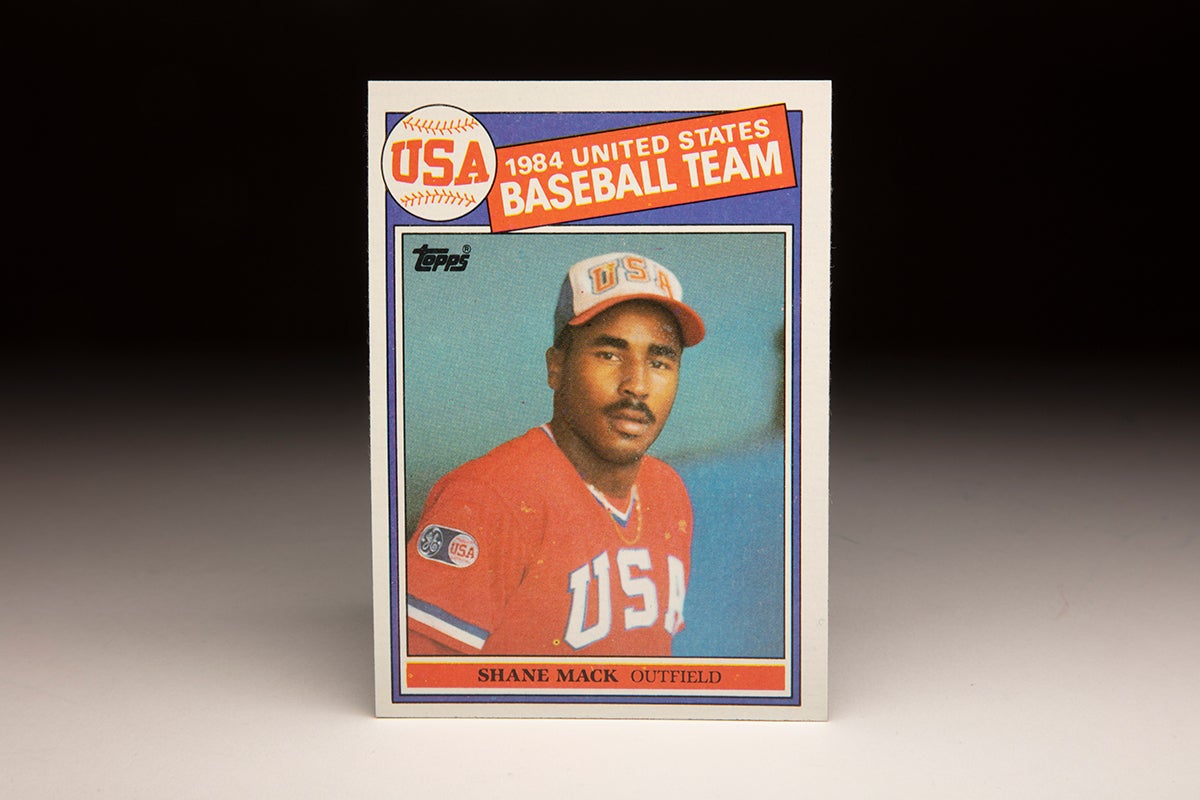
At Richard Gahr High School in Cerritos, Calif., Shane Mack was a two-time California Interscholastic Federation selection and hit .455 as a senior in 1981 while setting a national record by recording 16 straight hits. The Kansas City Royals selected Mack in the fourth round of the MLB Draft that year but Mack turned down a reported $42,000 bonus and enrolled at UCLA.
“I remember the questions (Shane and his mother) asked when I was recruiting Shane,” UCLA head coach Gary Adams, who led the Bruins for 30 seasons, told the Times. “They weren’t your average: ‘Will I start my first year?’ or ‘What position will he play?’
“Instead, it was: ‘Will he get good counseling?’ and ‘Will baseball conflict with my classes a lot?’”
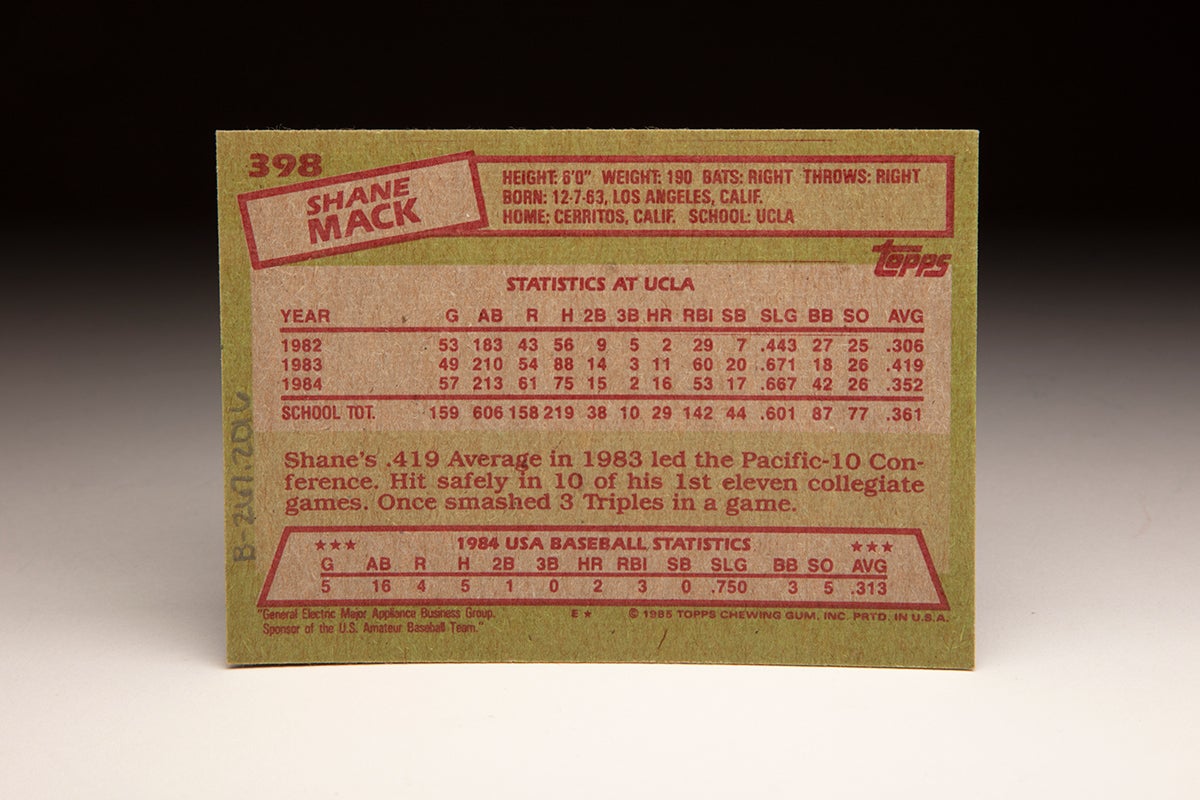
An “A” student at UCLA, Mack also starred on the diamond for the Bruins. He hit .306 with two homers and 29 RBI in 53 games as a freshman, then led the Pac-10 with a .419 average as a sophomore while earning All-America honors.
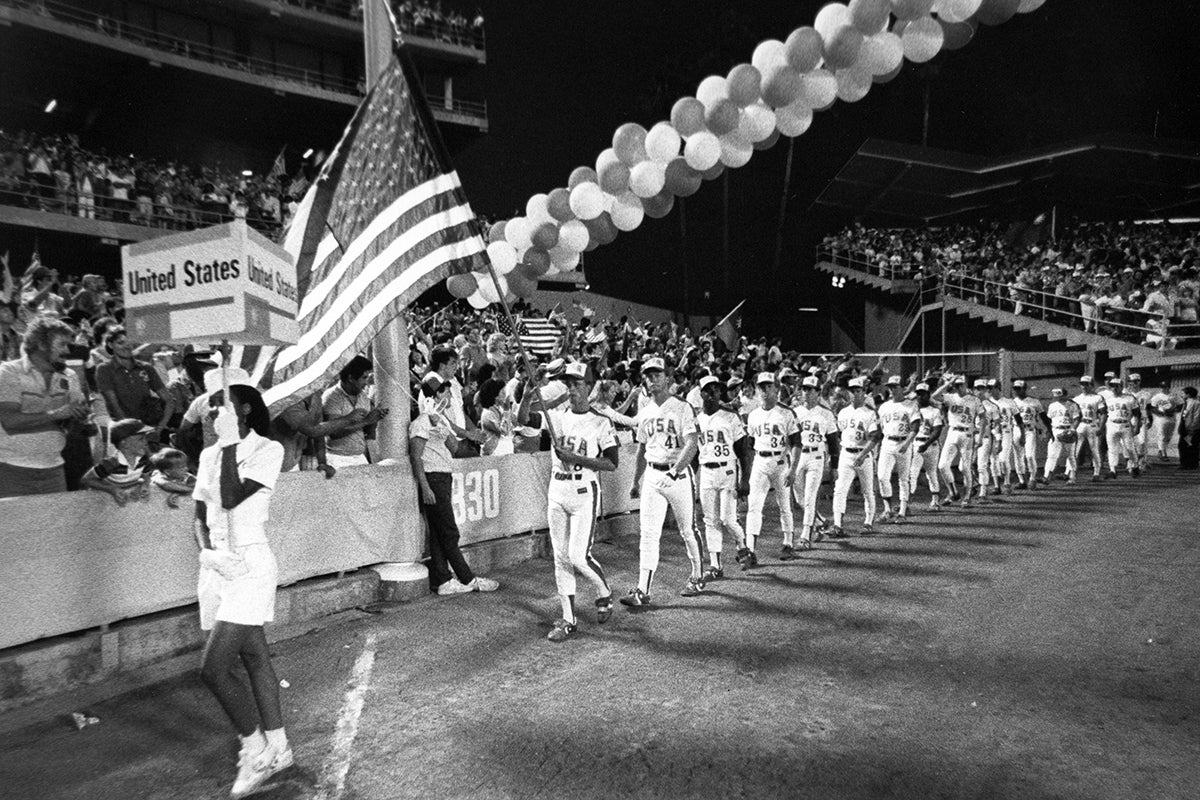
Mack hit .352 with 16 homers and 53 RBI as a junior, earning a spot on the United States Olympic Team that would play baseball as a demonstration sport at the Los Angeles Summer Games in 1984. Team USA took home the silver medal after Mack was selected with the 11th overall pick by the Padres in the MLB Draft. He hit .313 with two homers in five games in the Olympics before reporting to the Padres to prepare for the 1985 season.
Assigned to Double-A Beaumont of the Texas League, Mack batted .260 with 23 doubles, three triples, six homers, 55 RBI and 12 steals in his first pro season. He returned to Beaumont in 1986, this time hitting .281 with 15 homers and 68 RBI in 115 games before being promoted to Triple-A Las Vegas late in the season. Mack hit .362 for the Stars in 19 games, reinforcing the notion that he was a major part of the Padres’ future.
Sent back to Triple-A to start the 1987 season, Mack was hitting .336 with 11 doubles, five homers and 26 RBI in 39 games when Steve Garvey suffered a torn left biceps muscle in late May. The injury sidelined Garvey for the rest of the season (and ended his big league career), and the Padres adjusted by moving John Kruk from left field to first base and calling up Mack for his big league debut.
Starting in right field against the Phillies on May 25, Mack went 0-for-2 with two walks and a run scored.
“Mack’s playing or we wouldn’t have brought him up,” Padres manager Larry Bowa told the North County Times of Oceanside, Calif. “We won’t bury the guy if he gets off to a slow start. We’ll watch him closely. We might even sit him against some of the more overpowering right-handed pitchers.”
The right-handed swinging Mack looked right at home in the big leagues.
“I feel good, I feel I belong,” Mack told the North County Times. “I feel this is a year to build on. I think the Padres will be good. There are a lot of good prospects in the minor leagues.”
The Padres needed those prospects as the team went 65-97 that season, finishing last in the National League West. Mack batted .239 with 11 doubles, three triples, four home runs and 25 RBI in 105 games – most of which came in center field.
Most observers believed Mack was destined to become one of the best outfielders in the majors.
“There is no way Shane Mack won’t make it in the big leagues,” Oddibe McDowell, who shared outfield duties with Mack on the 1984 Olympic team, told the North County Times.
Mack played winter ball in Puerto Rico that year, working on his approach against right-handers (he batted just .208 against righties in 1987). But when Mack struggled in Spring Training in 1988, the Padres decided to keep Shawn Abner – the No. 1 overall pick in the 1984 MLB Draft – on the roster and send Mack back to Triple-A.
“I felt rejection when I got sent down,” Mack told the Daily Times-Advocate of Escondido, Calif., after he returned to the Padres in May. “I was wondering if the team had given up on me.”
Mack quickly proved he had mastered Triple-A when he began the season with a 27-game hitting streak. He was batting .379 when the Padres brought him back up.
“When I got sent down, I tried to take my anger out on the ballfield,” Mack told the Daily Times-Advocate. “I had kept it all inside. I felt that I knew I could play but I feel I didn’t show them that.”
But Mack was unable to translate his Triple-A success into hits with San Diego. After two months as the Padres’ everyday center fielder, Mack was hitting .244 with no homers and 12 RBI in 56 games. The Padres sent him back to Triple-A in July.
Things got worse in 1989 when a bone spur in his right elbow kept Mack on the shelf at the start of the season. The Padres eventually optioned him to Triple-A, but Mack appeared in only 24 games that year due to the injury. His season ended when he underwent surgery on the elbow.
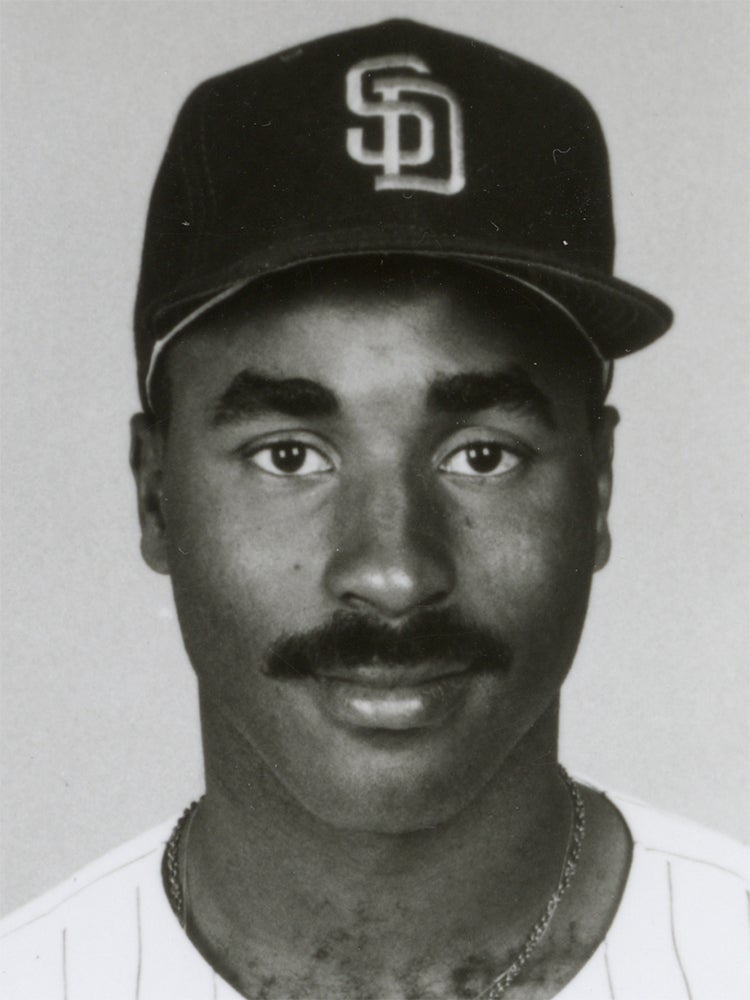
The Padres left Mack off their 40-man roster following the season, and on Dec. 4, 1989, the Twins selected Mack in the Rule 5 Draft.
“I just tried too hard with the Padres,” Mack told the North County Blade-Citizen of Solana Beach, Calif. “I put a lot of pressure on myself. I felt I had to get two hits every time I was in or I wouldn’t play for two or three days.
“I think a shot to play is all I need.”
Padres general manager Jack McKeon agreed with Mack’s self-evaluation.
“Some guys try too hard,” McKeon told the Blade-Citizen. “In Shane’s case, he tried to get six hits in three at-bats.”
In 1990, Mack earned a spot on the Twins’ Opening Day roster and found himself in a platoon role in right field with Randy Bush. He thrived in the role, blistering lefties to the tune of a .370 batting average with five home runs and 27 RBI in 168 plate appearances. But Mack also hit right-handers, batting .287 in 185 trips to the plate.
In 125 total games, Mack hit .326 – a figure that would have ranked second in the league had Mack had enough at-bats to qualify – with 10 doubles, four triples, eight home runs and 44 RBI.
Mack’s strong defensive skills also prompted talk in the spring of 1991 – talk that was not discouraged by manager Tom Kelly – that Mack would displace Kirby Puckett in center field, moving the future Hall of Famer to left or right.
“Right now, (Mack) is a little quicker than Puck and he can cover more ground,” Kelly told the Associated Press in Spring Training. “Unless something really goes wrong, (Mack) is going to be our center fielder.”
Kelly kept his word and started Mack in center field on Opening Day, with Puckett in right. Mack played winter ball in Mexico that offseason and credited manager Tony Oliva with helping him refine his approach at the plate.
For the first time in his career, Mack entered Spring Training knowing he had a job.
“I’ve never been in this situation before at the start of Spring Training,” Mack told the AP. “I definitely feel more relaxed.”
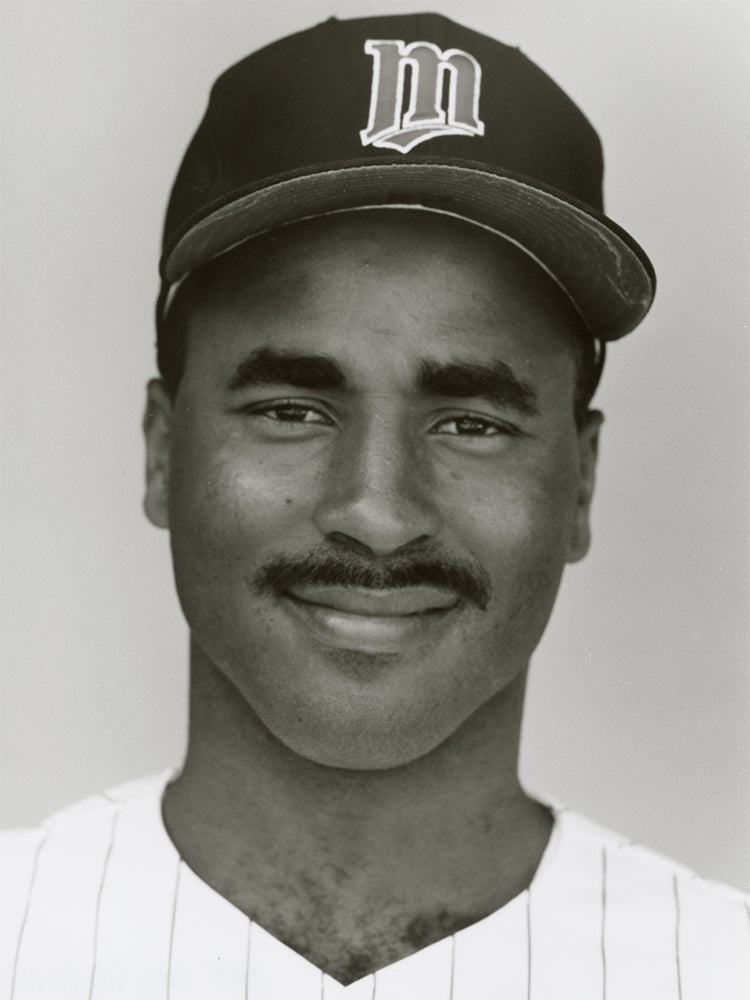
But the Twins started the 1991 season 2-9, and Kelly quickly moved Puckett back to center and once again began platooning Mack. He was hitting .264 through July 24 when he and the Twins got red hot as Minnesota took control of the AL West. Over Mack’s next 35 games, he batted .374 with 10 doubles, six triples, seven homers and 26 RBI as the Twins went 22-13.
By the end of the season, Mack was ensconced in right field. He hit .310 with 27 doubles, eight triples, 18 home runs, 74 RBI and 79 runs scored as Minnesota advanced to the ALCS vs. Toronto. In Game 1, Mack had an infield single in his first at-bat and later scored on a Greg Gagne single to increase Minnesota’s lead to 3-0. Then in the third, Mack doubled home Chili Davis – chasing Toronto starter Tom Candiotti and giving the Twins a 5-0 lead.
That RBI proved to be the difference as Minnesota hung on to win 5-4.
In Game 3, Mack tripled and scored in the fifth inning – the ball glanced off right fielder Joe Carter’s glove – to cut Toronto’s lead to 2-1. The Twins went onto win 3-2 in 10 innings to take a 2-games-to-1 lead in the series, and Mack added a hit and an RBI in Game 4 and two more hits in Game 5 as Minnesota rolled into the World Series.
But in the Fall Classic, Mack went 0-for-15 with seven strikeouts in the first four games against the Braves. The slump prompted Kelly to start Davis – who had played just three innings in the field all season while serving as the team’s DH – in right field and bench Mack. The move did not produce a win, however, and Minnesota returned home for Game 6 down 3-games-to-2.
“I thought there would be some sort of shakeup,” Mack told the Newark (N.J.) Star-Ledger. “Throughout the season, when things weren’t going good, T.K. would change things.
“I’m not disappointed about not playing. I’ll do whatever I can to help the team win.”
Mack would get his chance. And Twins hitting coach Terry Crowley had a hunch that Mack was ready.
“Shane might have put a little pressure on himself, trying to do too much with one at-bat,” Crowley told the Star-Ledger. “I have a feeling that Shane’s offense will be a big part of this series before it’s over.”
In Game 6, Mack started in right field and singled off Steve Avery in the first inning, driving home Puckett – who had tripled in the game’s first run – to give Minnesota a 2-0 lead. Mack then doubled to lead off the fourth but was stranded, keeping the score 2-0.
The game eventually went to extra innings, and Puckett won it in the bottom of the 11th with a legendary home run that set up Game 7.
In the finale, Mack singled in the second inning but Braves starter John Smoltz squelched the rally. The game remained scoreless through nine innings (Mack grounded into a double play in the bottom of the ninth as Alejandro Peña pitched out of trouble), and Kelly sent starter Jack Morris back out to pitch the 10th.
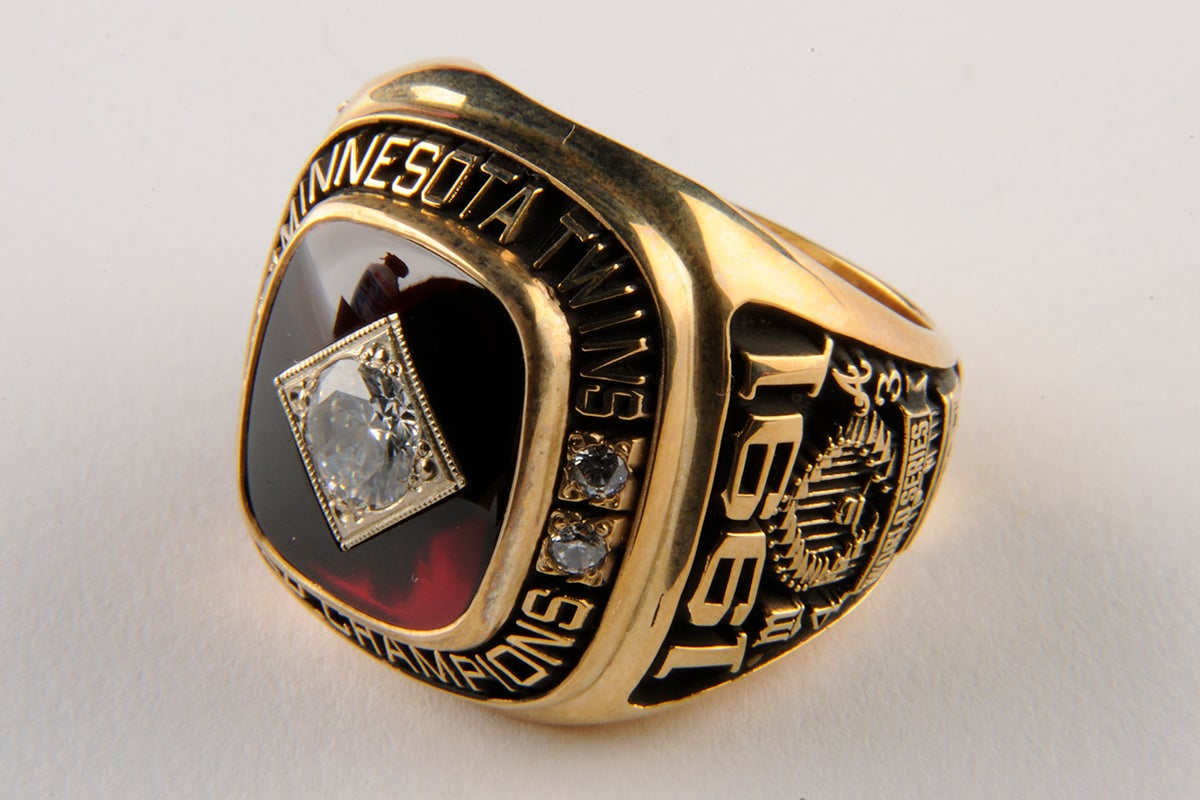
When Morris put up another zero, it set the stage for Gene Larkin’s pinch-hit single that scored Dan Gladden to give Minnesota the title. It would be Gladden’s last game with the Twins as the left fielder signed with Detroit following the season, prompting the Twins to move Mack to left field in 1992. The team also moved Mack into Gladden’s leadoff role for the first half of the season before placing him lower in the lineup in the second half.
Mack embraced the changes, hitting better than .400 during Spring Training in 1992.
“Spring Training is Spring Training, but he worked hard down there,” Crowley told the Sioux Falls (S.D.) Argus-Leader early in the 1992 season. “He had a good year last year and he’s a year better. No way are we going to ask Shane Mack to do anything different.”
Mack had his best big league season that year, batting .315 with 101 runs scored, 31 doubles, six triples, 16 home runs, 75 RBI and 26 steals. He was also hit by pitches a league-leading 15 times, pushing his on-base percentage to .394. He finished fifth in the AL in batting average, sixth in OBP and eighth in Wins Above Replacement with a 6.5 figure.
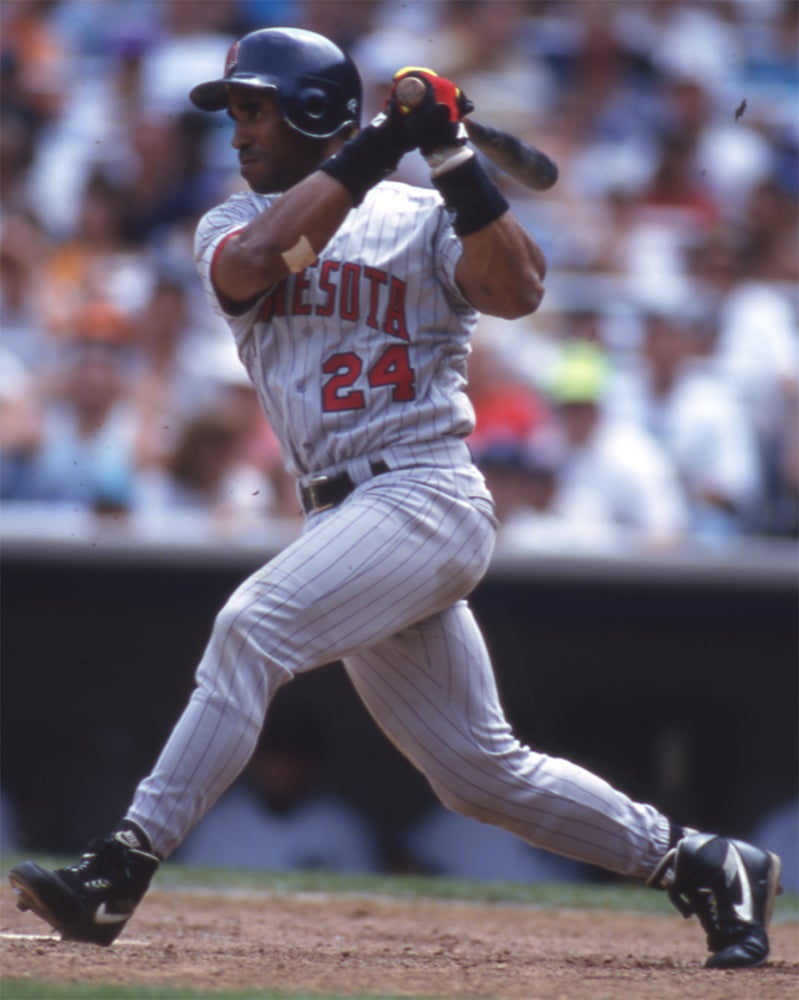
Mack earned $1.075 million in 1992 – a result of his agreement not to go to arbitration after the 1991 season, a deal worked out when he first joined the Twins due to his issue with his elbow. He increased his salary to $3.05 million in 1993, when he played in only 128 games due to a right shoulder separation in Spring Training that bothered him for months. But he still hit .276 with 30 doubles, 10 homers and 61 RBI.
Now just one service day short of being eligible for free agency, Mack agreed to a $3.25 million deal with the Twins for 1994. He spent much of the season in left field, batting .333 with 15 home runs and 61 RBI in 81 games despite not playing his first game until May 3 while he recovered from shoulder surgery.
Finally a free agent, Mack’s timing couldn’t have been much worse. A work stoppage canceled the World Series, and when the strike dragged on into the winter, Mack decided his future lay overseas. On Jan. 4, 1995, Mack signed what was reported to be the largest contract in Japanese baseball history – agreeing to a two-year, $8.1 million deal with the Yomiuri Giants of the Japan Central League.
“He’s been there. He knows people there,” Mack’s agent, Eric Goldschmidt, told the AP. “He has Japanese friends from UCLA (from) his days in college.
“He hits for average. He hits for power. He’s an excellent outfielder. He’s a good guy.”
Unlike some players who had difficulty adjusting to the Japanese game, Mack gave the Giants all they could have wanted. In 1995, he batted .275 with 79 runs scored, 20 homers and 52 RBI in 120 games. He was even better in 1996, hitting .293 with 28 doubles, 22 homers and 75 RBI in 127 games while helping the Giants win the Central League title.
The Giants lost to the Orix BlueWave – a team that featured a 22-year-old Ichiro Suzuki in his third full season in Japan – in the Japan Series, and Mack returned to MLB after his contract expired, signing with the Red Sox on Dec. 14 for one year and $1.85 million.
“Anytime you disappear for a couple of years, you’ve got to prove yourself if you want to stay in the game and get another contract,” Mack told The Boston Globe. “I know there are still doubts about the shoulder. But by playing center field in Japan, I was able to prove to everyone that I can still play the outfield.
“I don’t think I’ve lost anything.”
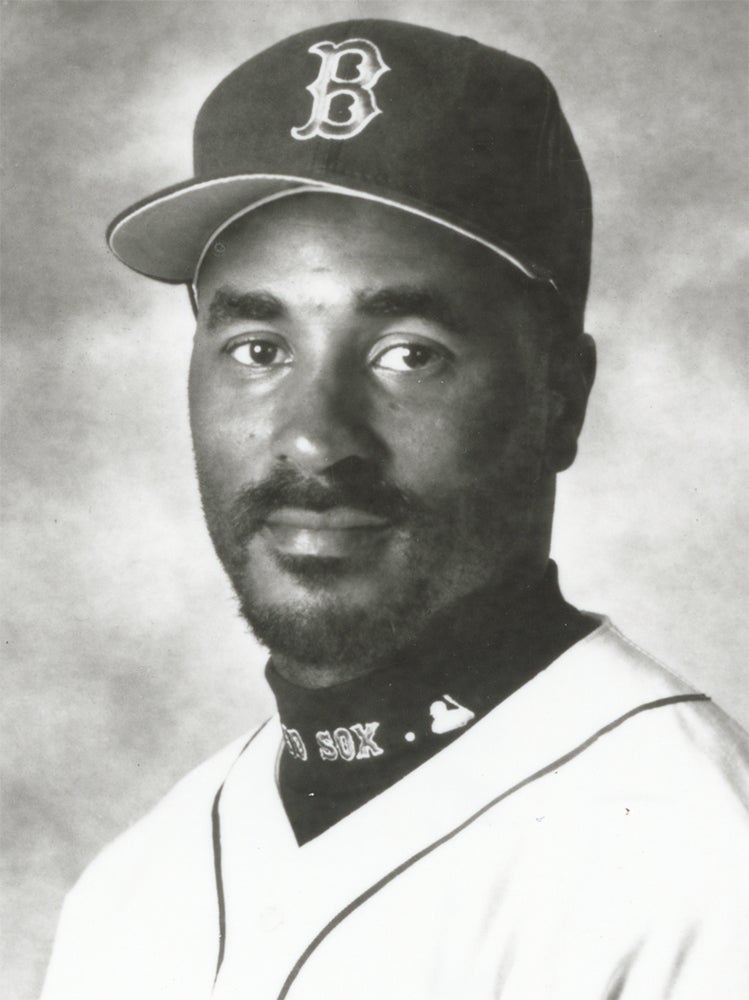
Mack started in center field on Opening Day in 1997 after rushing back from a broken finger suffered in Spring Training. His shoulder continued to bother him, and Mack played in just 60 games, hitting .315 when he was on the field.
On Nov. 22, 1997, Mack agreed to a one-year deal with the Oakland A’s. But he appeared in only three games – all off the bench – before being traded to the Royals on April 8, 1998, in a deal that brought Mike Macfarlane to Oakland.
After going 0-for-2 in his first game with Kansas City the day after the trade, Mack strung together a 15-game hitting streak. He was hitting .278 in late July when a bulging disc in his back ended his season.
Mack returned to the Padres on a minor league deal for the 1999 season but was among the team’s last cuts in Spring Training. He soon opted to retire.
Over nine big league seasons, Mack totaled 853 hits – three shy of a .300 batting average. He was particularly effective against left-handers, hitting .312 with a .506 slugging percentage and an .880 OPS.
And though he never made an All-Star team, Mack earned a World Series ring – and provided value at the plate in each of his professional stops.
“You don’t really know what you can do until you’re given a chance,” Mack told the Associated Press in 1993. “Yes, there’s a great deal of self-satisfaction. Not that I’ve shown the Padres, not really any vengeance. I’m just happy I reached my goal of being a major league ballplayer.”
Craig Muder is the director of communications for the National Baseball Hall of Fame and Museum