#CardCorner: 1989 Fleer Vicente Palacios
The Pittsburgh Pirates were barreling down the stretch of the 1990 season, trying desperately to hold off a New York Mets team that had started slowly but was now in striking distance of first place.
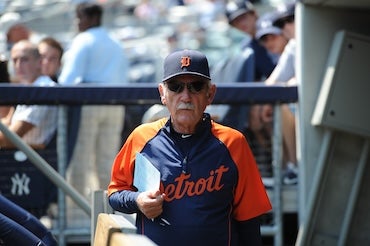
Pittsburgh had led the division for much of the year despite not having an established closer, with manager Jim Leyland orchestrating a committee approach that featured pitchers like Bill Landrum, Ted Power and Stan Belinda in the role of the stopper.
Then in September, the Pirates promoted Vicente Palacios – who spent the entire season as a starter with Triple-A Buffalo – to the big leagues. And in 15 innings over seven games, Palacios allowed just four hits and no runs while recording three multi-inning saves.
Pittsburgh won the National League East, and Palacios won a spot in the hearts of Pirates fans who longed to see a winning team.
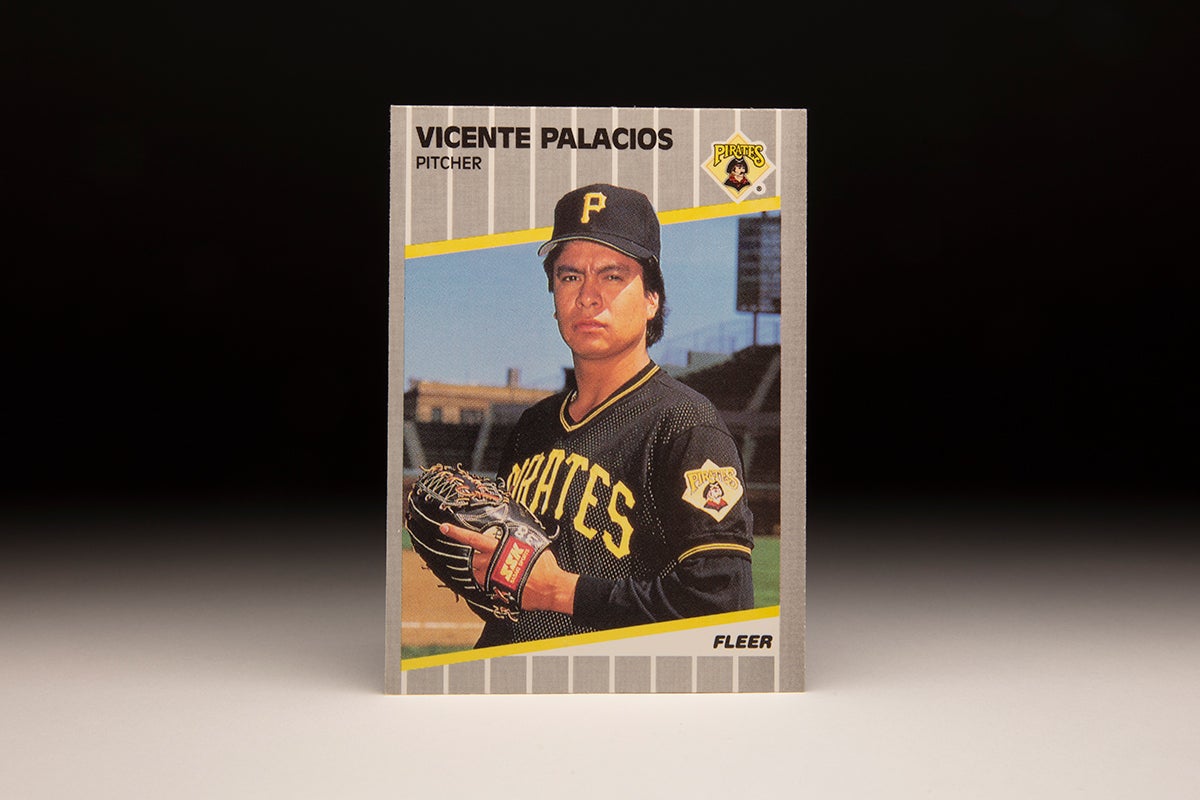
Born July 19, 1963, in Manlio Fabio Altamirano in the state of Veracruz on the Atlantic Ocean side of Mexico, Palacios made his professional debut with Veracruz and Aguascalientes of the Mexican League in 1983, posting a combined 12-6 record during a season in which he turned 20 years old.
He was 7-8 with 120 strikeouts in 128 innings for Veracruz in 1984 before his contract was purchased by the White Sox on July 20. Sent to Double-A Glens Falls of the Eastern League, Palacios went 1-2 with a 2.49 ERA in five starts.
He returned to Glens Falls in 1985 and went 1-1 with a 4.76 ERA in eight games before being returned to Veracruz, where he spent the entire 1986 season, going 4-12 with a 4.20 ERA. But the Pirates liked what they saw from Palacios in the Mexican Winter League and signed him on Dec. 4, 1986 – only to lose him to the Brewers in the Rule 5 Draft just four days later.
“If he went out and won 12 to 14 games for us it wouldn’t surprise me,” Brewers scout Ray Poitevint told the Associated Press. “Ability-wise, he’s one of our best pitchers.
“(Palacios’ fastball) has the velocity of an average major league fastball but drops straight down. (The hitters are) not timing it. And he has 88-90 mph on his fastball and an above-average curveball.”
Baseball America ranked Palacios as its 13th-best rookie prospect heading into the 1987 season (Rafael Palmeiro of the Cubs topped that list). But Palacios did not make the Brewers’ Opening Day roster, and Milwaukee had to offer him back to the Pirates per the Rule 5 Draft regulation.
The Pirates took Palacios back and assigned him to Triple-A Vancouver, where he was 13-5 with a 2.58 ERA in 27 appearances, striking out 148 batters in 185 innings. The Pirates brought him to Pittsburgh in September, where he went 2-1 with a 4.30 ERA over six appearances, including four starts.
“The good thing is that he has been getting by in the major leagues without getting the ball down like he can,” Pirates pitching coach Ray Miller told the Pittsburgh Press after the season.
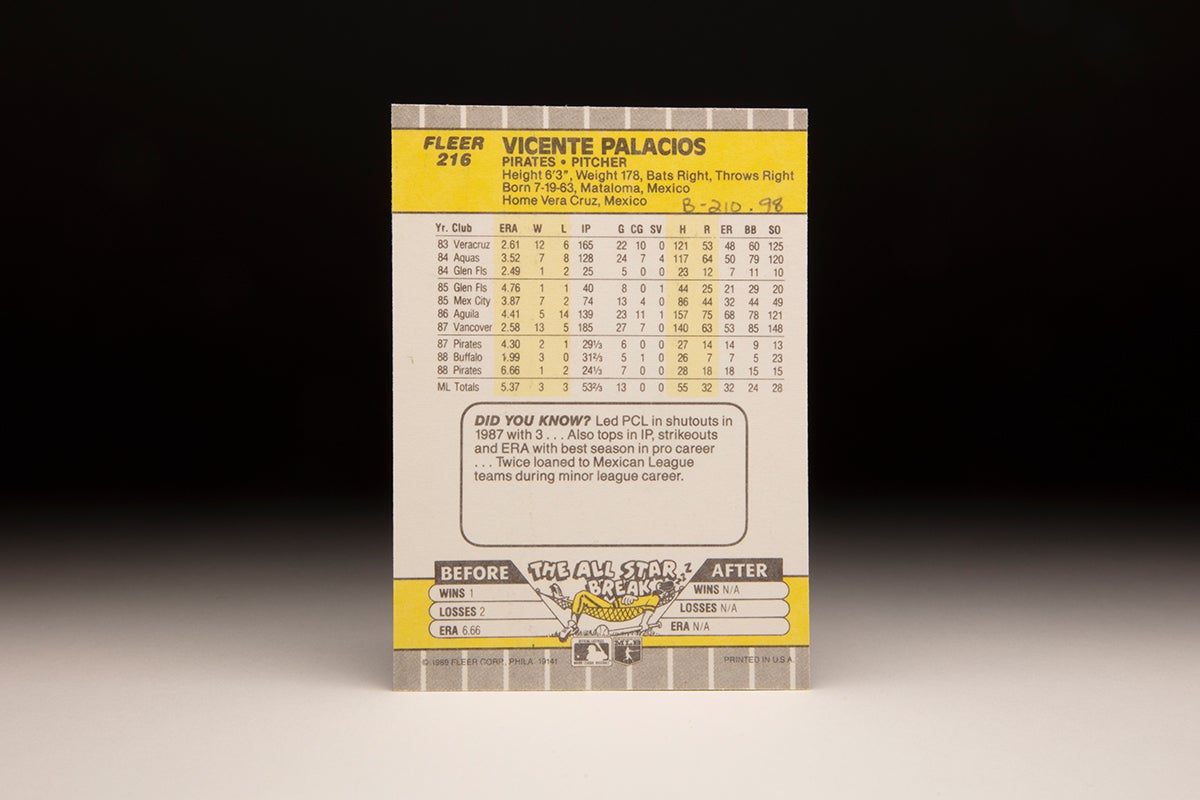
Palacios made the Pirates’ Opening Day roster in 1988 as a bullpen arm. But after two scoreless appearances, he was rocked for a combined 18 earned runs over his next five games. The Pirates then sent Palacios to Triple-A Buffalo on May 14, where he remained for the rest of the season and eventually underwent rotator cuff surgery. The Pirates outrighted him off the major league roster that fall.
Palacios underwent another surgical procedure on his shoulder in July of 1989 and pitched just two games for Buffalo that year.
“When I found out I had to have another operation, I cried and cried and cried,” Palacios told the Associated Press. “I didn’t think I could come back from another operation. After I got operated on, I was going to do everything I could to make it back.”
In 1990, Palacios finally got healthy after working with Buffalo pitching coach Jackie Brown and dominated Triple-A hitters once again, going 13-7 with a 3.43 ERA in 28 starts for Buffalo. The Pirates called him up to the majors on Sept. 5, the day they swept a doubleheader from the Mets to increase their division lead to two-and-a-half games.
But after beating the Mets again on Sept. 6, the Pirates lost eight of their next 11 – including a six-game losing streak that left Pittsburgh just a half game in front of New York after play on Sept. 18. Two days later, Palacios picked up his first save by pitching 3.2 scoreless innings against the Cubs.
He worked another 3.1 scoreless frames against the Cardinals for a save on Sept. 23 then saved a Sept. 27 win over the Cubs with two hitless innings. Pirates manager Jim Leyland had such confidence in Palacios that he let him bat for himself with the bases loaded and two outs in the eighth inning, with Pittsburgh clinging to a 3-2 lead.
Palacios grounded out to end the inning but retired Mark Grace, Andre Dawson and Luis Salazar in order in the ninth to preserve the win. At that point, the Pirates magic number was down to four and Palacios was becoming a Pittsburgh hero.
“Maybe if our other guys (in the bullpen) had pitched regularly, I might have hit for (Palacios),” Leyland told the Pittsburgh Post-Gazette. “Or if we had a hot hand in the bullpen you might try to add a run. But (Palacios) has been our hot hand.”
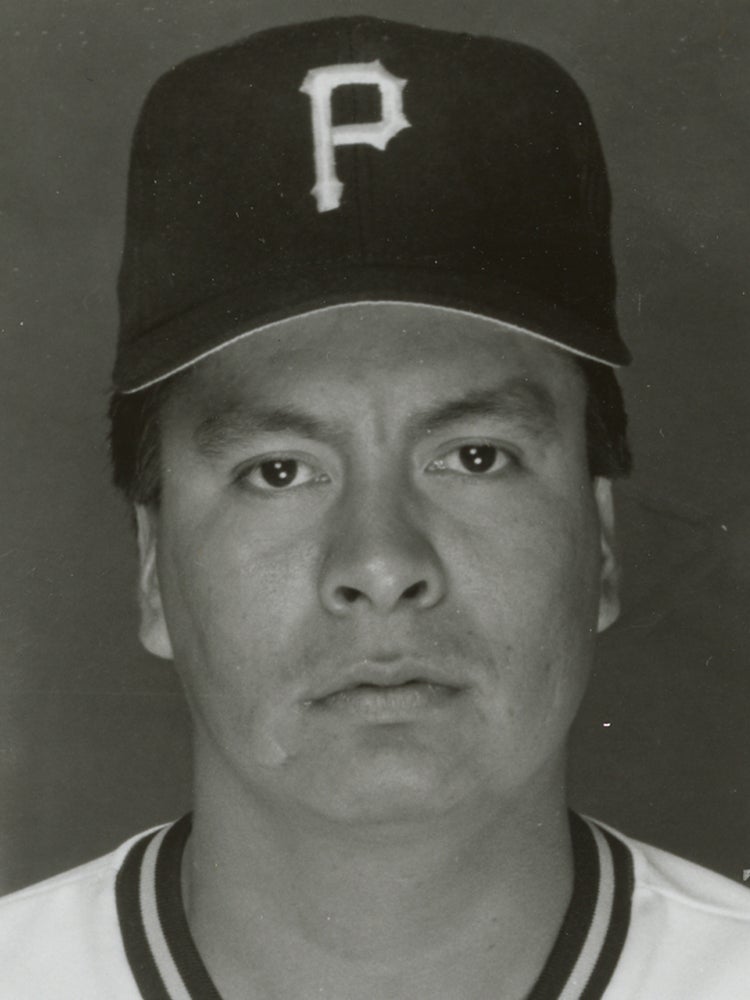
The Pirates clinched the division with a Doug Drabek shutout of the Cardinals on Sept. 30, and Palacios worked in one more game that year – pitching two scoreless innings against the Mets on Oct. 2 in a series that was meaningless for both teams. Palacios finished the season with 15 scoreless innings over seven outings for Pittsburgh, allowing just four hits and two walks.
But because he was brought to the big leagues after Sept. 1, Palacios was not eligible for the National League Championship Series vs. the Reds.
“I’m just using (Palacios) up now because I won’t have him later,” Leyland joked with reporters after the Sept. 27 game against the Cubs.
But it was no joking matter when Pittsburgh relievers allowed late insurance runs to the Reds in both Game 3 and Game 4, giving Cincinnati a 3-games-to-1 lead in the series. After the Pirates won Game 5, the Reds closed out the series in Game 6 on a seventh-inning single by Luis Quiñones off starter Zane Smith that gave Cincinnati a 2-1 lead. Leyland brought in Belinda to squelch the rally – but fans were left to wonder if Palacios might have been a better choice to face Quiñones had he been available.
Palacios earned a spot in Pittsburgh’s bullpen at the start of the 1991 season and notched a save against the Cubs on April 12. Seven days later, Palacios started against Chicago after veteran Bob Walk went on the disabled list, shutting out the Cubs over 6.2 innings. Palacios followed that start with a four-hit shutout against Expos on April 25.
“He was just outstanding, but I’m not going to worry about what happens later,” Leyland told the AP after Palacios’ shutout. “Walk’s one of my starters, but it’s good to know this kid can do the job when we need it.”
Palacios’ off-speed pitch – what Pirates pitching coach Ray Miller labeled as a “taco pitch” that was a combination forkball and knuckleball – was the talk of baseball.
“It’s a knuckle-palm ball,” Miller told the Post-Gazette in 1991. “He has good command, and the ball kind of tumbles toward home plate. It’s different from most. And when you say ‘taco pitch,’ the opponents think he’s throwing a spitter.”
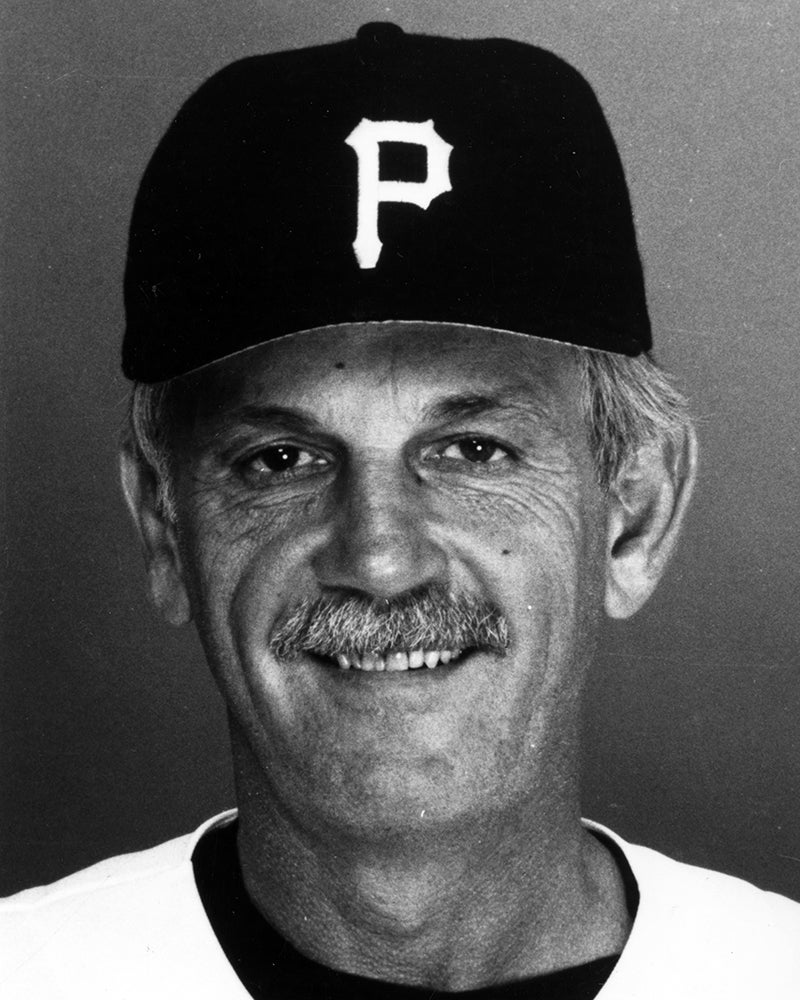
At that point, Palacios also gained fame as the only Mexican player in the National League.
“Everyone knows that Vicente Palacios is in the ‘liga grande,’” Palacios told the Pittsburgh Post-Gazette of his ascent to the major leagues. “At first it was difficult – the language and the food. I barely liked hamburgers. And pizza, no.”
But while Palacios adjusted to the culture, batters adjusted to his pitching. He returned to the bullpen in late May and was 6-3 with two saves and a 3.44 ERA when he allowed three runs without retiring a batter against the Mets on Aug. 7. He went on the disabled list the next day with shoulder issues before returning for six games in September.
With midseason pickups Roger Mason and Rosario Rodríguez the hot hands in the bullpen, Palacios was left off the NLCS roster for the series vs. the Braves. He finished the year 6-3 with three saves and a 3.75 ERA in 81.2 innings over 36 appearances for the NL East champion Pirates.
Palacios again made the Opening Day roster in 1992 and was 3-0 with a 2.88 ERA through May in his usual role as a spot starter/reliever. But two rough outings in June resulted in losses and pushed his ERA to 4.25. The Pirates put Palacios on the disabled list with tendinitis in his right bicep on June 19, and he did not pitch again that season.
On Nov. 18, the Pirates released Palacios. He signed a minor league deal with the Padres on Feb. 1, 1993, but did not make the team out of Spring Training, drawing his release two days after walking two batters, balking twice and throwing a wild pitch in one inning against the Brewers on March 28. He spent the season back in the Mexican League before signing with the Cardinals on Dec. 23, 1993.
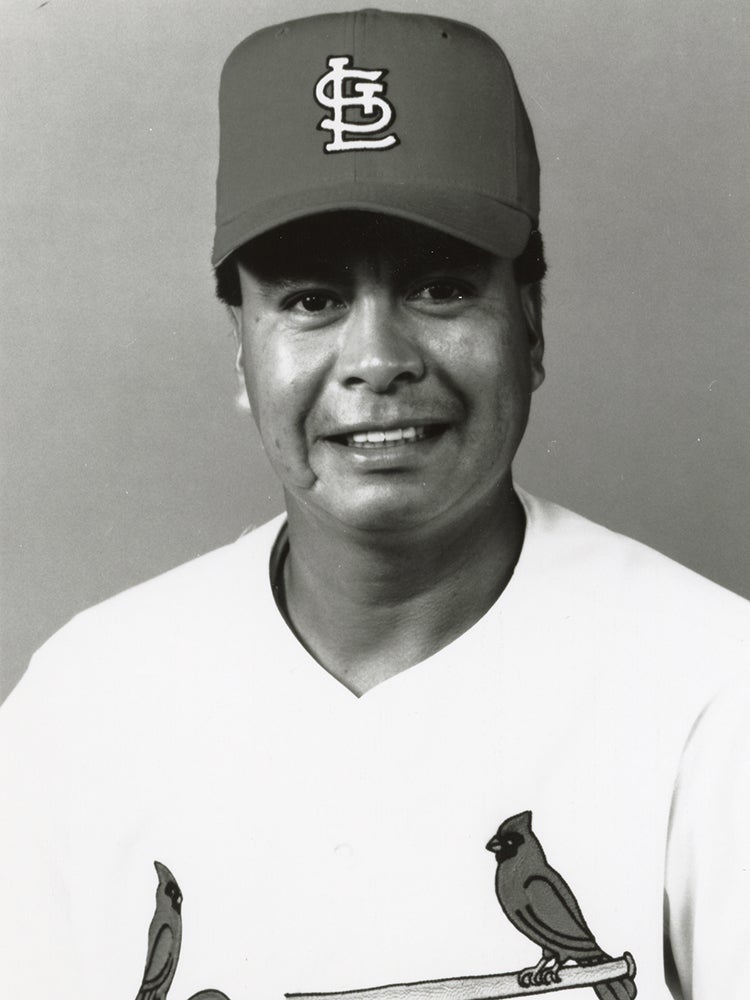
He earned a bullpen spot out of Spring Training and moved into the rotation in May. On July 19 against the Astros, he pitched his finest big league game – allowing just one hit – a third-inning single by Andújar Cedeño – and one walk over nine innings while striking out eight in a 10-0 St. Louis victory. It was just the fourth time in MLB history that a Mexican-born pitcher allowed one or fewer hits over a nine-inning start.
The gem came on Palacios’ 31st birthday and one day after the Cardinals tied a National League record by blowing an 11-run lead in a 15-12 loss.
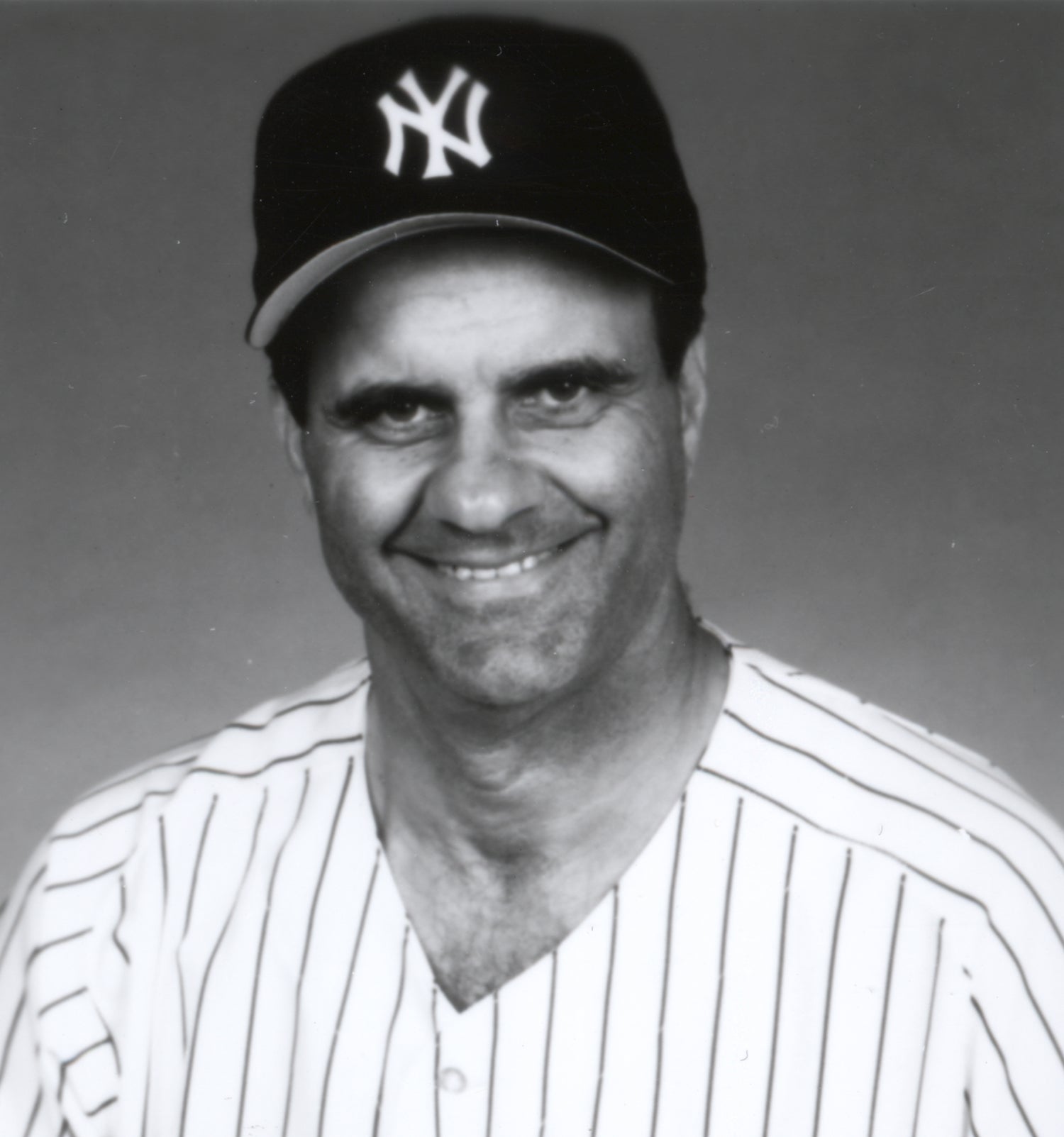
Palacios finished that strike-shortened season with a 3-8 record and 4.44 ERA over 31 appearances, including 17 starts. When MLB returned to action in April 1995, Cardinals manager Joe Torre moved Palacios to the bullpen.
“(Palacios) gives us a little more (in the bullpen),” Torre told the St. Louis Post-Dispatch on the eve of the season opener. “He can strike somebody out if you need it.”
Palacios eventually earned two spot starts in May and two more in June as Torre used him in different roles.
But on June 21, Palacios again ran into problems with his shoulder. He allowed six runs in 1.1 innings in a start against the Dodgers, went on the disabled list the next week and soon had a third shoulder surgery to clean out debris from his rotator cuff. Palacios finished the season with a 2-3 record and 5.80 ERA in 20 appearances. He was released on Nov. 15.
Palacios spent the next three seasons in the Mexican League before signing with the Blue Jays on Jan. 19, 1999. He was released on March 21 and returned to Mexico, where he dominated with Reynosa as a closer – going 5-2 with 10 saves and a 0.95 ERA before signing with the Mets on July 30. He spent the rest of the season with Triple-A Norfolk, going 2-1 with a 1.86 ERA in seven games.
He signed with the Padres on Nov. 4, 1999, and after some time in extended Spring Training made his San Diego debut on April 20, 2000. But after just seven games – all Padres losses – he was sent to Triple-A Las Vegas, where he appeared in 36 games before being released on Aug. 3. The Cubs signed him four days later but kept him in Triple-A the rest of the season.
Palacios would pitch for three more seasons in the Mexican League but would never return to the majors. He finished his big league career with a 17-20 record and seven saves over 134 games, posting a 4.43 ERA and 270 strikeouts over 372 innings.
But thanks to his willingness to pitch in any situation, Palacios carved out a unique legacy as both a starter and a reliever.
“He has no trouble mentally with what we ask him to do,” Torre told the St. Louis Post-Dispatch in 1991. “A lot of guys want to know what their role is. He just wants to know when he’s pitching. He’s got the arm to do anything.”
Craig Muder is the director of communications for the National Baseball Hall of Fame and Museum