#CardCorner: 1975 Topps Derrel Thomas
A jack-of-all-trades utility player who spent more than a decade with National League West teams, Derrel Thomas broke new ground as the first free agent position player signed by the Los Angeles Dodgers.
His abilities allowed manager Tommy Lasorda to maneuver at will and helped the Dodgers to their fourth World Series title in the City of Angels.
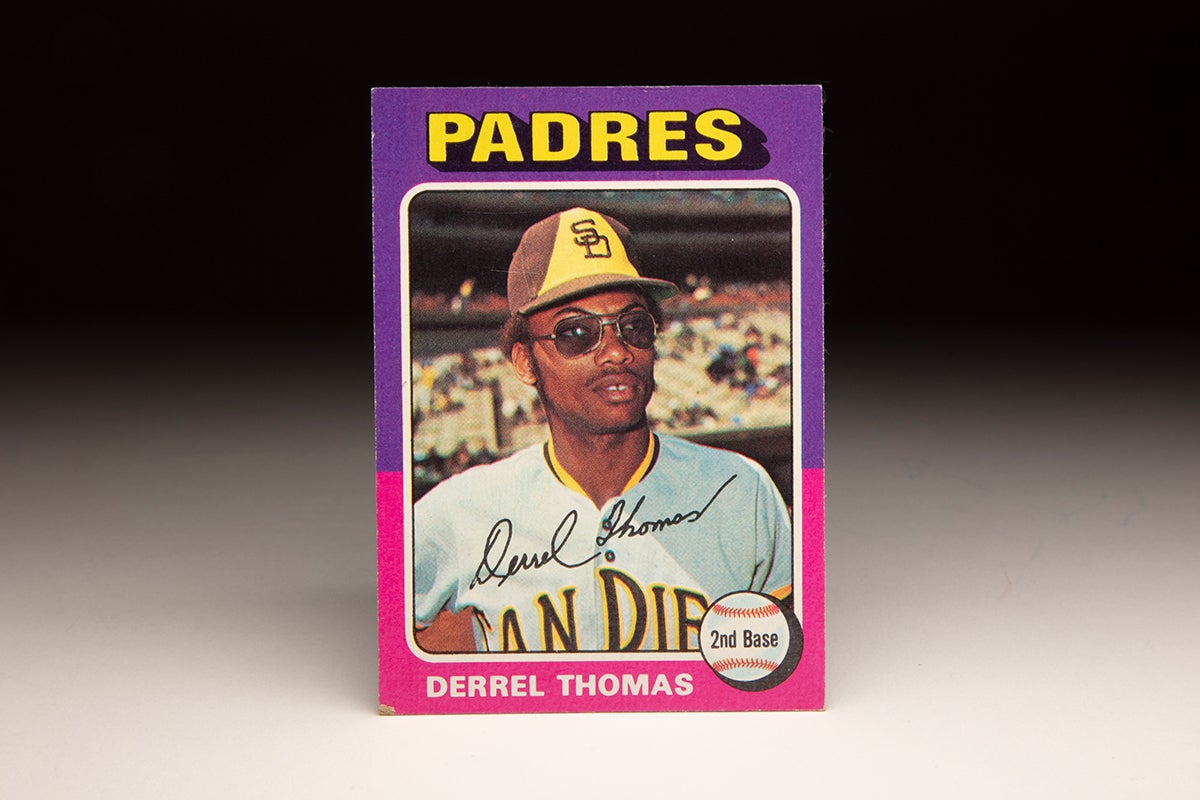

Born Jan. 14, 1951, in Los Angeles, Thomas was raised by foster parents and attended Susan Miller Dorsey High School in southwest LA – a school that produced big leaguers such as Sparky Anderson, Don Buford and Billy Consolo and later Chili Davis. Thomas, however, idolized Dodgers shortstop Maury Wills and spent much of his big league career wearing the same uniform number – 30 – as Wills.
At 5-foot-11 and 150 pounds coming out of high school and already a switch-hitter, Thomas was taken by the Astros with the first overall pick of the January 1969 MLB Draft – a portal to the majors usually utilized for junior college players. But because Thomas graduated from Dorsey High School on Jan. 31, 1969, he was deemed eligible.
Astros executive Tal Smith told United Press International that Thomas had “good size, good hands and good speed.”
The Astros sent the 18-year-old Thomas to Cocoa of the Class A Florida State League, where he hit .289 in 33 games before earning a promotion to Triple-A Oklahoma City. He finished the season with a combined .302 average and 38 runs scored in 69 games.
Thomas began the 1970 season at Double-A Columbus but spent most of his time back in Oklahoma City, batting .259 with 10 doubles, 10 triples and eight home runs in 113 games. He was invited to the Astros’ Spring Training camp in 1971 but was sent back to Triple-A, where he spent much of the season at second base while hitting .286 with 74 runs scored, 22 doubles, eight triples and 13 steals in 122 games.
The Astros called Thomas up to the big leagues on Sept. 3, and he appeared in five games that month, going 0-for-5 at the plate.
“I’ve been as impressed with (Thomas) as I have anybody I’ve seen this spring,” Astros manager Harry Walker told the Houston Chronicle in Spring Training. “He can fly, he can sting the ball and he wants to learn and he wants to play.”
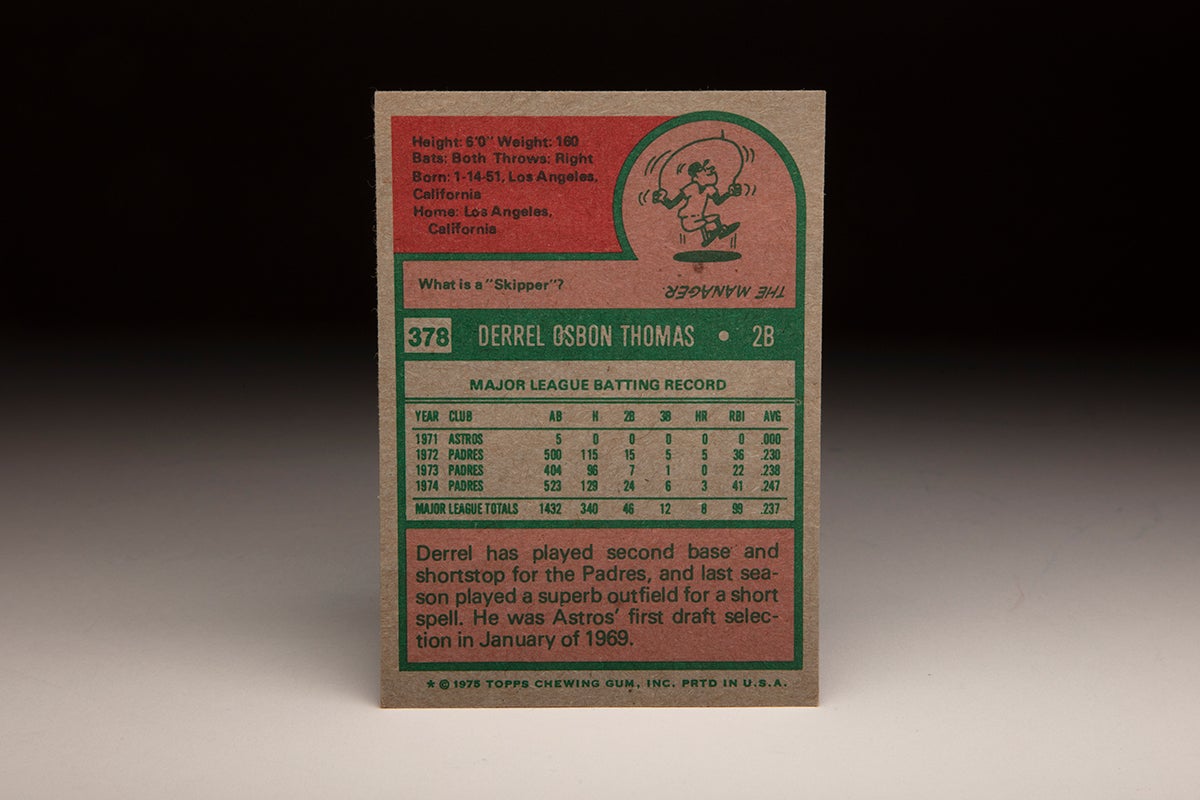
But following a second straight 79-83 season, the Astros made several changes. On Dec. 3, 1971, Houston sent three prospects – pitchers Bill Greif and Mark Schaeffer along with Thomas – to the Padres in exchange for lefty starter Dave Roberts, who was 14-17 with a 2.10 ERA in 34 starts for San Diego that season.
Thomas was considered the key to the deal.
He started at second base on Opening Day for San Diego and notched the first three hits of his big league career, recording a bunt single and stolen base off Phil Niekro in a four-run sixth inning that carried the Padres to a 6-5 win. But before that, Thomas had angered Padres manager Preston Gómez when he refused to fasten his seat belt on a flight and the pilot threatened to throw the team off the plane unless Thomas complied.
Then, 10 days after the opener, the Padres were leading the Mets 1-0 in the seventh inning when pitcher Steve Arlin picked Tommie Agee off second base. But Agee was safe on an error charged to Thomas, and Agee scored on the play to tie the game. Three batters later, Ed Kranepool lifted a pop fly to short right field. Larry Stahl waved off Thomas and was charged with an error, allowing what became the winning run to score in a 2-1 New York victory.
After the Mets beat the Padres 5-1 the following night, San Diego general manager Buzzie Bavasi relieved Gómez of his managerial duties.
Into the void stepped Don Zimmer, who was making his big league managerial debut. Soon, Zimmer was feuding with Thomas. On June 20, Thomas – who entered the game against St. Louis that day as a pinch-runner and stayed in the game to play second base – bobbled a two-out grounder in the bottom of the 10th to allow Lou Brock to score the winning run.
“Somebody’s going to Alexandria,” the Associated Press quoted Zimmer saying to Thomas following the game, referring to the Padres’ Double-A affiliate in the Texas League. “It’s either going to be you or me.”
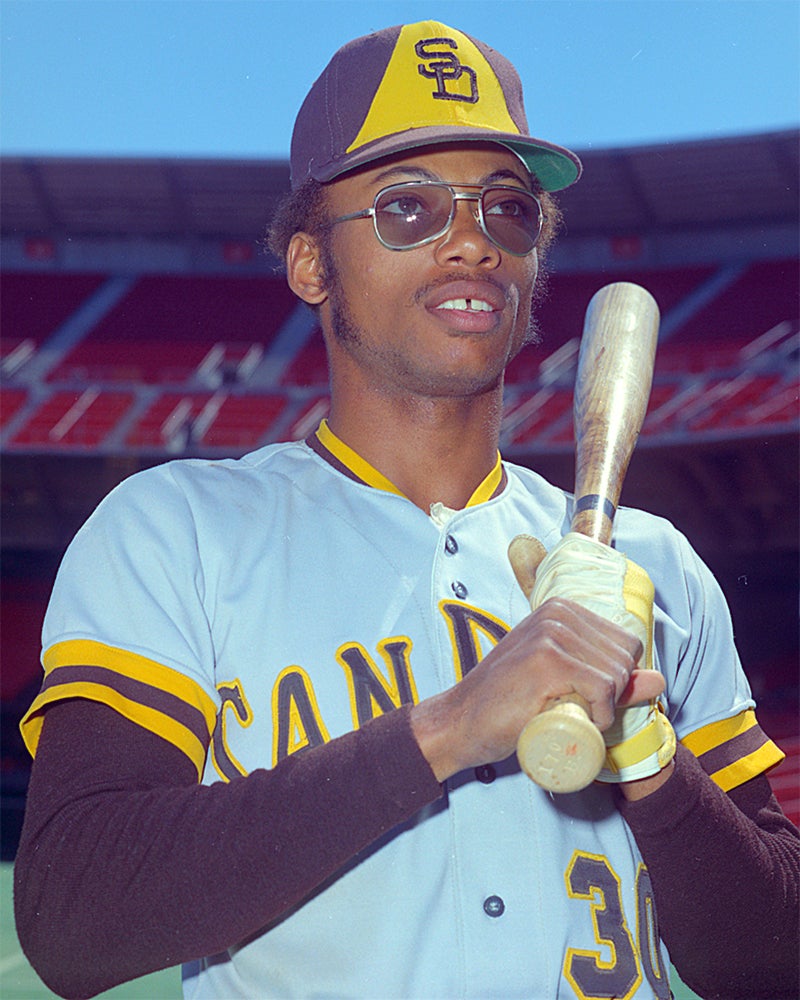
In fact, Thomas was sent to Triple-A Hawaii for two weeks – he resisted the demotion before finally reporting – and returned to San Diego on July 4. He played regularly the rest of the season and finished with a .230 batting average, 15 doubles, five triples, five homers and 36 RBI in 130 games.
Thomas began the 1973 season in a utility role and regularly started at second base and shortstop. In 113 games, he hit .238 with 22 RBI and 15 steals. But he struggled defensively at shortstop, where he was charged with 32 errors in just 74 games.
Then in 1974, John McNamara took over as the Padres’ manager and reinstated Thomas as the team’s starting second baseman in mid-April after veteran Glenn Beckert went on the disabled list. He was hitting .303 as late as May 17 before finishing at .247 with 24 doubles, six triples and 41 RBI in 141 games.
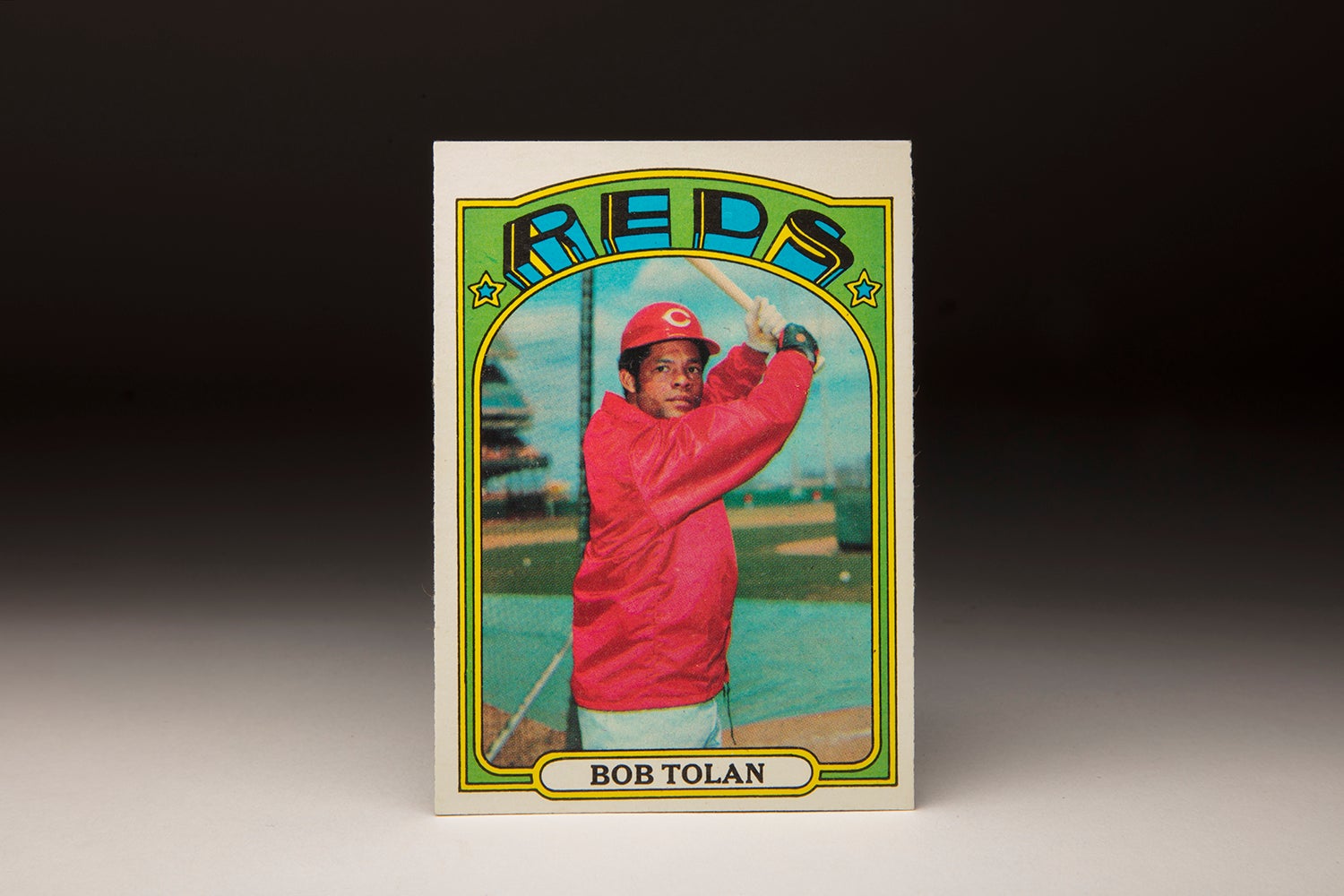
Thomas credited his success to new teammate Bobby Tolan.
“If I have a good year, Bobby deserves a lot of the credit because we talk baseball all the time and he has shown me a lot of things that have helped me,” Thomas told the Associated Press.
But the Padres lost 102 games for the second year in a row in 1974. A Dec. 6 trade sent Thomas to his third NL West team in five years, with infielder Tito Fuentes and pitcher Butch Metzger going from the Giants to the Padres in the deal.
McNamara praised Thomas following the trade.
“Thomas can be a helluva player,” McNamara told the San Francisco Chronicle. “He’s versatile and adaptable. For instance, he can play a helluva third base, he can play all infield positions, and he can be a solid backup man…in center field.
“Is Derrel a hot dog? If it spells out to be ‘arrogant’ or ‘difficult to handle’ or ‘defiant’ then, no, Derrel is not a hot dog. If it means ‘flamboyant’ or ‘individualistic’ then, yes, Derrel is a hot dog.”
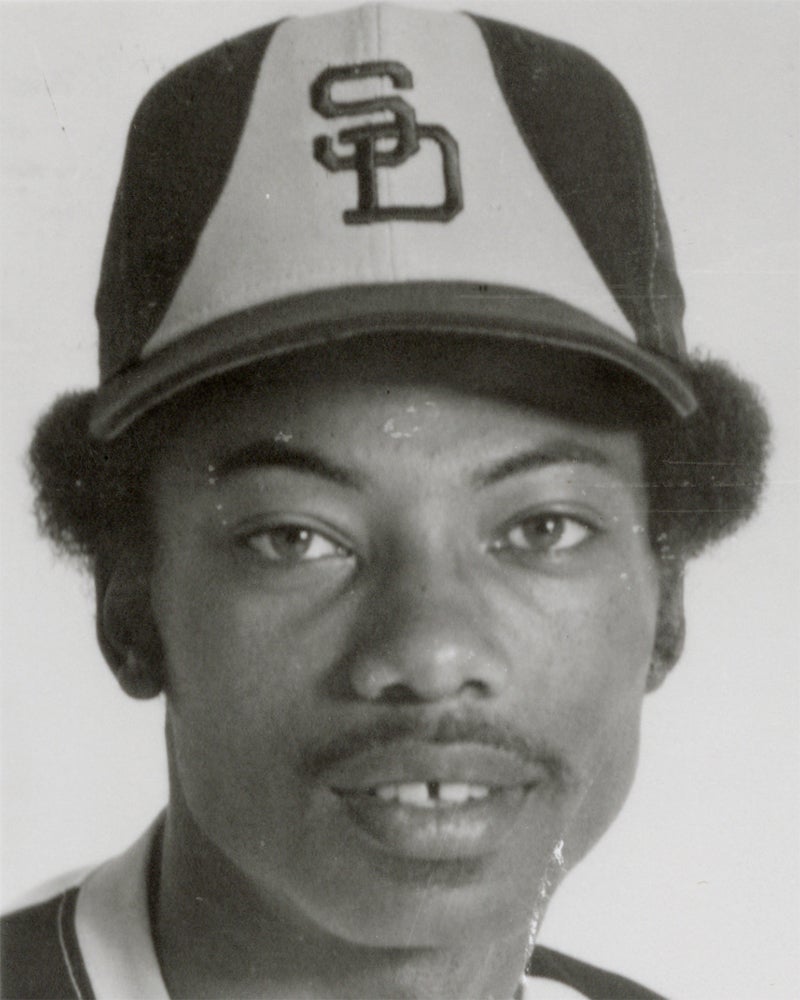
Thomas had his best season as a big leaguer in 1975, appearing in 141 of his 144 games at second base while hitting .276 with 21 doubles, nine triples, six home runs, 99 runs scored, 48 RBI and 28 steals while hitting out of the No. 2 position for most of the year. But 1976 proved to be more challenging as Thomas refused to sign his contract in the wake of the Andy Messersmith/Dave McNally decision that created free agency in December 1975.
Thomas then suffered a leg injury in June – the Dodgers’ Lee Lacy crashed into him at second base – that wound up sidelining him for two months. In 81 games, he batted .232 and often expressed a desire to be traded.
In 1977, the Giants put newly acquired Rob Andrews at second base, a move that prompted Thomas to ask for a demotion to the minor leagues.
“I won’t play part-time to Rob Andrews,” Thomas told the Chronicle. “It’s sickening…simply sickening.”
But with longtime shortstop Chris Speier rumored to be headed to the Expos, the Giants needed Thomas as a utility player. He played several games at short around the time Speier was traded to Montreal on April 27, but that deal brought Tim Foli to San Francisco, sending Thomas back to the bench.
In July, however, the Giants moved Thomas to center field and kept him there for most of the rest of the year. He finished the season batting .267 with 13 doubles, 10 triples, eight home runs, 75 runs scored and 44 RBI. He also finished second among NL center fielders with 10 assists despite appearing in just 76 games there.
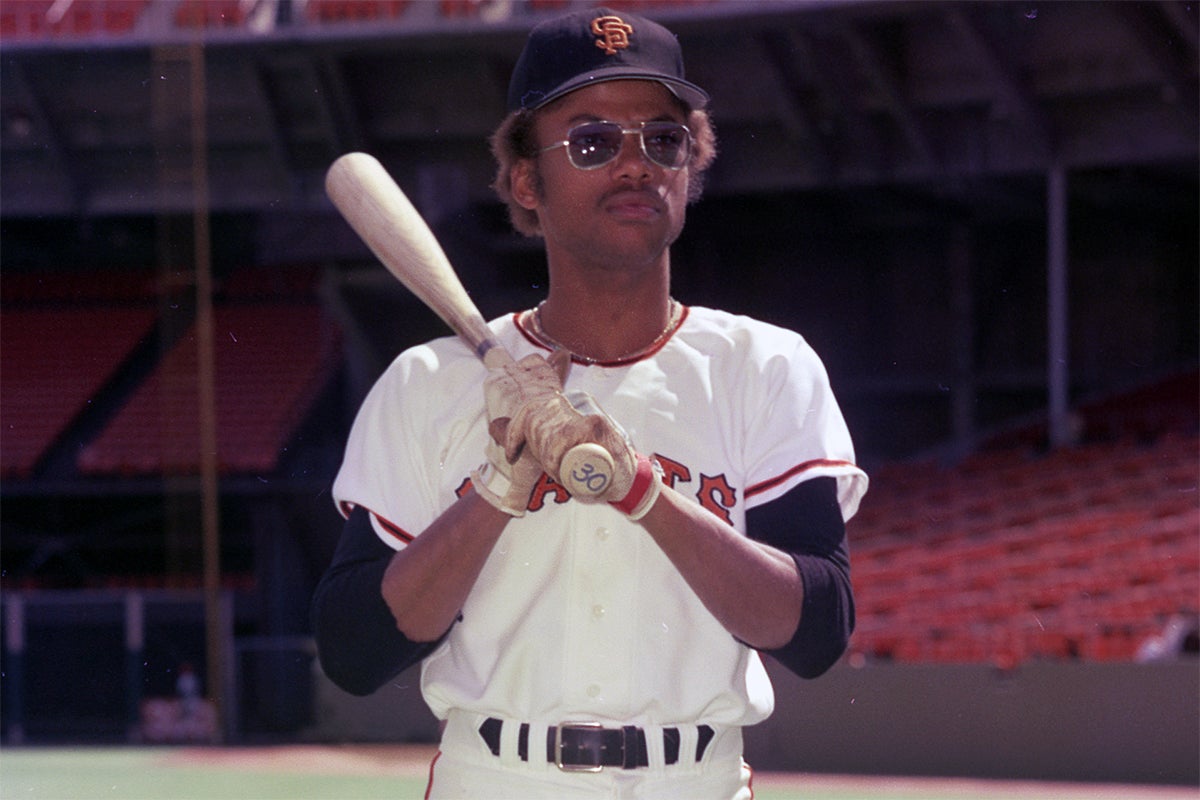
But with Thomas entering his free agent platform season, the Giants sent him back to the Padres on Feb. 28, 1978, in a one-for-one deal for first baseman Mike Ivie.
“He plays hard, and he’s a showman type,” Padres manager Roger Craig said in 1978. “He likes attention, and he’ll do anything to get it.”
By this time, Thomas had received a reputation as one of the most polarizing players in the game.
“Let’s put it this way,” Dodgers outfielder Reggie Smith told the Chronicle. “Derrel Thomas does things that make it easy to hate him.”
But Thomas also had the respect of many of his peers.
“Some guys would like you to do things with conventionality,” Dodgers outfielder Bill North told the Chronicle. “Derrel’s a hot dog, but so am I. He also has as much ability as damn near anybody in the game. He leads cheers in the outfield. He’s vocal, temperamental. He’s the kind of ballplayer other ballplayers don’t like. He’s also the kind that can beat you.”
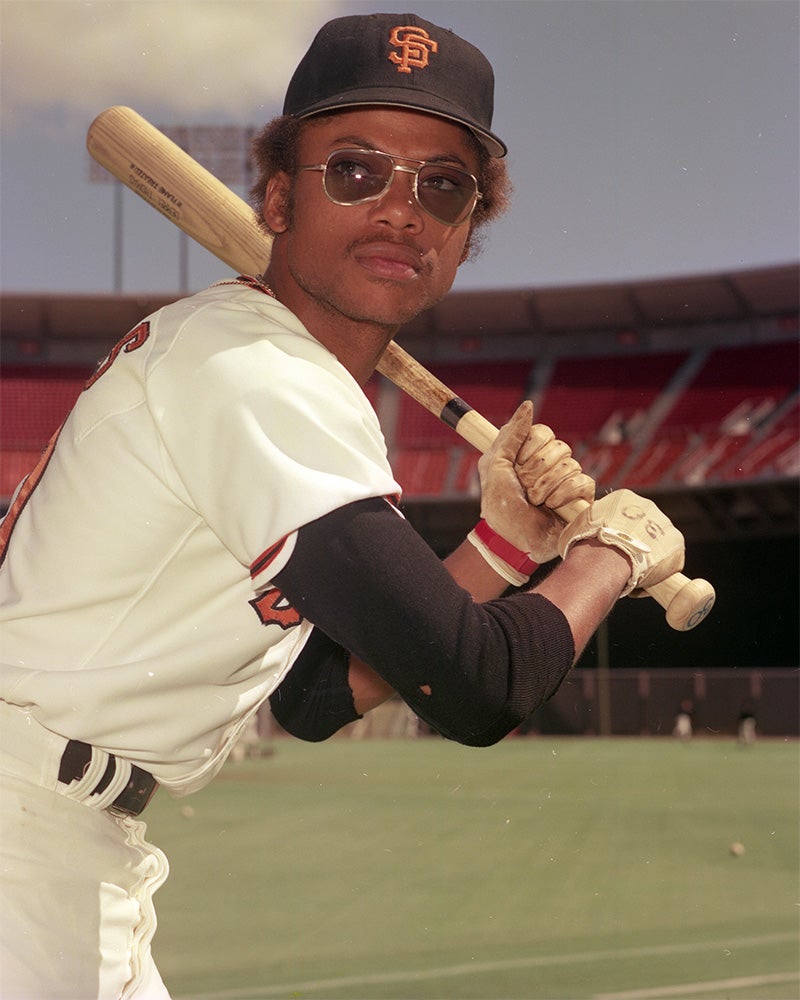
Thomas made at least 10 starts at four positions in 1978 (first base, second base, third base and center field) but hit just .227 with 36 runs scored and 26 RBI in 128 games. But that did not deter the Dodgers from pursuing him in free agency.
On Nov. 14, 1978, the two-time defending National League champions signed Thomas to a five-year contract worth a reported $700,000. He became just the second modern free agent signed by the Dodgers following Terry Forster the year before.
“He’s a versatile player, and he adds a great deal to our ballclub,” Dodgers manager Tommy Lasorda told the AP while noting he expected Thomas to replace Lee Lacy and Bill North, who would both depart as free agents.
Thomas, meanwhile, welcomed the chance to play in his hometown.
“I’m satisfied being a Dodger,” Thomas told the AP. “And if that’s what they have in store for me (a bench role), I’m satisfied with that.”
The Dodgers battled injuries in 1979 and were unable to win their third straight pennant. But Thomas gave them exactly what they wanted, stepping into center field for the injured Rick Monday and playing 119 of his 141 games there while batting .256 with 18 steals.
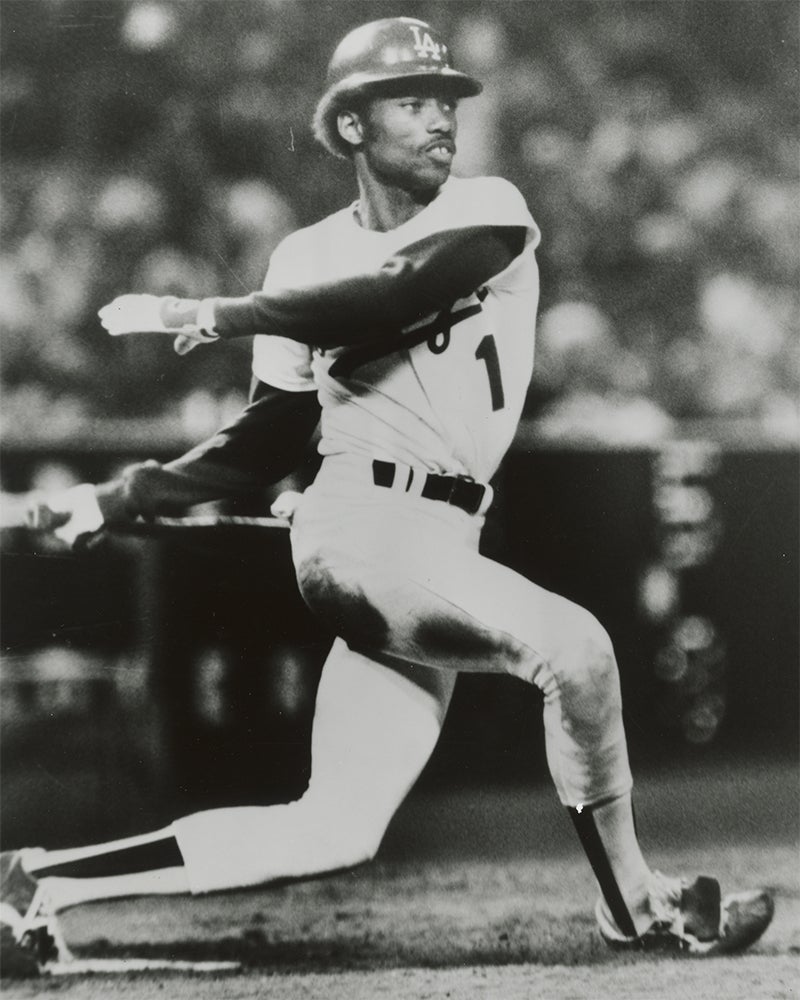
In 1980, Thomas started at shortstop on Opening Day for the injured Bill Russell before making five appearances at catcher – including three starts – in mid-April. The string began when Joe Ferguson left an April 15 game against the Padres with a bad back. Starting catcher Steve Yeager was already sidelined with an infected left elbow, and Triple-A catcher Mike Scioscia was out with a broken finger.
Thomas relieved Ferguson on April 15 – with knuckleballer Charlie Hough on the mound, no less – then started behind the plate the next three days against the Padres and Astros. Yeager returned on April 19 but Thomas came into that game to catch after Dodgers manager Tommy Lasorda pinch-hit for Yeager.
And though the Astros stole seven bases against Thomas on April 17 and Thomas was charged with four passed balls in five games, everyone praised Thomas for his willingness to take on a position he had never played.
“Show me another guy who could do what he did today,” Lasorda told the Los Angeles Times after Thomas had two hits to help the Dodgers beat Houston on April 17. “I’ve been in baseball nearly all my life, and I’ve never seen anything like it. I’m so grateful to him. He’s a great athlete, but more than that, he’s courageous.”
Thomas, however, was just plain exhausted.
“I feel like I should be dead,” Thomas told the Times after the Dodgers’ 6-4 victory. “I didn’t sleep last night. I was too nervous. There are so many things to remember. When they got on base, I just tried to stay relaxed and remember what (Yeager) had told me to do.”
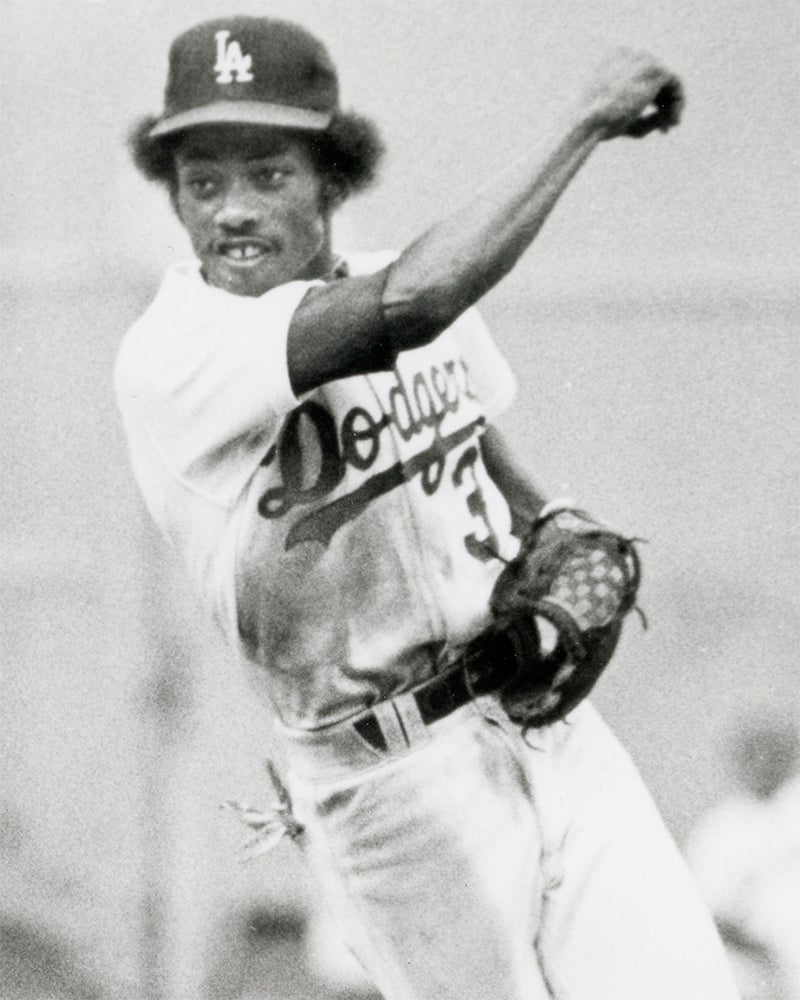
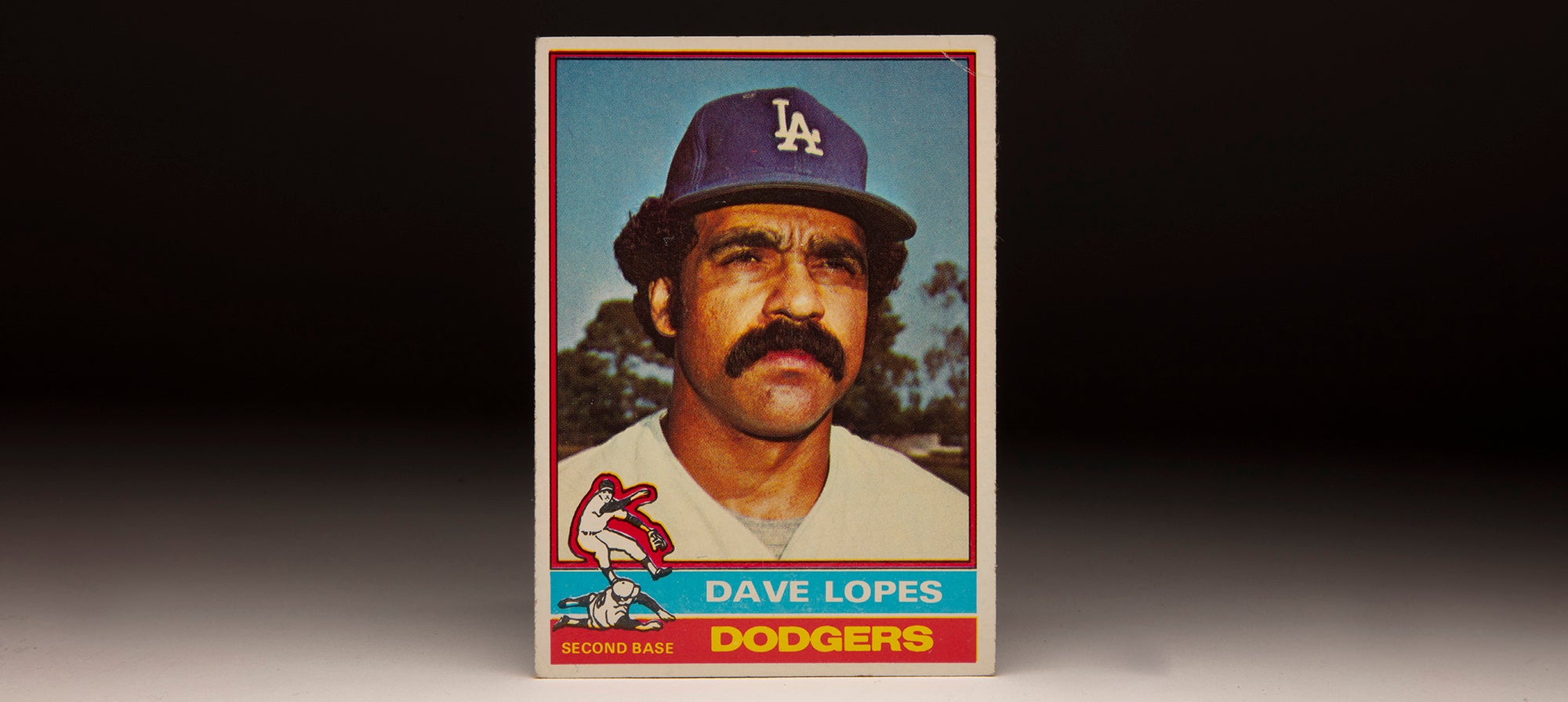
Thomas returned to his utility role but was forced back into the lineup at shortstop when Russell went down with a fractured finger on Sept. 12. The Dodgers chased down the Astros in the season’s final weeks, with Los Angeles sweeping a three-game series against Houston to end the year to force a one-game playoff. Down 3-0 in the final game of that series, Thomas scored the Dodgers’ first run on a Davey Lopes single in the fifth inning. Los Angeles rallied to win 4-3.
In the one-game playoff a day later, however, the Astros jumped out to an early 7-0 lead in a game Houston won 7-1. Thomas had two hits – the only Dodgers’ player with multiple hits that day.
Denied a chance at his first postseason appearance, Thomas finished the year hitting .266 in 117 games. He played every position that year except for first base and pitcher.
In 1981, however, Thomas would finally get his spot on the postseason stage. He stepped in for the injured Davey Lopes at second base from mid-May until the strike interrupted the season in June before returning to a utility role when play resumed.
The Dodgers won the first-half NL West title to advance to the NLDS vs. the Astros, and Thomas – who batted .248 over 80 games in the regular season – appeared in four of the five games as Los Angeles advanced to the NLCS. He played in two of the five games of that series vs. the Expos, getting a hit and scoring a run in Los Angeles’ 7-1 win in Game 4.
The Dodgers won Game 5 two days later to advance to the World Series. Once again, they would face the Yankees – the team that beat them in both 1977 and 1978.
The series was tied at two games apiece – Thomas had appeared in three of the first four games off the bench – when Lasorda called on Thomas to start in center field in Game 5. And though he went 0-for-3 at the plate, Thomas proved his versatility when he moved from center field to third base in the ninth inning after Ron Cey was hit in the head by a Goose Gossage pitch in the bottom of the eighth.
The Dodgers won 2-1, and in Game 6, Thomas pinch-hit for a woozy Cey in the sixth inning, driving home a run with a grounder to third off Rick Reuschel. Thomas later scored the inning’s final run, a rally that turned a 4-1 lead into an 8-1 advantage. Los Angeles won 9-2 to capture the title.
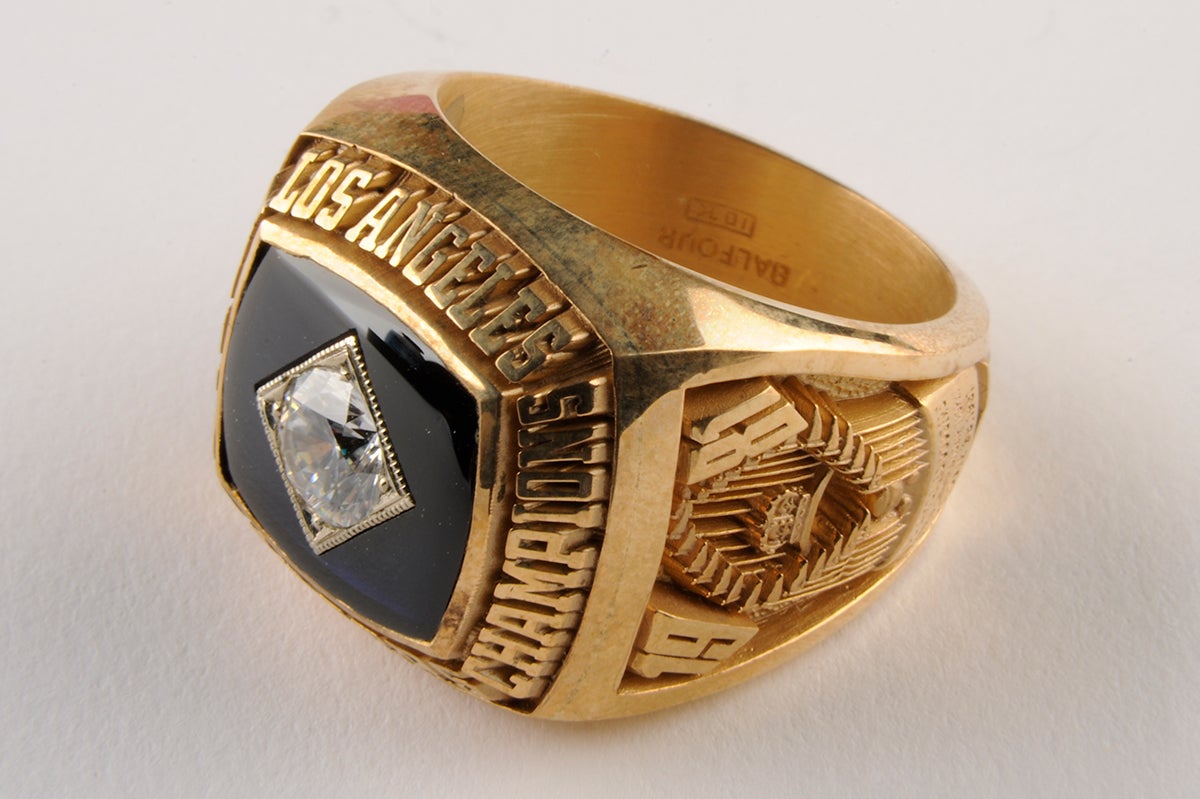
In 1982, Thomas settled back into his utility role but broke his left leg while running the bases as a pinch-runner against the Braves on June 24. He did not return until September and played in only 66 games – his fewest since his debut season in 1971 – while batting .265 as the Dodgers were eliminated from the postseason on the campaign’s final day.
Thomas entered the final season of his Dodgers’ contract in a familiar role, with a mix of veterans and youngsters ahead of him on the depth chart but with the status as one of the game’s best bench players. He batted .250 with 38 runs scored despite coming to the plate just 227 times in 118 games, earning his keep as a trusted late-inning defensive replacement.
The Dodgers recaptured in the NL West title, and Thomas drew the start in right field in Game 1 of the NLCS vs. the Phillies, recording two hits and a stolen base in Los Angeles’ 1-0 loss. He was stranded at second base to end the game as Al Holland got Greg Brock to ground out to end the threat.
Thomas got into Games 2 and 3 off the bench and then started in right field again in Game 4, recording two more hits as the Phillies won 7-2 to eliminate Los Angeles.
Four weeks later, the Dodgers allowed Thomas to enter the free agent re-entry draft, effectively ending his time with the team. He was reportedly seeking a contract worth about $400,000 per season but the Dodgers declined to make an offer.
“I’m disappointed there was no offer,” Thomas told the Los Angeles Times. “I felt I provided them five good years of service. During that time I was underpaid, but I never…moaned or complained.
“Even if they offered something that was embarrassing to me, like a $10,000 raise, at least it would have been an offer.”
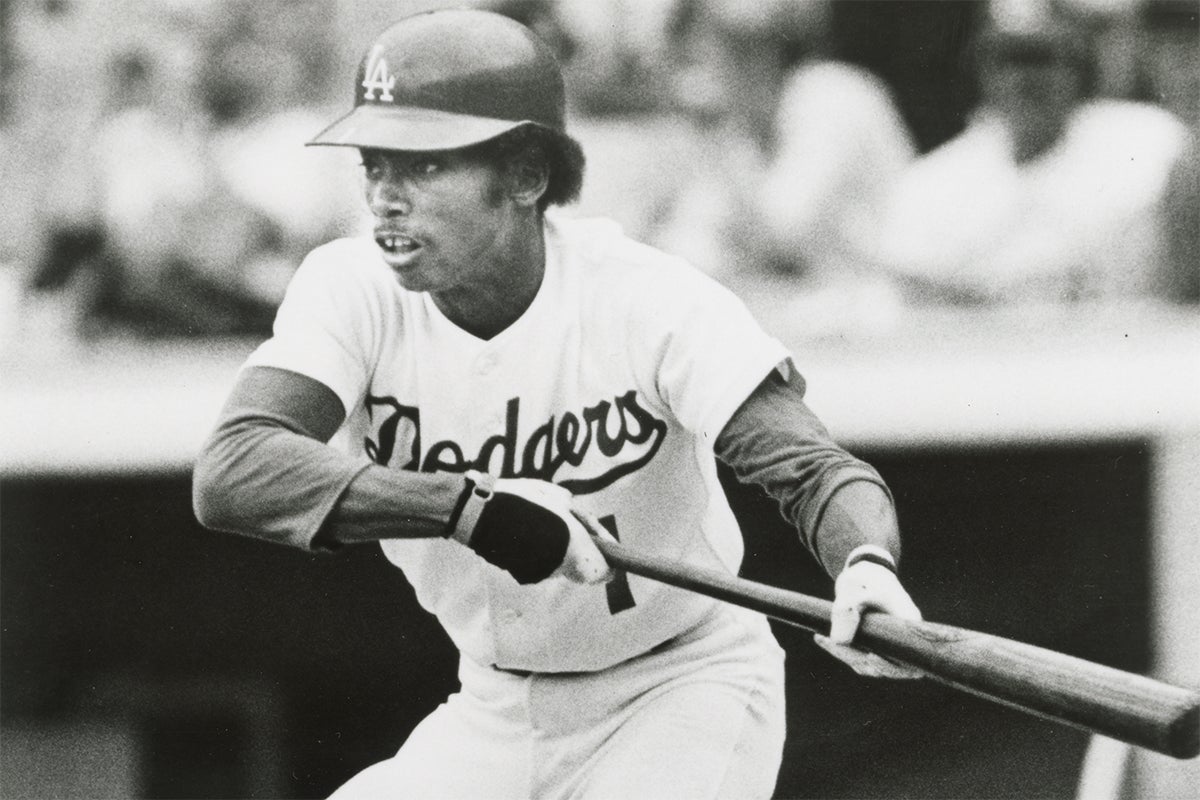
Thomas signed a one-year contract with the Expos on Feb. 2, 1984, and began the season on the bench. But when Bryan Little failed to hit, Thomas began seeing regular time at second base before moving over to shortstop during the summer. He hit .333 in 25 games in July but cooled off from there.
With his contract expiring, Thomas and the Expos parted ways on Sept. 6 when the Angels acquired him in a cash transaction.
Thomas voiced his frustration immediately after he was told about the deal during batting practice.
“I just could not believe they’d trade me during batting practice,” Thomas told the AP. “But when I looked in the mirror in the clubhouse I realized why they did it that way. They’d never trade a white player like that.”
Thomas batted .138 in 14 games for the Angels and finished the season with a .243 average in 122 games. When he did not receive a suitable offer in free agency, Thomas signed on with the Class A Miami Marlins of the Florida State League, an independent team for which several former big leaguers were playing.
“It’s not so much chasing the dream – I’ve already got the World Series ring – but it’s proving something to yourself and to everybody else,” Thomas told the AP about playing for the Marlins. “We all want to make it back to the top – because that’s where we belong.”
Thomas did make it back to the top when – after hitting .292 in 27 games for Miami – the Phillies purchased his contract. He spent the rest of the 1985 season coming off the bench, batting .207 in 63 games.
It had been a trying season for Thomas, whose name had been mentioned at the federal drug trial in Pittsburgh that summer that implicated several big leaguers. Thomas was not suspended by MLB but found no job offers following the season, prompting him to sign with the San Jose Bees, a team that featured former big leaguers including Steve Howe and Mike Norris. Thomas, however, was cut before the season started. After playing briefly in the Mexican League, Thomas’ on-field career came to an end.
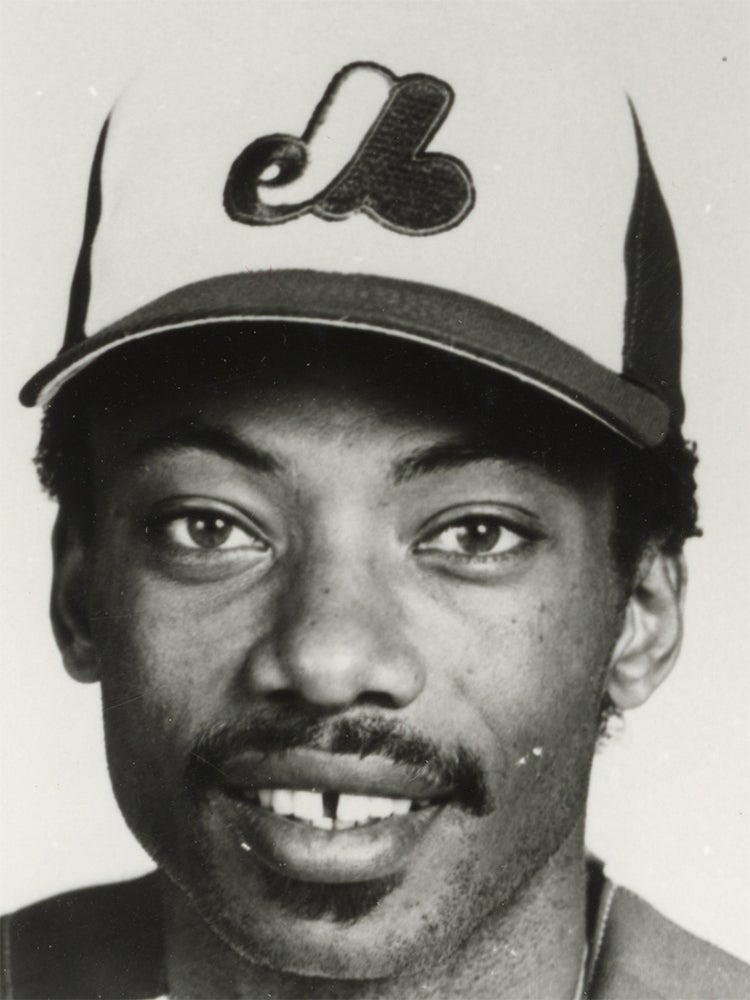
After coaching at the college level, Thomas was hired in 1987 as the manager of the Boise Hawks, an unaffiliated team in the short-season Class A Northwest League. On June 27, Thomas and the Hawks faced the Bend Bucks, who were managed by Mel Roberts. Newspapers across the country reported that it was the first time in minor league history that two teams with Black managers had faced each other.
“I never even thought about it,” Thomas told the media.
A month later, with the Hawks sporting a 9-29 record, Thomas was dismissed.
“That was my rookie experience,” Thomas said. “My educational experience.”
Thomas returned to coaching amateur baseball and was hired as the baseball coach at his alma mater, Dorsey High School, in December 1991. On March 24, 1992, Dorsey senior shortstop Wilfred Wright III died after accidentally shooting himself in the back of a team bus following a game. Thomas called paramedics moments after the incident.
Then, on April 24, 1992, Thomas was arrested along with a former police officer for conspiracy to possess and sell cocaine. His bail was set at $1 million.
“I just needed some money to take care of my family,” Thomas, who was living in his mother’s house and reportedly owed $330,000 in back taxes, told the Los Angeles Times just before his trial began. “But I can’t justify what I did…I was wrong and I’ll never be wrong like that again.”
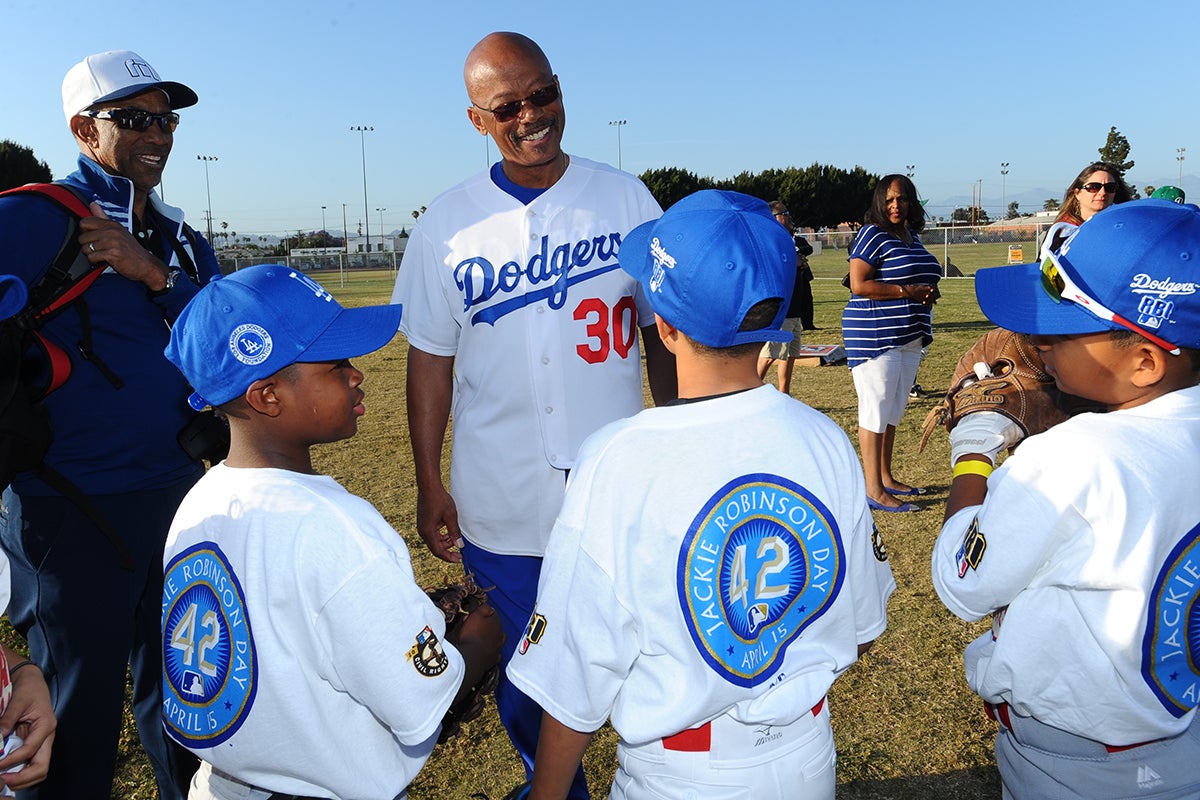
Thomas eventually pleaded no contest to conspiring to buy and sell 22 pounds of cocaine and was sentenced to probation after testifying against the former police officer. He continued to work in youth baseball as both an umpire and coach, then was hired by the Reds in 1997 to manage their Pioneer League team in Billings, Mont.
But Thomas was suspended when media reports in Cincinnati detailed his probation, which had been extended earlier that year when police discovered cocaine in his vehicle after he was pulled over for speeding.
Thomas, however, continued to work to counsel young players on the game and the dangers temptation could present.
“This is our way of giving back,” Thomas told the Los Angeles Times at a 2001 clinic in Ventura County, Calif., called Baseballers against Drugs. “We get a great reaction from the kids. We have their undivided attention, and they really seem to absorb the information we’re putting out there.”
Over 15 big league seasons, Thomas hit .249 with 1,163 hits, 585 runs scored, 154 doubles, 54 triples, 43 home runs, 370 RBI and 140 steals. He played every position in the field except pitcher, and remains of the most identifiable Dodgers of his era.
And while his career was far from trouble-free, his love for the game was always front and center.
“All my problems,” Thomas told the San Francisco Examiner, “were due to immaturity. I wasn’t able to cope with everything around me.”
Craig Muder is the director of communications for the National Baseball Hall of Fame and Museum