#CardCorner: 1989 Donruss Lloyd McClendon
By the time he was 12 years old, Lloyd McClendon made national headlines as the star of the 1971 Little League World Series. And though his big league career consisted of just 570 games, McClendon remained in the game for more than six decades – earning a reputation as an outstanding teacher and mentor.
The Little Leaguer known as Legendary Lloyd lived up to his potential.
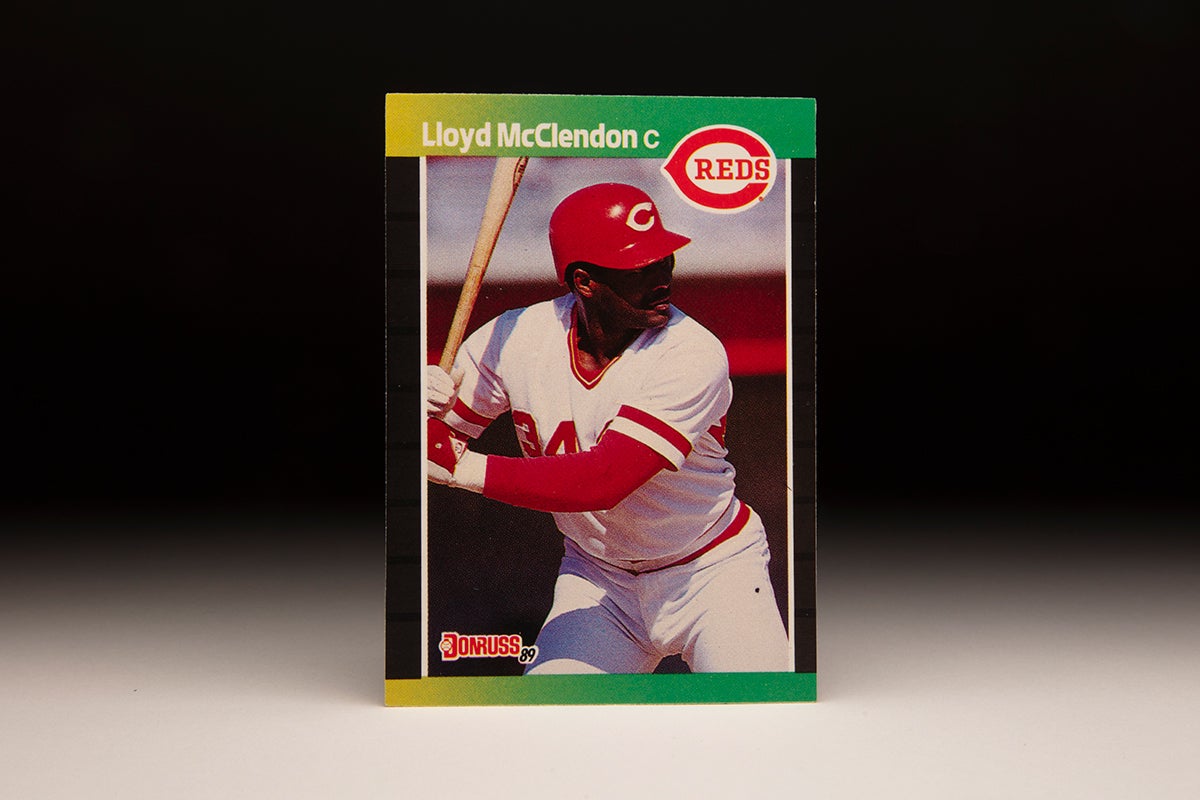
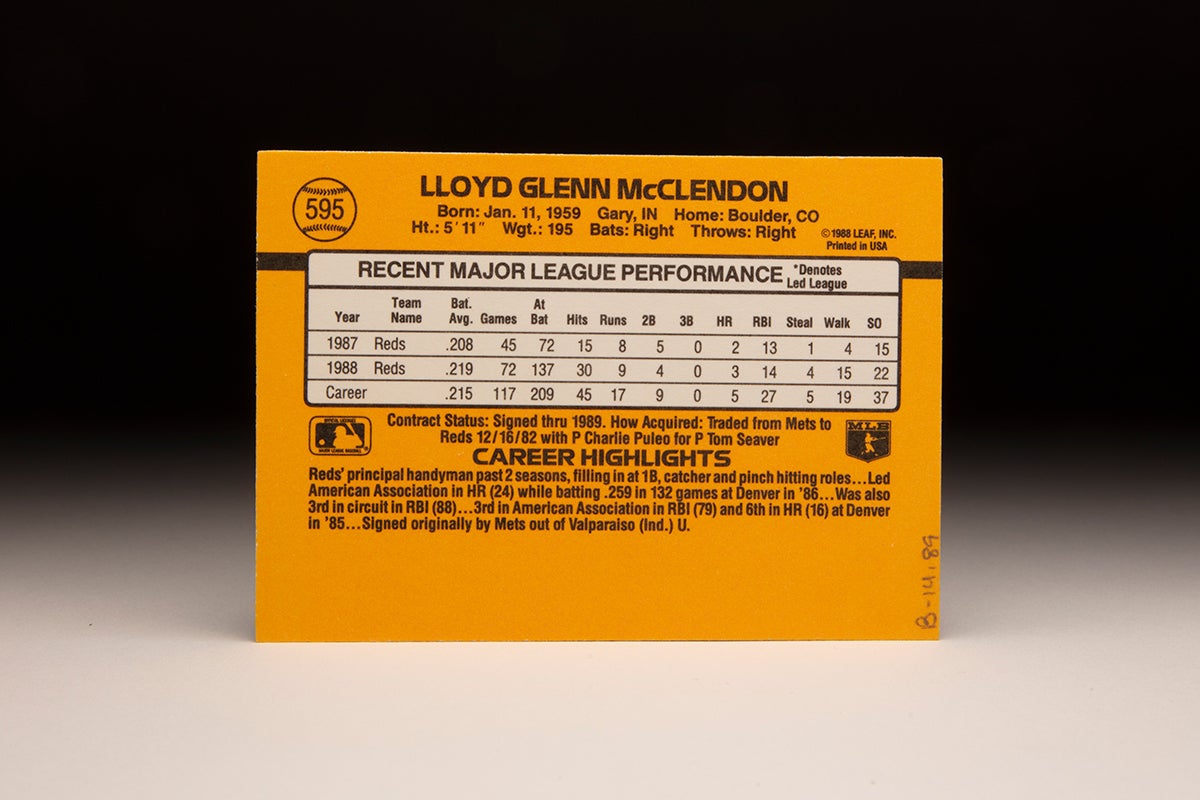
Born Lloyd Glenn McClendon on Jan. 11, 1959, in Gary, Ind., he was one of 13 children belonging to Grant and Hattie McClendon. Grant worked in an auto plant, where steel from mills in Gary would be transformed into cars.
“If I can be half the man my father was,” McClendon told the Pittsburgh Post-Gazette in 2000, “I will be successful.”
McClendon’s athletic ability and perseverance – “I had to be tough to make it through that,” McClendon said of being the youngest boy in the family – made him a star in the Anderson Little League. As a pitcher and hitter, he led Gary to Williamsport, where he hit five home runs on five powerful right-handed swings – and was intentionally walked in every other plate appearance.
Gary won the United States title before losing to Taiwan in the finals. McClendon started the championship game on the mound, holding a 3-0 lead before Taiwan rallied to tie the game in the fourth inning and piled on in the ninth with the help of multiple passed balls. Gary eventually lost the game 12-3 despite McClendon’s 12 strikeouts.
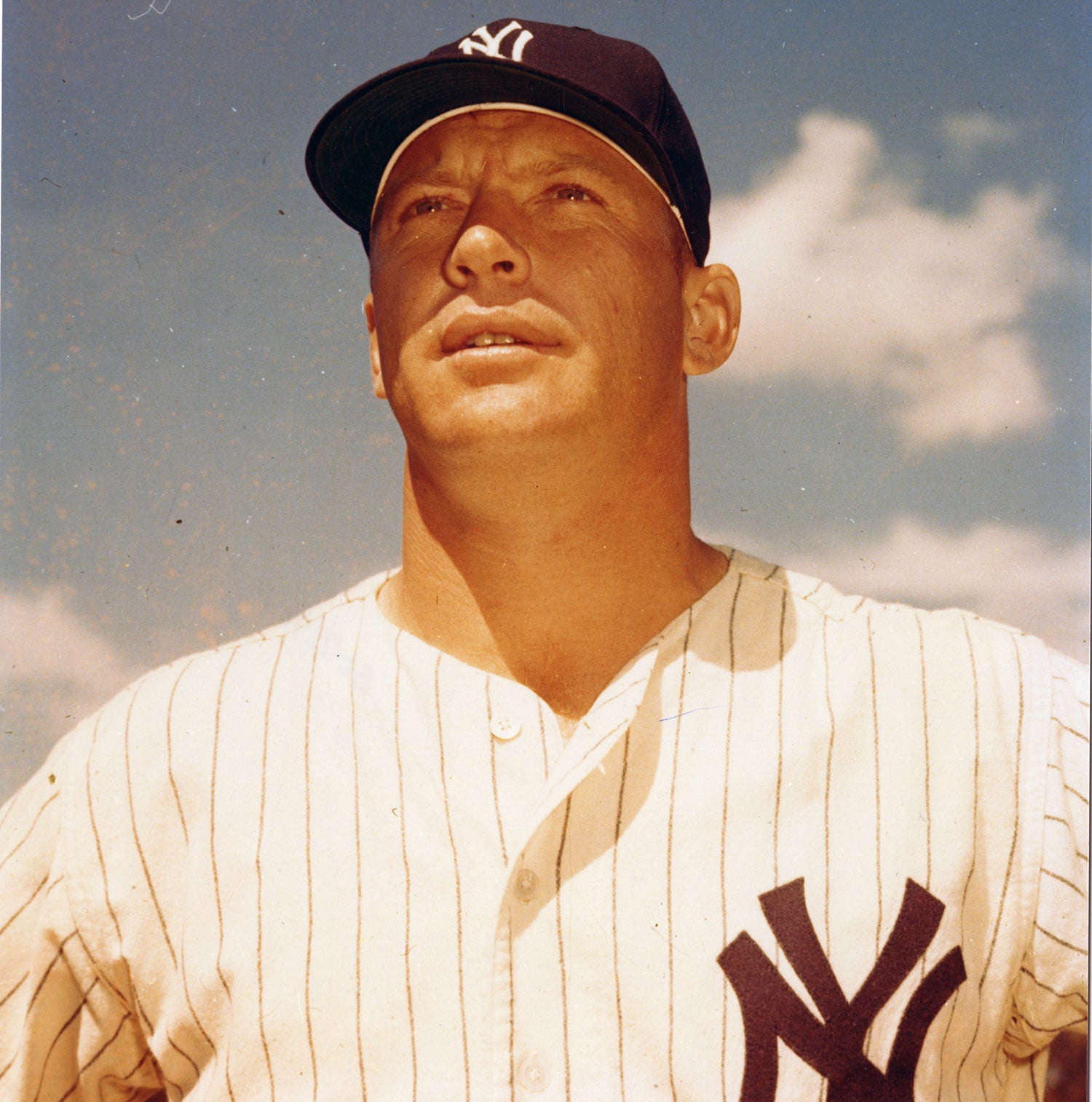
Mickey Mantle – three years away from being inducted into the Hall of Fame – interviewed McClendon on television.
“I was just swinging a magic bat,” McClendon told the Marion (Ind.) Chronicle Tribune in 1986. “I was just a kid, having fun and I didn’t know much about the game at the time.”
McClendon starred for Theodore Roosevelt High School in Gary and was an all-state selection in 1977 but went undrafted after graduation, instead enrolling at Valparaiso University. A third baseman, McClendon was named to the Heartland Collegiate Conference all-tournament team in 1980.
Selected by the Mets in the eighth round of the 1980 MLB Draft, McClendon quickly signed and reported to Kingsport of the Appalachian League. After hitting .326 in 14 games, McClendon was promoted to Little Falls of the New York-Penn League, where he hit .274 with a .434 on-base percentage.
Now a catcher, McClendon spent the next two seasons with Class A Lynchburg of the Carolina League and helped young prospects like Darryl Strawberry adjust to minor league ball. In his second season, McClendon grew into his power – hitting 18 homers and driving in 78 runs in 108 games.
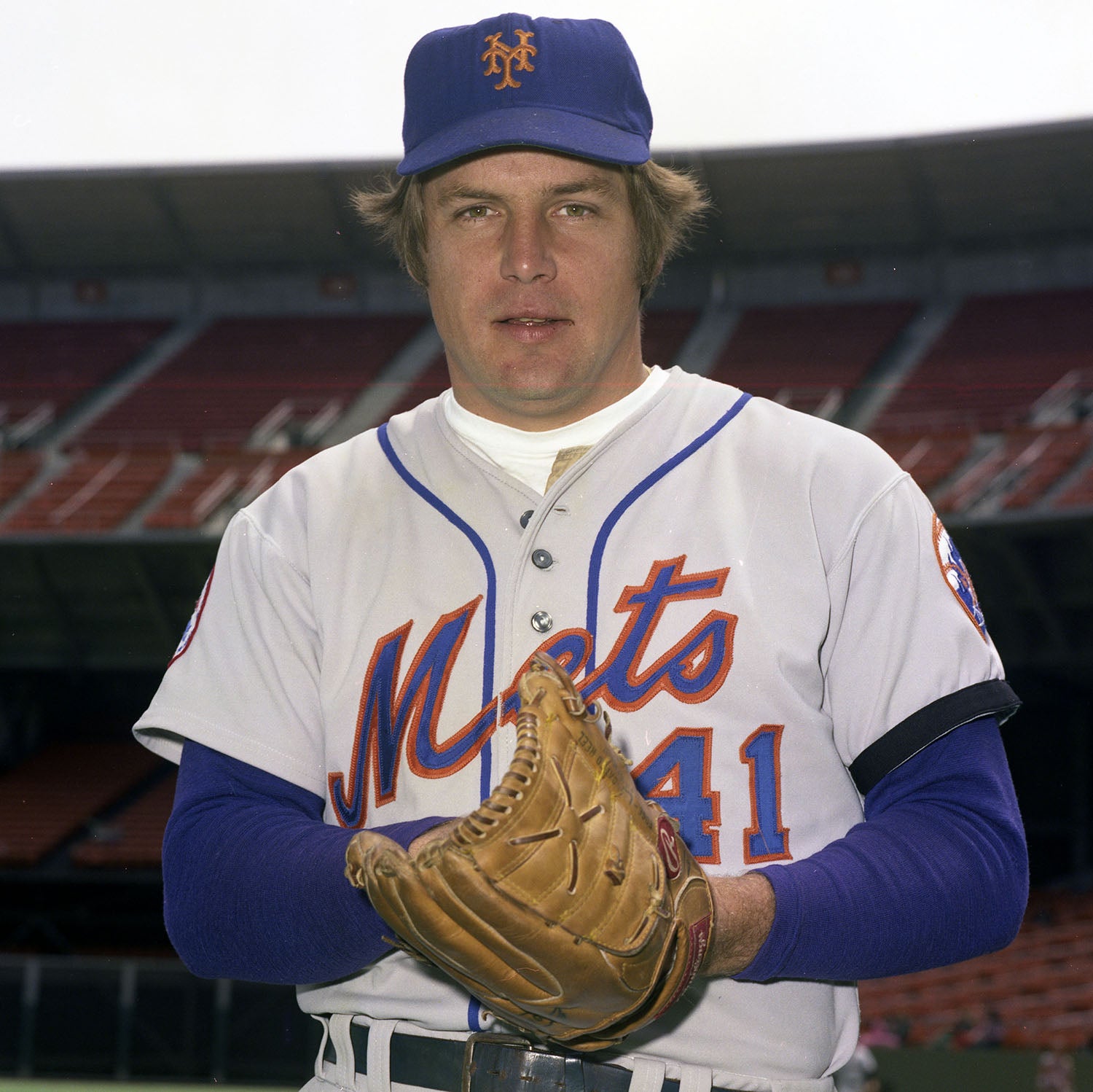
A rising prospect, McClendon was sent to the Reds with Charlie Puleo and another minor leaguer in a deal that brought Tom Seaver back to the Mets on Dec. 16, 1982. He continued to hit in 1983, batting .263 with 15 homers and 57 RBI for Double-A Waterbury of the Eastern League.
After hitting .285 while splitting the 1984 season between Waterbury and Triple-A Wichita, McClendon spent the next two seasons with Triple-A Denver, mostly at first base. After recording 24 homers (tops in the American Association) and 88 RBI for the Zephyrs in 1986, McClendon came to Spring Training with the Reds in 1987 with a chance to make the team.
“He’s done everything you can ask of a Triple-A player,” Sheldon Bender, the Reds vice president for player personnel, told the Cincinnati Post. “He’s a hard-working fellow who can hit, and he’ll do anything to help a club. He’s just one of those guys you keep pulling for.”
McClendon’s versatility – and ability to catch – helped him make the Opening Day squad in a season where rosters were limited to 24 players.
“I haven’t been at the right place at the right time before,” McClendon told the Post. “I’ve kept at it because I’m not a quitter.”
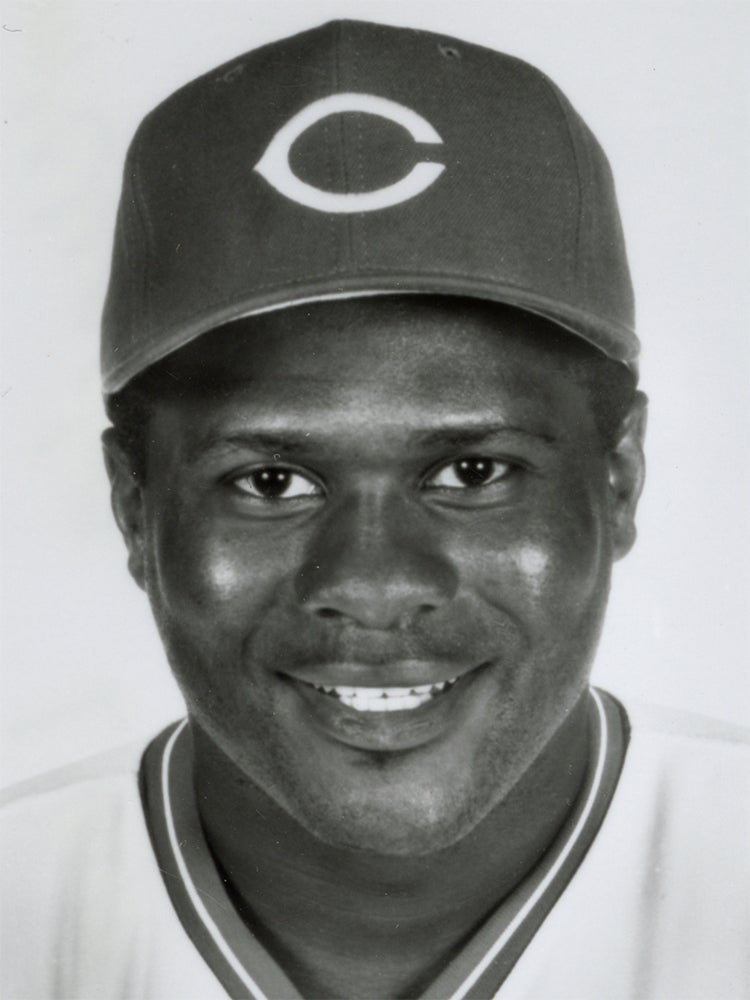
On Opening Day – April 6, 1987 – McClendon made his big league debut, grounding out to shortstop against the Expos’ Lary Sorensen while pinch-hitting for pitcher Frank Williams. He saw regular action off the bench that year in between an August trip back to Triple-A Nashville, batting .208 with two homers and 13 RBI in 45 games.
Following the season, the Reds assigned McClendon outright to Nashville. Virtually every media story during his rookie season mentioned his Little League days.
“It’s quite embarrassing, to tell you the truth,” McClendon told The New York Times during the 1987 season. “I don’t talk about it unless people bring it up. It’s flattering that they remember, but the funny thing is, I can only remember the (last of the five home runs).
“I’m still waiting to achieve that again.”
With third baseman Buddy Bell recovering from an injury, McClendon made the Reds’ Opening Day roster in 1988 and spent virtually the whole season in Cincinnati, batting .219 with three homers and 14 RBI in 72 games.
On Dec. 8, 1988, the Reds traded McClendon to the Cubs in exchange for outfielder Rolando Roomes.
“It didn’t appear Lloyd was going to have an opportunity to play here (in 1989),” Reds general manager Murray Cook told the Cincinnati Post. “With the additions we’ve made and the ones we hope to make, we didn’t think he’d have a good chance to make the club.”
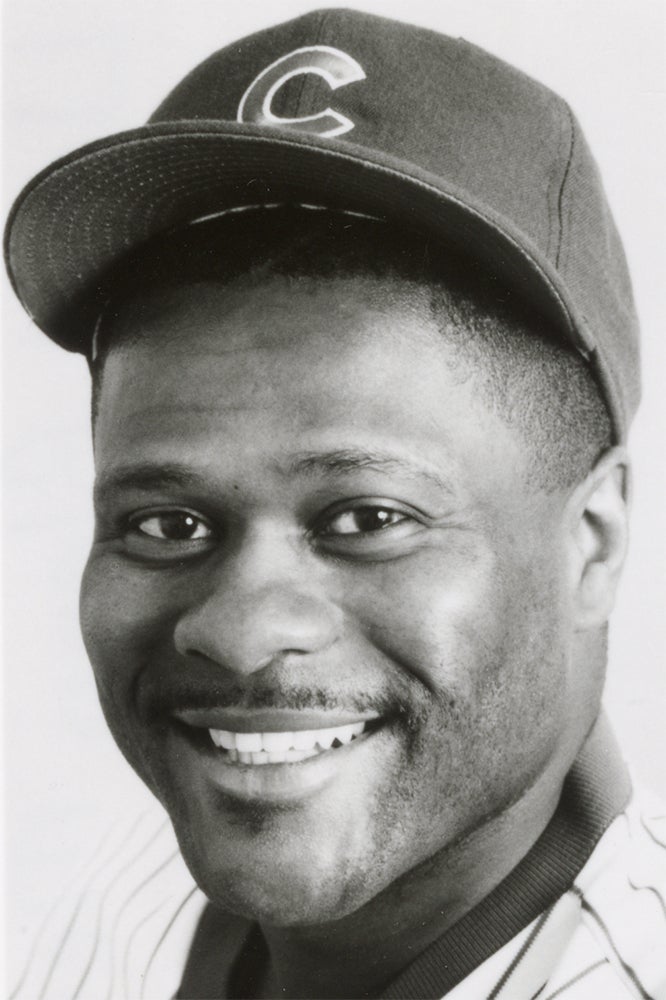
McClendon didn’t make the Cubs’ Opening Day roster, either. But after a month with Triple-A Iowa – where he hit .321 over 34 games – he was called up to Chicago. He spent much of the rest of the season platooning in left field with Dwight Smith, hitting .286 with 12 homers and 40 RBI in 92 games as the team won the National League East title. He went 2-for-3 with a walk in the Cubs’ five-game loss to the Giants in the NLCS.
It would be a harbinger of postseason success to come.
In 1990, McClendon had designs on playing third base for the Cubs, who entered the season with no clear-cut starter. But manager Don Zimmer had other ideas.
“I’m ready to tell him he’s the fifth third baseman,” Zimmer told the Chicago Tribune before Spring Training. “If four guys get hurt, he’ll play third.
“I know he can catch. And he can hit. When you’ve got a bat like he does, you try to find a spot for him.”
McClendon eventually returned to his platoon role in left field but fell into a deep slump and was hitting .165 when the Cubs sent him back to Triple-A in July. He returned for two games in September before being traded to the Pirates for a player to be named later (who turned out to be minor leaguer Mike Pomeranz) on Sept. 7.
He appeared in four games for Pittsburgh, with the highlight coming on Sept. 11 when his two-run, pinch-hit home run in the seventh inning tripled the Pirates’ lead in a game Pittsburgh won 5-1. But because he was acquired after Aug. 31, he was not eligible for the postseason when the Pirates won the NL East.
But at long last, McClendon had found a home.
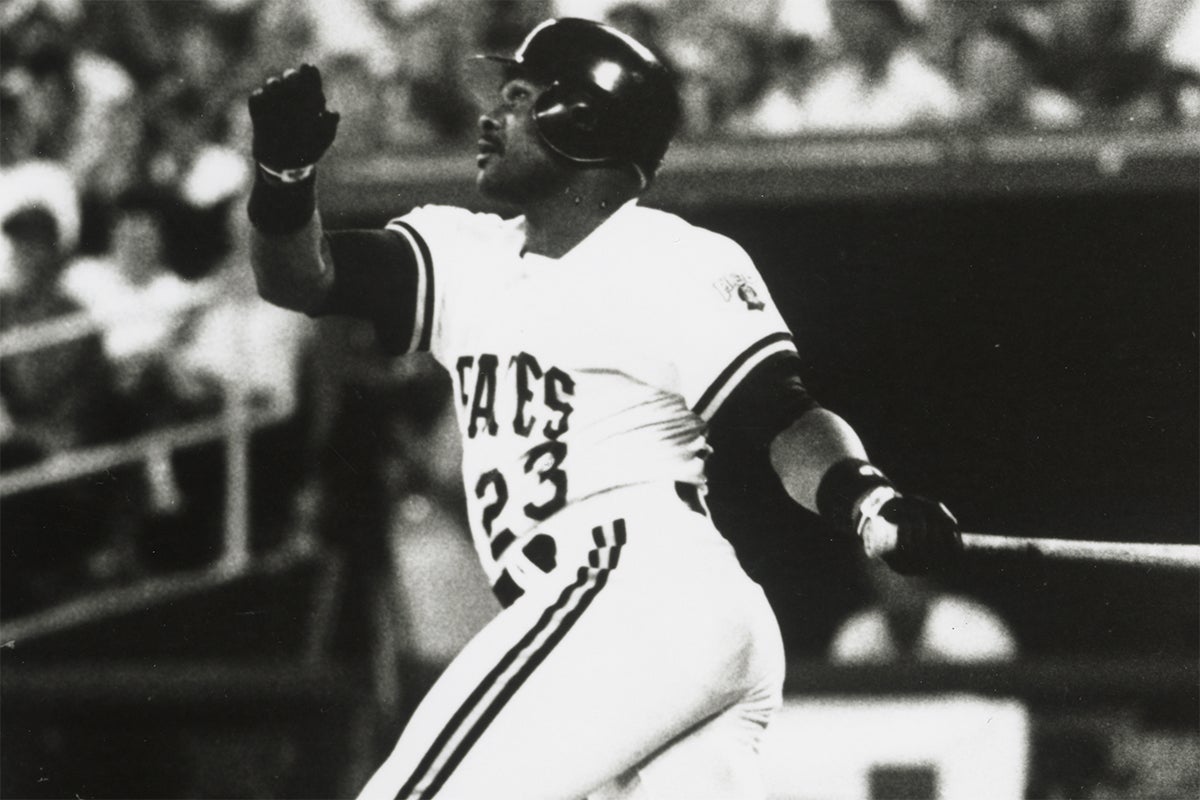
In 1991, he made the Pirates’ Opening Day roster and saw regular duty as a platoon outfielder and first baseman as well as a pinch-hitter. He was batting .304 as late as Sept. 26 and finished at .288 with seven homers and 24 RBI in 85 games.
In the NLCS vs. the Braves, he appeared in three of the seven games as a pinch-hitter, going 0-for-2 with a walk as Pittsburgh fell to Atlanta.
In 1992, McClendon reprised his bench role and put up similar numbers as the year before, hitting .253 with three homers and 20 RBI – and 28 walks – in 84 games. The Pirates once again won the NL East title and again faced Atlanta for the right to go to the World Series. But this time – with All-Star right fielder Bobby Bonilla having gone to the Mets via free agency following the 1991 season – McClendon started in right field in the NLCS in every game that the Braves started a left-hander.
McClendon went 2-for-3 with an RBI double off Steve Avery in Game 2 and was 0-for-2 with a walk against Tom Glavine in Game 3. Pittsburgh found itself trailing 3-games-to-1 heading into Game 5, but McClendon helped the Pirates tie the series over the next two games – going 3-for-3 in both contests with a combined three RBI and three runs scored.
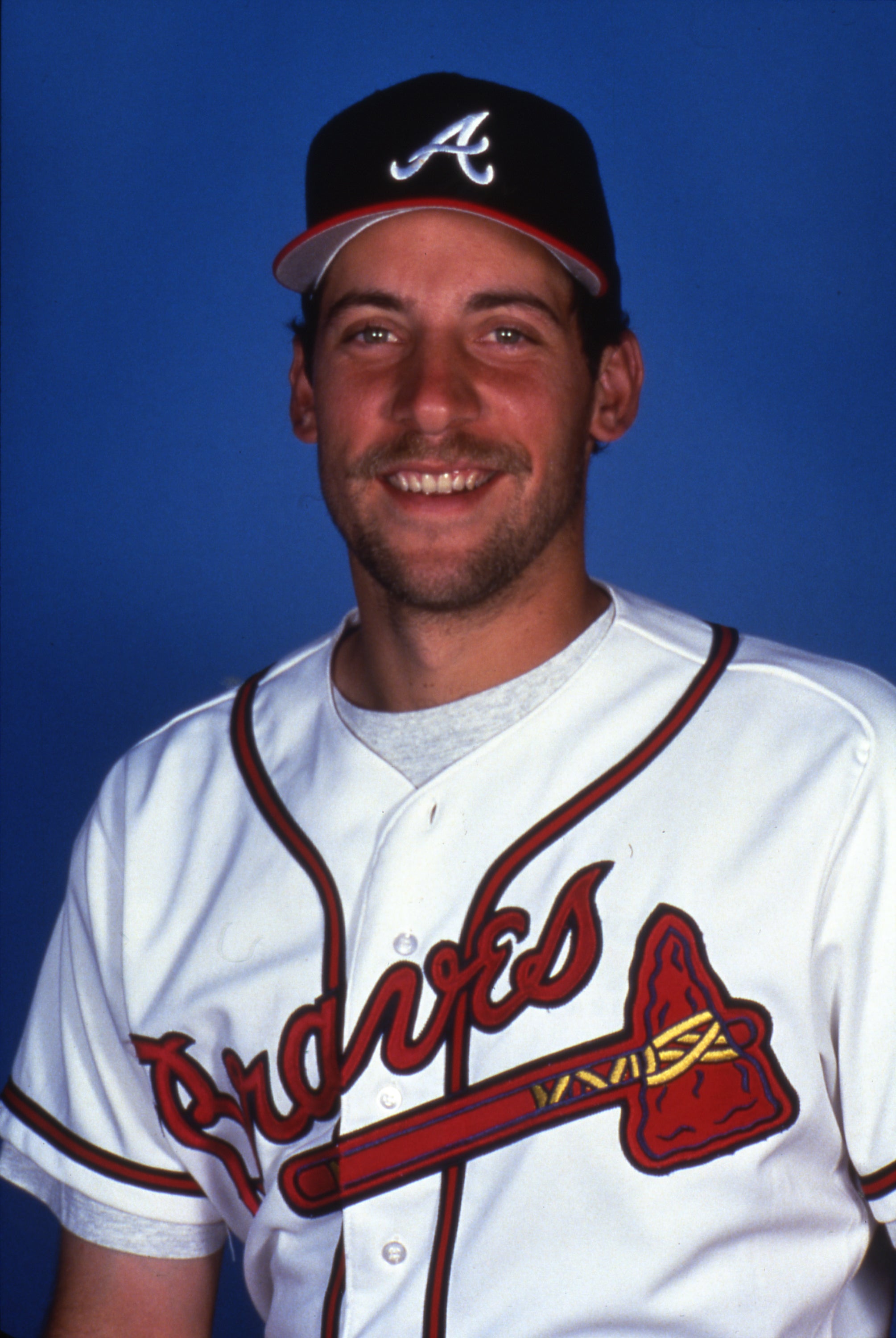
In Game 7, however, Atlanta started right-hander John Smoltz. Pittsburgh manager Jim Leyland stuck with his regular platoon, starting Alex Cole in right field. McClendon eventually pinch-hit for Cole and drew two walks in two plate appearances, including an intentional pass in the seventh inning as the Pirates threatened to add to their 2-0 lead.
“I don’t think you change basically what you did all year,” Leyland told USA Today about the decision not to start McClendon in Game 7. “I don’t think it would be fair for all of a sudden to play somebody against a right-hander who hasn’t played all year. I just don’t think that’s the right way to do it.”
Three outs from the World Series, Pittsburgh fell victim to an Atlanta rally as Francisco Cabrera’s two-run, two-out single gave the Braves a 3-2 win.
McClendon’s .727 batting average in the 1992 NLCS is the best mark for any player in one postseason series (among those with enough at-bats to qualify).
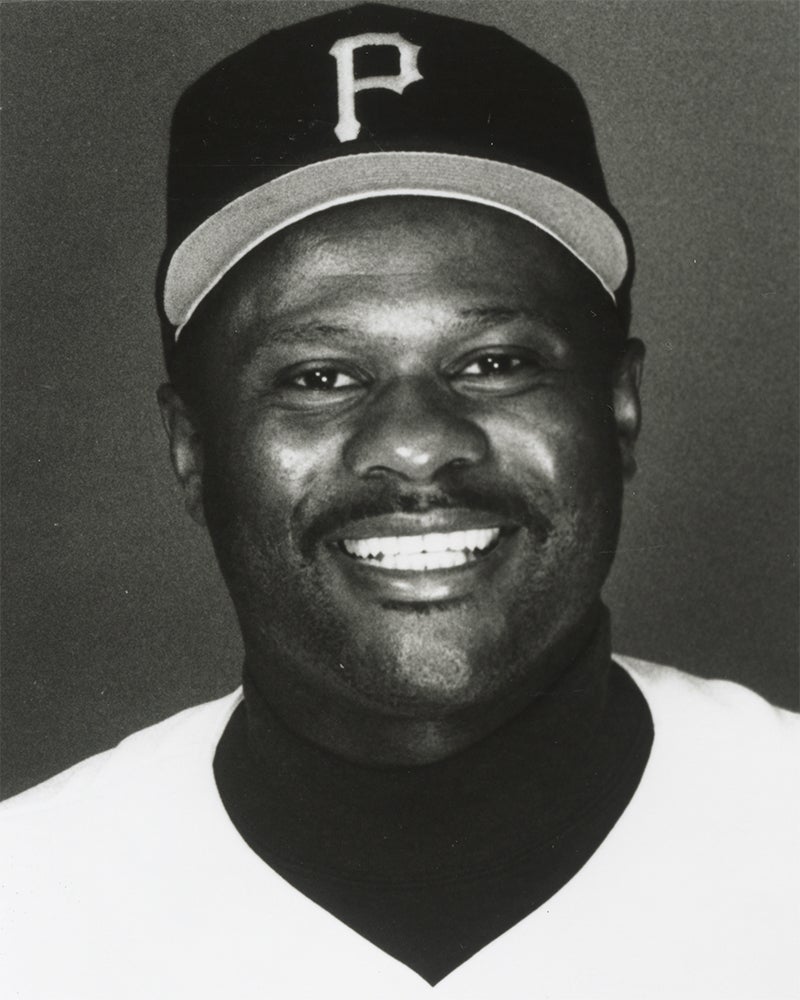
McClendon returned to the Pirates in 1993, signing a two-year deal worth a reported $1.3 million. But after losing Barry Bonds and Doug Drabek to free agency, the Pirates were no longer the best team in the NL East. McClendon batted .221 in 1993, the first of 20 straight seasons Pittsburgh would finish with a sub-.500 record.
McClendon would be in the Pirates dugout in one role or another in 11 of those seasons.
“I’m way past the point of being discouraged,” McClendon told the North Hills (Pa.) News Record in September of 1993. “It’s good to get the at-bats in, but it’s still a bad year. For the team and for myself.”
But things did not improve for either McClendon or the Pirates in 1994. He was hitting .239 in 51 games when the season ended due to the strike. With his contract expired, McClendon joined dozens of free agents who worked out in Homestead, Fla., in the spring of 1995 while hoping to get signed to a big league deal.
“I don’t think anybody knows the answer to that question,” McClendon told the News-Press of Fort Myers, Fla., when asked how long he and his free agent compatriots might have to wait.
Eventually, McClendon signed a minor league deal with Cleveland, which was on its way to a 100-win season and the American League pennant. But McClendon got into just 37 games with Triple-A Buffalo and was never called up to the majors.
He retired following the season. But McClendon still had plenty of days in the majors ahead of him.
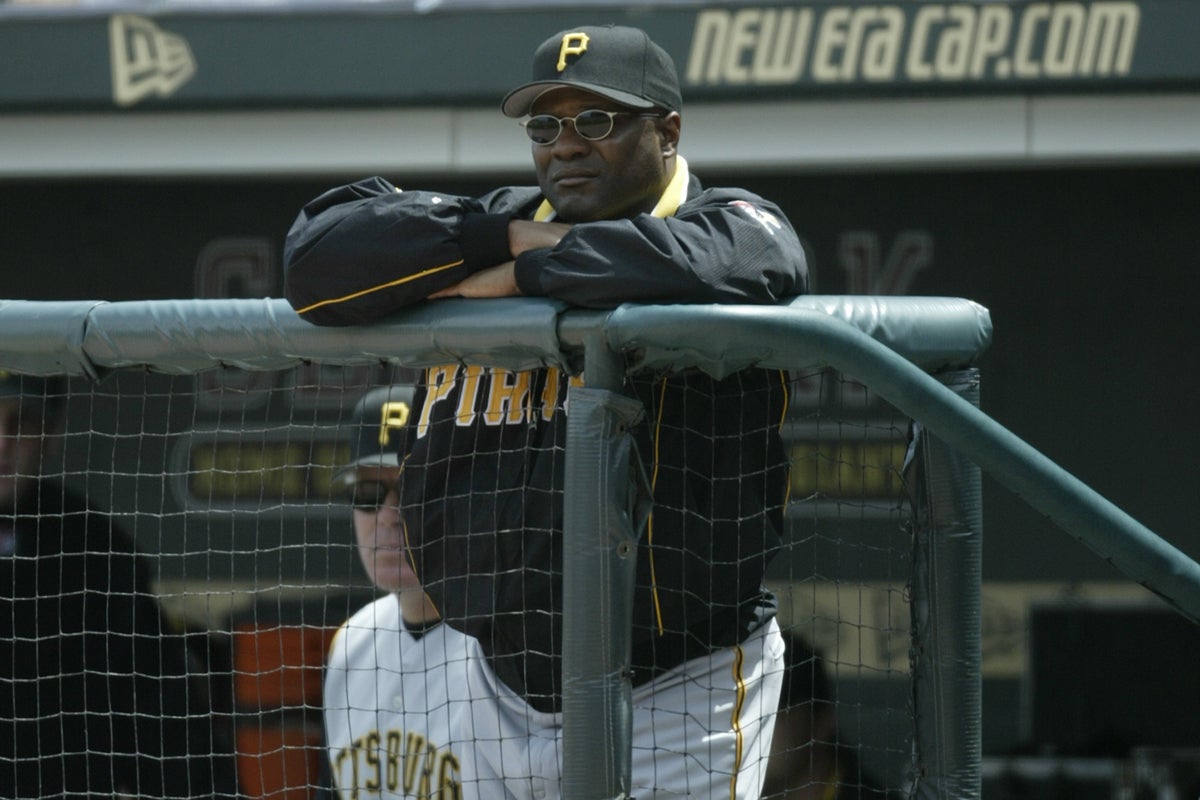
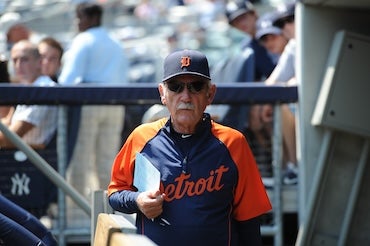
Following the 1996 season, Leyland left the Pirates to take over the Marlins. Gene Lamont – who was the Pirates longtime third base coach before skippering the White Sox – replaced Leyland as the Pirates manager and hired McClendon as his hitting coach. When Lamont was fired following the 2000 season, McClendon took over as the Pirates manager.
“His demeanor is one of a winner,” Pirates general manager Cam Bonifay told the Post-Gazette when McClendon was hired.
But McClendon was tasked with a difficult assignment. Pittsburgh went from 69 wins in 2000 to 62 wins in McClendon’s first season. He made national headlines on June 26 when – after Jason Kendall was called out at first base on a throw that he appeared to beat – McClendon stormed onto the field, argued with umpire Rick Reed and then picked up the first base bag and walked off the field.
“We loved it,” Pirates first baseman Kevin Young told the Associated Press. “We know he’s going to fight for us. If you look at our record, you would think our team has no fire and that’s not right. We play hard, and it’s because of Mac.”
The Pirates improved to 72 wins in 2002 and 75 wins a year later. But they regressed to 72 victories in 2004. En route to 95 losses in 2005, the Pirates fired McClendon on Sept. 6.
“The way we’ve played the last three months haven’t been up to our capabilities,” Pirates general manager Dave Littlefield told the AP.
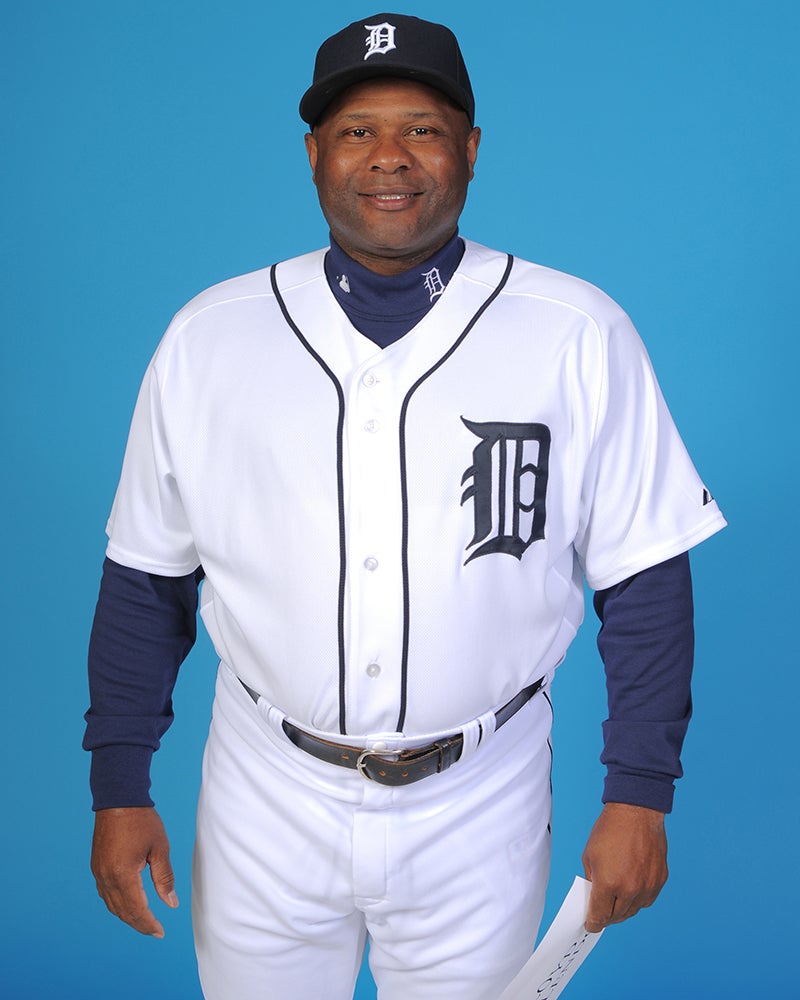
But McClendon wasn’t out of work for long. Leyland returned to managing after a six-year break and took over the Detroit Tigers in 2006, naming McClendon his bullpen coach. Detroit won the AL pennant before falling to St. Louis in the World Series, and McClendon was promoted to hitting coach in 2007. He held that position through 2013, helping Detroit advance to another World Series in 2012.
While he was the Tigers’ hitting instructor, McClendon’s son, Bo McClendon – an outfielder who also went to Valparaiso University – was drafted in the 39th round by Detroit in 2010. Bo McClendon played two seasons in the Tigers’ minor league system from 2010-11.
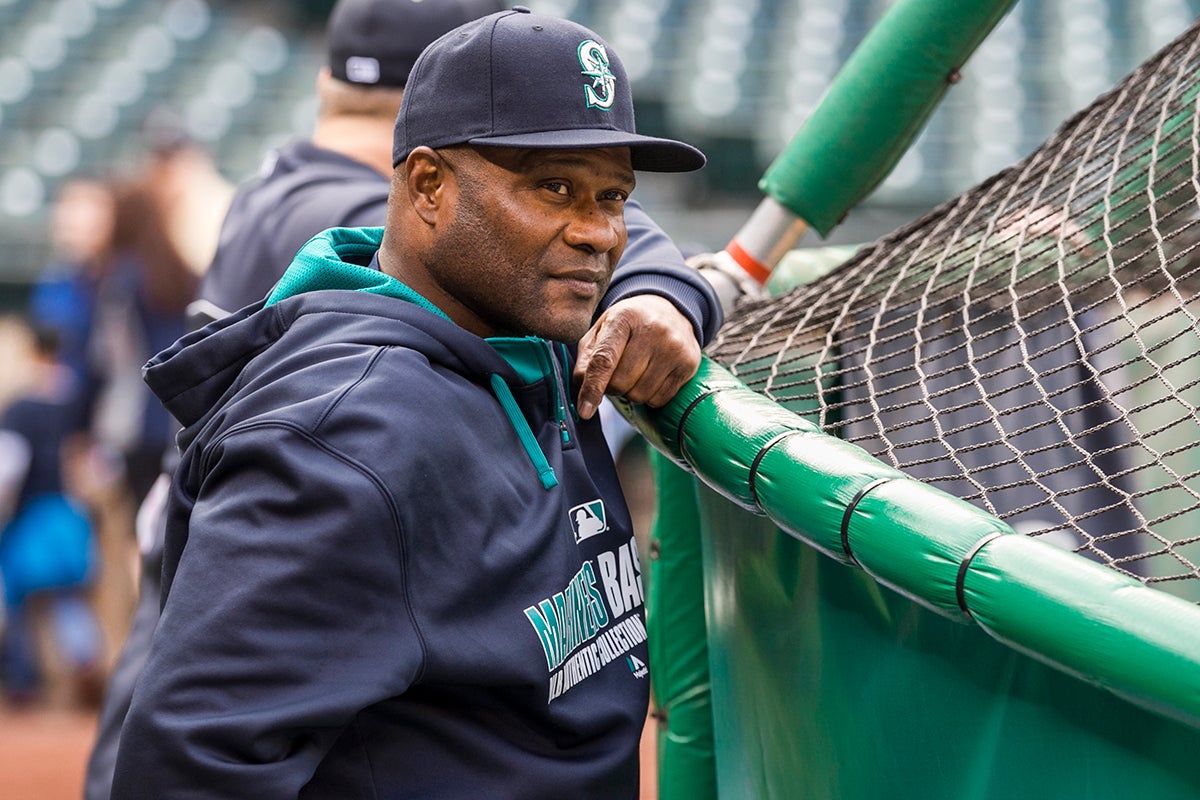
Meanwhile, Leyland retired after the 2013 season, and Lloyd McClendon was hired as the Mariners’ manager on Nov. 5. He welled up with tears as he approached the podium at his introductory news conference.
“Players first,” McClendon told The Olympian about his managerial philosophy. “I don’t want players to get out of their comfort zone. I think it’s my responsibility to go to them. If you want to call yourself a leader and a guy capable of leading young men, you better learn how to serve them. It takes some humility, some understanding and some patience.”
McClendon led the Mariners to a 16-game improvement in 2014, finishing 87-75 and in third place in the AL West. But the next season, Seattle went 76-86. Jerry Dipoto was hired as Seattle’s new general manager on Sept. 28, 2015, and McClendon was fired 11 days later.
McClendon returned to the Tigers organization in 2016, managing Triple-A Toledo. Then in 2017, he reprised his role as Detroit hitting coach – a role he held through the 2020 season when he was named interim manager on Sept. 19 after Ron Gardenhire abruptly retired.
McClendon then served a second stint as Toledo Mud Hens manager in 2022. He left the Tigers’ organization following that season.
McClendon finished his eight-year playing career with a .244 batting average, 35 home runs and 154 RBI for the Reds, Cubs and Pirates. In eight seasons as a manager, he was 501-613 for the Pirates, Mariners and Tigers.
Along the way, McClendon earned a lifetime of friends and admirers. And for one week in 1971, he was truly atop the baseball world.
“At the time, I didn’t know what an impact it would have on our area or on the country,” McClendon said in 1986 about his Little League World Series performance. “We thought we were going to play forever.”
Craig Muder is the director of communications for the National Baseball Hall of Fame and Museum