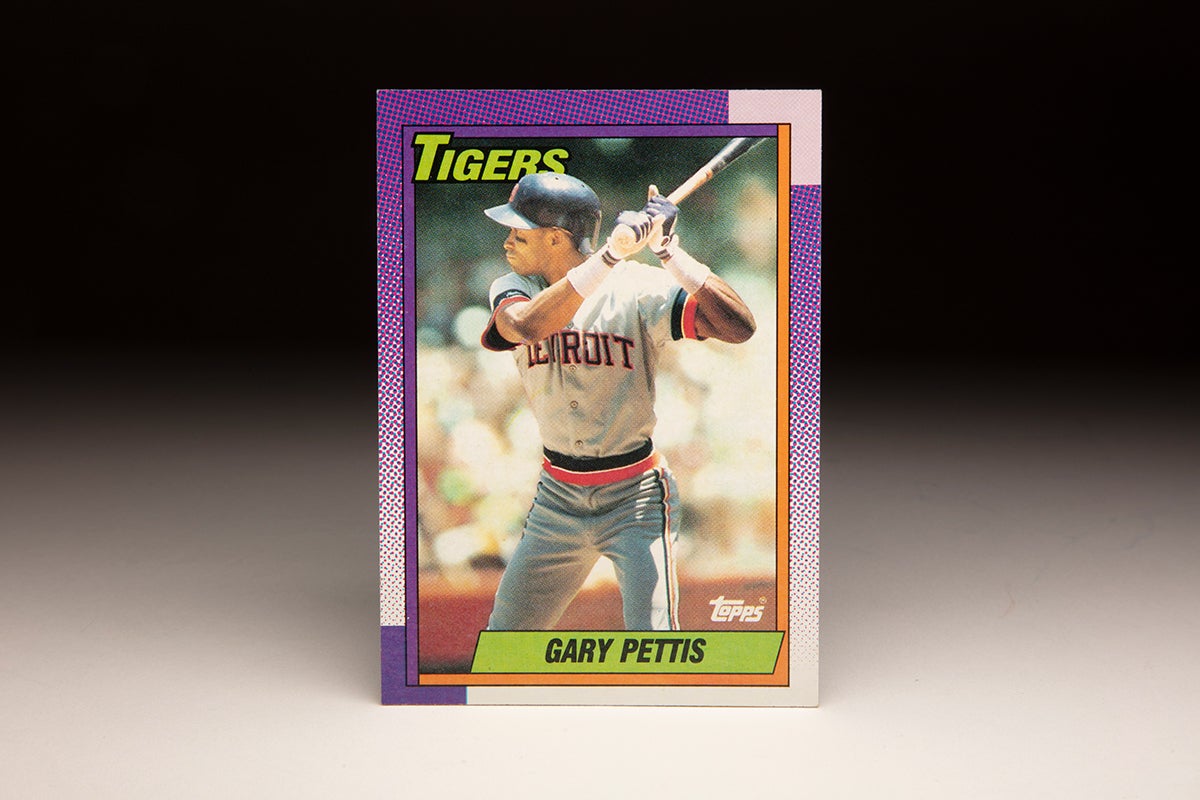
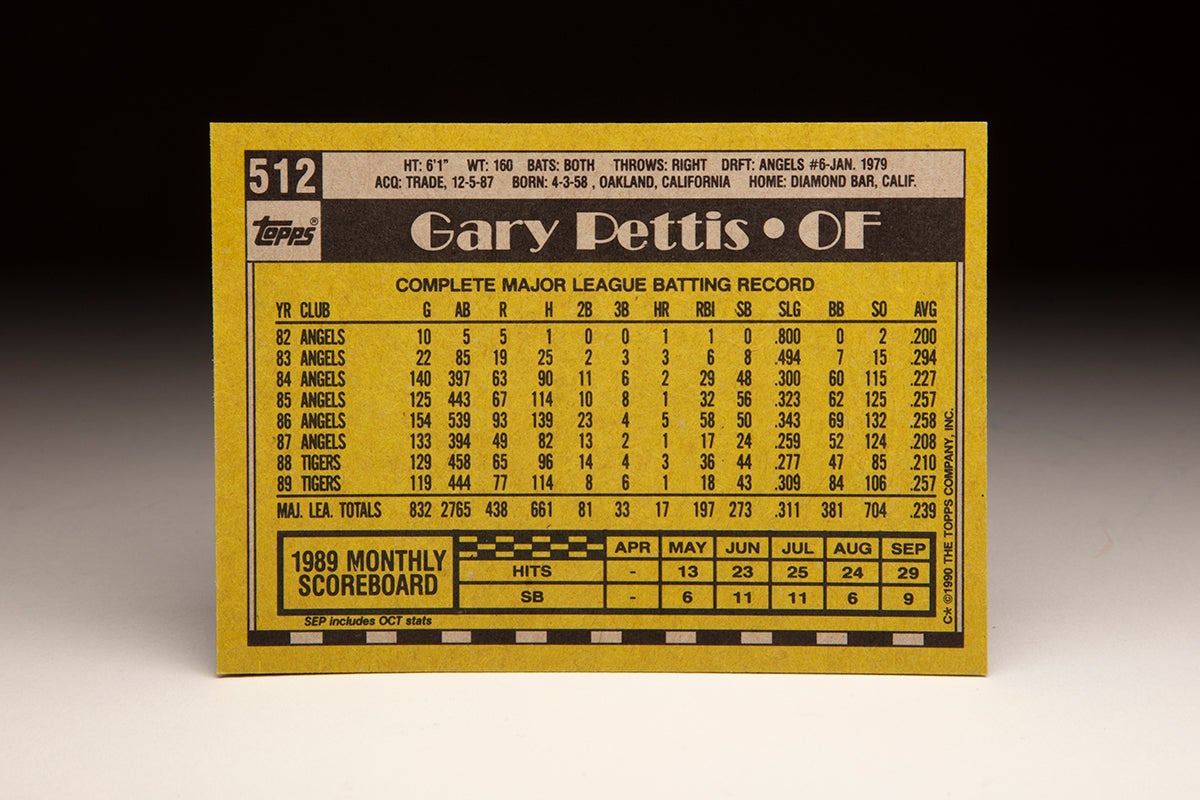
#CardCorner: 1990 Topps Gary Pettis
The most well-known baseball card featuring Gary Pettis never showed his face at all. But even one of the game’s most famous missing persons stories could not hide a career that saw Pettis become one of the best defensive center fielders in the game.
Gary George Pettis was born April 3, 1958, in Oakland, Calif. He graduated from Castlemont High School in Oakland in 1976 and enrolled at Solano Community College, located northeast of the Bay Area, where he played for the Falcons’ basketball team. Pettis then transferred to Laney College in Oakland, where he played baseball before the Angels took him in the sixth round of the January 1979 MLB Draft.
Not one of the 246 other players selected in that draft compiled a better career Wins Above Replacement figure than Pettis’ 22.1.
Sent to Idaho Falls of the Pioneer League, Pettis hit .318 with 10 doubles, 10 triples, 39 runs scored and 15 steals in 50 games. He was promoted to Class A Salinas of the California League in 1980, where he hit just .239 but drew 79 walks and stole 43 bases in 118 games.
Pettis credited former big leaguer Tommy Davis with helping him learn the art of base stealing while he was there.
“I had to work on (base stealing) because I would just run,” Pettis told the Desert Sun of Palm Springs, Calif. “My lead was not big and I would just outrun the baseball, but now my lead is better and my success ratio is better.”
Also in 1980, Pettis took up switch-hitting. The natural right-hander gained a step toward first base out of the left-hander’s batter’s box – and hit .266 with a .394 on-base percentage (powered by 86 walks) with 55 steals for Double-A Holyoke in 1981.
That same year, Pettis’ brother, Stacey Pettis, was selected in the fourth round of the June 1981 MLB Draft by the Pirates. Stacey Pettis would play seven seasons in the minors – including two for Angels’ affiliates – but never advanced above the Class A level.
The Angels promoted Pettis to Triple-A Spokane in 1982, and he continued to show the speed that would be his big league calling card. In 133 games, Pettis hit .288 with 22 doubles, 14 triples, 53 steals, 78 walks and 108 runs scored. The Angels, who would win the American League West that season, brought Pettis up to the big leagues in September.
He appeared as a pinch-runner or defensive replacement in his first 10 games before entering the game in the first inning on the season’s final day – when the Angels had already wrapped up a spot in the American League Championship Series. His walk-off home run in the bottom of the ninth inning off the Rangers’ Danny Darwin gave the Angels their 93rd victory of the season.
“I’m sure that’s every guy’s dream, to hit a home run for his first major league hit,” Pettis told the Associated Press. “It was a breaking ball; he had thrown me several breaking balls in a row. I didn’t figure he’d throw me another one.”
But because he wasn’t placed on the big league roster until September, Pettis was ineligible for the postseason. The Angels stole just 55 bases in 1982 and were just one-for-three on steal attempts in the ALCS as the Brewers rallied after losing the first two games to defeat California in the best-of-five series.
“I wish there was some way possible I could play, but I knew when I came up I wouldn’t,” Pettis told the AP after the regular season finale. “When I came up here, I just hoped to contribute. Now, I hope the guys can go all the way.”
It would be another 35 years before Pettis finally got a World Series ring.
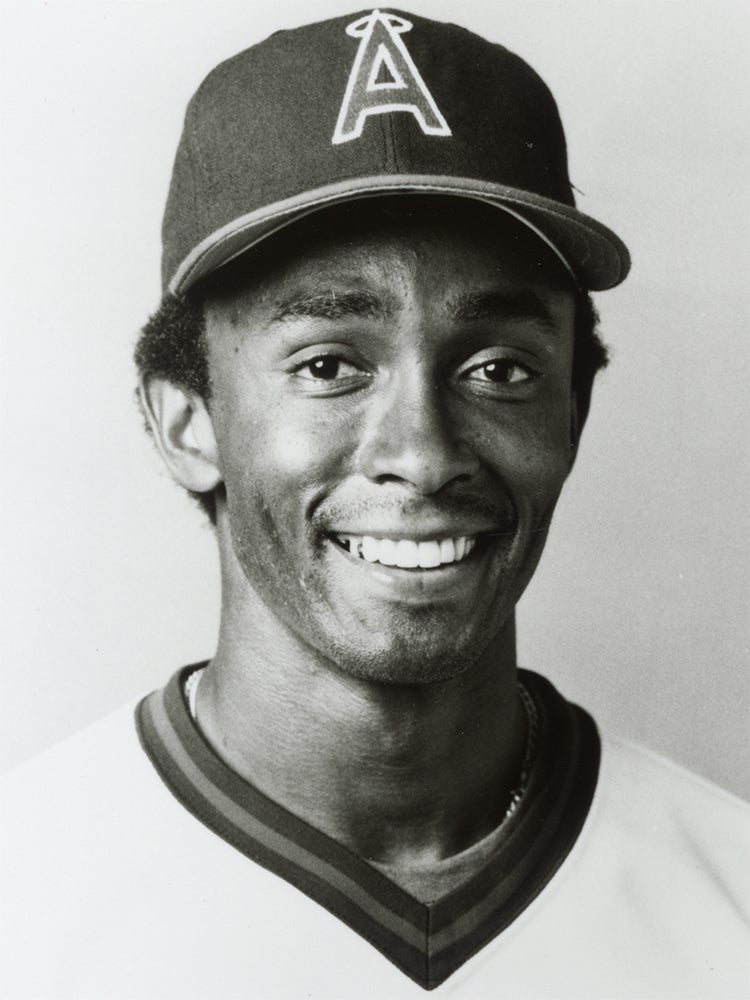
Pettis played winter ball in Venezuela following the 1982 season and set a new league record for steals. He returned to Triple-A with Edmonton in 1983, batting .285 with 138 runs scored, 27 doubles, eight triples, 11 home runs, 52 steals and 81 walks in 132 games before earning another September call up.
Playing in 22 games down the stretch, Pettis stole eight bases – improbably leading the team in that category. For the season, Pettis totaled almost 20 percent of the Angels’ 41 steals.
“My job is to get on base and make things happen,” Pettis told the Kansas City Times after going 2-for-5 with a triple, two runs scored and two steals in a 3-0 win over the Royals on Sept. 21. “When I first came up, I was too conservative. But spending time with (his big league teammates) has made me feel at home. And when you feel at home, it makes you feel comfortable.”
With little left to prove in the minors, Pettis entered Spring Training in 1984 virtually assured of a job. Veteran Fred Lynn volunteered to move from center field to right field before camp even started to make room for Pettis.
“I heard about it over the winter that Freddy moved to right,” Pettis told the Desert Sun of Palm Springs, Calif., during Spring Training. “I wasn’t surprised but pleased. I have to thank (Lynn), it takes a special guy to do something like that. Freddy can still play center field.”
Lynn, who had won four Gold Glove Awards in center field from 1975-80, was entering his age-32 season but still was considered a premium defender. But Lynn knew that Pettis was the future.
“He’s as fast as anybody in the league,” Lynn told the San Bernardino County Sun. “We need more speed and the only place he can play is center.”
Unsurprisingly, Pettis was the Angels’ Opening Day center fielder in 1984.
“If he hits .275 – and I expect him to hit no lower – he’ll steal a minimum of 60 bases,” Gene Mauch, the Angels director of player personnel who stepped down as Angels manager after the 1982 season, told the Los Angeles Times. “I told him that if he gets to first base, the next stop is Cooperstown.”
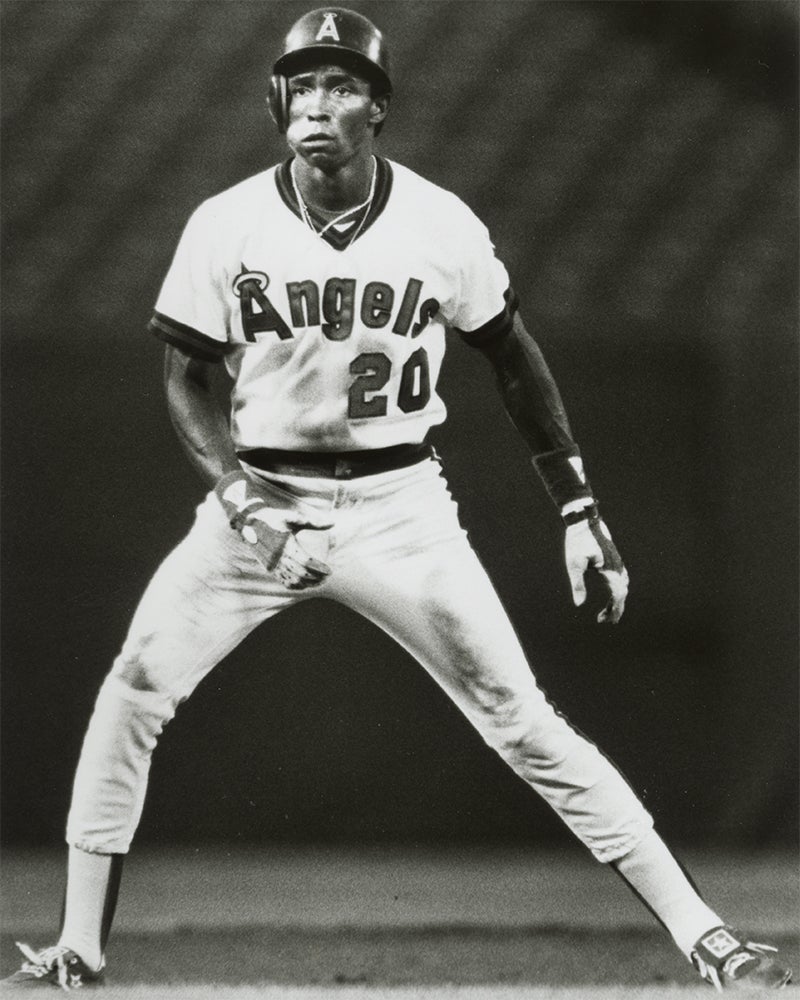
But the offensive skills Pettis showed in the minors did not translate to the big leagues. In 140 games during his rookie season, Pettis batted .227 with 11 doubles, six triples, two home runs and 29 RBI. He did draw 60 walks and stole 48 bases – but he also fanned 115 times, which was considered a high total for non-power hitters of that era.
“I’ve had a problem of wrapping the bat around my head,” Pettis told the Oakland Tribune early in the 1984 campaign. “But I’m just trying to make contact now, hitting the ball up the middle and to the left side.”
Defensively, however, Pettis showed off the range that would become his calling card. He recorded 12 assists and led AL center fielders with four double plays.
Now secure in his job after Fred Lynn left the Angels as a free agent following the 1984 season, Pettis had his brush with baseball card infamy in 1985 when his younger brother, Lynn, appeared on his Topps card. Lynn was outfitted in an Angels uniform and stared straight into the camera, with his right index finger brushing the point of his chin.
Pettis explained the mix-up to MLB.com in 2018.
“When I was playing with the Angels, one of the other players on my team had a son,” Pettis said. “My brother would come out to the ballpark on Sundays, and they’d dress up in uniforms and go out on the field and shag balls and run around.
“I guess this happened to be one Sunday when they were taking the pictures for the Topps baseball cards. I had no idea that was going on that day. My brother was out on the field and at that time, he was as big as I was at 14 years old. I guess he was around the dugout and sitting around and the guy walked up and said: ‘Hey, let me take your picture.’
“He posed for the picture. I’m sure he had no idea it was going to end up on a baseball card.”
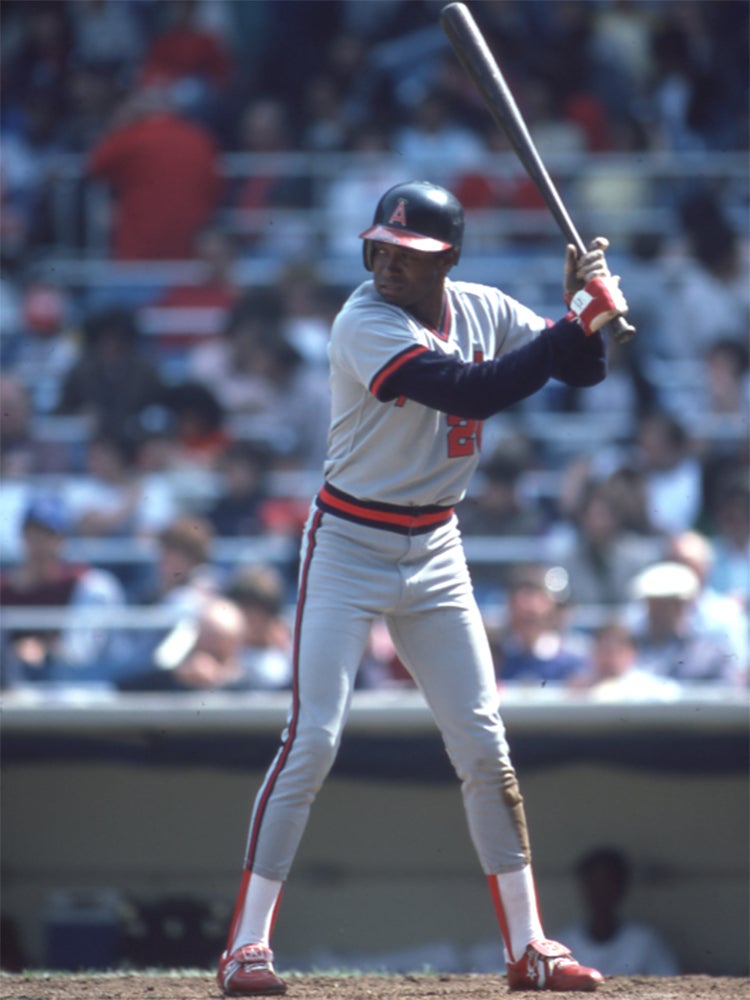
The real Gary Pettis improved across the board in 1985, batting .257 with 56 steals – second in the AL only behind Rickey Henderson’s 80 – and 62 walks in only 125 games. He totaled 13 outfield assists and led MLB center fielders with five double plays en route to his first Gold Glove Award.
Eligible for arbitration for the first time, Pettis lost his case in February 1986 and settled for $300,000 rather than $425,000 he requested. It would be one of the few losses Pettis and the Angels sustained in 1986 – until the postseason.
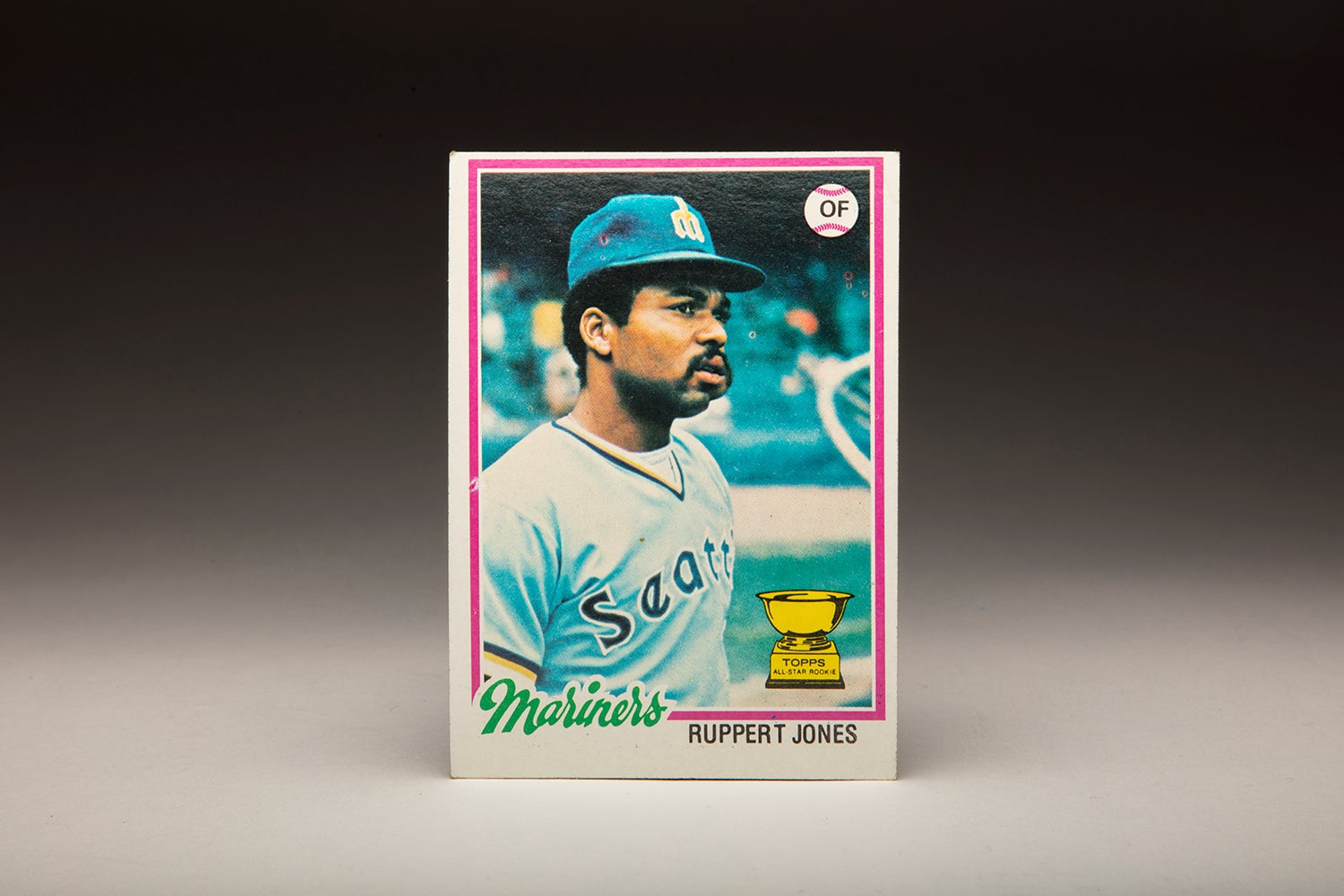
With a veteran team featuring over-30 outfielders such as Brian Downing, George Hendrick, Reggie Jackson and Ruppert Jones, the Angels relied on Pettis to cover ground in center field. Pettis played in 154 games that year, batting .258 with 23 doubles, four triples, five home runs, 58 RBI, 93 runs scored and 50 steals – once again finishing second in stolen bases behind Henderson. His Defensive Wins Above Replacement was 2.4 (his 464 putouts led the majors and continue to rank in the Top 30 on that all-time list) and his overall WAR was 5.1, both of which would represent career-highs for Pettis. And he finished the season with 162 steals, which vaulted him past Sandy Alomar Sr.’s 139 for first place on the Angels’ all-time list.
Still, the cast of characters in the Angels’ clubhouse made for some tense moments during the season.
“That clubhouse was a mess,” Angels pitcher Chuck Finley told the Los Angeles Times during a look back at the rollercoaster season in 2021. “Guys were just fighting all the time. (But) once that national anthem was played, it was just true professionalism. Those guys knew how to win.”
The Angels went 21-5 from late August to late September to capture the American League West title, giving Pettis his first chance to play in the postseason. He would perform admirably for an Angels team that suffered a heartbreaking loss.
Pettis had two hits, two runs scored and an RBI in an 8-1 win in Game 1 of the ALCS vs. Boston, added another hit in a Game 2 loss then hit a two-run home run in the bottom of the seventh of Game 3 to extend California’s lead to 4-1 in a game the Angels won 5-3. Pettis made nine putouts in that game to tie an LCS record.
In Game 4, Pettis’ RBI double in the bottom of the ninth cut Boston’s lead to 3-2, and Downing later forced the tying run across the plate when he was hit by a pitch from Calvin Schiraldi. Then in the bottom of the 11th, Pettis sacrificed Jerry Narron – who had singled to lead off the frame – to second base, and Narron scored on a Bobby Grich single to give the Angels a 4-3 win and a three-games-to-one lead in the series.
Game 5, however, would be one that no one in an Angels’ uniform would ever forget.
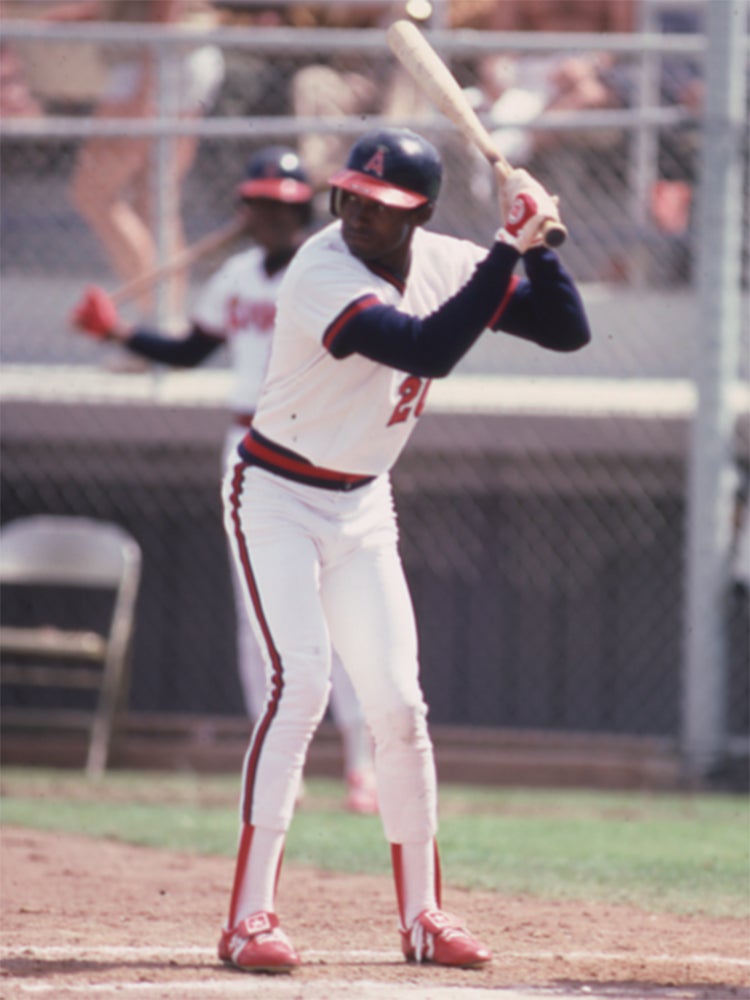
In a back-and-forth affair, the Angels scored two runs in the seventh inning to take a 5-2 lead – with Pettis scoring the fifth run after walking and then coming around to score on Downing’s sacrifice fly. After a scoreless eighth inning, the Angels were three outs away from the World Series. Don Baylor’s two-run home run cut the lead to 5-4, but starting pitcher Mike Witt then retired Dwight Evans on a popup. With lefty hitting catcher Rich Gedman due up, Mauch replaced Witt with lefty Gary Lucas.
Lucas proceeded to hit Gedman with his first pitch, and Mauch brought on closer Donnie Moore, who was battling a sore shoulder that would require a cortisone injection after the game. Dave Henderson then launched a 2-and-2 pitch over the left field wall to give Boston a 6-5 lead.
But the Angels and Pettis weren’t through. Bob Boone singled to start the ninth and Pettis sacrificed pinch-runner Ruppert Jones to second. Rob Wilfong then singled to right to score Jones and tie the game. The Angels then loaded the bases with one out before Doug DeCinces flew out to short right and Grich hit an easy liner to the pitcher to end the threat.
“I got no place to sleep tonight,” Mauch, who had never been to the World Series in his 24 previous seasons as one of the game’s most respected managers, told the Los Angeles Times after the game. “I bet my house that DeCinces would get that run in from third.”
After Moore escaped a first-and-third, one-out jam in the top of the 10th, Pettis nearly won the game in the bottom of the inning. With Narron on first after a two-out walk, Pettis drove a full count pitch from Steve Crawford to deep left. It was a similar blast to the double Pettis hit in Game 4, and Boston left fielder Jim Rice had taken a couple steps back toward the wall when Pettis came to the plate.
With Narron running with the pitch, Rice robbed Pettis at the wall – a grab that saved the season for Boston.
“He had to look in his glove to make sure he caught it,” Al Michaels, who was calling the game for ABC, told the Los Angeles Times in 2021. “Narron was running with the 3-2 pitch, and he scores easily if Rice doesn’t catch it.”
Boston then scored a run in the top of the 11th on a Henderson sacrifice fly, and the Angels went down in order to send the series back to Boston.
Pettis went a combined 1-for-9 in the final two games as the Angels lost both by a combined score of 18-5, sending the Red Sox to the World Series. It would mark the only postseason appearance of Pettis’ playing career.
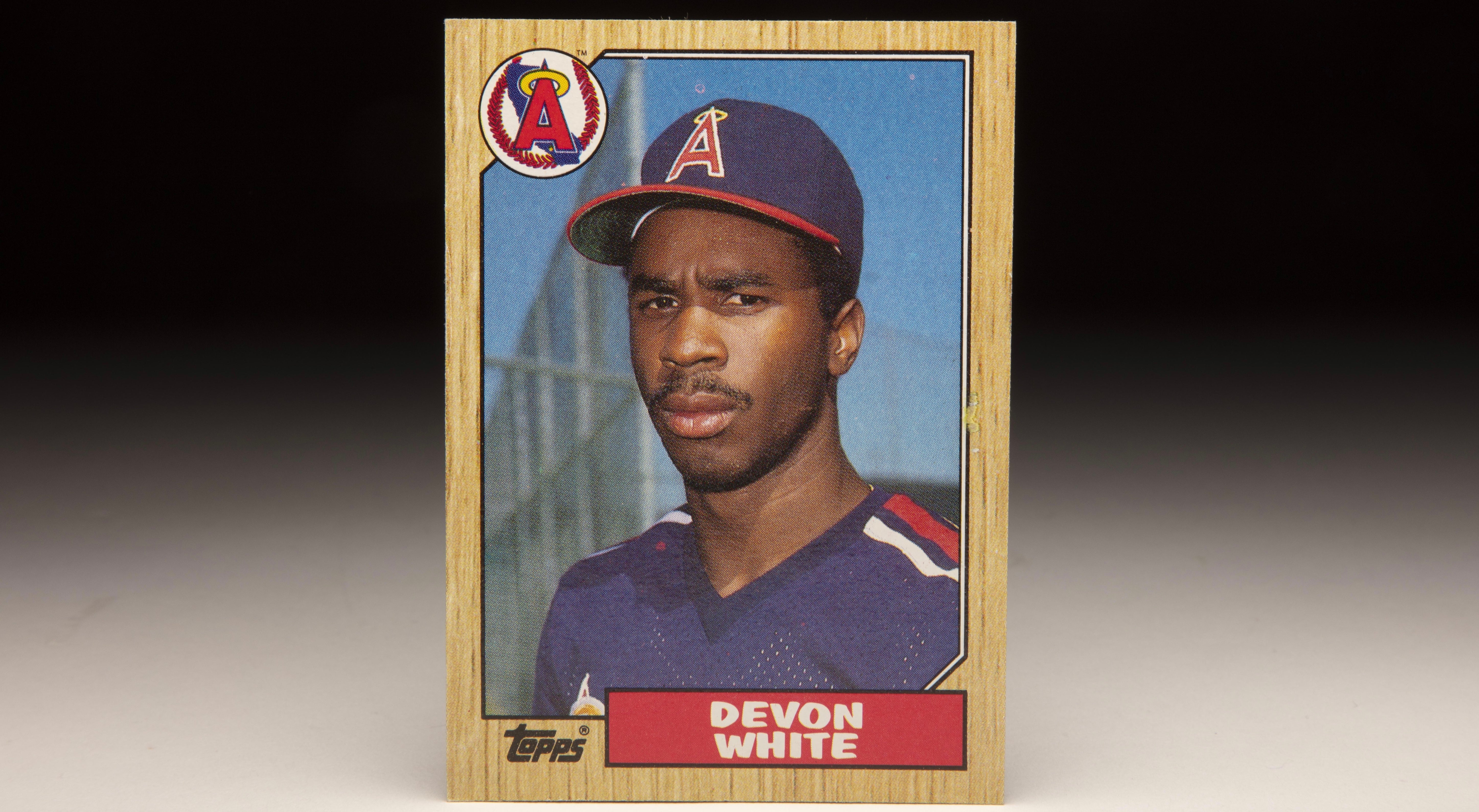
Pettis lost his arbitration case again in 1987, receiving $400,000 rather than the $550,000 he requested. But of more concern was the presence of young outfielder Devon White, who had a similar defensive skillset but was thought to have better hitting potential than Pettis.
“If I were Gary Pettis, I’d get myself a new agent,” Mauch told the Los Angeles Times. “I was sorry to see Gary go in that high. If he had pulled those numbers down a little bit, I bet he would have won it. Anything under $500,000 would have been a cinch.”
White would quickly become a star in 1987, playing much of the season in right field and finishing the year with 24 home runs, 87 RBI and 32 steals in 159 games. Pettis, meanwhile, struggled at the plate and was hitting .203 in August when he was sent back to Triple-A. He was recalled in September and finished the season batting .208 with 24 steals in 133 games. He was unable to claim his third straight Gold Glove Award despite defensive metrics that once again put him near the top among all American League center fielders.
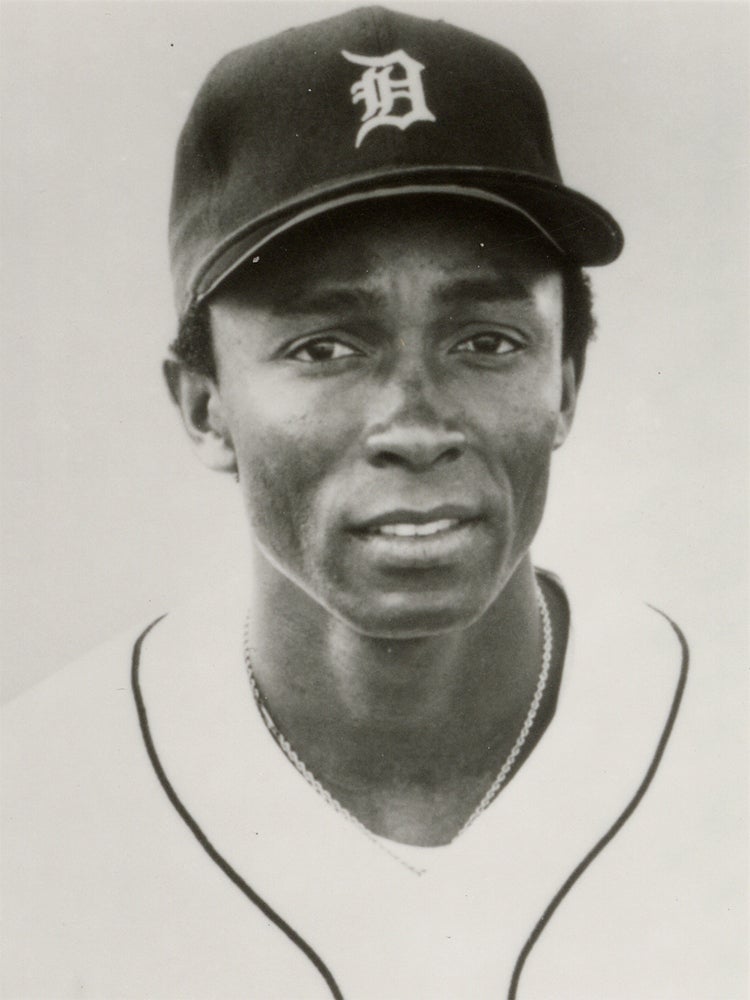
On Dec. 5, 1987, the Angels anointed White their center fielder by trading Pettis to the Tigers in a one-for-one deal for pitcher Dan Petry. Four days earlier, the Angels had signed right fielder Chili Davis, effectively eliminating any playing time Pettis might have had in 1988.
“Gary Pettis has outstanding ability, but we couldn’t find a way to get it out,” Angels general manager Mike Port told the Los Angeles Times. “I think he will be a better player in Detroit, just like Dan Petry will be a better pitcher for us.”
Petry, however, would pitch just two seasons for the Angels, finishing with a 6-11 record. Pettis, meanwhile, would win two Gold Glove Awards for the Tigers.
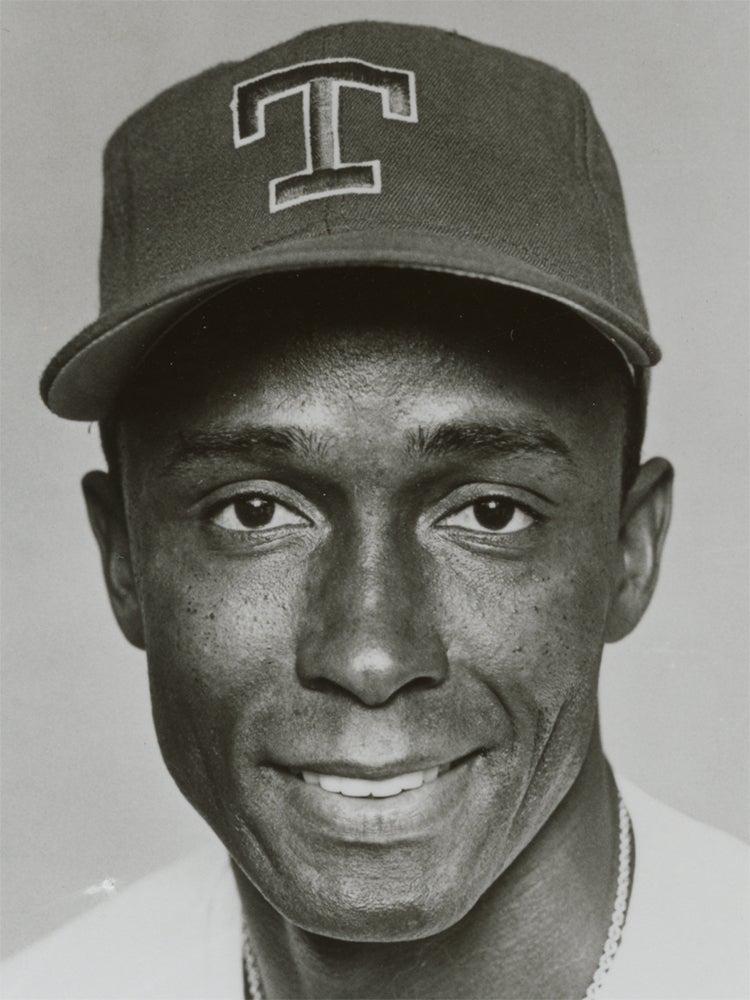
Pettis started in center field for Detroit on Opening Day in 1988, hitting leadoff for manager Sparky Anderson. But he never got untracked offensively and was eventually moved down in the order, finishing the year hitting .210 with 14 doubles, four triples, three homers, 36 RBI and 44 steals in 129 games.
In 1989, Pettis sprained his left thumb while sliding into second base in an exhibition game against Boston on March 21. His hand was placed in a cast and he did not play in a big league game until May 15, when he resumed his role as center fielder and leadoff hitter. His performance at the plate improved that year, and he was nearly dealt to the White Sox in July in a deal that would have brought Dave Gallagher to Detroit. But Pettis, who was to be a free agent after the 1989 season, could not agree to a contract extension with the White Sox – Chicago insisted on an extension if the trade was to be consummated – and the deal was nixed.
Pettis finished the season hitting .257 with a .375 on-base percentage (on the strength of a career-best 84 walks) while stealing 43 bases in 119 games. Now a free agent, Pettis signed a three-year deal with the Rangers worth a reported $2.66 million.
“The thing about Texas was that the Rangers showed interest in me from the start and held true to their words,” Pettis told the Detroit Free Press. “I expect myself to be a leadoff hitter and get on base and score any way I can and to play the type of defense that I always have.”
Pettis replaced Cecil Espy as the Rangers’ center fielder as Texas aimed to improve on an 83-79 record and take advantage of the remarkable late-career surge from Nolan Ryan.
“If (Pettis) does what he did for Detroit last year, we’re much better off,” Rangers manager Bobby Valentine told the Fort Worth Star-Telegram in the early days of the 1990 season. “If he does what Cecil Espy did last year, we’re still better off because he’s a much better defensive player.”
Pettis gave the Rangers his usual stellar defense, leading AL center fielders with 10 assists while committing only two errors while winning his fifth-and-final Gold Glove Award. But his batting average dropped to .239. And while he stole 38 bases, his OBP slipped to .333.
Then in Spring Training of 1991, the Rangers named 21-year-old Juan González as their starting center fielder. Pettis was asked to be the club’s fourth outfielder and quickly asked to be traded.
“I don’t have anything to prove,” Pettis told the Star-Telegram. “I just want to get some at-bats and show what I can do.”
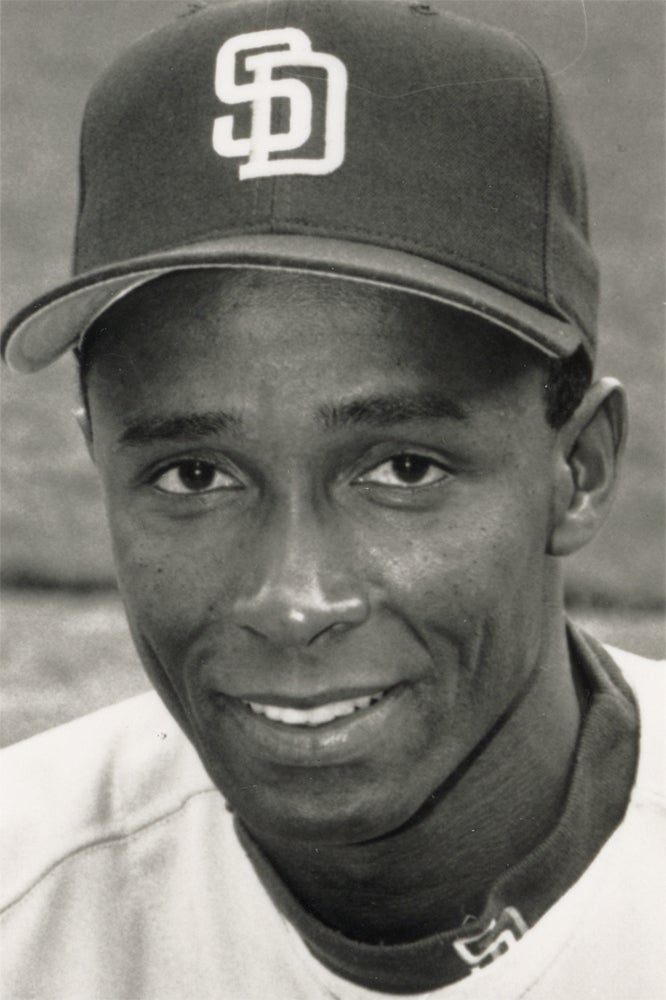
Pettis appeared in 137 games that season – the third-best total of his career – but came to the plate just 343 times. He hit .216 with 29 steals and 54 walks but had just 12 extra base hits.
On April 3, 1992 – three days before the season opener – the Rangers released Pettis, opting to keep John Cangelosi as their reserve outfielder.
“John has a real good feel for the game,” Valentine told the Star-Telegram. “He has a baseball attitude a little different than Gary’s.”
Eleven days later, Pettis signed with the Padres. But after hitting .200 over 30 games in a bench role, Pettis was released on June 21. He hooked on with the Tigers for 48 games the rest of the way, stealing 13 bases and drawing 27 walks in regular action as the team’s center fielder.
With his contract expiring, Pettis became a free agent after the season and signed with the Athletics on Dec. 10. But he did not make the team’s Opening Day roster in 1993 and spent the season with Triple-A Tacoma, playing in 26 games before drawing his release in August.
With that, Pettis’ playing career came to an end. But he would remain in the game for more than three decades after that.
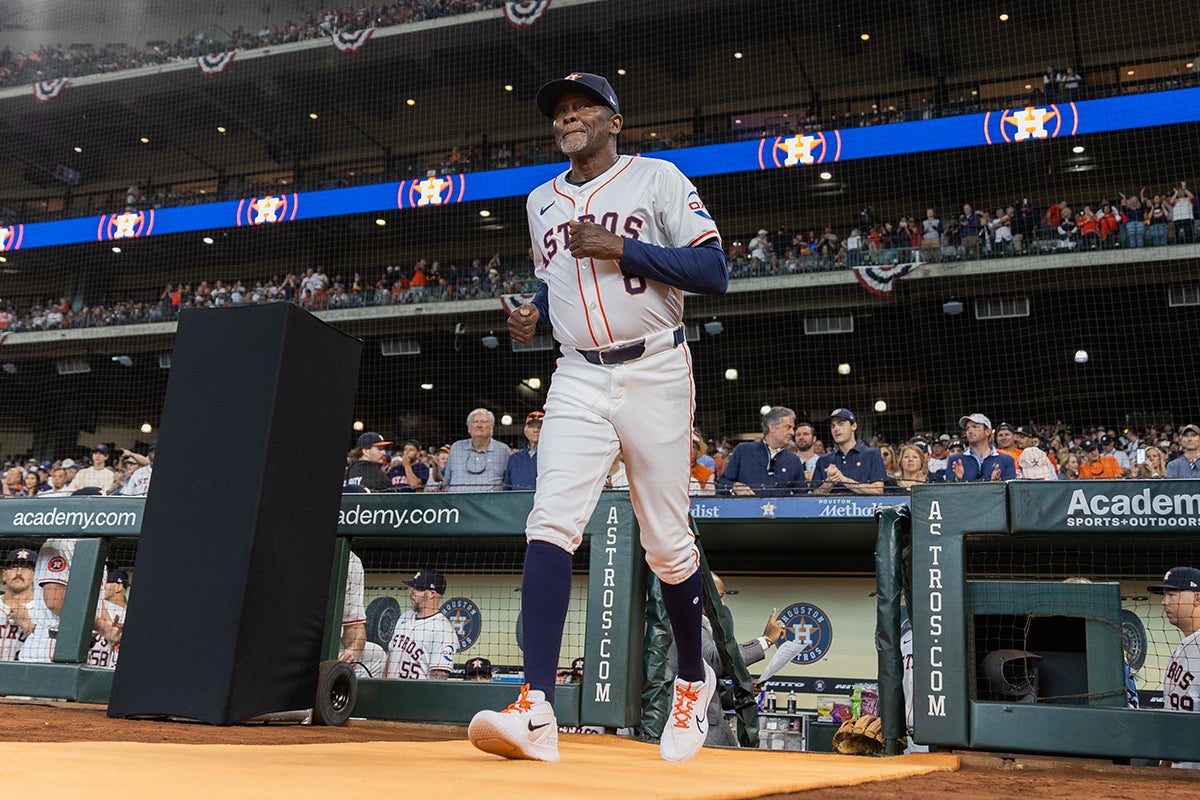
After a stint in the Angels’ organization, Pettis moved on to the White Sox and became their first base coach in 2001. He stayed for two seasons before taking the same job with the Mets for two seasons, working with the team’s outfielders and baserunners.
Then in 2007, Pettis became the Rangers’ first base coach under new manager Ron Washington. He helped Texas win AL pennants in 2010 and 2011 and stayed with the franchise through 2014 before landing with the Astros as the team’s third base coach.
With Houston, Pettis was part of a remarkable run that lasted through the 2024 season. During Pettis’ tenure as third base coach, Houston advanced to the postseason in nine of 10 years, earning seven straight ALCS berths, four AL pennants and World Series titles in 2017 and 2022.
Meanwhile, Pettis’ son, Dante, chose football for his career and set an FBS college football record with nine career punt returns for touchdowns at the University of Washington from 2014-17. Dante Pettis would go on to play seven years in the NFL for the 49ers, Giants, Bears and Saints.
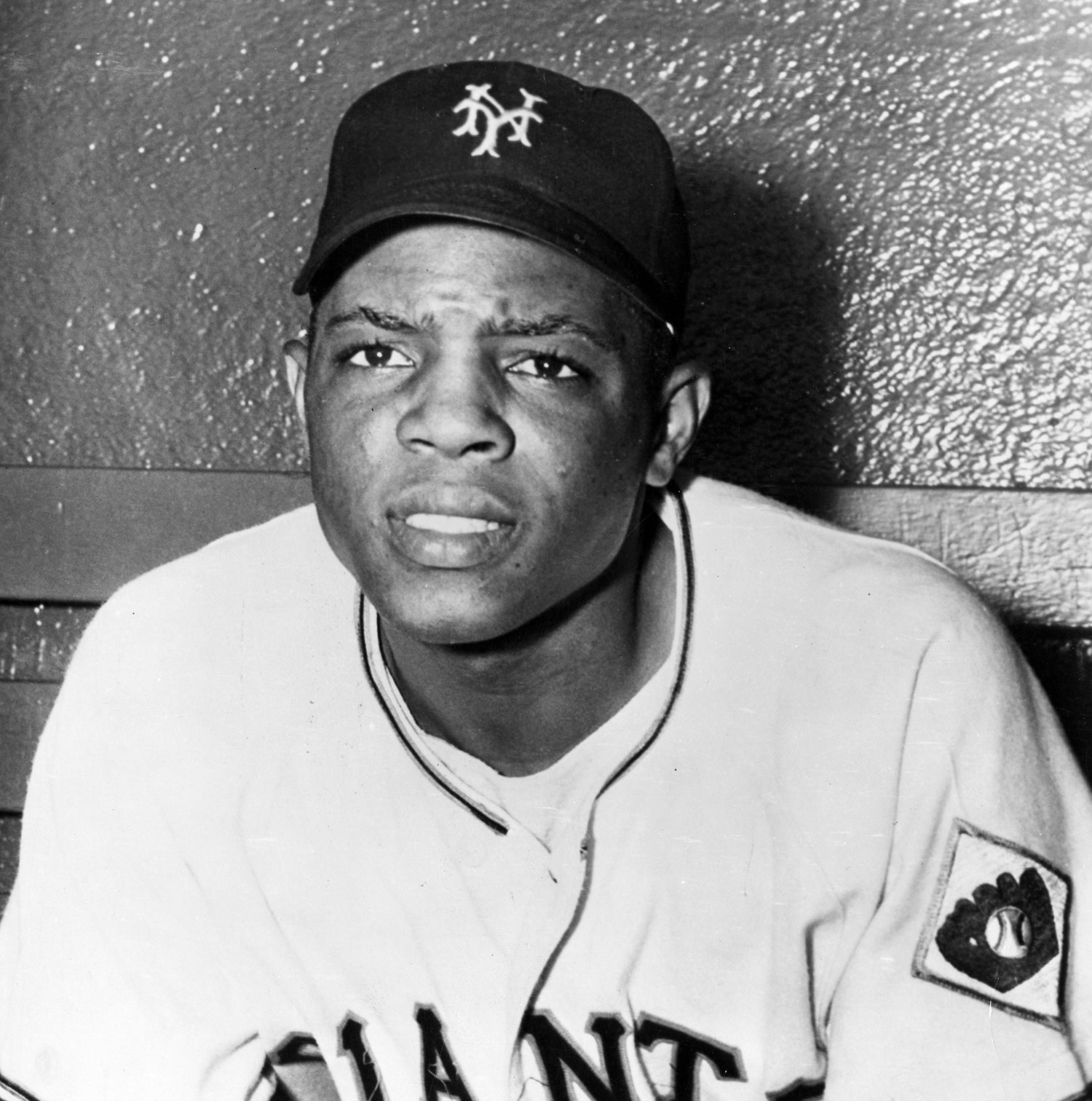
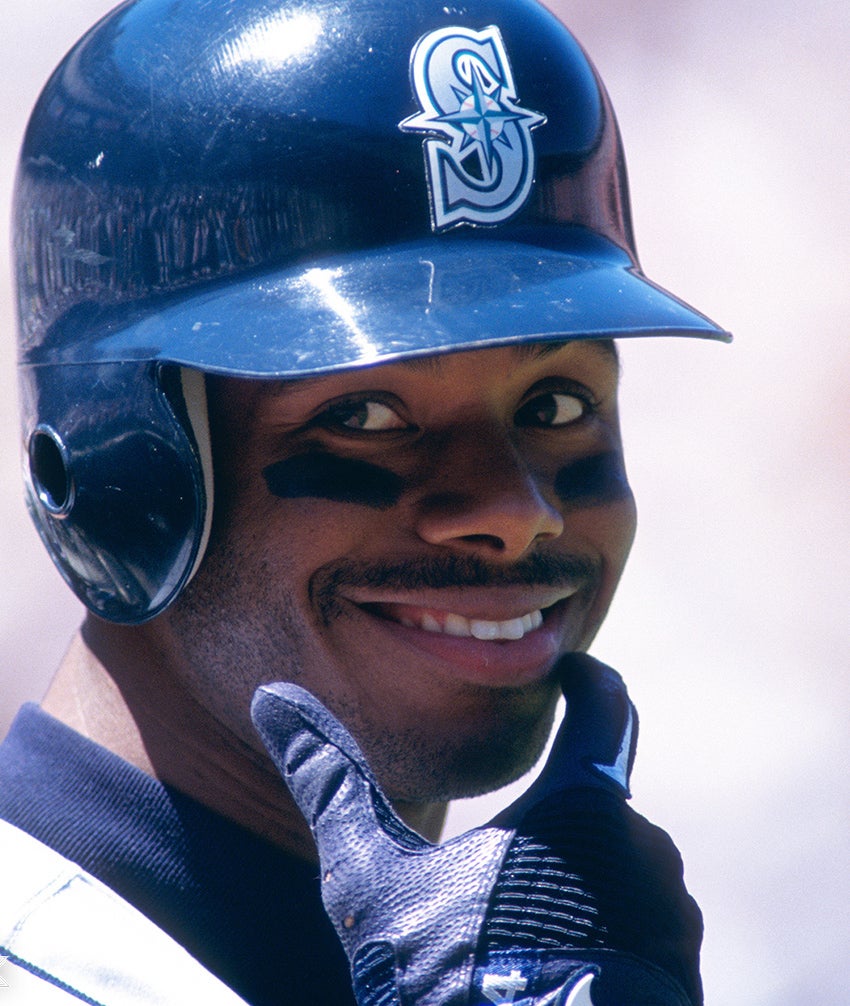
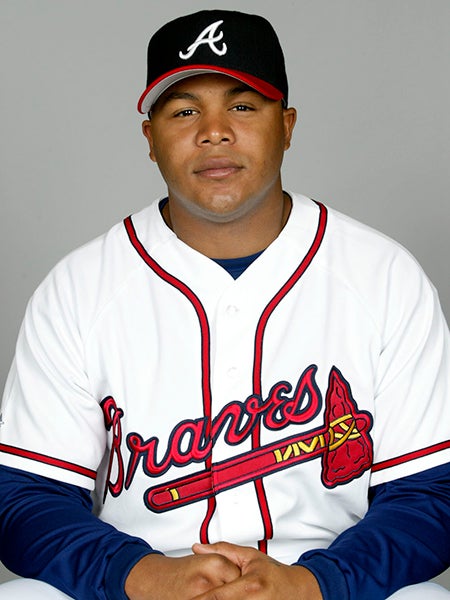
In 11 big league seasons as a player, Gary Pettis hit .236 with a .332 OBP, totaling 855 hits, 521 walks and 354 steals. Among outfielders whose primary position was center field, only 11 players – Willie Mays (12), Ken Griffey Jr. (10), Andruw Jones (10), Torii Hunter (nine), Paul Blair (eight), Jim Edmonds (eight), Garry Maddox (eight), Curt Flood (seven), Devon White (seven), Dwayne Murphy (six) and Kirby Puckett (six) – totaled more Gold Glove Awards.
Pettis may not have been an All-Star at the plate, but he was as good as there was in his era in the field.
“If I play the game like I can, I won’t cause any problems,” Pettis told the Desert Sun in 1984. “I always have confidence in myself. I may strike out or not get a hit, but I won’t lose confidence.”
Craig Muder is the director of communications for the National Baseball Hall of Fame and Museum