Flowers from Dirt
The tragedy of World War II was fertile ground for some of the game’s greatest stories.
Nothing marks the passage of time in American culture like baseball and war. When the two are intertwined, as they were from 1941-45 during World War II, their histories become all the more sacred, complicated and contemplated.
To dare ask, “What if World War II had never happened?” in the face of the hundreds of books written on the subject, not to mention more than 400,000 American lives lost, can strike a nerve. It certainly did when posed to official Major League Baseball historian John Thorn.
“The ‘what if’ question occupies no space in my mind,” Thorn responded via e-mail. “But baseball, like life, may not only recover but also flourish after adversity. Flowers grow from dirt.”
That is true. Without the “dirt” of World War II, there might not have been a golden age of MLB to follow in the 1950s. There would also be no one-armed wonder in outfielder Pete Gray in lasting baseball lore, no All-American Girls Professional Baseball League or film “A League of Their Own” celebrating the pathway for women to play professionally. And would Jackie Robinson and integration have followed as quickly in 1947?
The question examines not just what the war cost Major League Baseball in statistical currency, like home runs and games won, but what it paid back. And in examining what might not have been, we get all the more appreciation for what actually did.
The cost of World War II
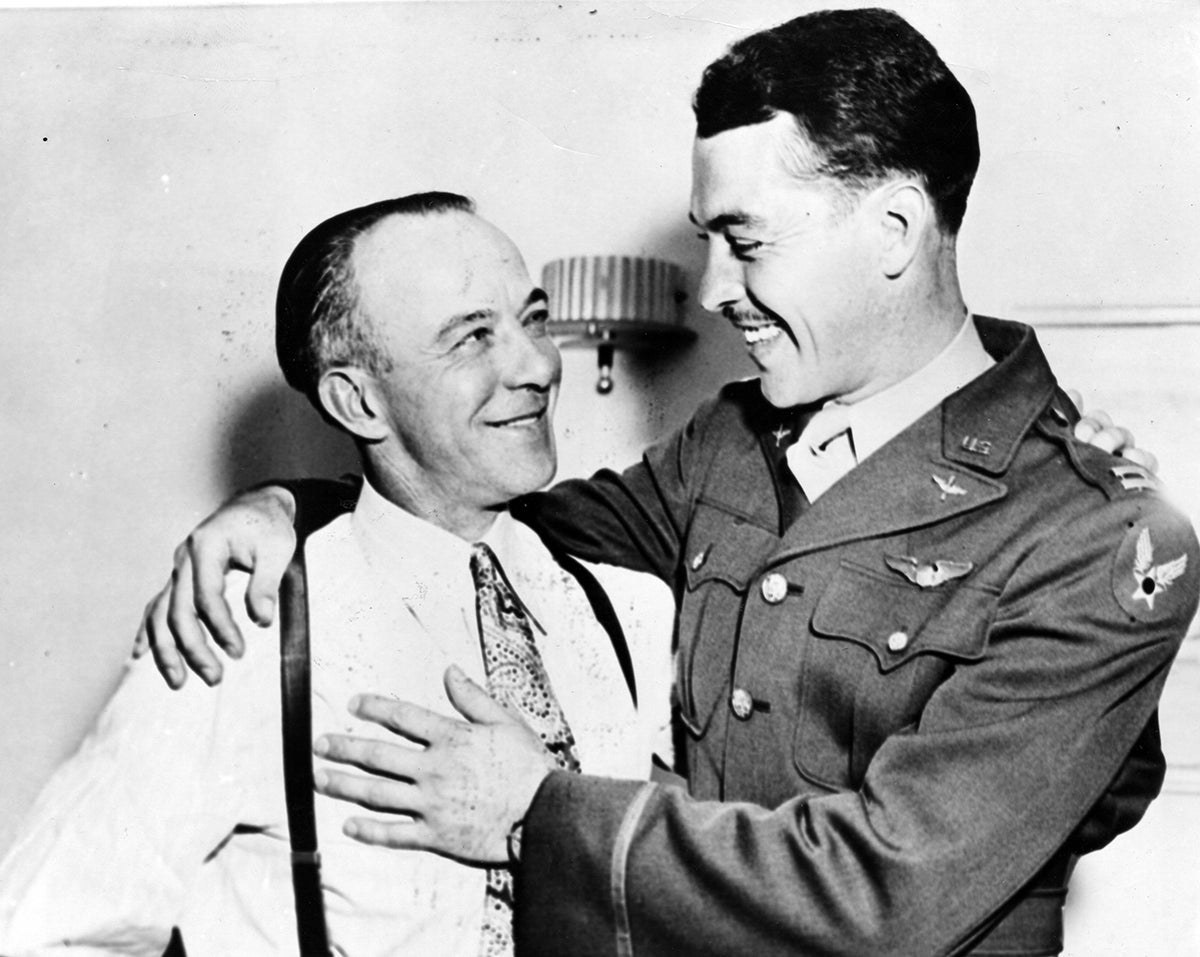
The records show, miraculously, that only two Major League Baseball players died in action during World War II. Elmer Gedeon, an outfielder for the Washington Senators, was shot down over France while flying in a B-26 bomber. Harry O’Neill, a catcher for the Philadelphia Athletics, was killed by a sniper in the battle of Iwo Jima.
But there were 137 minor league players killed during the war, including nine in the Battle of the Bulge, as documented in the book “Baseball’s Dead of World War II.” If just one in 10 of those minor leaguers makes it to the big leagues, as is the statistical norm, that’s 14 players audiences never got to see. Might have pitching prospect Billy Southworth Jr. been one of them?
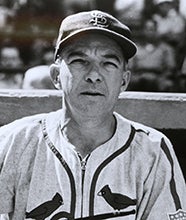
The son of Hall of Fame manager Billy Southworth was killed when the B-29 Superfortress he was flying crashed into Flushing Bay, N.Y., on Feb. 15, 1945, four months after his dad managed the St. Louis Cardinals to a third straight pennant and their second World Series title in three years.
How many others entered the service after the war started and weren’t yet signed to baseball’s professional ranks? What about the wounded?
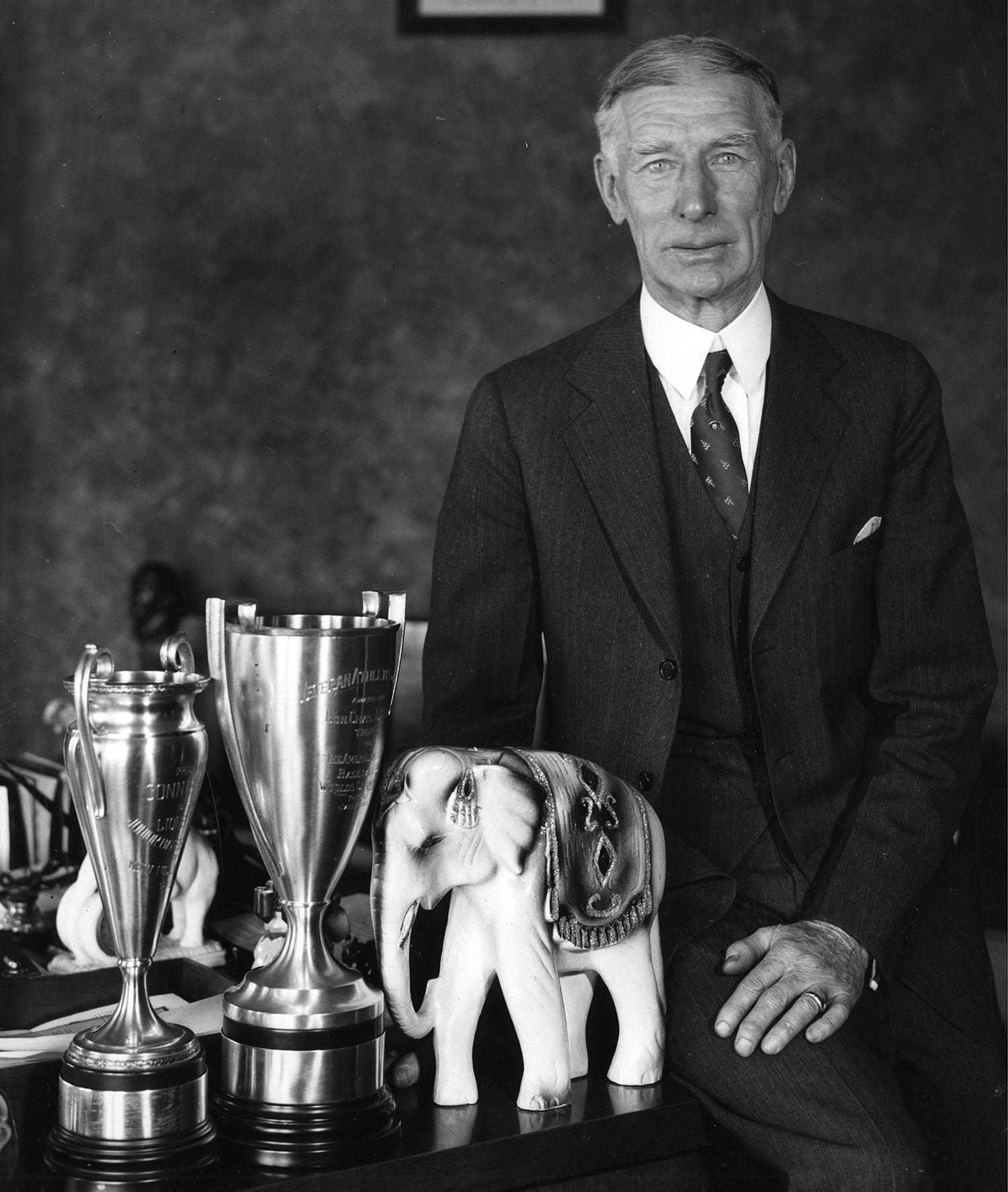
Philadelphia Athletics manager Connie Mack had already labeled left-hander Lou Brissie a future Hall of Famer as a teenager. He had a reputation as a 14-year-old for striking out men’s league hitters in and around his small town of Ware Shoals, S.C. But instead of getting college experience as Mack recommended, he joined the war effort.
Brissie’s leg was severely injured when his truck convoy was hit by German artillery in Northern Italy. His comeback to baseball was worthy enough to be documented by Pulitzer Prize-winning author Ira Berkow in his book “The Corporal Was a Pitcher.” But Brissie’s highest statistical achievement was winning 16 games and making the All-Star team in 1949. He pitched just four seasons more, primarily as a reliever.
The statistical cost
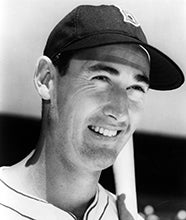
Even the legends of the game left much undone because of the war. There’s no better example than Ted Williams. “The Splendid Splinter” hit .406 in 1941, the last time an AL/NL player reached the .400 mark. He won the American League Triple Crown in 1942, the season following President Roosevelt’s famous “green light” letter to Commissioner Kenesaw Mountain Landis that paved the way for baseball to continue after the bombing of Pearl Harbor. The way Williams was going, who’s to say he wouldn’t have hit .400 again at age 24, 25 or 26, when he instead joined the Navy and began flight school.
Take it a step further: Had Williams not trained to become a fighter pilot during World War II, maybe he wouldn’t have been called back to active duty for the Korean War in 1952. Thirty-nine combat missions and being struck down three times nearly cost him his life in addition to two more seasons of baseball.
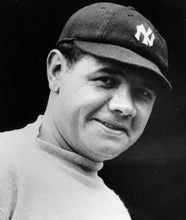
If Williams had continued his trajectory at the plate for three seasons in the mid-1940s, he could have added another 108 home runs to his total. Give him another 43 during 1952 and time missed in ’53, he would have finished his career with 672. Then he would have retired from baseball in 1960, trailing only Babe Ruth (714) on the all-time home run list and still be No. 6 all-time. And no question, the player many consider the greatest hitter in baseball history would have zoomed past 3,000 hits instead of finishing with 2,654.
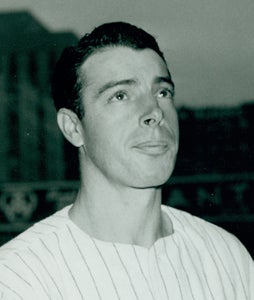
Joe DiMaggio took was a more typical path among major leaguers who enlisted for war, playing for military teams and serving as an ambassador while stationed in the U.S. throughout World War II. When he enlisted in 1943, he was one year removed from his baseball prime age of 27 and two years removed from a second MVP season, which included his record 56-game hitting streak.
DiMaggio still led the Yankees to four World Series titles in the six years remaining in his career, but finished below the typical Hall of Fame benchmarks of 3,000 hits (2,214) and 500 homers (361).
Lost wins
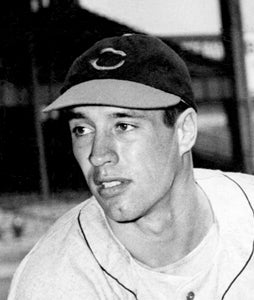
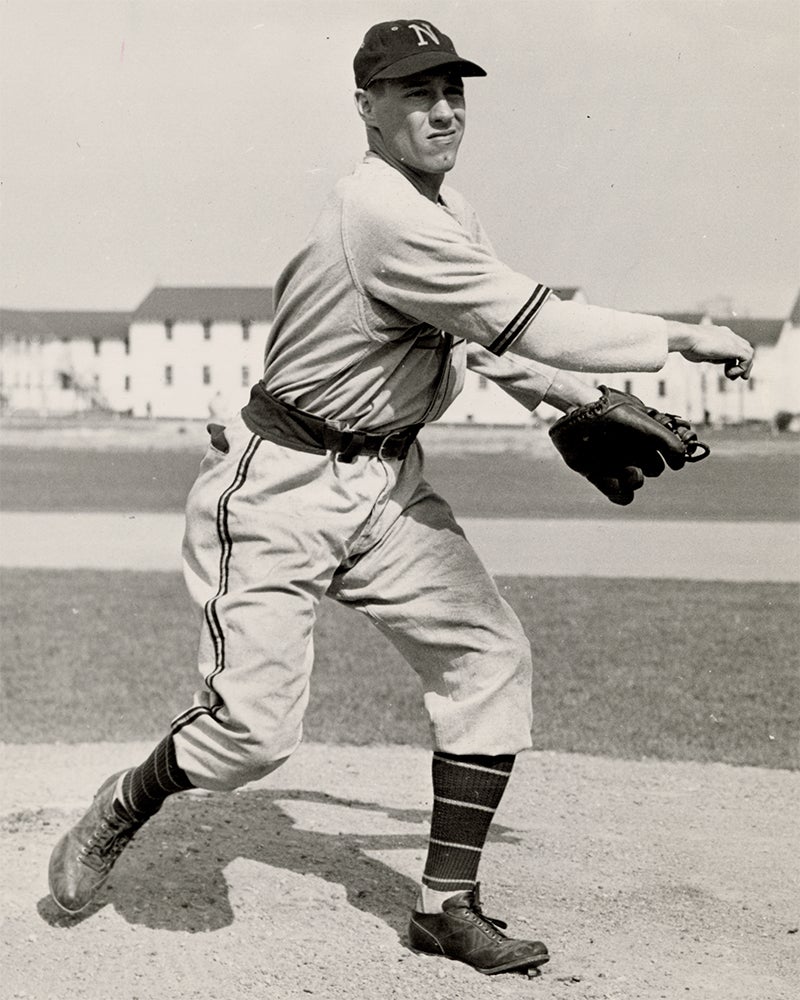
Cleveland ace Bob Feller was the first major league player to enlist after Pearl Harbor, joining the Navy two days later. Feller was a gunner on the USS Alabama. In the better part of four seasons he lost due to the war, Feller would have not only likely reached 300 wins but could have pushed 350, which would have him in the top 10 all time. He was averaging about 250 strikeouts a season when he left for the war, which should have had him cruising to 3,000 strikeouts, rather than the 2,581 he finished with.
What Feller came away with, though, as he told author Alan Schwarz in “Once Upon a Game: Baseball’s Greatest Memories,” were zero regrets.
“I did what any American could and should do: Serve his country in its time of need,” Feller said. “The world’s time of need.”
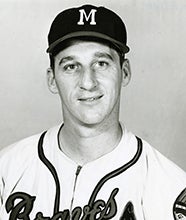
Warren Spahn is still baseball’s all-time winningest left-hander with 363 wins. Had it not been for his service in World War II, he might have become just the third pitcher to record 400 wins. He came up 37 shy.
Granted, Spahn’s World War II service followed his first four-game taste of the major leagues in 1942, so he was no proven commodity, but he missed three-and-a-half seasons. For a pitcher who averaged 17 wins over his 21-year career, Spahn could have pushed Walter Johnson (417) for second all-time in wins behind Cy Young and his 511.
It didn’t hurt that Spahn was only 25 when he returned to Boston in the middle of the 1946 season, having earned a Bronze Star in the Battle of the Bulge. From the sounds of it, Spahn thought the war might have actually helped his baseball trajectory because it changed his mindset.
“Before the war, I didn’t have anything that resembled self-confidence,” he told the Associated Press. “I was tight as a drum and worrying about every pitch. …Nowadays I just throw them up without the slightest mental pressure. …Nobody’s going to shoot me.”
Silver linings
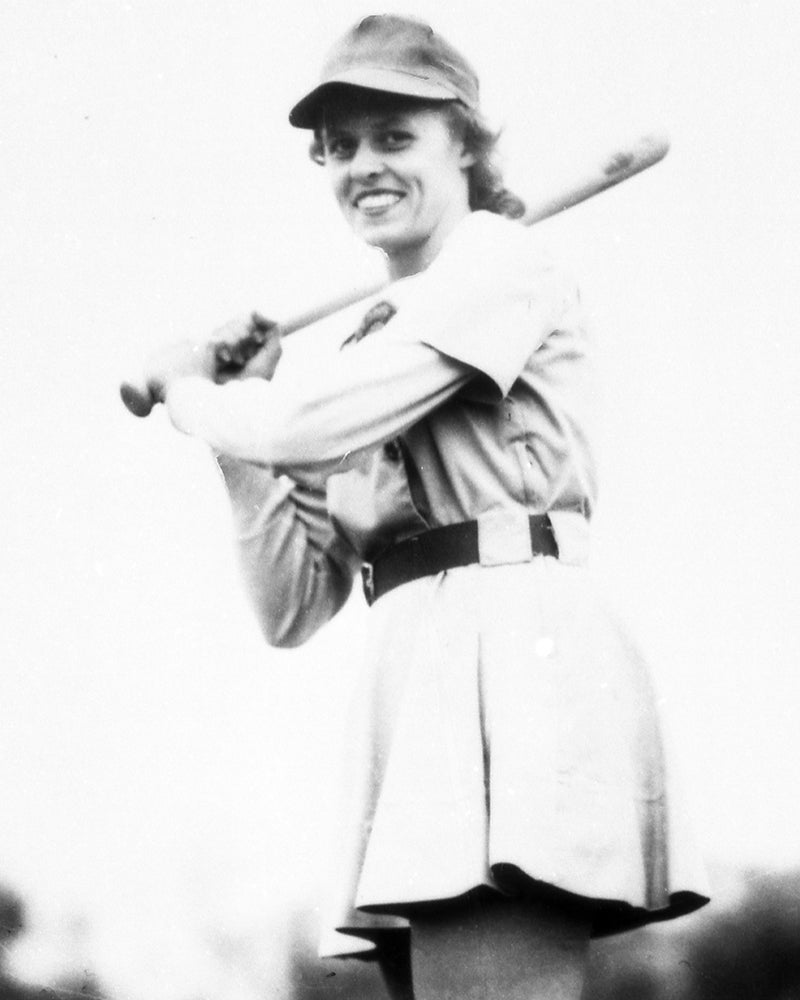
In addition to integration after the war, the void left by departing players gave rise for an opportunity for Rosie to put down the Riveter and pick up a bat. Chicago Cubs owner Philip Wrigley started the All-American Girls Professional Baseball League with teams in Racine and Kenosha, Wisc., South Bend, Ind. and Rockford, Ill.
The league grew to include 15 teams, lasted 12 seasons and fielded more than 500 women. Among them were Sophie Kurys, who stole 201 bases in the 1946 seasons, pitcher Betsy Jochum, one of the league’s best hitters who became a pitcher when the league went to overhand, and Dottie Kamenshek, the first baseman and outfielder thought to be the inspiration for the character “Dottie Hinson” in Penny Marshall’s “A League of Their Own.”
As for the men’s game, owners had learned from publicity gaffes made during World War I and elected to embrace patriotism and raise money for the war effort. Baseball games became a place where citizens could celebrate and honor soldiers fighting overseas. In the past, “The Star-Spangled Banner” might have been played on Opening Day or during the seventh-inning stretch (like it was in the 1918 World Series). During World War II, it was played before every game.
Night games became more commonplace, as war machine factory workers were looking for entertainment and easy-to-access concessions. Before the war, Landis had limited teams to no more than seven night games per season. The use of electricity was considered costly and wasteful. During the war, he loosened restrictions, including allowing the Washington Senators to play every weekday game at night. Only 11 of 16 major league teams were playing in stadiums with lights at the start of the war. By 1948, Wrigley Field was the last MLB stadium without lights.
Minor League Baseball saw its share of changes because of the war, first with a void in player personnel and ultimately a boom in popularity. After the war, the number of minor league teams peaked at nearly 500 teams in 1947.
“You could make a case the minors don’t see their explosion either,” said Baseball America editor-in-chief J.J. Cooper. “People had money and they were looking for entertainment. It’s just before the rise of TV. It’s also just before the rise of air conditioning in the home in the South. Cordele, Ga., had a minor league team. Vidalia, Ga., had a minor league team. You didn’t really want to be inside at night. At least at a ballpark there is some shade and a little bit of air.”
Cooper makes an interesting case for the impact of World War II on Major League Baseball into the 1950s as well. He suggested the Dodgers and Giants might not have left the New York area for the West Coast as early as 1957 if not for the advancement in airplane technology created by the war.
“Without World War II, aircraft development is slower,” Cooper said. “Jet engine development is slower. [Brooklyn and New York moved] at the time where air travel was practical to go from the West Coast to the East Coast. You can’t do that if you’re still on trains.”
Were it not for the war, the St. Louis Browns would have been the first franchise to move to Los Angeles anyway. A deal, already approved by American League owners with train travel accommodations built in, fell apart in the days following the attack on Pearl Harbor. Travel restrictions brought on by the war, not to mention the risk of holding large-scale events on the West Coast, became too risky for the Browns to move to L.A.
As it was, the Browns were used to making do with less talent than their crosstown rival Cardinals. Proving how adept they were at thriving with a depleted roster, the Browns defeated the Yankees, while the Tigers lost to the Senators, on the last day of the 1944 season. Thus the Browns became the last of the original 16 major league teams of the 20th century to play in a World Series.
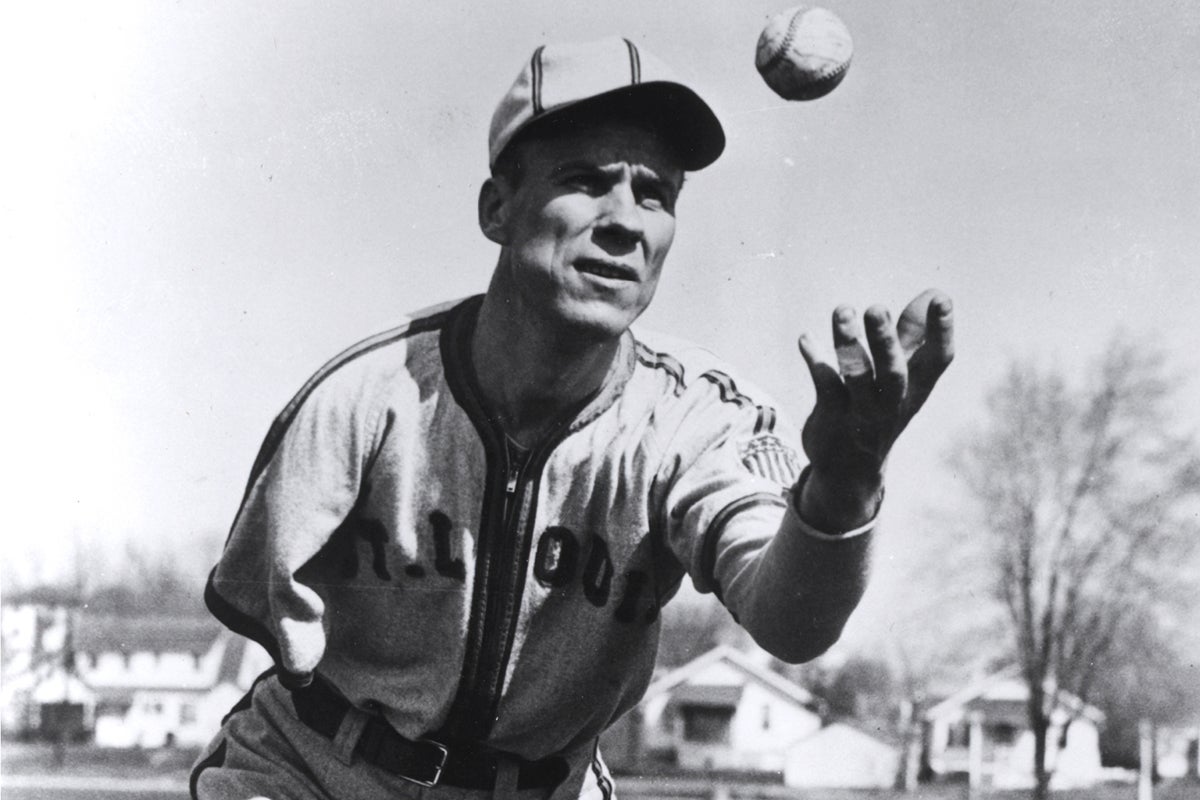
The following year, in 1945, the Browns signed a one-armed outfielder named Pete Gray, who played 77 games. He batted .218 and eventually fizzled out in a way many able-bodied ballplayers do; he struggled to hit the curveball. But his story of persistence inspired scores of future athletes.
It was one of thousands of examples of flowers that grew from dirt during an era of world conflict.
Carroll Rogers Walton is a freelance writer from Charlotte
Memories and Dreams
This story previously appeared in Memories and Dreams, the award-winning bimonthly magazine exclusively available to supporters of the Museum's Membership Program.