Week in Review
For fans in the 1970s, ‘This Week in Baseball’ was appointment TV.
How about that!
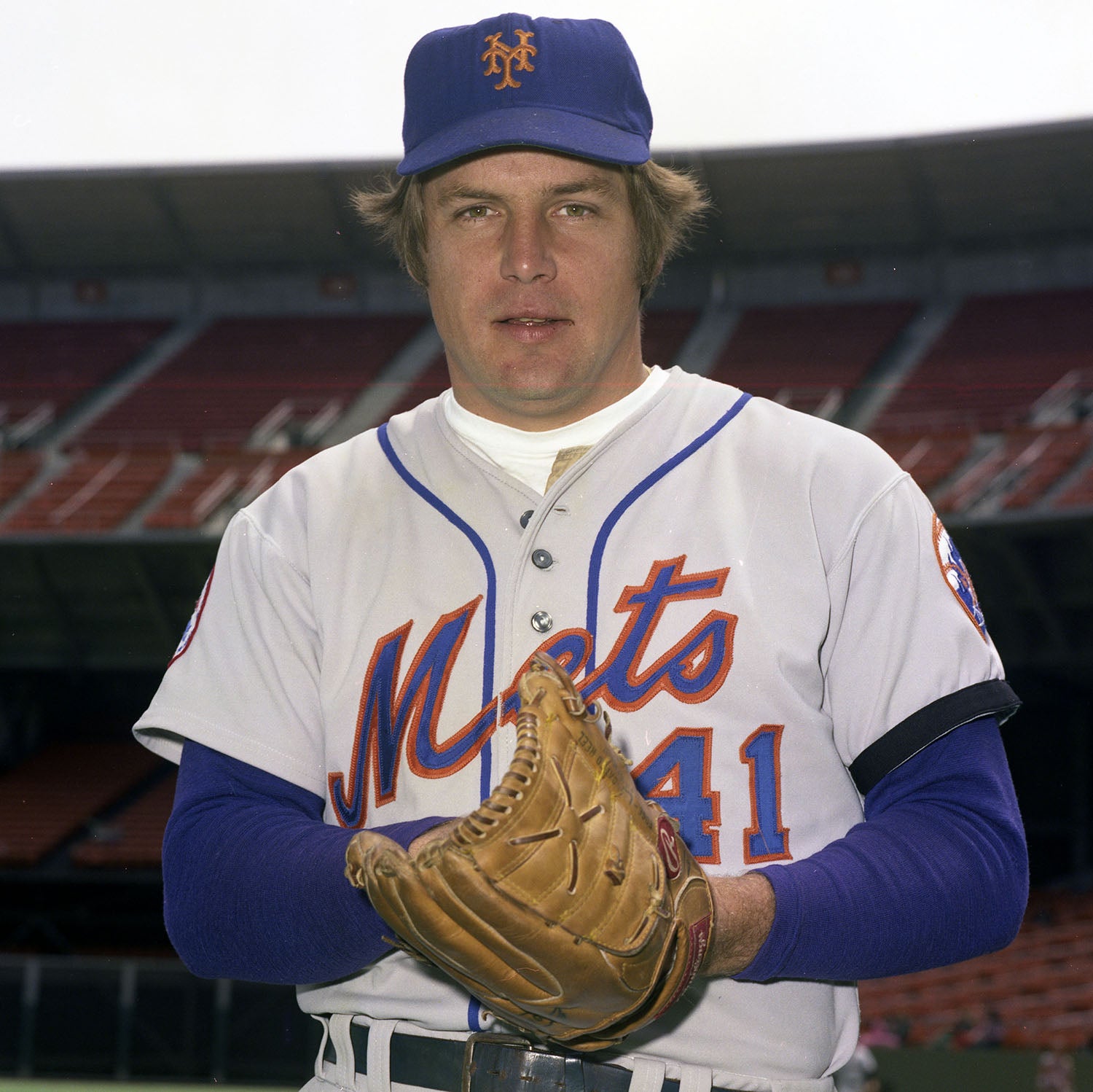
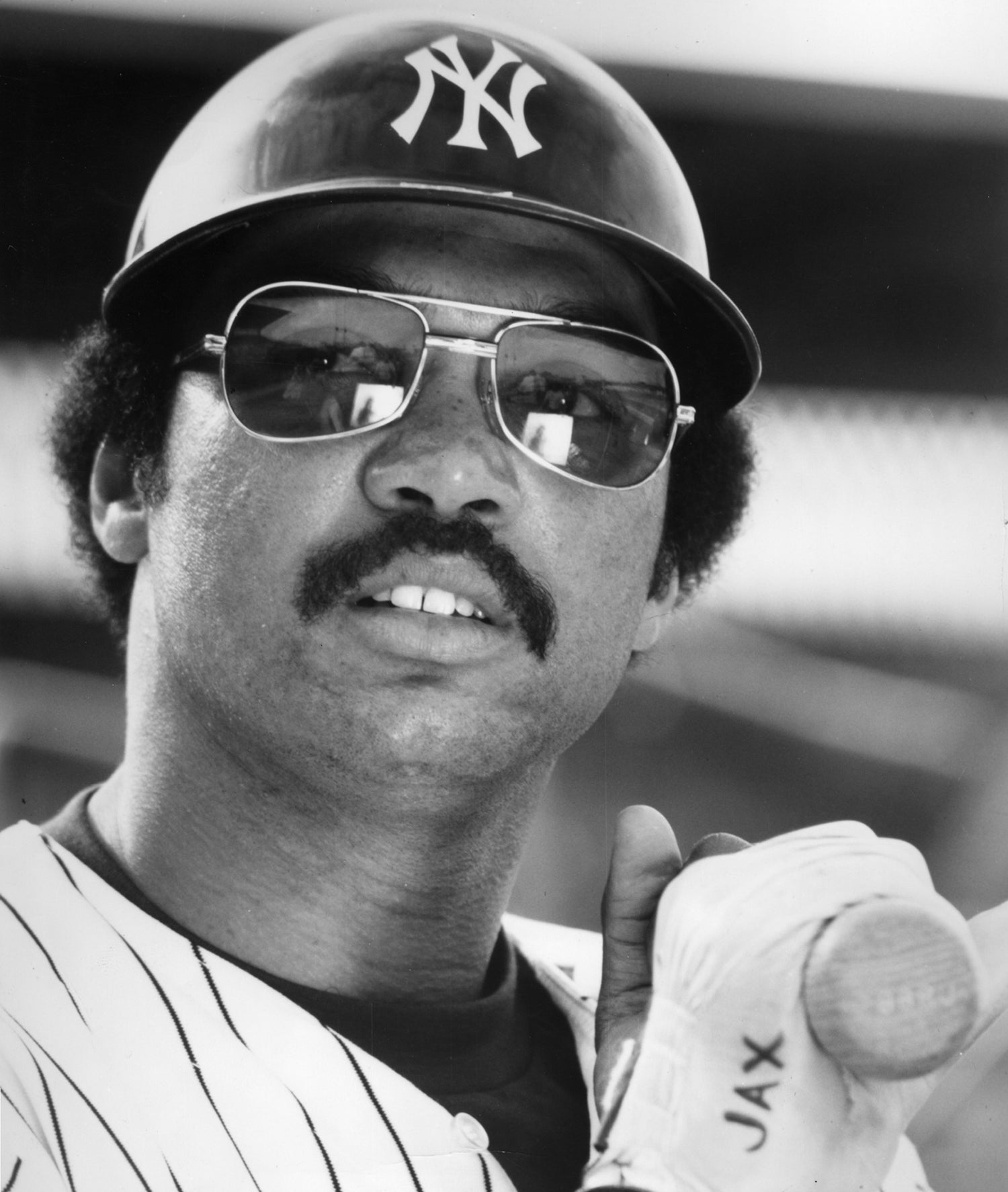
The 1977 baseball season, like most big league campaigns, had its share of memorable moments. It was the first expansion year for the Toronto Blue Jays and Seattle Mariners, the New York Mets traded franchise legend Tom Seaver to the Cincinnati Reds, and Mr. October, Reggie Jackson, clubbed three consecutive homers in the World Series’ decisive Game 6 win over the Los Angeles Dodgers, to name a few.
But 1977 was also when an unheralded television series, “This Week in Baseball,” premiered across most of the country. Soon enough, though, the 30-minute syndicated show of highlights, bloopers, features, TWIB Notes and weekly awards, with a legendary host and memorable opening and closing theme music, drew a sizeable and devoted following.
Despite TWIB’s format changing over time, it lasted on air for 34 years and remains a fond memory for fans of the National Pastime.
“This Week in Baseball” – the first episode of which aired in May 1977 – was promoted as showing clips from the previous week’s games. The idea of a highlights show was not new, as the National Football League had been doing it for years with success. So Major League Baseball’s Promotion Corporation was given the task of producing its own version.
“This year, we will lose quite a bit of money on it,” said Joe Podesta, the president of MLB’s Promotion Corp., at the time. “But the show is designed to put people in the stands. We feel if we can show on a weekly basis all the excitement of baseball, we can get people out to the ballpark.
“The purpose of the show is, simply, to create interest in baseball.”
Memories and Dreams
This story previously appeared in Memories and Dreams, the award-winning bimonthly magazine exclusively available to supporters of the Museum's Membership Program.
According to reports at the time, MLB put TWIB together and marketed it to local stations for free. There were six minutes of commercial time in the half-hour show, three of them sold nationally by baseball and the other three sold locally by the stations.
Initially, 65 percent of the country had signed up to show TWIB, with the only major league cities where it wasn’t available being Kansas City and Milwaukee.
The highlights covered Saturday through Friday, edited Saturday and Sunday, and a script was prepared Monday. After the host did the taping of the show on Wednesday, a final viewing took place on Thursday before the show went out to the stations. Many markets presented it on Saturday just before NBC’s Game of the Week telecasts.
“Originally, we went to the station managers convention in Miami earlier this year with the show,” said Joe Reichler, special assistant to Commissioner Bowie Kuhn and associate producer of TWIB, in a July 1977 interview. “We had quite a few stations pick up the show then. But since we’ve started, the response has grown. Right now, we have 76 percent of the country.
“The only stipulation we have in our transactions with a station is that the show not be aired while a live, televised game is in progress.”
While the NFL in that era had only 14 games every week to deal with when producing its highlights show, there were approximately 70 baseball games every week in a 26-team baseball league. It became economically feasible as technology advanced.
“We purchased 30 videotape machines,” Reichler said. “They cost between $1,800 and $2,000 apiece, and each of the 26 major league teams has one. We pay people to operate the cameras, and we shoot about 70 games a week. Somehow, we monitor each game.
“We usually handle highlights of eight to 12 games in one show. Then we have our Gillette Player of the Week, and we key on him with a couple minutes worth of tape.”

The host of “This Week in Baseball” for its first two decades was the legendary Mel Allen, who was the radio and television voice of the New York Yankees from 1939 to 1964. With his deep, rich voice, a bubbly baritone tinged with a slight Southern accent, the Alabama-born Allen was there for Joe DiMaggio’s 56-game hitting streak, Roger Maris’ 61 homers and Don Larsen’s perfect game.
“Mel Allen is synonymous with baseball broadcasting,” said producer Stu Kirshenbaum. “There are only a handful of people who have had that sort of name recognition and that stature down through the years. He’s really an amazing person. I think, in a lot of ways, he’s thought of hand-in-hand with the show.”
Catchphrases that Allen made popular during his time broadcasting Yankees games – “Hello everybody, this is Mel Allen,” “Going, going, gone,” for a home run and punctuating outstanding feats with “How about that!” – were introduced to a new audience through the popularity of TWIB.
“Allen was a natural,” said producer Jody Shapiro. “Because he’s not on camera, we needed someone whose voice was known across the country. Mel is still known and admired.”
Allen would later remember being contacted by Reichler, asking if he’d like to get involved with a baseball highlights show.
“I wanted to stay active and stay with the game,” said Allen. “And I also liked the idea of not traveling. I did that for a lot of years, and that can get very old. This way, there was no wear and tear, and I was still seeing a lot of baseball.
“I’ve done an awful lot of broadcasting over the years, and I can tell you honestly, I’ve never had the kind of reaction to a show as we’ve had for this one. I get letters from people of all ages all around the country. They love it.”
With a series of highlights rolling, Allen’s voiceover introduction to the first-ever episode of TWIB went like this:
“This is baseball, Major League Baseball, and this is Mel Allen saying…get set for baseball personalities…swing into baseball action...catch on to the excitement of another big week in baseball. Let’s bring it all home as Major League Baseball presents ‘This Week in Baseball.’”
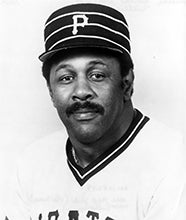
As the show’s 30 minutes were concluding, and with the credits rolling and slow-motion footage of Willie Stargell rounding third, Mark Fidrych backing up home, Ron Cey running to first, Luis Tiant in his windup and Carl Yastrzemski rounding the bases, Allen’s familiar refrain was repeated week after week: “And that’s it for this week, folks. See ya next week on ‘This Week in Baseball.’”
In 1978, Allen and Red Barber were the first recipients of the Ford C. Frick Award, presented annually by the National Baseball Hall of Fame to a broadcaster for “major contributions to baseball.”
“By 1977, Allen had disappeared to most of the nation,” said Curt Smith, author of the 2007 biography, “The Voice: Mel Allen’s Untold Story.” “Then, Mel began hosting ‘This Week in Baseball’” – eventually sports’ highest-rated TV serial.”
Allen would recall once having a cold that prevented him from hosting TWIB.
“The Expos were in New York playing the Mets, and I got a call from Warren Cromartie. He said he’d watched the show and wondered why I wasn’t on. Can you imagine that?” Allen said. “Just the other day, I was at Yankee Stadium and Willie Randolph said to me, ‘I made one hell of a play, you better get it on there.’”
Those interactions confirmed that the congenial Allen was back in the spotlight and developing a brand-new legion of fans.
“It’s at the point where he is identified with the show,” said Maureen Rooney, the Sales and Broadcast Coordinator for Major League Baseball Productions, which oversaw the production of TWIB at the time of this 1984 interview. “And the show is identified with him.”
Supervising producer James Rogal was more succinct: “I really think Mel is the voice of baseball. When you hear that voice, you think of baseball. He provides that link from the game’s past to its present.”
A 71-year-old Allen, in the same 1984 interview, was amazed how TWIB brought him back into active focus.
“You walk into a ballpark,” he said, “and you have people hollering at you, ‘Hey, who’s going to get the Player of the Week Award?’ And they are kids who are only 7 or 8 years old, believe it or not. I was surprised at the people who weren’t even born when I was doing the games daily who are interested in the show.
“When I started out, I had no idea it would be the attraction it is. One day we were looking at some film where the cameraman was fooling around during batting practice. We noticed that every time after a ball was hit, all the infielders would turn and look to the right. It turned out they were watching the show on the scoreboard.”
Mark Durand was the writer of “This Week in Baseball” from its inception in 1977 through 1983. Though he went on to a long and illustrious career in sports programming – being involved in such projects as “The Baseball Bunch,” ESPN’s “SportsCentury” and “30 for 30,” and, most recently, a documentary on women’s baseball – he looks back on his time at TWIB with genuine fondness.
“I think I realized that more in recent years. You keep fighting to move ahead and not be typecast by the past. I’m 78 now and I’m just finishing up a documentary called ‘Her Game is Hardball,’” said Durand in a recent interview. “But at this stage, looking back, I have to say that experience of doing ‘This Week in Baseball,’ where it really was a team effort, the energy was really very positive. Once we recorded Mel, which was so much fun, and walking out with Mel and the morning sunshine down Third Avenue, it’s hard to beat that.
“The show was enormously successful. I don’t know the exact number of employees, but I’ll say that when we first started ‘This Week in Baseball,’ there might have been nine or 10 employees. But in a couple of short years, there were like 80 employees,” he added. “I’ve been told by a lot by people in the business, or people I just meet, that they used to watch that show when they were a kid. And most of the ones that I talked to were watching the show when I was there.”
One unforgettable element that remains embedded in the ears among the millions of faithful TWIB viewers was the iconic music at the show’s beginning and end. The opening theme was “Jet Set,” composed by Mike Vickers and once used as in the mid-1970s game show “Jackpot.” TWIB’s closing theme was “Gathering Crowds,” composed by John Scott.
“I would get people all the time who say, ‘I want to use [“Gathering Crowds”] as my wedding theme,’” Geoff Belinfante, TWIB’s former executive producer, told USA Today in 2020. “And we always tried to make available copies of it, even though we’re not supposed to.”
By the mid-1980s, TWIB was one of the highest-rated syndicated sports programs on television. Broadcast on over 100 TV stations, it was well on its way to becoming a baseball institution.
But by the 1990s, as satellite technology made accessing game footage much easier, it also created a problem for TWIB as game highlights were available to viewers around the country on local sportscasts and cable stations. The show’s way of adapting to the changing times was to become more feature-oriented, sending camera crews across the country to cover human-interest stories.
Allen hosted the show until his death at the age of 83 on June 16, 1996 – replaced for the rest of the season by longtime contributor Warner Fusselle.
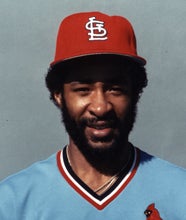
In February 1997, it was announced that longtime shortstop Ozzie Smith would be the new voice of “This Week in Baseball.” The Wizard – who was elected to the Hall of Fame in 2002 – had retired in 1996 after 19 seasons, 15 All-Star Game selections and 13 consecutive Gold Glove Awards.
“When they asked me if I wanted to do the show, I asked them, ‘How much do you want me to pay you to do it?’” said Smith at the time of the announcement. “It’s very tough replacing a legend. There’s no replacing a Mel Allen. You just do what you do. Whatever I do, I want it to be the right thing for me.
“Hopefully, I can bring the same excitement that Mel brought to it. Mel had such a stamp on the show that it would be hard to get away from that. I don’t have any catchy phrases yet.”
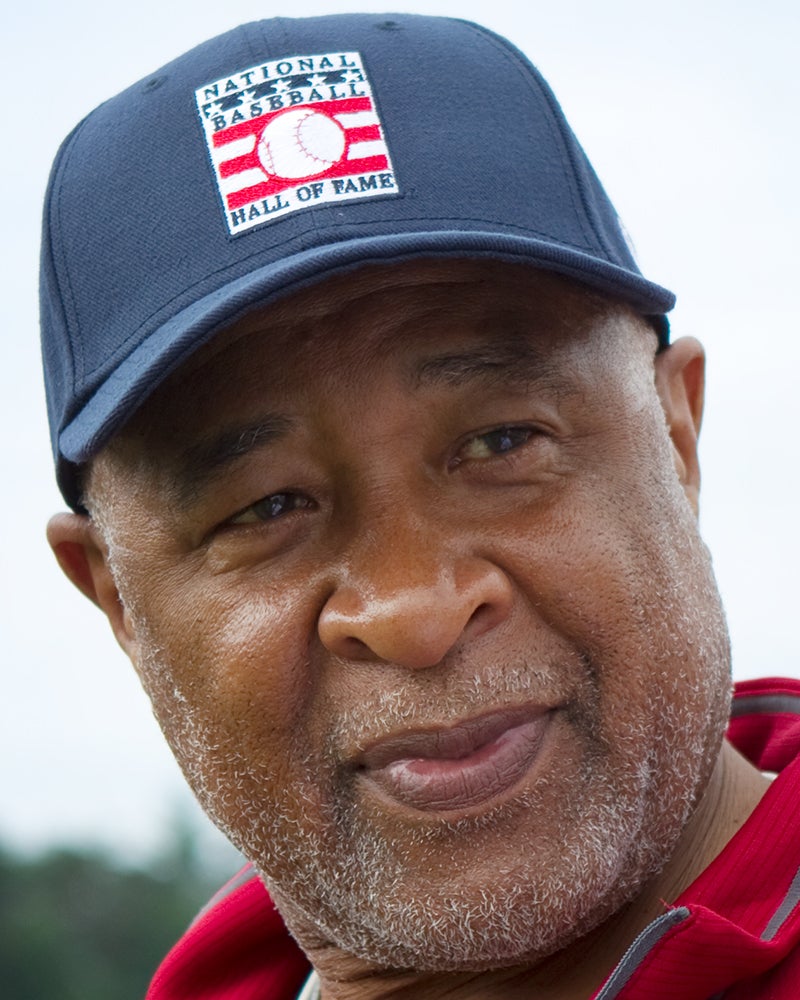
In a recent interview, Smith reflected on his two-year stint (1997 and 1998) hosting the show.
“It was a great experience because it gave me the opportunity to start to get involved in the media side of things. And it also forced me to do something that I hadn’t done since I was in school, which was to memorize most of the copy that we had,” Smith recalled, noting that, unlike Allen, he was on camera for much of the narration. “And it kept me connected to the game, as well, so it made my transition from playing the game to still being able to be a part of it through something that was very iconic for a lot of people.
“As for replacing Mel Allen, you don’t replace people like that. Mel made that show, and I was just honored to be asked to be a part of it. It was a great experience, and I had so much fun doing it. I actually hated it when it went away.”
With the changing media landscape – baseball highlights and news had become too commonplace – TWIB did not air during the 1999 season. But the following year, news broke that TWIB had reinvented itself and would return in 2000. After 22 years of syndication, it came back on network television on FOX, airing before the Saturday Game of the Week.
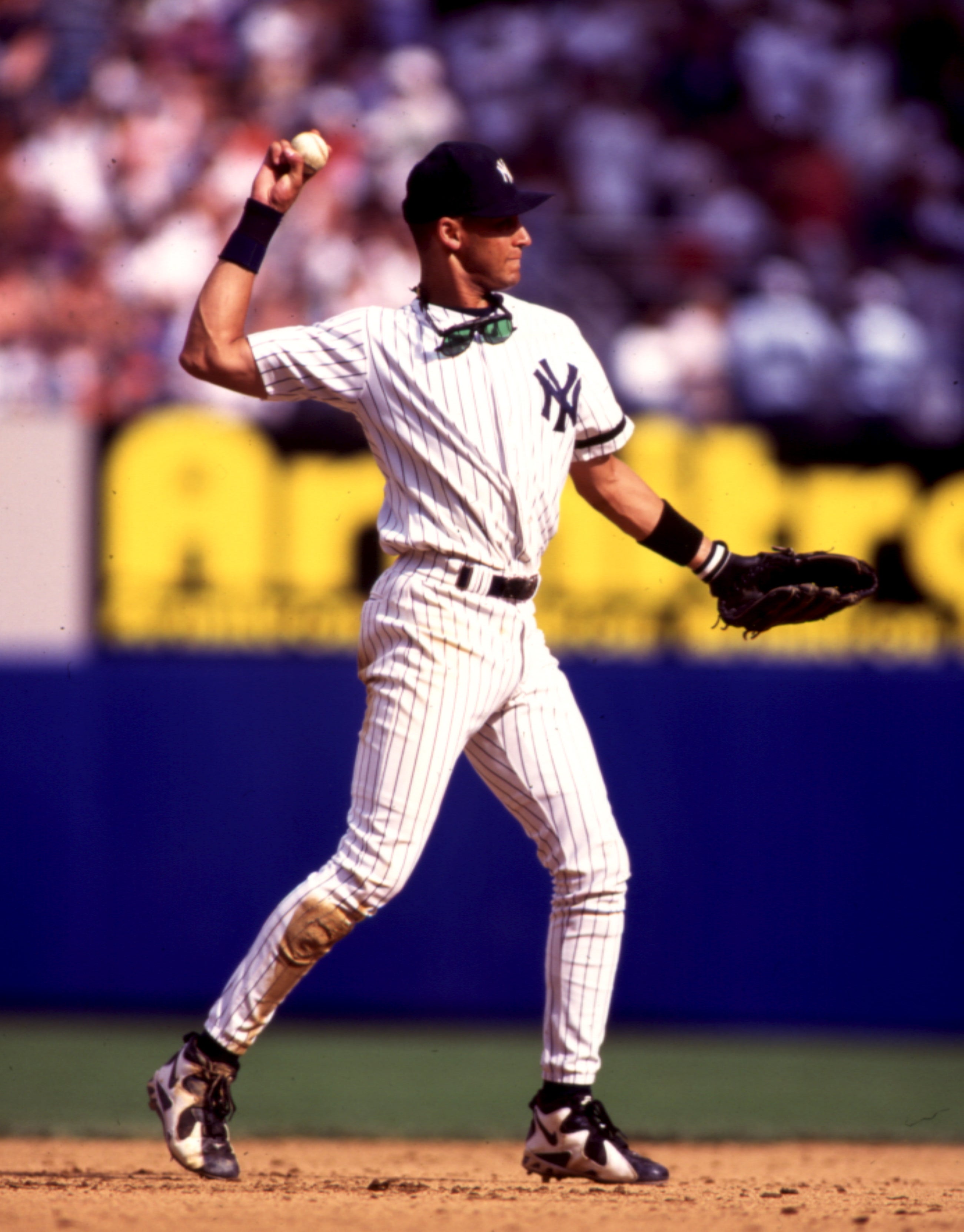
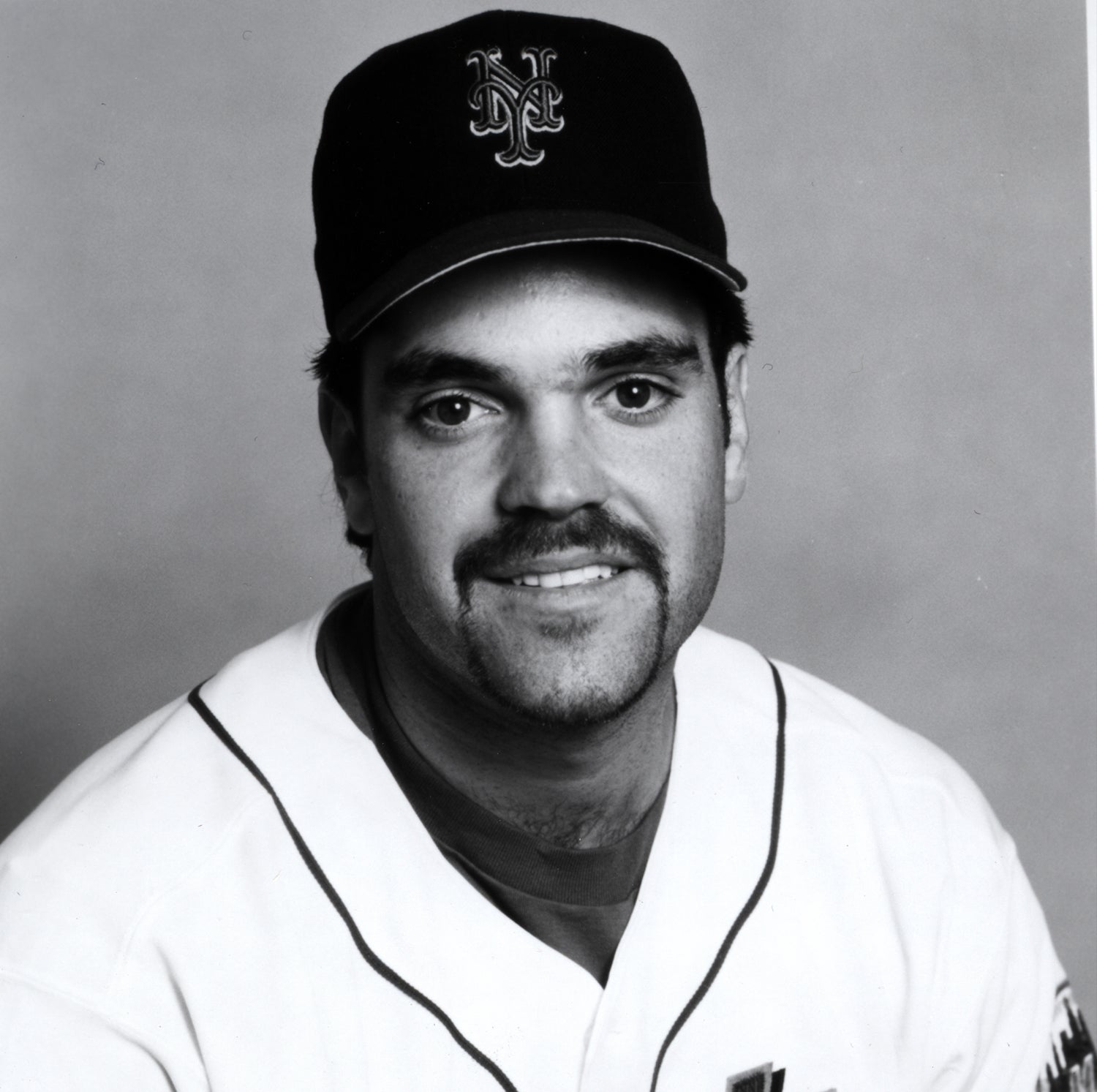
While Allen’s unforgettable voice continued to grace each FOX show, it would be hosted by a different active player each week, a contingent that included in that first season Derek Jeter, Álex Rodríguez, Mike Piazza, Cal Ripken Jr. and Barry Bonds.
“We don’t want a highlights show,” said Steve Hellmuth, MLB Productions’ senior vice president. “The focus will be on presenting the game through the eyes of the players, what it’s like inside the stadiums and the game’s history.”
FOX’s version of TWIB lasted a dozen years, ending after 2011. The groundbreaking television show that delighted fans across parts of five decades finally had run its course.
Major League Baseball Productions said, in part, “With the proliferation of highlight shows across television over the years, TWIB was no longer serving the role it had made famous decades ago.”
TWIB became expendable, in the modern media landscape, when fans had choices such as ESPN’s “Baseball Tonight” and “SportsCenter” and MLB Network’s “MLB Tonight.”
“TWIB was appointment viewing in the three-channel era,” wrote USA Today’s Gabe Lacques in 2020, “providing a breezy, entertaining and pun-laden look around the majors.”
This Week in Baseball is officially BACK!
Episode 1 with @askkaitt is here ⬇️ pic.twitter.com/cS6ozpfytJ— MLB (@MLB) April 3, 2026
Bill Francis is the senior research and writing specialist at the National Baseball Hall of Fame and Museum