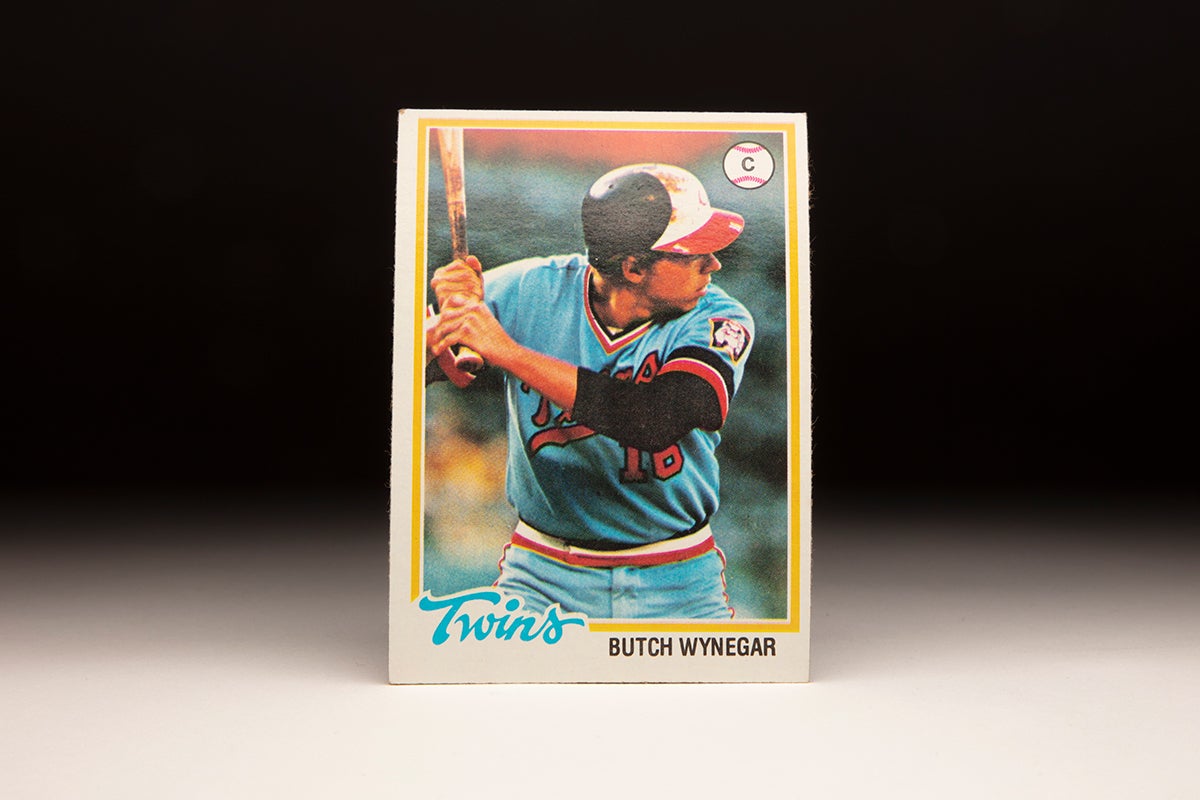
#CardCorner: 1978 Topps Butch Wynegar
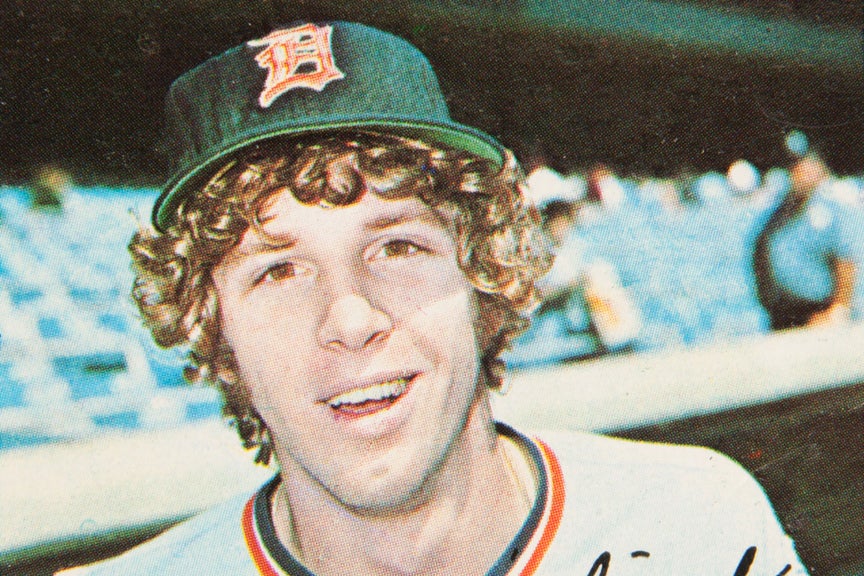
When he pinch-hit for Luis Tiant in the 1976 All-Star Game in Philadelphia, Butch Wynegar became the youngest player ever to appear in a Midsummer Classic contest.
It was another in a string of superlatives for Wynegar during his rookie season. And though his career would take an unexpected turn when he was traded from the Twins to the Yankees, Wynegar still put up numbers that ranked him among the most effective and efficient catchers of his era.
Born Harold Delano Wynegar on March 14, 1956, in York, Pa., Wynegar was the son of Harold and Dorrea Wynegar and excelled as a three-sport athlete at Red Lion High School, starring in football – where he was a teammate of future NFL wide receiver Scott Fitzkee – basketball and baseball. But an injury on the football field during his junior year – along with MLB scouts who began appearing at his games a year earlier – convinced Wynegar to concentrate on baseball.
“He always wanted to play in the major leagues,” Harold Wynegar Sr. told the York (Pa.) Dispatch in 1976. “He never dreamed of anything else.”
Wynegar was a third baseman until his junior year when Dutch Dorman, a part-time scout for the Phillies in the York area, told Wynegar he’d have a better chance at the majors as a catcher.
“Catching is a prime commodity in baseball because parents don’t want their kids doing it,” Wynegar told the Lebanon (Pa.) Daily News in 1993. “They want them to be pitchers and shortstops because there are too many bumps and bruises when you’re a catcher.”
On the day he graduated from high school, Wynegar signed with the Twins, who had selected him in the second round (38th overall pick) of the 1974 MLB Draft. No player selected in that round (nor anyone else in the next eight rounds) would top Wynegar’s career Wins Above Replacement total of 26.5.
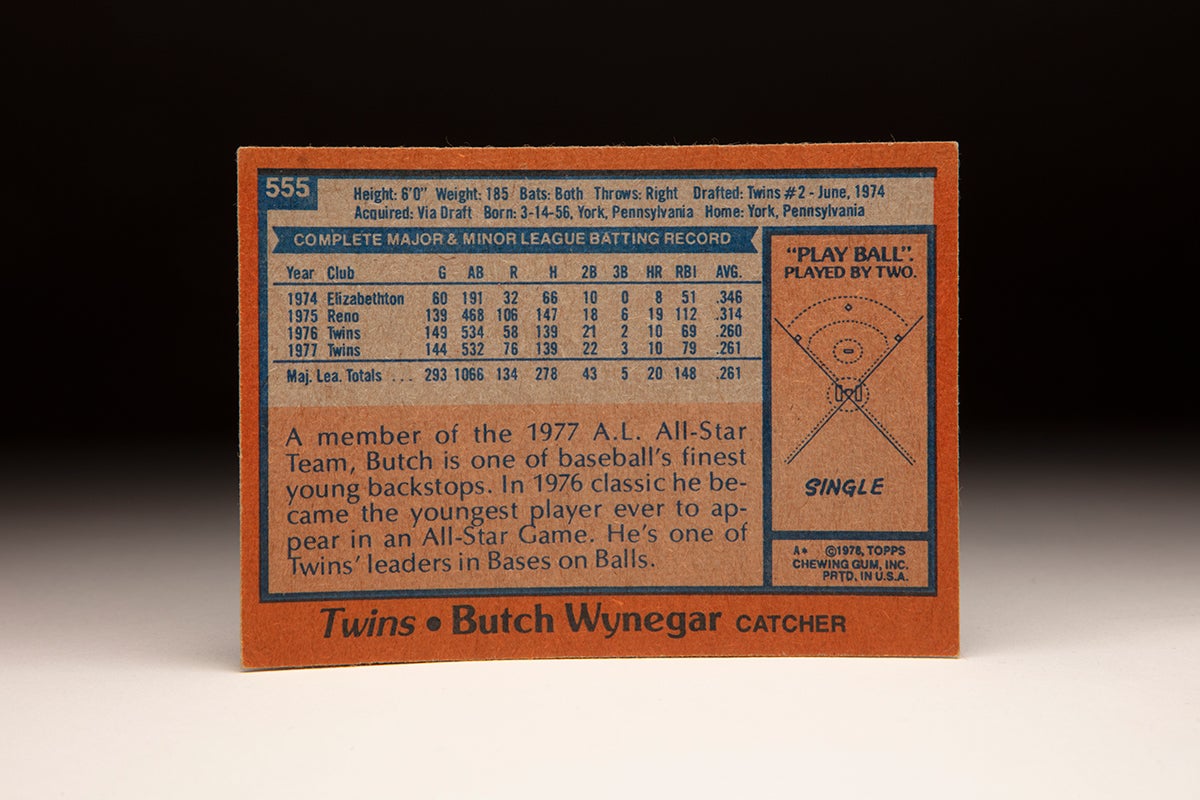
Sent to Elizabethton of the Appalachian League to begin his pro career, the switch-hitting Wynegar hit .346 – winning the league batting title – with 10 doubles, eight homers, 51 RBI and 43 walks in 60 games, earning a spot on the league’s All-Star team.
In 1975, the Twins assigned Wynegar to the Reno Silver Sox of the Class A California League – a team that had affiliate agreements with both the Twins and the Padres. Wynegar hit .314 with an astounding .473 on-base percentage, leading the league in RBI (112) and walks (142) while scoring 106 runs and blasting 19 home runs. He was named to the Topps Class A All-Star team.
Convinced they had a future star, the Twins brought Wynegar to their big league camp in 1976. Minnesota got little production out of Glenn Borgmann and Phil Roof behind the plate in 1975 but few observers expected the 20-year-old Wynegar to skip Double-A and Triple-A and make the big league roster.
Wynegar, however, impressed new manager Gene Mauch so much that Mauch put Wynegar in the Opening Day lineup.
“He’s the most complete rookie player I’ve ever managed,” Mauch told the Associated Press. “Dick Allen (managed by Mauch in 1964 with the Phillies) had the greatest first year I’ve ever seen, but that was mostly because of his great hitting.
“Butch is so unimpressed by himself. He handles all situations and contends well with the publicity.”
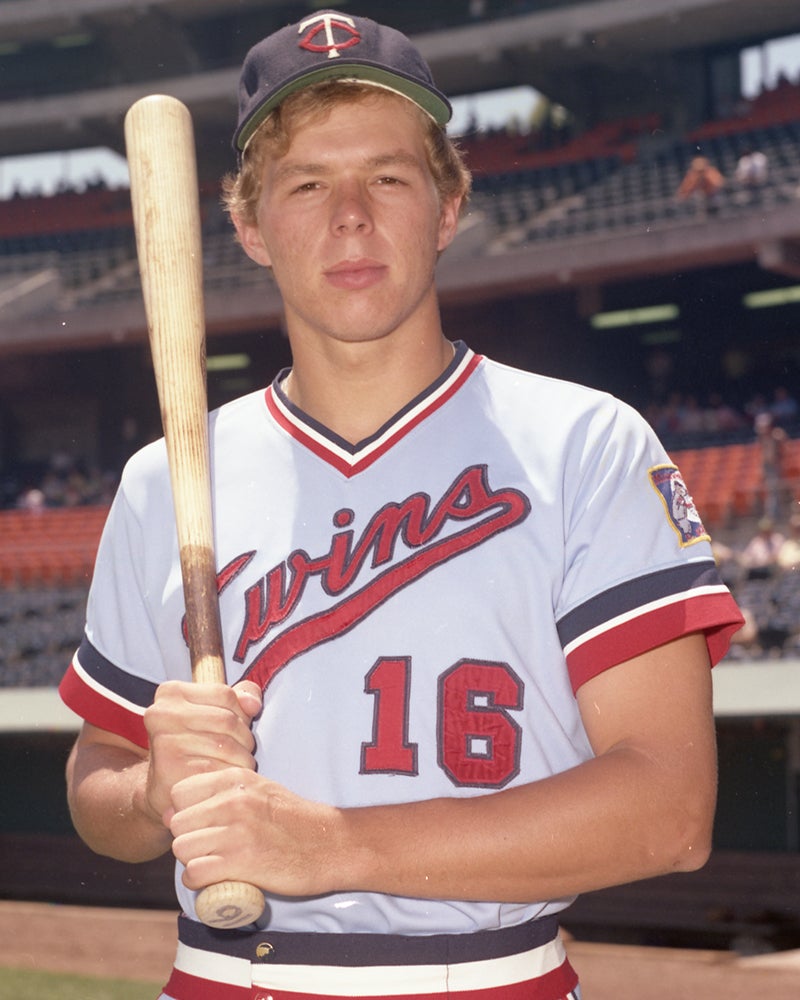
Wynegar started slowly at the plate and also had issues throwing out runners. But he soon got more comfortable at the plate and posted a stretch of eight of nine games in mid-May where he had multiple hits, lifting his average to .315. Behind the plate, Twins pitchers began helping Wynegar with quicker deliveries, and Wynegar finished the 1976 season with a 35.4 caught stealing percentage even though he allowed a league-high 113 stolen bases.
“He’s got the strongest arm in our league and maybe is only a shade off John Bench’s best throw,” Mauch told the AP. “It wasn’t his fault we were getting run on (early in the season) and our pitchers know that.”
Wynegar was hitting .294 at the All-Star break and was selected for the AL roster by manager Darrell Johnson as the third catcher behind starter Thurman Munson of the Yankees and Carlton Fisk of the Red Sox. Wynegar was not on the fan ballot for the All-Star Game but tallied 561,488 write-in votes, the most for any player in 1976.
Wynegar was overwhelmed by the honor, but Twins teammate Rod Carew – who had taken Wynegar under his wing – smoothed the waters for baseball’s baby-faced superstar.
“I had never been away from home much,” Wynegar told the York (Pa.) Daily Record in 2016. “I didn’t have a suit and a tie. But Rod bought me two suits and two ties for the All-Star Game functions. He never let me pay him back.”
Wynegar became the youngest player ever to appear in an All-Star Game (since surpassed) when he pinch-hit in the seventh inning in Philadelphia, drawing a walk from the Giants’ John Montefusco at 20 years, 121 days old.
“I was sitting in the dugout (before the at-bat) with a bat on my lap, taking in as much as I could,” Wynegar told the York Daily Record on the 40th anniversary of his first MLB All-Star Game. “Out of the corner of my eye, I saw (Twins manager and American League coach) Gene Mauch walk toward me. He tapped me on the knee and said: ‘You are going to pinch-hit for Tiant.’
“When the red light (on the center field camera) came on, I thought: Everyone back home in York will be watching. I was definitely nervous.”
But the plate discipline that Wynegar showed throughout his career carried him through the at-bat and allowed him to work Montefusco for a walk that seemed perfectly appropriate. During his 13 years in the big leagues, Wynegar would walk 626 times against only 428 strikeouts.
It was a stat line that made his friend and mentor proud.
“It was an education to watch (Rod Carew) hit,” Wynegar told the Lebanon Daily News. “I never saw anyone who went to the plate who you knew could get a hit like Rod. He was magnificent to watch.”
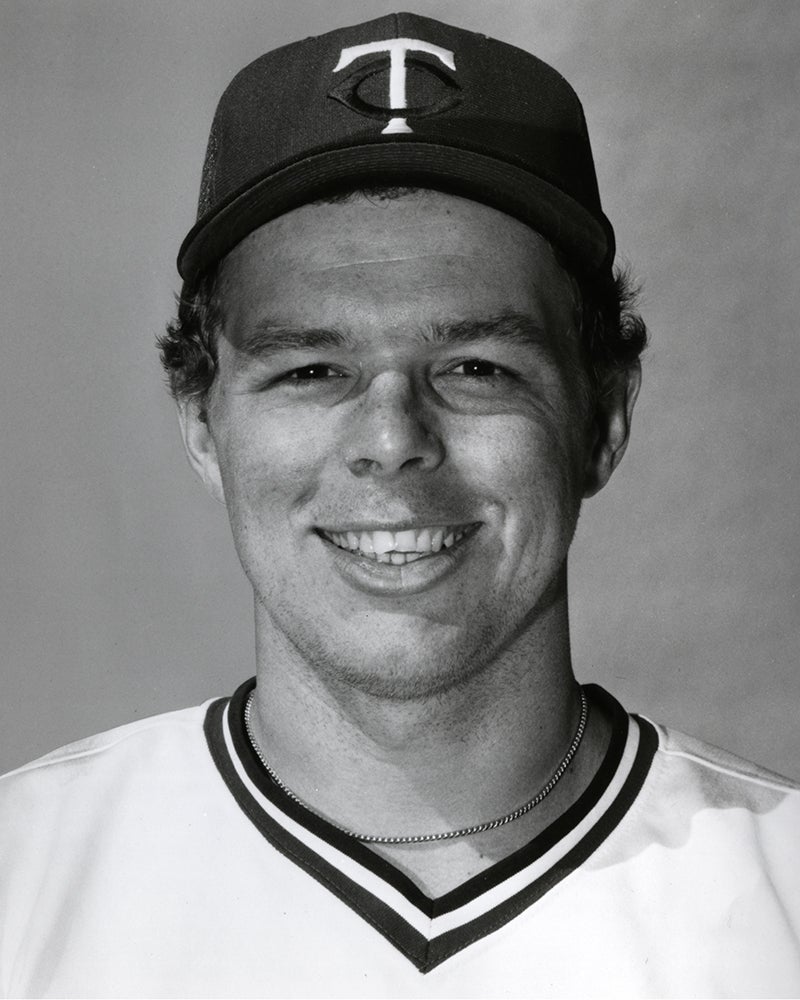
Wynegar finished the 1976 season with a .260 batting average, 21 doubles, 10 home runs, 69 RBI and 79 walks in 149 games. In most years, he would have been a runaway winner in the AL Rookie of the Year balloting. But that was the summer Tigers pitcher Mark Fidrych captured the nation’s attention with his mound antics and pitching excellence, and Fidrych received 22 of the 24 votes to win the award by a landslide.
Wynegar, however, was named the Sporting News AL Rookie of the Year in balloting that only considered position players.
Working out during the winter in a rented barn near his childhood home, Wynegar reported to Spring Training in 1977 with the starting job in hand. He worked relentlessly on his fielding and led the AL in caught stealings with 60 while improving his percentage to 42.6, cutting his errors from 16 in 1976 to five in 1977.
At the plate, Wynegar posted similar numbers to his rookie year – batting .261 with 22 doubles, 10 homers, 79 RBI and 68 walks in 144 games. Once again, Wynegar was named to the All-Star Game.
“Wynegar,” Twins owner/general manager Calvin Griffith told the Minneapolis Star prior to Spring Training in 1978, “is going to be a great catcher.”
But 2,428 innings behind the plate over two seasons began to take a toll on Wynegar. And his relationship with Griffith took a turn for the worse when Griffith implied that Wynegar’s 1978 slump was due in part to him getting married in December of 1977.
In 135 games in 1978, Wynegar hit .229 with 22 doubles, four homers and 45 RBI.
“I wasn’t trying to downgrade Butch Wynegar,” Griffith told United Press International after the 1978 season. “I think very highly of him as a young man and as a ballplayer. He’s only 22, and personally I think he could be a Hall of Famer if he gets some more strength.”
Wynegar reported to Spring Training in 1979 determined to recapture his All-Star form.
“I got an apology from Mr. Griffith, and I accepted it,” Wynegar told UPI. “I don’t mind what people say about me. But when they bring my wife into it, that’s a different story. That’s what made me mad.”
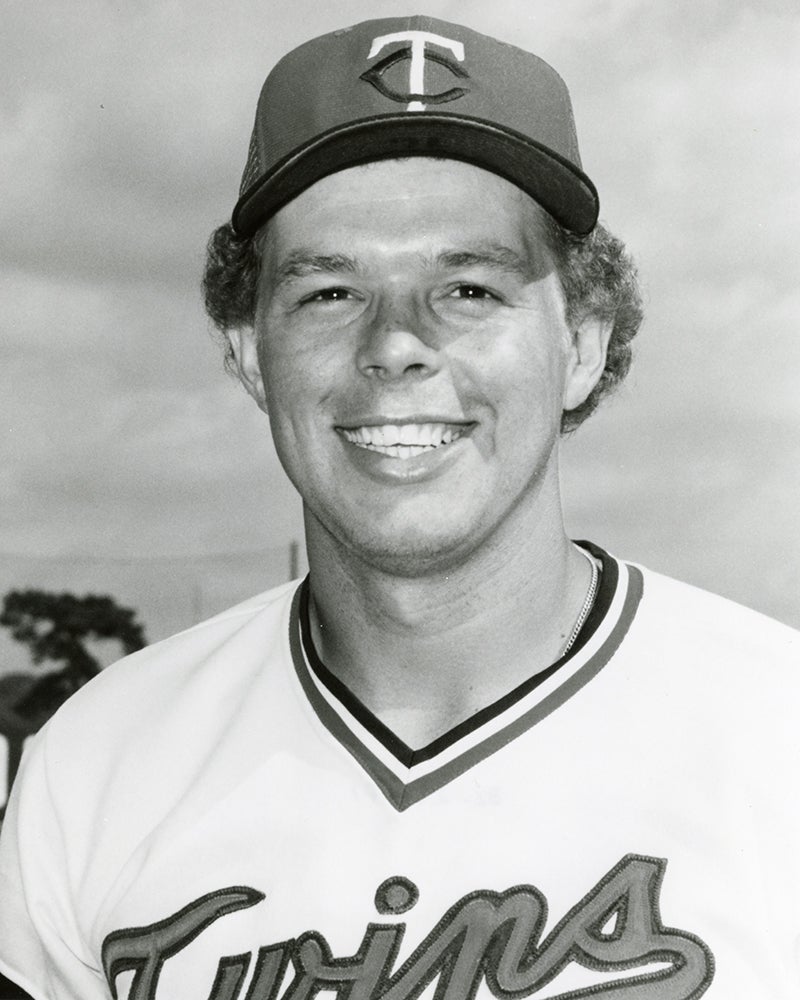
Wynegar adhered to a weight-training program after the 1978 campaign and the results showed in 1979 as he posted career-highs in batting average (.270) and on-base percentage (.363) to go with 20 doubles, seven homers, 57 RBI and 74 walks in 149 games. Defensively, he led AL catchers with 64 caught stealings while throwing out a big league-best 52.9 percent of would-be base stealers.
In 1980, Mauch – who had long-valued Wynegar’s ability to draw walks – put Wynegar in the leadoff spot 29 times, a rarity for a catcher in that era. Wynegar’s offensive numbers declined slightly but he still hit .255 with 18 doubles, five homers, 57 RBI and 63 walks in 146 games.
Still just 25 years of age entering the 1981 season, Wynegar had averaged the equivalent of 133 full games behind the plate per season over a five-year period in a league where the designated hitter was an option to keep his bat in the lineup.
On Jan. 28, 1981, the Twins rewarded Wynegar by signing him to a five-year deal worth a reported $2.3 million – at the time the biggest contract in team history.
“When the 1980 season ended, I wasn’t too optimistic about signing again with the Twins,” Wynegar told the AP, noting that he was set to become a free agent after the 1981 campaign. “But then Calvin (Griffith) said they would offer me a multiyear contract and my attitude changed completely.”
But the 1981 season proved difficult for Wynegar and the Twins. Mauch had resigned as Twins manager on Aug. 24, 1980, removing Wynegar’s longtime supporter from the dugout.
“Gene Mauch was great and…like a second father to me,” Wynegar told the Lebanon Daily News in 1993. “He’d take me aside if something was wrong and talk to me like a man.”
Then on April 10, 1981, Wynegar underwent surgery to remove bone chips from his right elbow. He did not make his season debut until May 17 and played in only 47 games that year due to the injury and the strike, batting just .247 and failing to hit a home run.
In 1982, Wynegar was behind the plate on Opening Day for the Twins for the sixth time in seven seasons. But on May 12, he was traded to the Yankees along with pitcher Roger Erickson in exchange for Pete Filson, Larry Milbourne, John Pacella and cash.
The deal was largely viewed as a salary dump by the Twins, who had traded Roy Smalley – another high-salaried player – to the Yankees just 32 days earlier.
“I am convinced that Calvin is getting rid of all his high-priced players,” Wynegar told the AP after the trade. “I think if he’s doing it for the future, he’s got a long future ahead of him.”
Trade rumors had swirled around Wynegar since Spring Training.
“It got to the point where I almost didn’t want to come to the park and play,” Wynegar told the AP. “It just wasn’t fun anymore.”
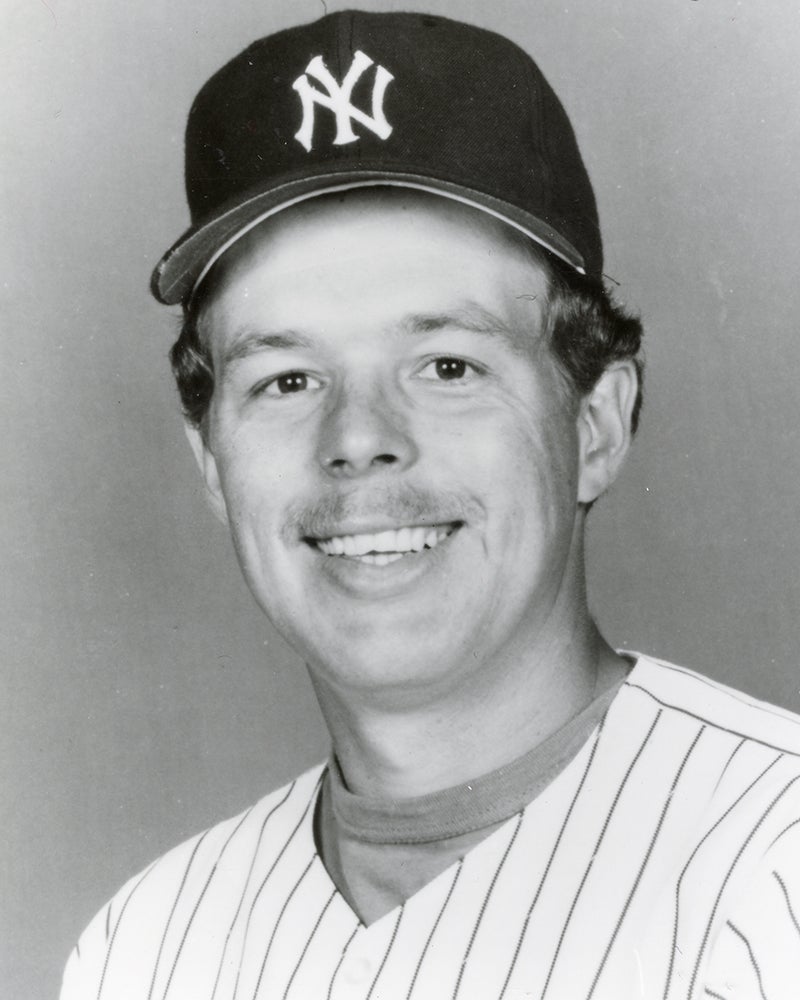
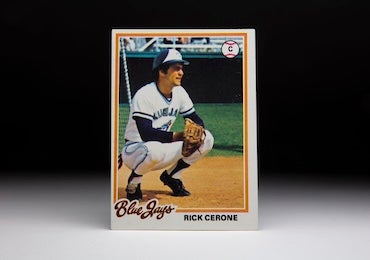
But things only marginally improved with the Yankees, who already had Rick Cerone behind the plate. Cerone fractured a thumb on May 11 – leading to the Wynegar trade – but returned in July and cut into Wynegar’s playing time. Wynegar finished the year batting .293 with the Yankees in 63 games and hit .267 overall with four homers and 28 RBI in 87 contests.
In 1983, Wynegar and Cerone shared catching duties in a platoon for new manager Billy Martin. Wynegar hit a robust .296 with 18 doubles, six homers, 42 RBI and 52 walks while finishing fifth in the AL by throwing out 38.9 percent of potential base stealers.
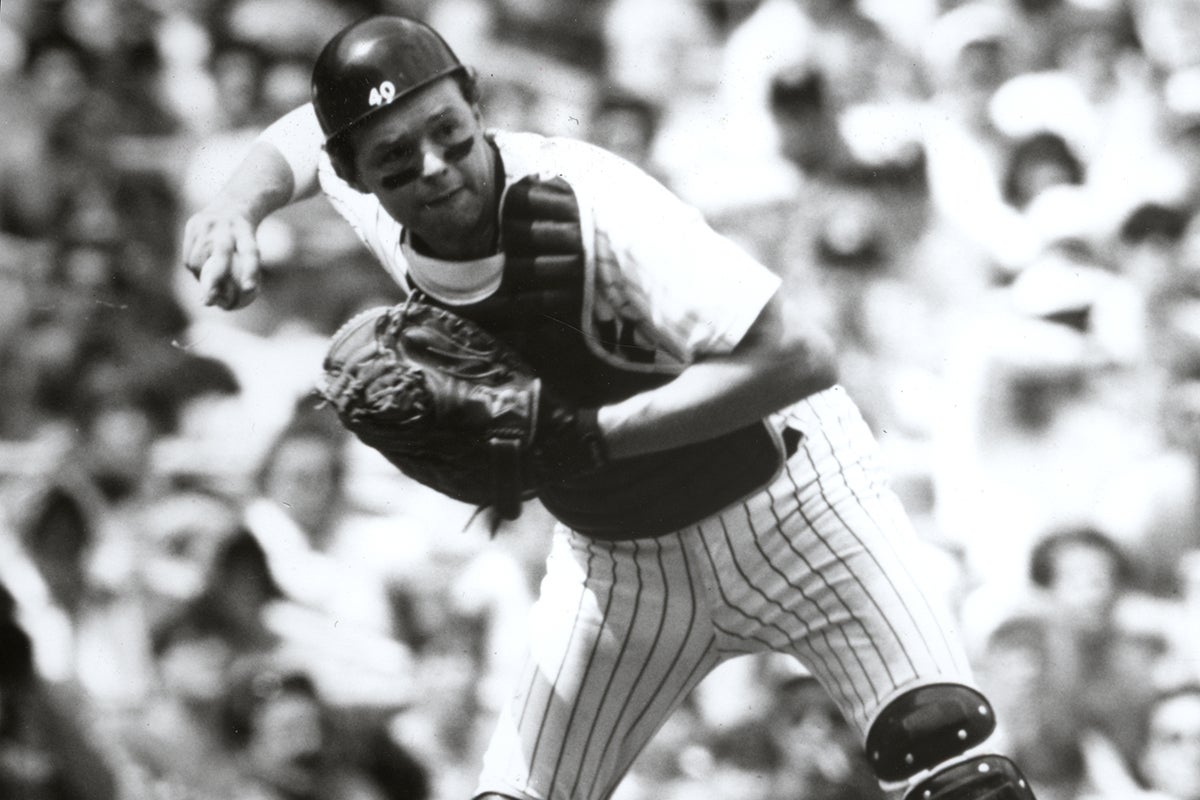
Wynegar also caught Dave Righetti’s no-hitter on July 4 at Yankee Stadium. The final out came on a slider that resulted in a strikeout of future Hall of Famer Wade Boggs, who fanned just 36 times that season.
“If they were going to get a hit off of him, I wanted it to be off his best pitch, which of course is the fastball,” Wynegar, who said he second-guessed himself the moment Righetti released the final pitch, told the Hartford Courant. “If Boggs had gotten (a hit), I would have kicked myself to kingdom come.”
In 1984, Wynegar played for his fourth Yankees manager in three seasons when Yogi Berra took over for Martin. He appeared in 129 games as Cerone missed two months with an elbow injury, batting .267 with 13 doubles, six home runs, 45 RBI and 65 walks.
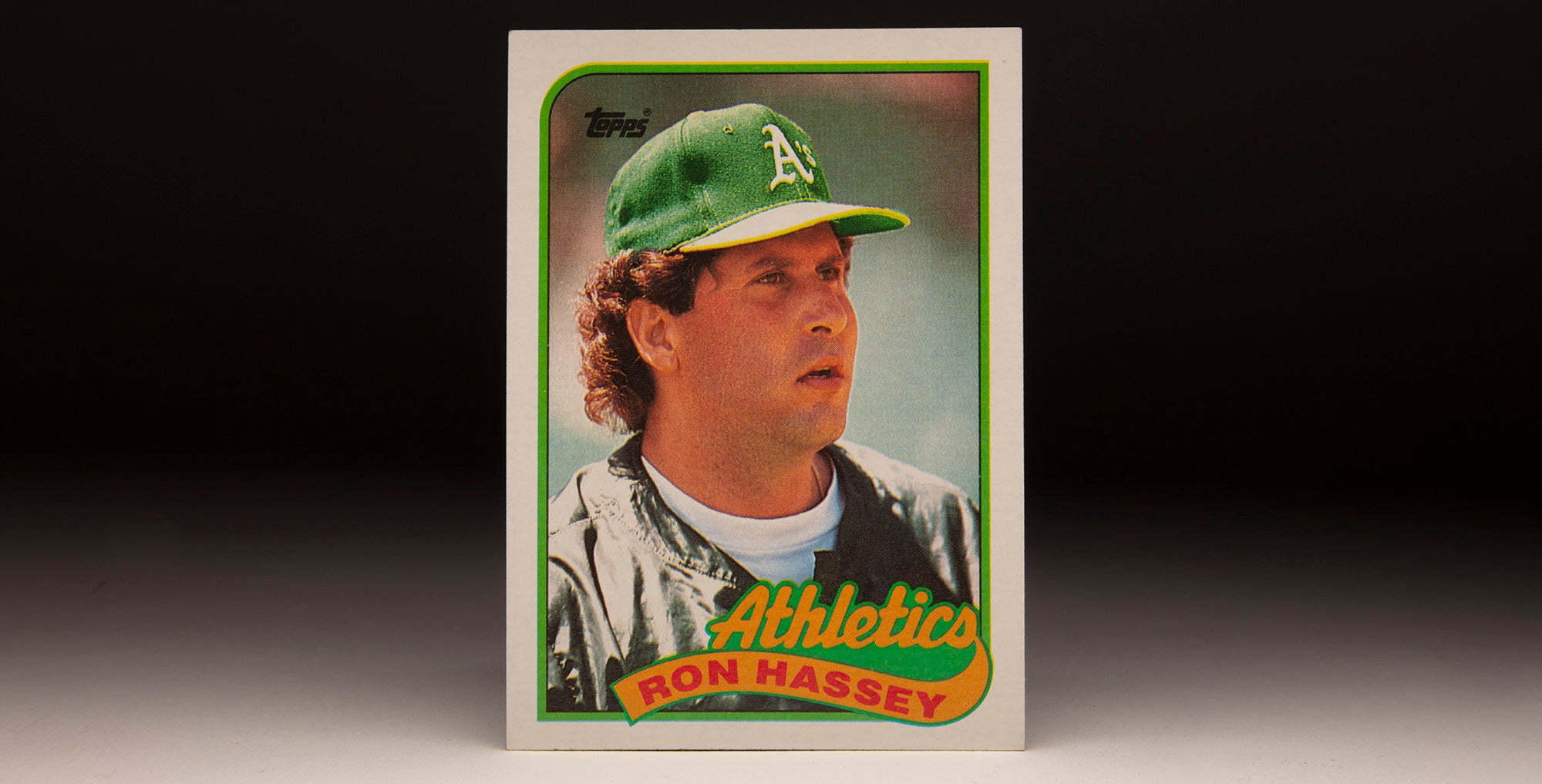
Cerone was traded to the Braves following the 1984 season, but Wynegar lost another of his favorite managers when the Yankees fired Berra just 16 games into the 1985 campaign. Martin returned at that point, and Wynegar chaffed under Martin’s style while platooning with lefty-hitting Ron Hassey. He batted just .223 but did draw 64 walks over 102 games for a .356 on-base percentage despite missing time with a head injury suffered when he was hit by a foul ball in the on-deck circle in Baltimore on June 17.
Wynegar was also part of history once again when he caught Phil Niekro’s 300th victory on Oct. 6 vs. the Blue Jays. Niekro threw only three of his famous knuckleballs all game – each to the final batter, Jeff Burroughs.
Niekro pitched a shutout in the Yankees’ 8-0 win.
“(Niekro) told me early today that he wanted to (pitch without throwing the knuckleball),” Wynegar told the Atlanta Constitution. “I thought he was kidding. Hey, I was happy not to have to catch that thing.”
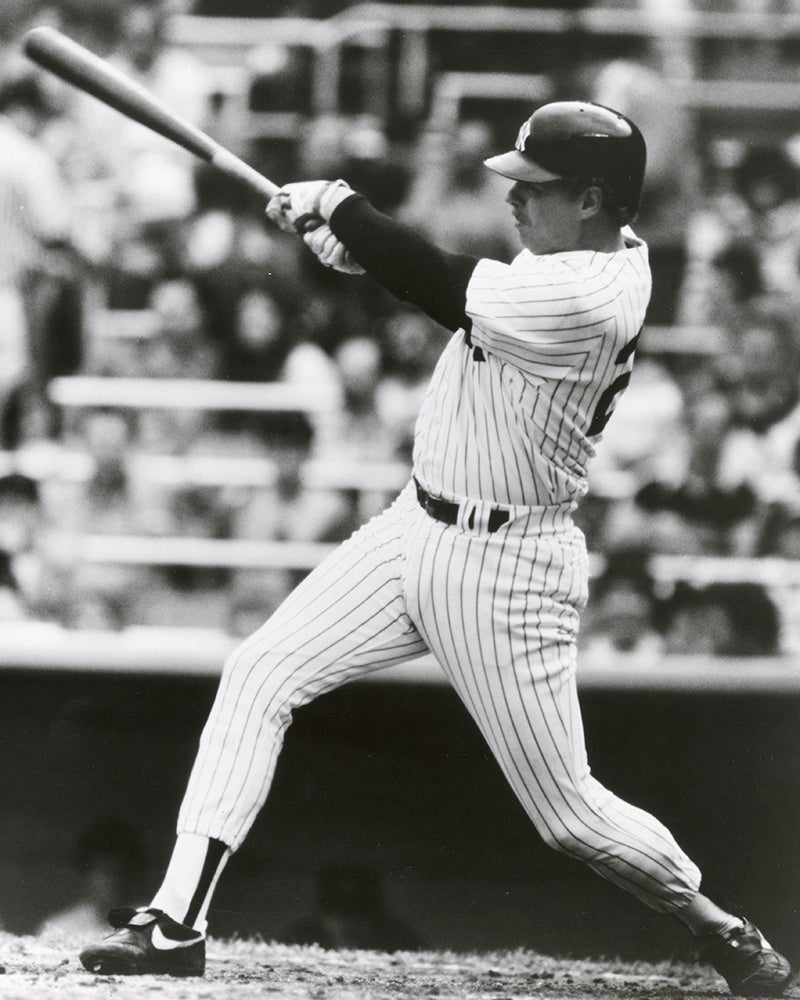
The Yankees – who had not reached the postseason since 1981 – employed another new manager in 1986 with Lou Piniella taking over in the dugout. But the move did not improve conditions for Wynegar.
“I loved playing for Yogi,” Wynegar told the Lebanon Daily News. “Billy Martin was different. He did a lot more yelling and screaming, and Lou Piniella was the same type.”
With his contract expired, Wynegar wanted to leave New York but found no suitable offers. On Jan. 8, 1986, he agreed to a three-year deal worth $2.2 million to return to the Yankees.
“If any other club would have made me an offer, I wouldn’t have come back,” Wynegar told Newsday following the 1986 season. “I knew I was fooling myself.”
On July 29, 1986, the pressure finally became too much for Wynegar. That day, he was not expecting to play against the Brewers because Hassey figured to start against Milwaukee right-hander Danny Darwin. But when he arrived, Yankees coach Jeff Torborg told Wynegar he would be in the starting lineup.
When Wynegar asked why, Torborg could not – or would not – disclose the reason, which turned out to be because the Yankees were about to trade Hassey to the White Sox. Wynegar played that day – getting a hit in four at-bats to raise his average to .206 – in what would be his last game for the Yankees.
“I was back there calling signals and not caring what I was calling,” Wynegar told Newsday. “It was like I was in a fog. When I got back to the hotel, I realized I’d never want to go through that again. That’s when I called Gretchen (his wife).”
The next day, newly acquired Joel Skinner caught for the Yankees and Wynegar remained on the bench. The team flew to Cleveland after the game, and on the off day, Wynegar called Yankees general manager Clyde King.
“Clyde, I’ve got to get out,” Wynegar remembered telling King. “I’m losing enthusiasm. Something’s wrong.”
King reported the news to Yankees owner George Steinbrenner, who said that Wynegar should take a day off and then return to the team. Wynegar refused and went home instead.
Wynegar consulted psychiatrists, who told him he was suffering from stress and what they called “combat fatigue.” Soon, Wynegar’s desire to play returned – as long as he wouldn’t be playing with the Yankees.
“I want to give it a couple more years,” Wynegar told Newsday. “I want to go out on a high note. I’m 30 years old and not quite ready to give it up.”
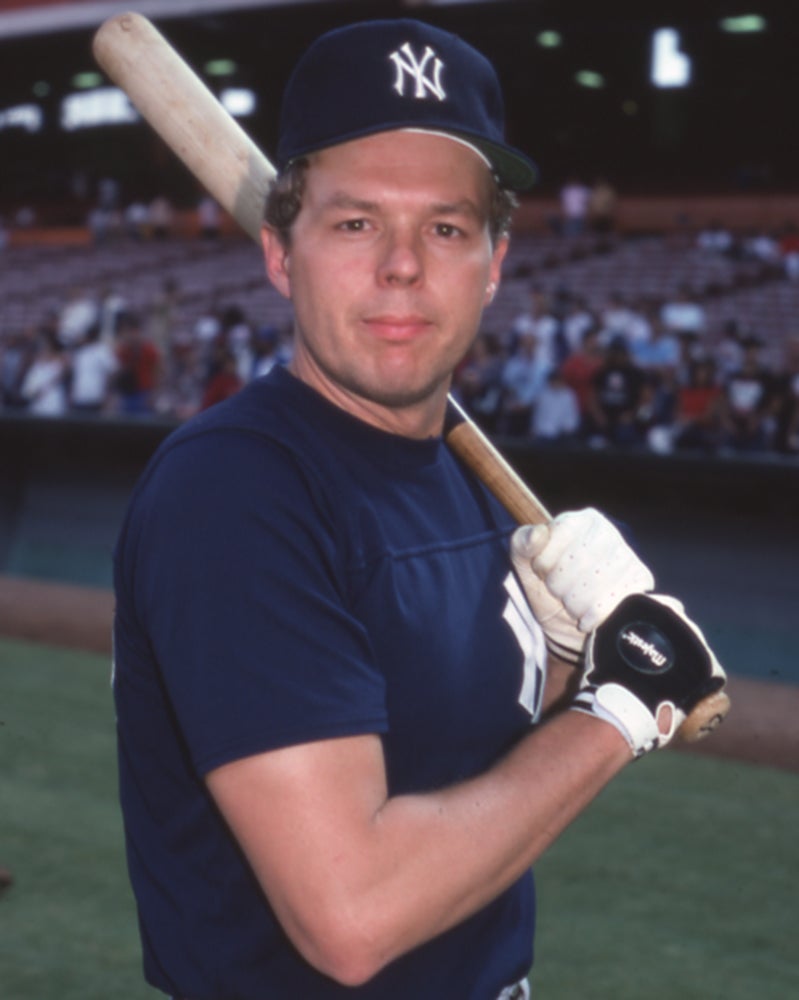
On Dec. 19, 1986, the Yankees traded Wynegar to the Angels in exchange for pitchers Alan Mills and Ron Romanick. The deal reunited Wynegar with Mauch, who was the Angels’ manager. But it also made Wynegar a backup behind Bob Boone, who despite being in his late 30s was in the midst of a four-year stretch of Gold Glove Awards.
Wynegar was also plagued by a bone spur in his right toe which required surgery. He appeared in 31 games, batting .207 over 102 plate appearances. He reported to Spring Training in 1988 once again set to back up Boone.
“I’m not going to look past this year,” Wynegar told the York Daily Record. “I have an option year (for 1989 on his contract) but I don’t foresee the Angels picking that up right now.
“I don’t think I could ever be a full-time catcher again. The toe just does not have enough stamina.”
Wynegar appeared in 27 games in 1988, batting .255 while not appearing in a game after May 24 due to his ongoing toe problems. He walked eight times against seven strikeouts, the 12th time in his 13 seasons (1987 being the only exception) where he walked more than he struck out.
On Oct. 6 – four days after the regular season ended – the Angels released Wynegar. He soon retired as an active player.
Wynegar moved to Longwood, Fla. – near the Twins’ Spring Training home in Orlando – in 1981 and became an assistant baseball coach at nearby Rollins College in the early 1990s. He then returned to the MLB universe with the Orioles as the manager of the Class A Albany Polecats of the South Atlantic League. Wynegar moved to the Rangers in 1995, managing Class A Charlotte for three years before transitioning to a roving hitting instructor for the Rangers.
In 2003, Wynegar was named the Brewers’ big league hitting coach under new manager Ned Yost. He held the position for four years before returning to the Yankees as a minor league hitting instructor and later working with the Pirates in the same capacity.
Over his 13 seasons as a player, Wynegar hit .255 with a .348 on-base percentage, 1,102 hits, 506 RBI and 626 walks. He is one of only 25 catchers in history (who played at least 50 percent of their games behind the plate) with at least 5,000 plate appearances and a .345 on-base percentage.
And though the peak of his career came at its very beginning, Wynegar sustained his life in baseball for more than four decades.
“A lot happened to me very quickly,” Wynegar said of his meteoric rise to the big leagues. “I didn’t have time to think about (the attention).”
Craig Muder is the director of communications for the National Baseball Hall of Fame and Museum