#CardCorner: 1992 Donruss Kenny Lofton
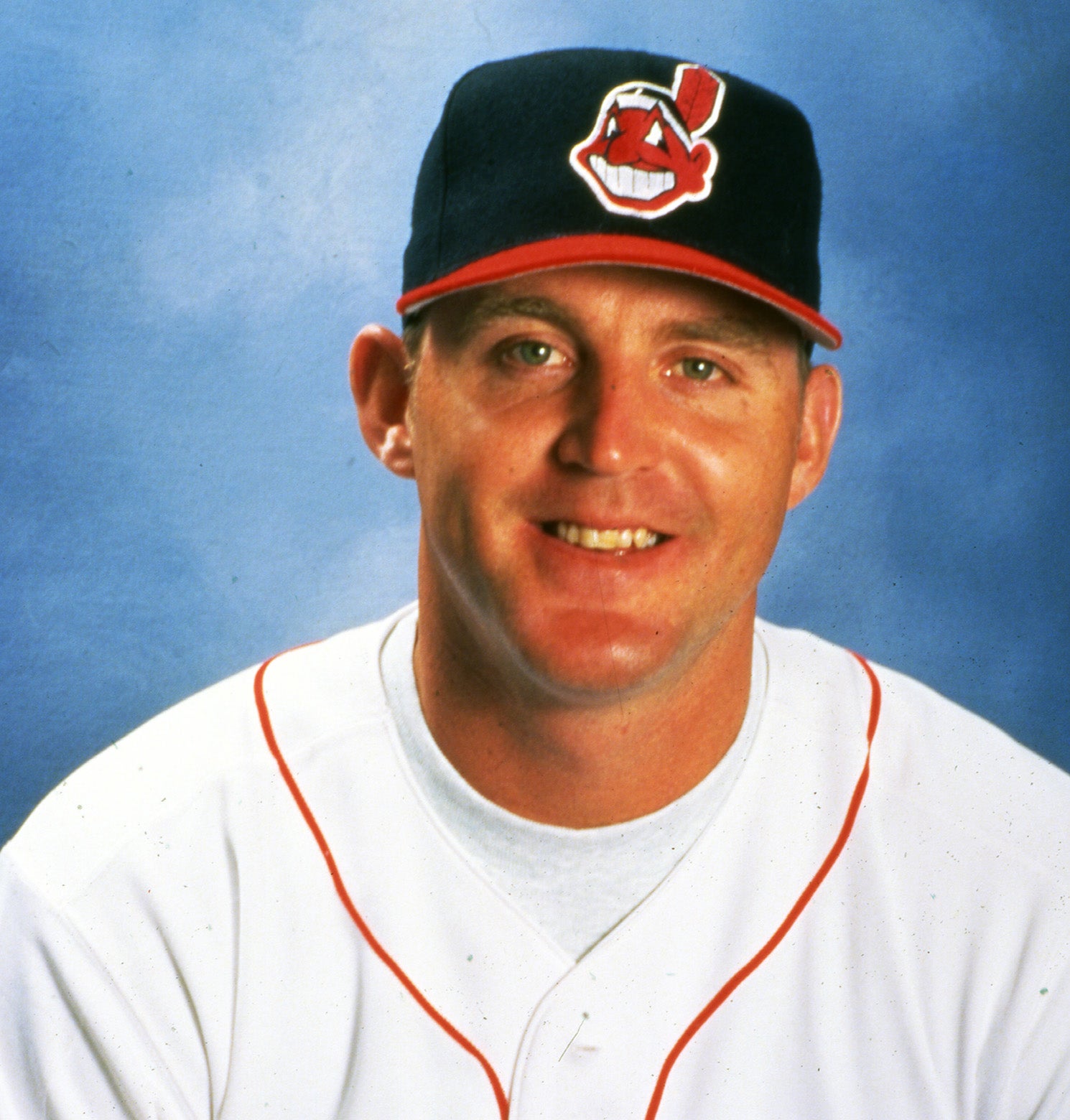
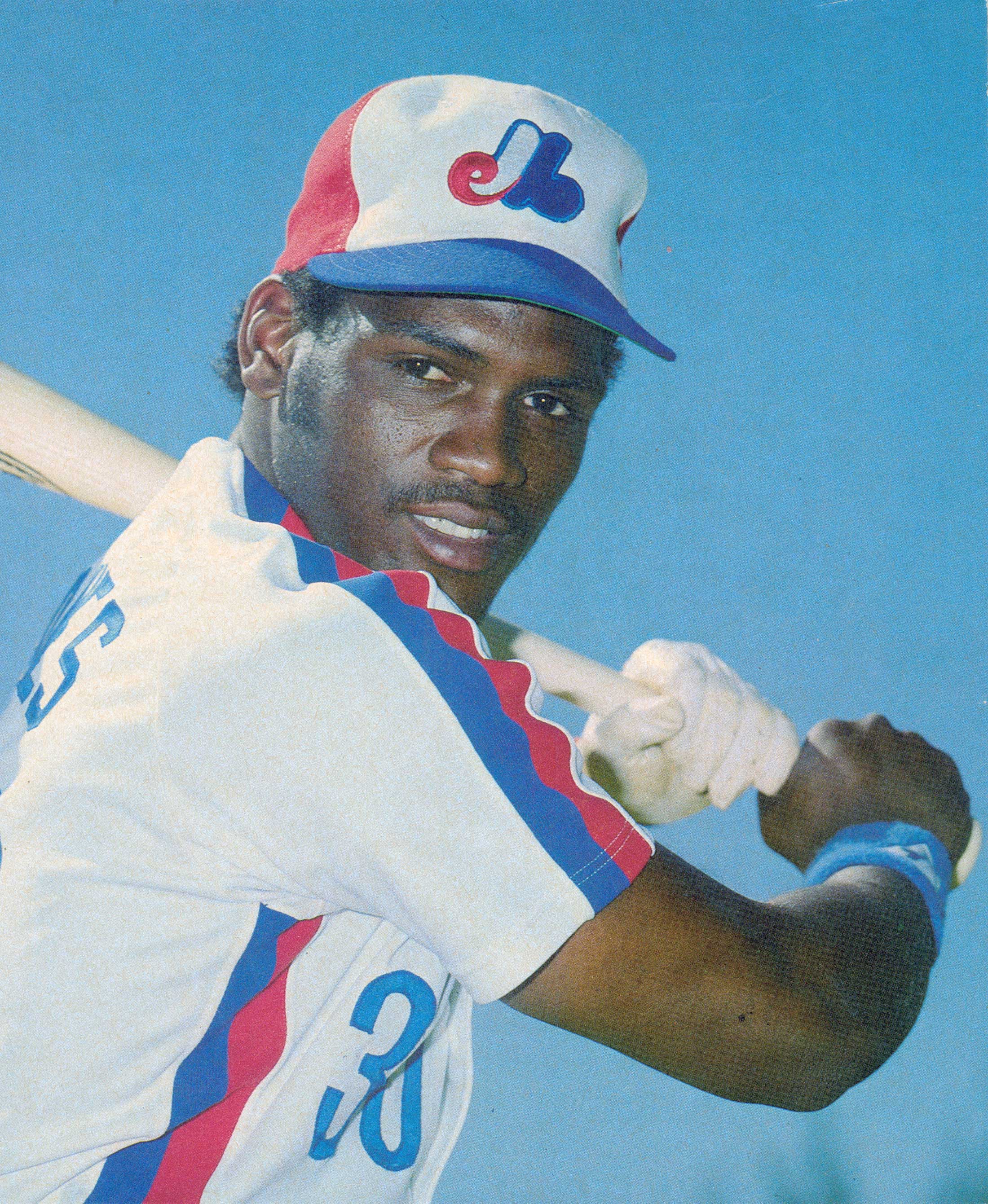
When Kenny Lofton stepped to the plate at Cleveland Stadium for the first time in 1992, the 65,813 fans in attendance for the Indians’ home opener were greeted with his 1991 minor league stats on the scoreboard.
While with Triple-A Tucson, Lofton was credited with a .308 batting average, 168 hits…and more than 100 stolen bases.
With all the hype around Cleveland’s new speedy center fielder, many Indians supporters probably thought they were seeing the real-life incarnation of Willie Mays Hayes from the movie “Major League”.
In reality, Lofton only stole 40 bases in Triple-A in 1991. But reality would also turn out to be pretty good for the Indians and Lofton, who soon became one of the best players in the game.
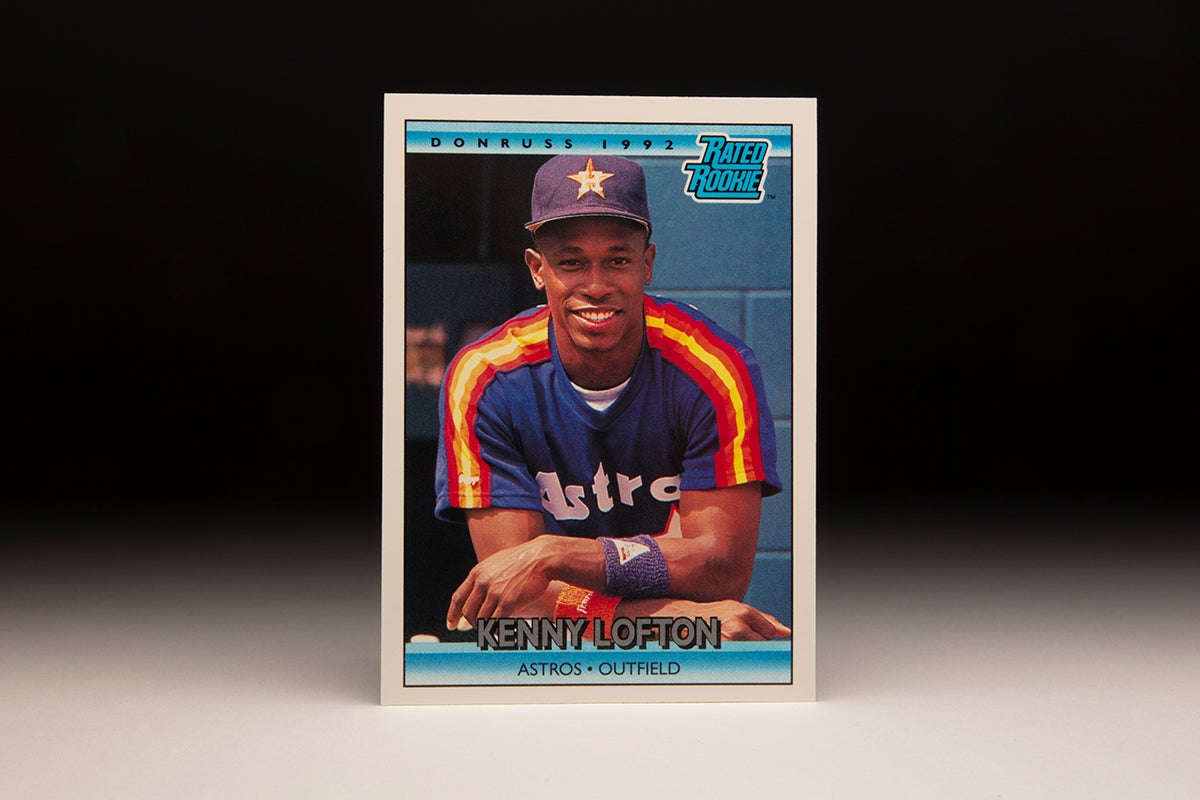
Born Kenneth Lofton on May 31, 1967, in East Chicago, Ind., Lofton was raised by his grandmother.
“(She) gave me the love and support and understanding and guidance of how to be a man,” Lofton told an audience in Gary, Ind., in 2019. “And that’s something that pushed me forward and gave me the understanding of how to treat others, respect what you have and cherish what you have…”
Lofton starred at Washington High School in East Chicago on the basketball court while playing baseball for four varsity seasons. He led his team to the Indiana state Final Four in 1985 and earned a scholarship to the University of Arizona.
“I wasn’t that great a prospect to play both sports,” Lofton told the Houston Chronicle in 1991. “When I went to play basketball, I made the decision to concentrate on that sport. I wanted to get used to going to college and make sure my grades were in order. I didn’t think that I could play two sports without that suffering.”
Lofton would play four seasons of basketball with the Wildcats, starting 21 games as a sophomore in 1986-87. Then as a junior, Lofton served as the backup to guards Steve Kerr and Craig McMillan as Arizona advanced to the Final Four before losing to Oklahoma in the semifinals.
It would one day allow Lofton to enter a club that contains only one other member – fellow Washington High School alumnus Tim Stoddard – as players who appeared in both the NCAA Men’s Final Four and the World Series.
Lofton tried out for baseball at Arizona during his junior year and appeared in five games, leading the Houston Astros to select him in the 17th round of the 1988 MLB Draft. He signed with Houston and was sent to Auburn of the New York-Penn League, where he batted .214 with 26 steals in 48 games.
Lofton then returned to Arizona to earn his degree and started each of the Wildcats’ 33 basketball games in the 1988-89 season, helping Arizona – which was ranked No. 1 nationally during the season – advance to the Sweet 16 of the NCAA Tournament. After graduation, Lofton joined the Astros’ minor leaguers in Auburn and later Asheville of the Class A South Atlantic League, batting a combined .292 with 40 steals in 56 games.
“If it wouldn’t have been for basketball getting me to that area of Arizona, I probably wouldn't have been in the situation I am today,” Lofton told the Hammond (Ind.) Times in 2019. “So Northwest Indiana basketball is awesome, and it still is, and it’s something that I’ll always be proud of – but baseball became my life.”
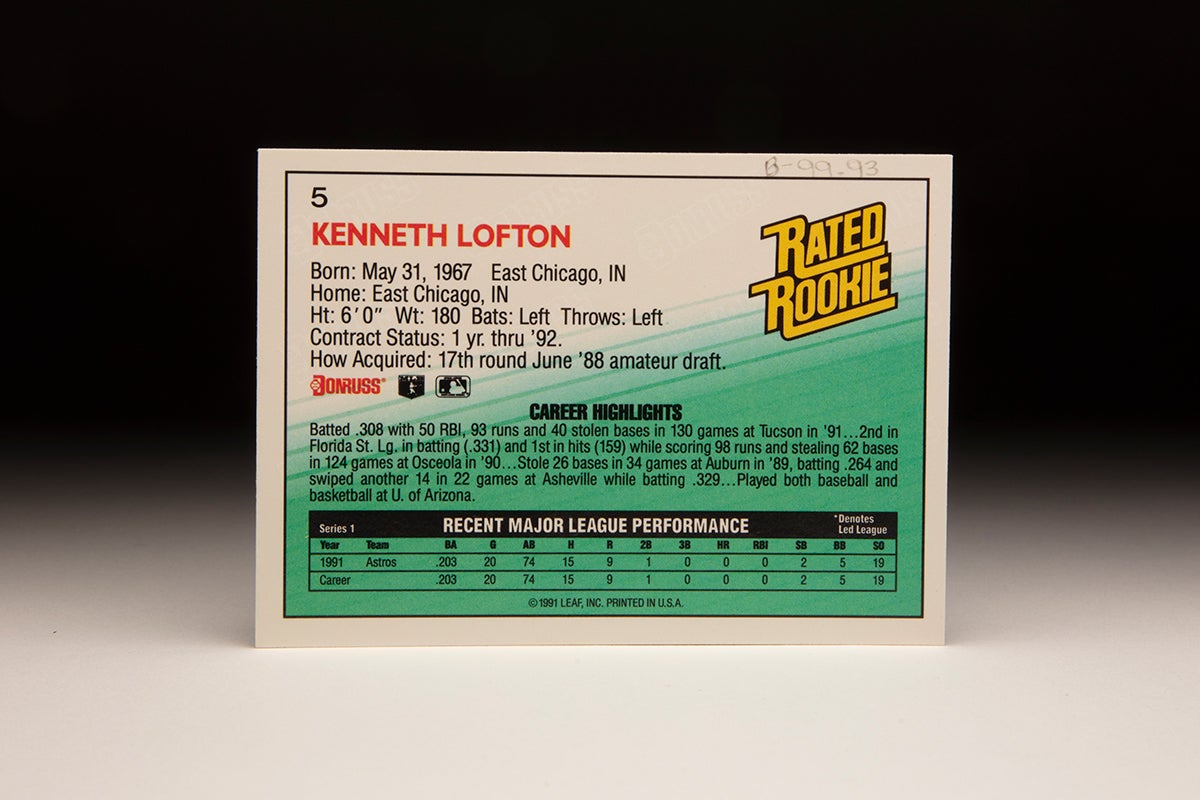
In 1990, the Astros assigned Lofton to Class A Osceola of the Florida State League, where he led all Astros minor leaguers with a .331 batting average and 62 steals while being named to the FSL All-Star Game.
The Astros brought Lofton to their big league Spring Training camp in 1991 after he hit .483 in 19 games in the Florida Instructional League.
“He’s got great tools, especially his speed,” Astros manager Art Howe told the Houston Chronicle. “You watch him in batting practice, and you know he can sting the ball. He reminds me a lot of a young Mickey Rivers, a guy who can hit the ball hard and fly.”
The Astros assigned Lofton to Triple-A Tucson, sending him back to the town where he went to college.
“He’s a guy that after you watch him play for a little while, you’ll be coming around asking a lot of questions about him,” Astros general manager Bill Wood told reporters in the spring of 1991. “He’s an exciting player.”
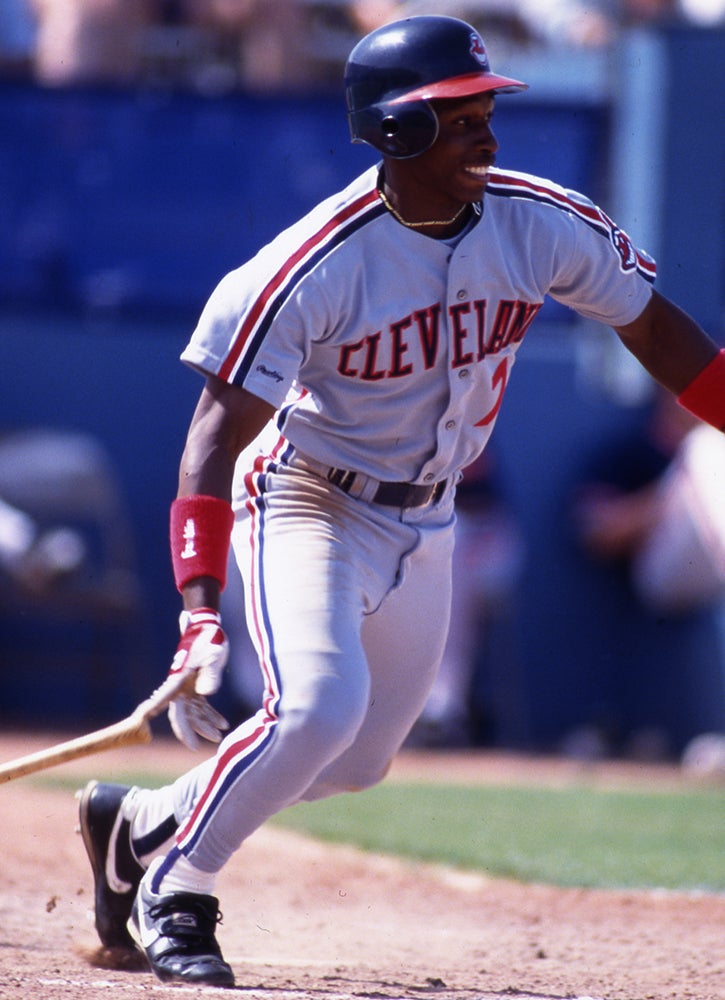
Lofton hit .308 with 19 doubles, 17 triples, 93 runs scored and 40 stolen bases for the Toros in 130 games, earning a berth in the Triple-A All-Star Game.
“He’s going to be an outstanding major league player,” Tucson manager Bob Skinner told the Hammond Times in 1991. “He’s getting very close.
“He’s just starting out. I think maybe he had 50 at-bats in college when (the Astros) signed him, and he arrived at Houston very inexperienced. He’s doing much better in this league than I thought he would do at this point in time.”
The Astros called Lofton up to the big leagues in September, and he hit .203 with two stolen bases in 20 games. But with Steve Finley set in center field and a plan in place to move catcher Craig Biggio to second base, the Astros needed depth behind the plate.
On Dec. 10, 1991, Houston sent Lofton and infielder Dave Rohde to Cleveland in exchange for catcher Ed Taubensee and pitcher Willie Blair. And while Taubensee would play 11 seasons in the big leagues, most of those would come with the Reds after the Astros sent him to Cincinnati. Blair pitched just one season in Houston before going to Colorado in the expansion draft.
Lofton, meanwhile, would make the trade one of the most lopsided in history.
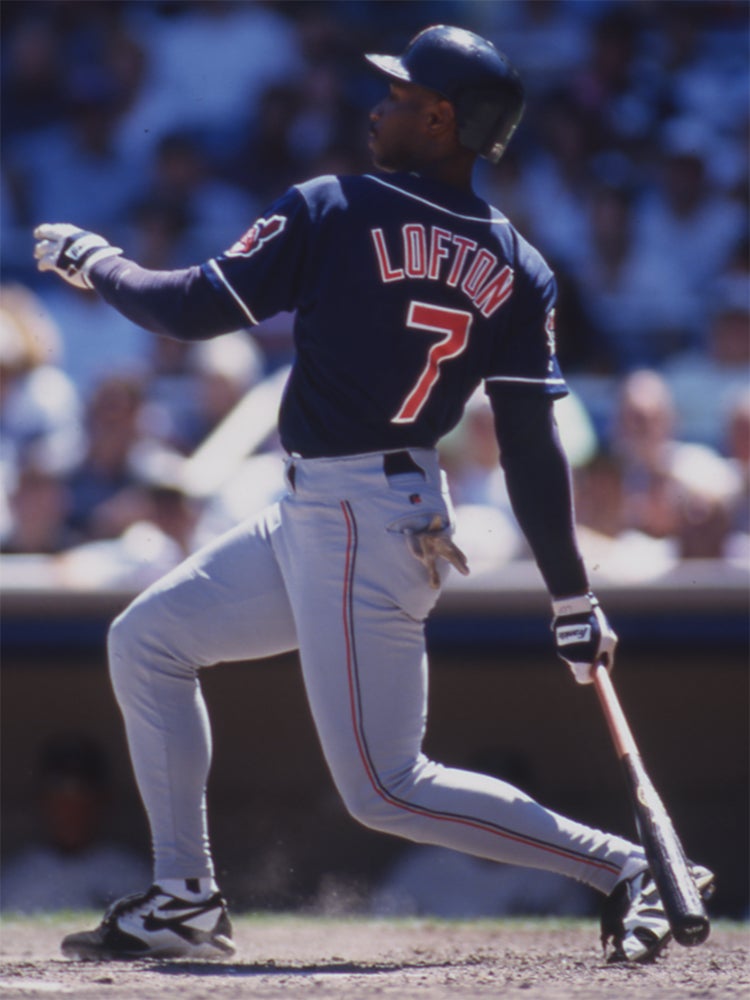
Lofton had two hits and two walks in nine plate appearances in that Opening Day game in 1992, a contest Cleveland lost to Boston in 19 innings. The next day, Lofton stole four bases against the Red Sox while recording a hit and three walks. A stretch where he hit safely in 16 of 18 games pushed his average into the .270s in mid-May, and by the end of the season he was batting .285 with 96 runs scored, 15 doubles, eight triples, 68 walks and an AL-leading 66 steals.
He finished second to Milwaukee’s Pat Listach in the AL Rookie of the Year voting despite a 6.6 Wins Above Replacement figure that was almost two full points higher than Listach’s. And though that statistic did not exist in 1992, the voters could see that Lofton had more runs (96 to 93), more steals (66 to 54), a better on-base percentage (.362 to .352) and slugging percentage (.365 to .349) while finishing first among AL center fielders with 14 assists. He also led AL center fielders in errors with eight, but Lofton’s defensive WAR of 2.3 easily outpaced Listach’s mark of 0.8 at shortstop.
Listach received 20 first-place votes compared to seven for Lofton.
“I expected it to be a lot closer,” Listach told the Associated Press after learning he had won the award. “I didn’t know if I’d come in first or second.”
For Listach, it was easily the best year of a six-year MLB career that was over after 1997.
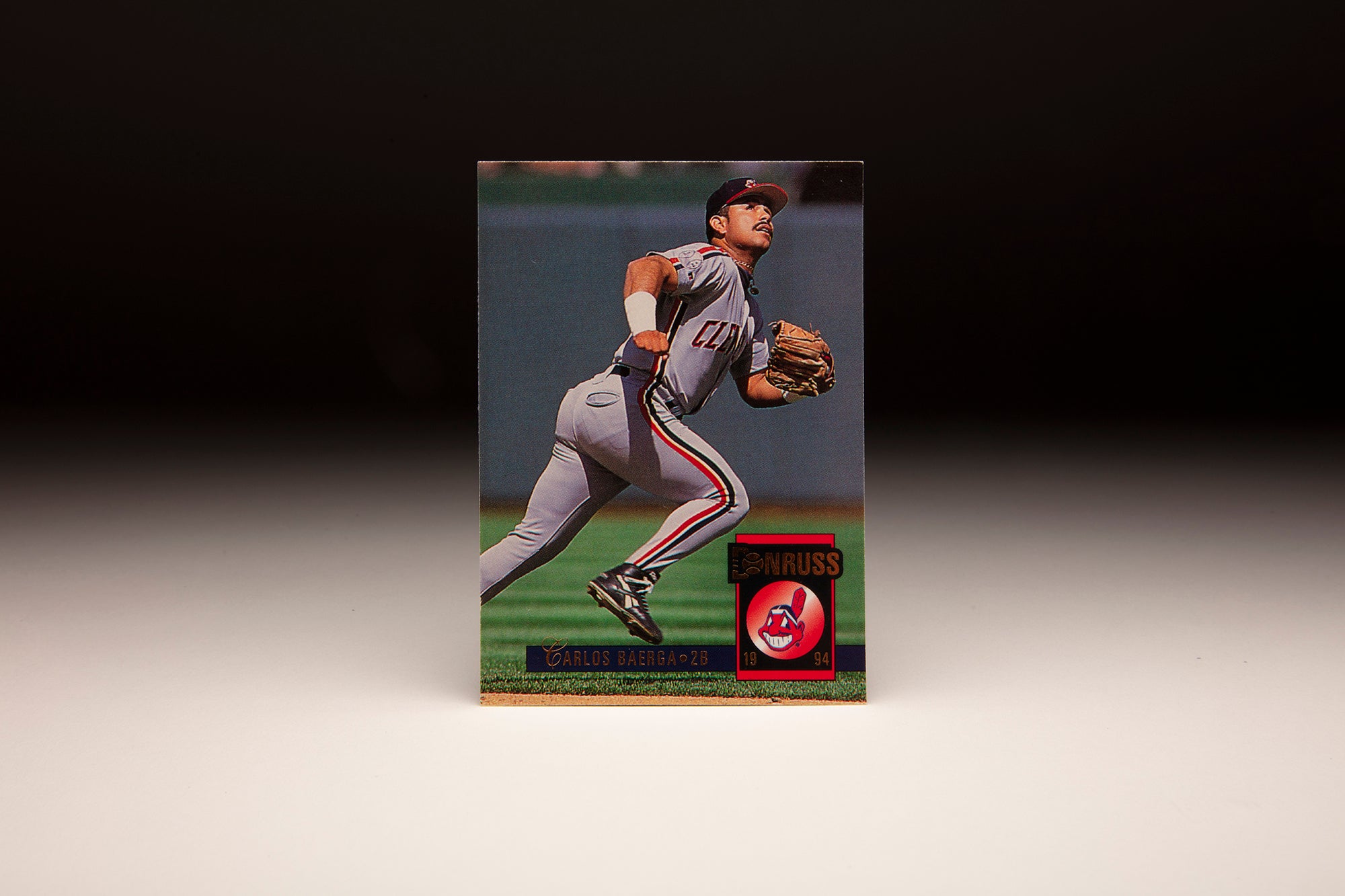
Lofton, meanwhile, was part of a young Cleveland team that he would power at the top of a lineup featuring Carlos Baerga, Albert Belle, Manny Ramírez and Jim Thome.
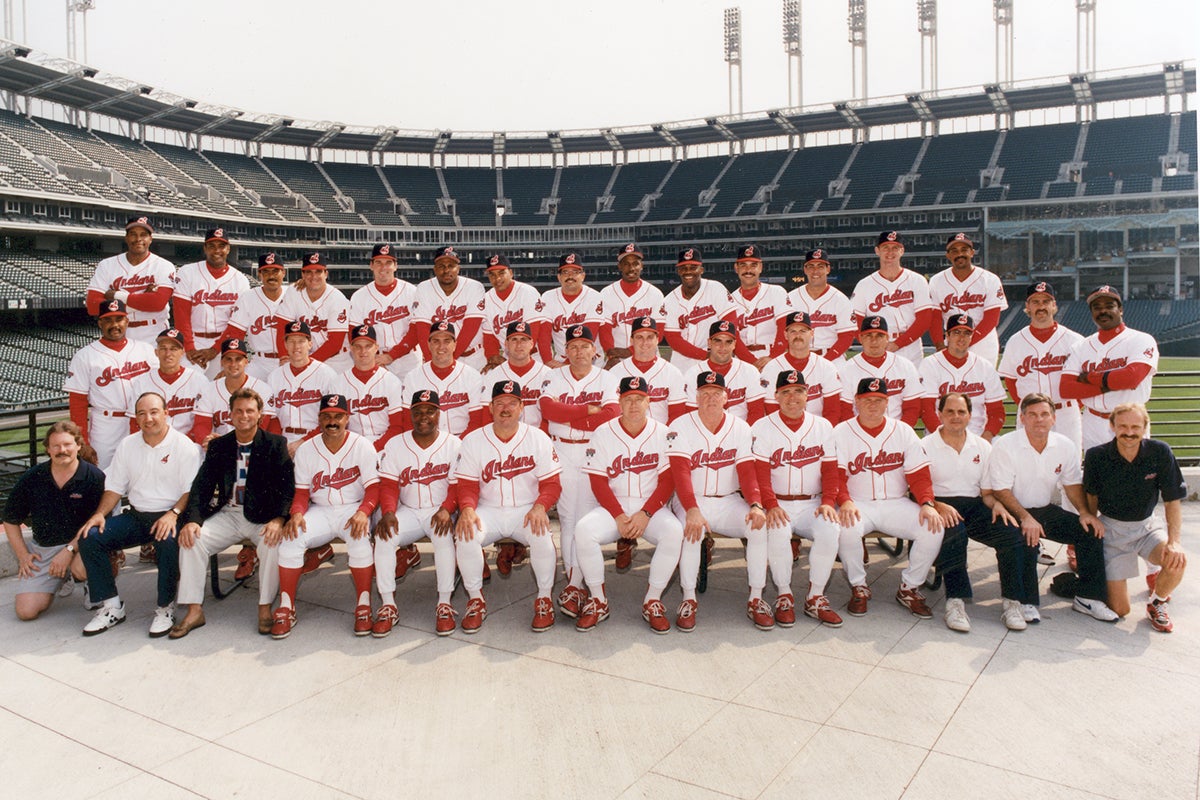
In 1993, Lofton hit .325 (fourth in the AL) with 116 runs scored, 28 doubles, eight triples, 81 walks and an MLB-best 70 steals. A Spring Training boating accident that took the lives of pitchers Tim Crews and Steve Olin cast a pall over the season, and Cleveland finished 76-86. But most scouts believed that Lofton and the Indians were on the verge of becoming contenders, and Lofton was rewarded after the season with a Gold Glove Award while finishing 15th in the AL Most Valuable Player voting.
“Kenny is the guy who makes us go,” Baerga told the Cleveland Plain Dealer in the spring of 1994. “When he gets on base, we usually score.”
Lofton, Baerga and Belle were all signed to multi-year contracts by the spring of 1994 as general manager John Hart locked up his core group of players. Lofton’s deal was for four years and $6.3 million with a team option for 1997.
The Indians appeared headed toward the postseason for the first time since 1954 when the strike ended the season in August of 1994. It appeared it was going to be Lofton’s best year, as he batted .349 (once again fourth in the AL) with a .412 OBP, AL-leading totals in hits (160) and steals (60) to go with 32 doubles, nine triples, 12 homers, 57 RBI and 105 runs scored.
Named to his first All-Star Game that summer, Lofton finished fourth in the AL MVP voting and won another Gold Glove Award. His 7.2 WAR was the best of any player in the American League.
In 1995, leg injuries limited Lofton to 118 games, but he still led the big leagues with 13 triples and the AL with 54 steals while hitting .310 with 93 runs scored. He was named to his second straight All-Star Game and made his first start in the Midsummer Classic while earning his third of what became four straight Gold Glove Awards in center field.
“When he’s healthy,” Indians manager Mike Hargrove told the Cleveland Plain Dealer, “there’s nobody like him in the game.”
Lofton’s signature moment in 1995 – and perhaps for his entire career – came in Game 6 of the American League Championship Series vs. the Mariners. Making their first postseason appearance in 41 years, the Indians swept Boston in the ALDS. But in the ALCS, Seattle took a 2-games-to-1 lead before Cleveland won Game 4 and Game 5 to push the series back to the Pacific Northwest.
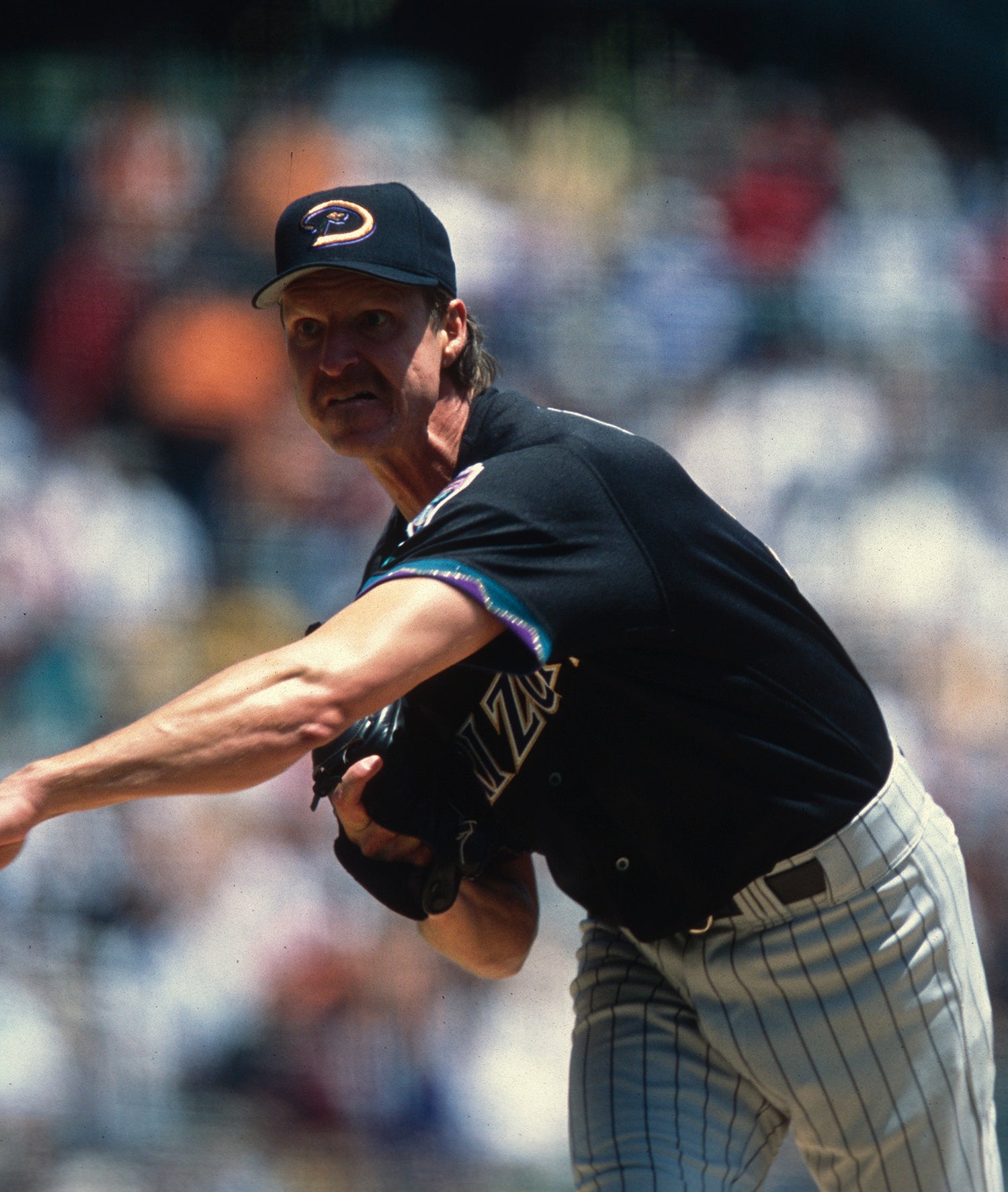
With Dennis Martínez and Randy Johnson posting zeroes through four innings, Lofton broke the scoreless tie in the fifth with an RBI single that scored Álvaro Espinoza. Then in the top of the eighth with the score still 1-0, Tony Peña led off with a double and Lofton reached first base on a bunt single. Lofton then stole second base – his fifth steal of the series.
With Omar Vizquel at the plate, Mariners catcher Dan Wilson was charged with a passed ball that scored Rubén Amaro – who was pinch-running for Peña – from third. But Lofton wasn’t satisfied with advancing just one base and steamed around third as Wilson retrieved the ball near the Indians dugout.
Wilson paused – seemingly not believing his eyes – then threw to Johnson, who was covering the plate. Lofton’s hook slide beat the tag, giving Cleveland a 3-0 lead that became a 4-0 win that propelled the Indians to the World Series.
“I saw that (Wilson) was (slow) when he went after the ball, so I decided to go for it,” Lofton told the Staten Island Advance.
His teammates mobbed Lofton when he jubilantly bounced into the dugout.
“That play probably was the biggest of the game,” Hargrove told reporters after the game. “I was like everybody else, I didn’t know he was coming until I saw him slide across home plate.”
Lofton ended the series batting .458 (11-for-24) with four walks, three RBI and two triples. He totaled six steals, six runs and three walks in the World Series against the Braves, but Cleveland fell to Atlanta in six games.
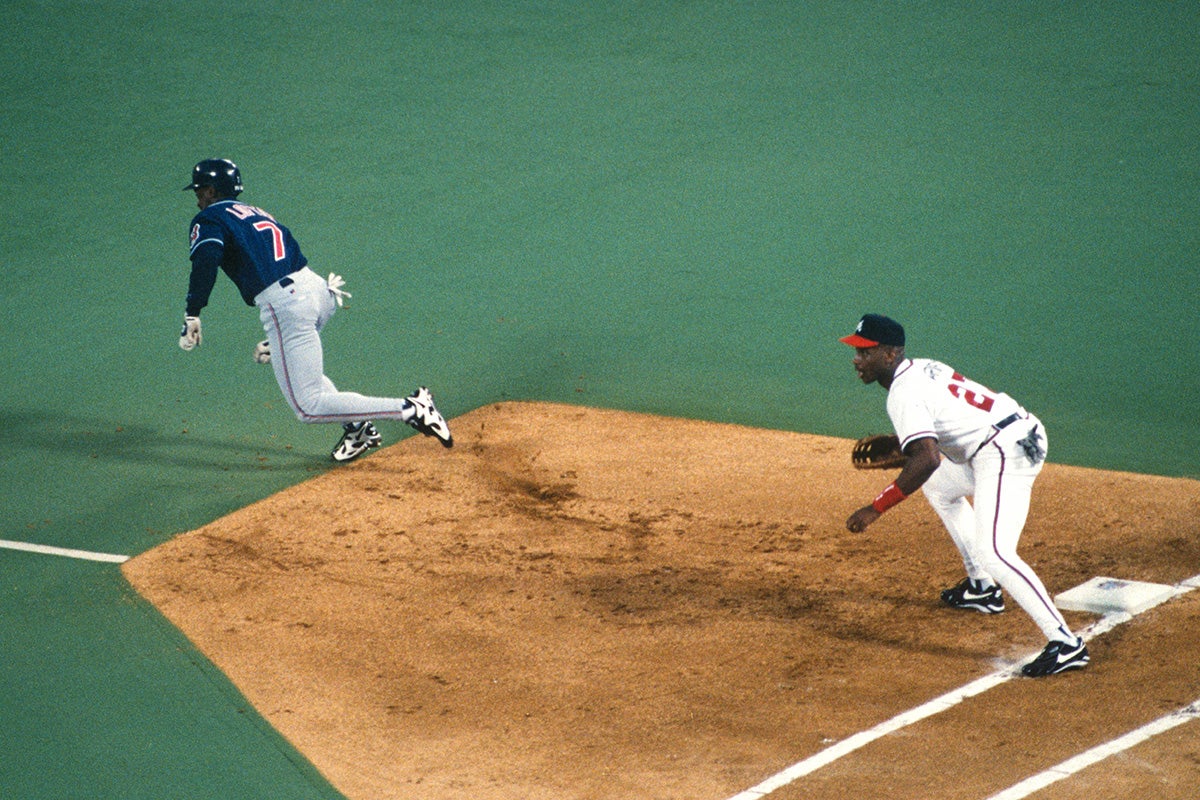
Lofton and the Indians were viewed as favorites to repeat as AL champions in 1996, and Cleveland’s powerful offense scored 952 runs en route to 99 wins that season. Lofton set what would become career-bests in steals (75, a Cleveland single-season record), runs scored (132), hits (210), doubles (35) and total bases (295).
But in the ALDS vs. Baltimore, Lofton went 3-for-18 (.167) as Cleveland fell in four games. After the season, Belle left the Indians for the White Sox via free agency, breaking up Cleveland’s nucleus.
Four months later, Cleveland general manager John Hart shocked the baseball world when he traded Lofton and pitcher Alan Embree to the Braves for Marquis Grissom and David Justice.
“It’s a painful trade for all of us in the organization,” John Hart told Thomson News Service. “But based on the fact that Kenny is a free agent after the 1997 season, we had to make this trade. We felt we were not going to be able to sign Kenny, because he made it very clear he wanted to exercise his right and go out on the market.
“We went through that with Albert Belle last year. We were not prepared to go through that again.”
Lofton left Cleveland as the franchise’s leading base stealer with 325 career thefts. He also departed with unrivaled respect from his teammates.
“I thought Kenny was one of the greatest players in baseball,” catcher Sandy Alomar Jr. told Thomson News Service. “This happened out of nowhere.”
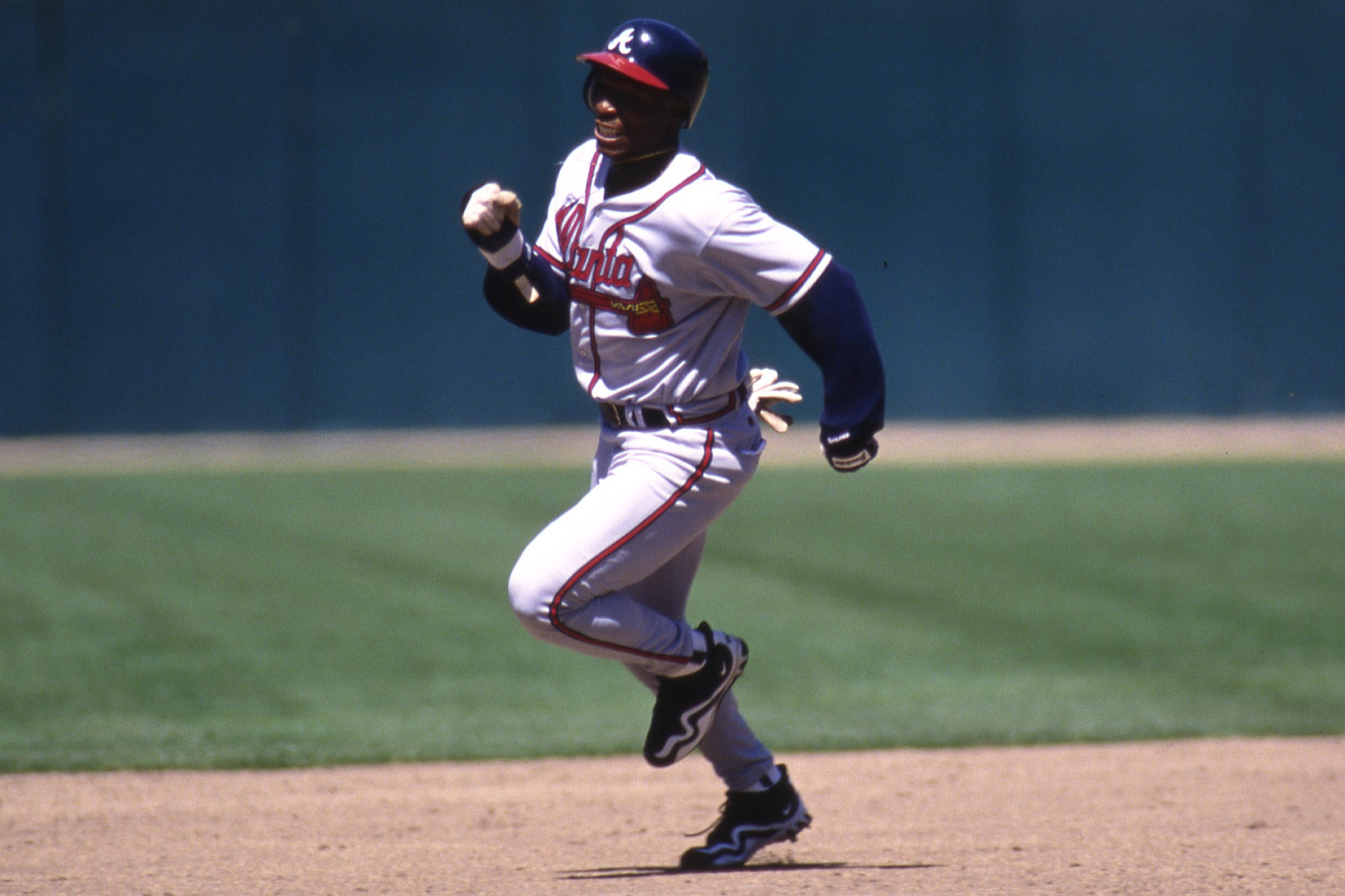
Lofton continued his stellar play with the Braves but also missed 35 of 36 games from mid-June through the end of July with a groin injury. But he was hitting .350 as late as Sept. 4 before finishing at .333 with 90 runs scored and 27 steals in 122 games.
Atlanta won 101 games and swept Houston in the NLDS. The Braves entered the NLCS vs. the Marlins as favorites but fell in six games as Lofton hit just .185.
As predicted, Lofton tested free agency. What was not expected, however, came when he signed with the Indians on Dec. 8, agreeing to a three-year deal worth $24 million with a club option for 2001. That same day, Cleveland traded Grissom – who had helped the team win the American League pennant – to the Brewers.
“I was like a ghost for a year but now I’m back,” Lofton told the Associated Press. “I’m glad to be back where I belong. Everyone knows I belong here. Hopefully, I’ll be here for the rest of my career.”
For the next four seasons, Lofton helped power an offense that averaged better than 926 runs per season. The Indians scored 1,009 runs alone in 1999, becoming just the sixth AL team to reach the 1,000 mark and the first team in any league to hit the milestone since 1950.
Cleveland made the playoffs in three of those four seasons but lost twice in the ALDS and once in the ALCS.
In 1998, Lofton hit .282 with 101 runs scored, 12 homers, 64 RBI and 54 steals. Cleveland beat Boston in the ALDS as Lofton hit .375 with five runs scored, two homers and four RBI. Then in the ALCS vs. the favored Yankees, Cleveland took a 2-games-to-1 lead as Lofton contributed a key two-run single in the 12th inning of Game 2 to help the Indians win 4-1.
But New York won the final three games of the series as Lofton hit .185.
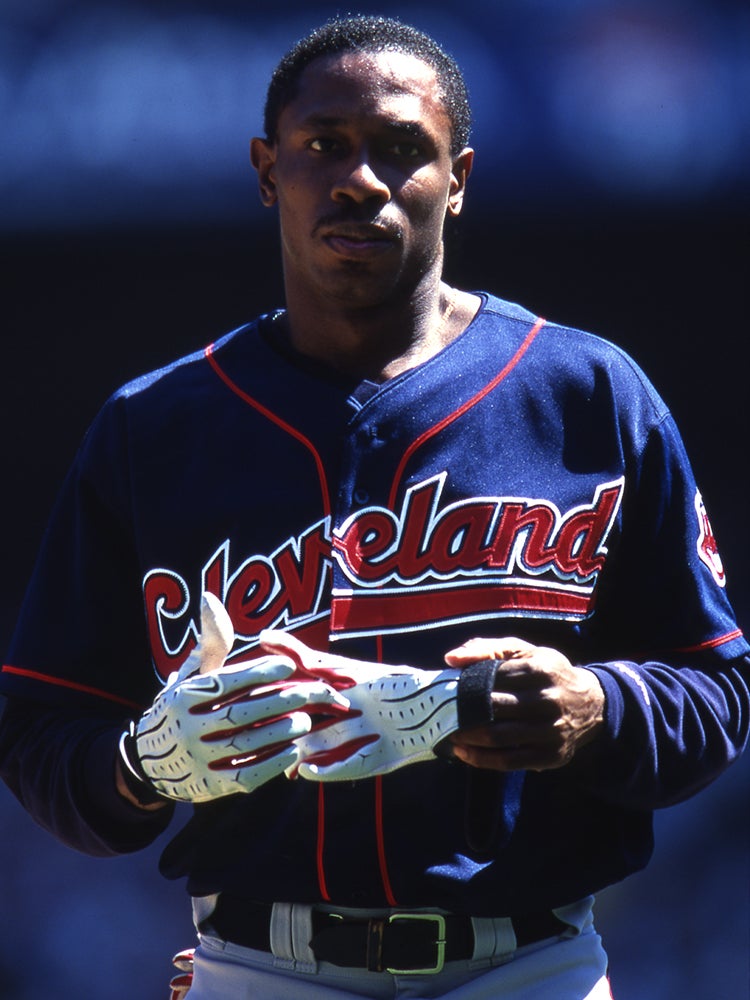
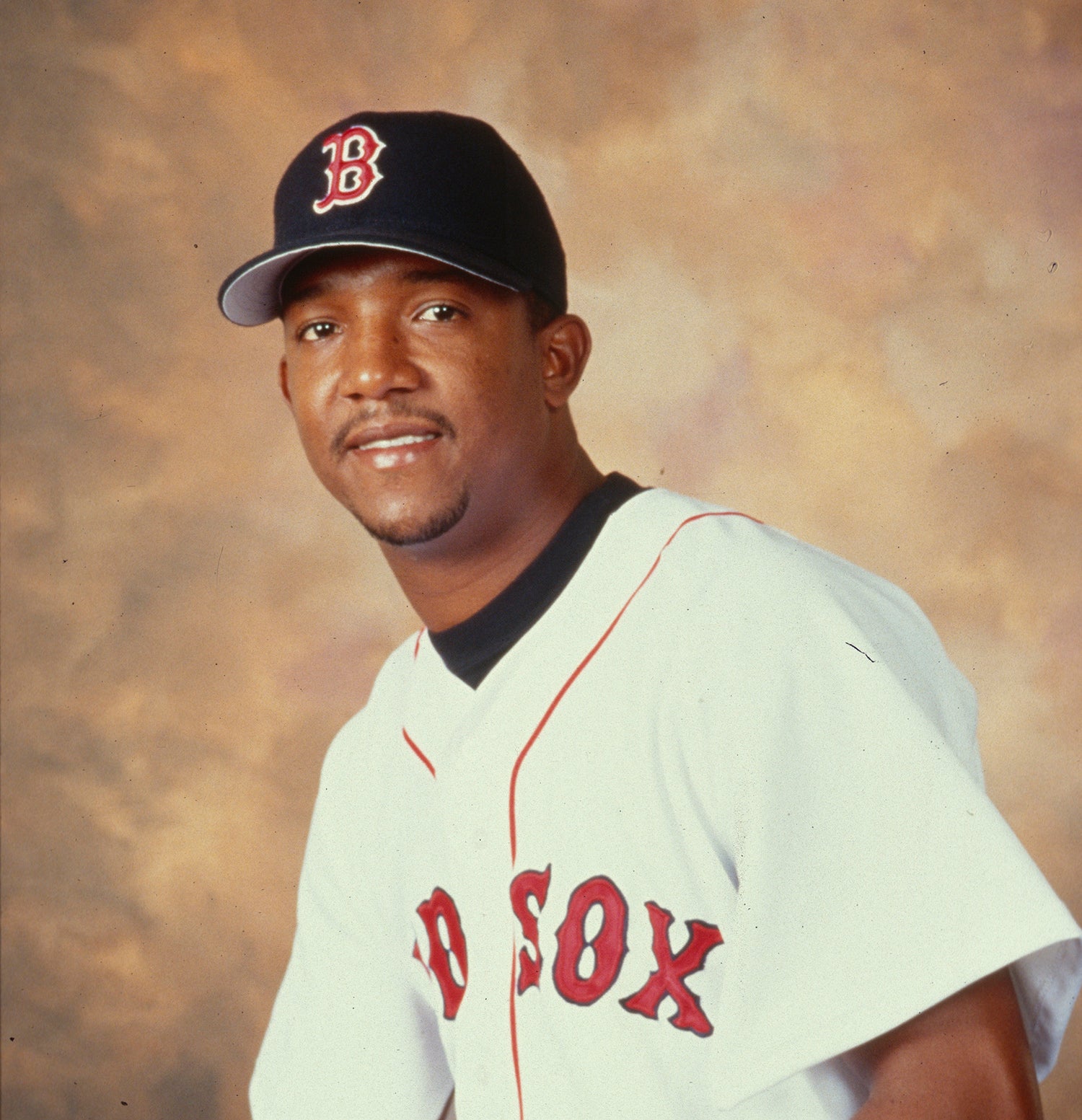
In 1999, Cleveland’s lineup featured four hitters with at least 100 RBI and five with at least 100 runs scored. Lofton was limited to 120 games because of hamstring issues but still hit .301 with 28 doubles, 79 walks (good for a .405 on-base percentage, the fourth time in his eight full seasons reaching the .400 mark), 25 steals and 110 runs scored. Cleveland took a 2-games-to-none lead in the ALDS vs. Boston but dropped the final three games, with Pedro Martínez coming out of the bullpen in Game 5 (he strained a back muscle in Game 1) to toss six hitless innings against the best lineup in baseball.
Lofton, meanwhile, exited Game 5 in the fourth inning when he slid head-first into first base while trying to beat out an infield hit. He tore his left rotator cuff on the play, and surgery was expected to sideline him for at least half of the 2000 season. But remarkably, Lofton was in the Cleveland lineup on Opening Day in center field.
“I can’t say that I’m surprised that I came back this quickly because I’ve never had any kind of surgery like this before,” Lofton told the AP during Spring Training.
Lofton hit .278 in 137 games in 2000, scoring 107 runs, drawing 79 walks and stealing 30 bases while setting career-highs in home runs (15) and RBI (73). But for the first time since 1993, the Indians failed to make the playoffs in a full-season campaign.
The Indians picked up Lofton’s $8 million option for 2001, and Lofton hit .261 (a career low to that point) with 14 homers and 66 RBI in 133 games. But he stole just 16 bases and saw his OBP drop to .322.
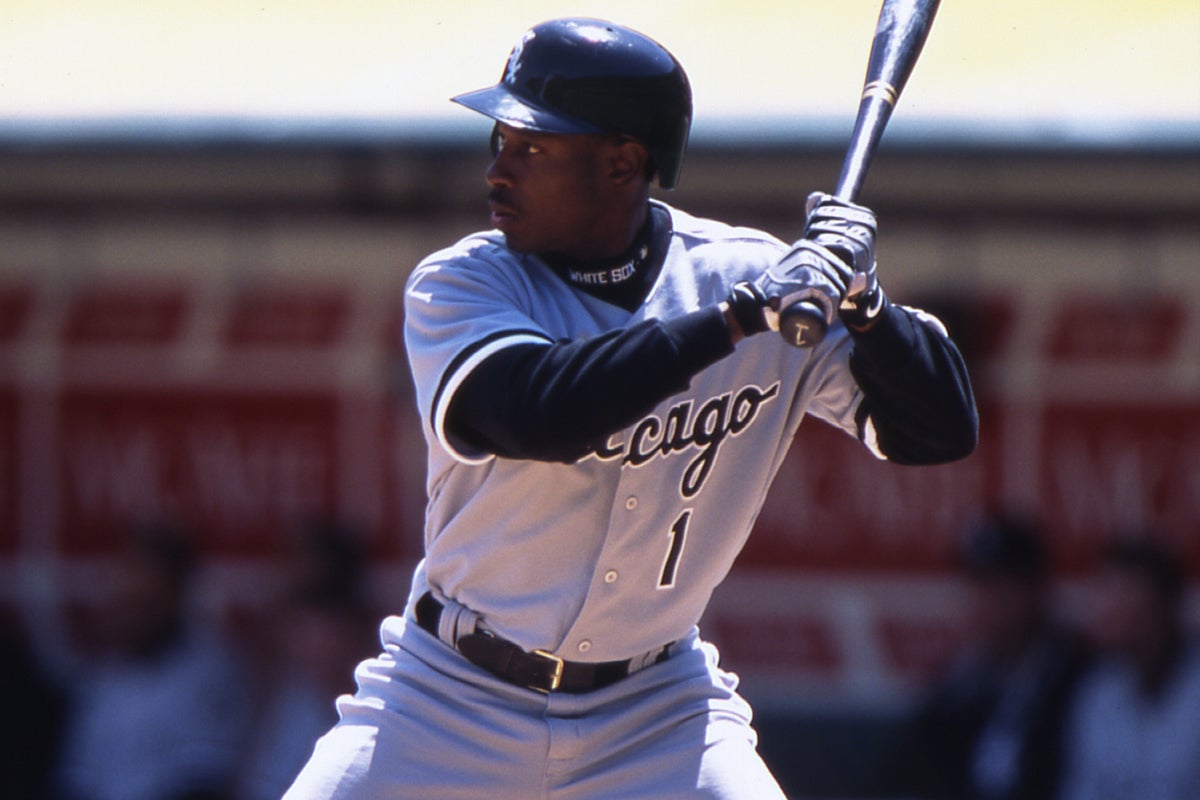
On Feb. 1, 2002, Lofton signed a one-year deal with the White Sox worth $1.025 million. Thus began a six-year stretch where Lofton played for nine teams, including a third stint with Cleveland.
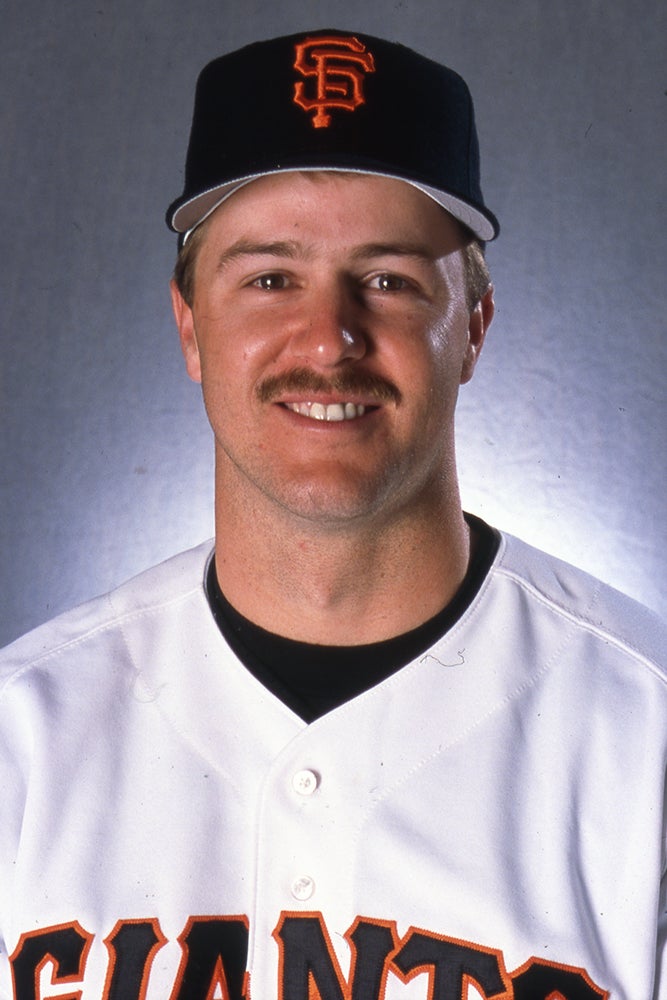
Lofton batted .259 in 93 games with the White Sox before being dealt to the Giants, where he helped San Francisco clinch a postseason berth. In the NLDS, NLCS and World Series, Lofton batted a combined .292 with 16 runs scored, six walks and five steals in 17 games. He appeared to be on the verge of winning his elusive World Series ring when he singled and scored on a Jeff Kent RBI base hit in the top of the seventh of Game 6, putting the Giants up 5-0 over the Angels. San Francisco needed just nine outs to clinch the title, but the Angels rallied to win 6-5. Anaheim then won Game 7 to claim the championship.
Despite his slow-aging tools, Lofton didn’t find a suitable offer until March 14, 2003, when he signed a one-year deal with Pittsburgh worth $1.025 million. Once again, he was traded midseason to a contender – this time to the Cubs, where he hit .327 in 56 games to help Chicago win the NL Central under new manager Dusty Baker, who had moved on from the Giants after the 2002 season.
Lofton finished the year batting a combined .296 with 97 runs scored, 12 homers and 46 RBI. He batted .286 in the Cubs’ five-game win over Atlanta in the NLDS and then hit .323 with eight runs scored in the NLCS vs. Florida. But once again, Lofton’s team suffered heartbreak. Lofton scored the game’s first run in Game 6 and the Cubs led 3-0 heading to the top of the eighth – just six outs away from the World Series. But Florida scored eight runs in the eighth in a rally that will forever be remembered for Steve Bartman’s controversial fan interference. Florida then won Game 7 to advance to the World Series.
For Lofton, more postseason pain was on the horizon. He signed a two-year deal worth $6.2 million with the Yankees for the 2004 season, slotting in as a reserve outfielder.
“I came to Spring Training expecting to play center field or DH or whatever’s necessary,” Lofton told the Star-Ledger of Newark, N.J. “My preparation is going to be the same no matter what."
Lofton missed time with hamstring issues but still hit .275 with 51 runs scored in 83 games. He recorded his 2,000th career hit on Aug. 25 against the Indians in Cleveland, receiving a standing ovation from the 30,605 fans at Jacobs Field.
The Yankees defeated the Twins in the ALDS then took a 3-games-to-none lead in the ALCS vs. Boston, only to become the first team with such a lead to fail to win that series.
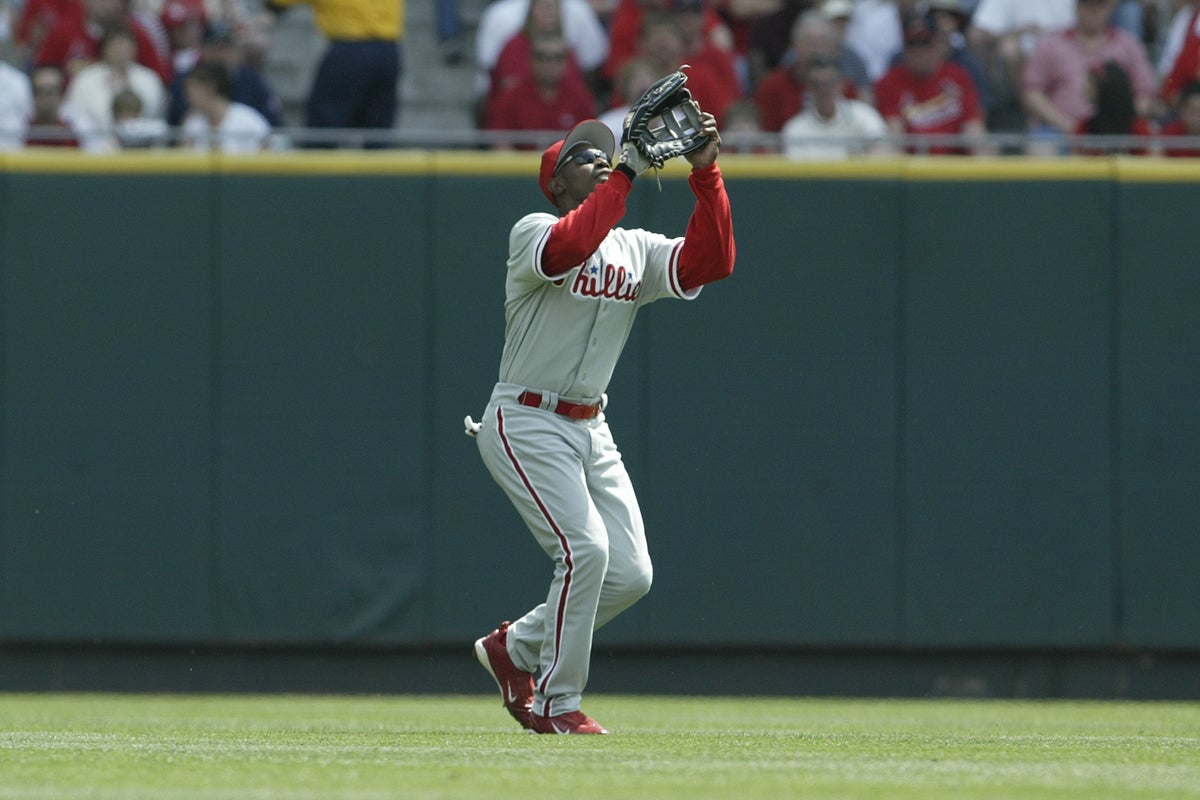
On Dec. 3, 2004, the Yankees sent Lofton to the Phillies in exchange for reliver Félix Rodríguez. Lofton was the Phillies’ everyday center fielder in 2005, batting .335 with 67 runs scored and 22 steals in 110 games. With his contract expiring once again, Lofton signed a one-year deal with the Dodgers.
In 129 games in 2006, Lofton hit .301 with 79 runs scored and 32 steals. He started each of the Dodgers’ three games in the NLDS vs. the Mets, batting .077 (1-for-13) as New York swept the series.
Lofton agreed to a one-year, $6 million deal with the Rangers on Dec. 12, 2006 – and made the Opening Day start in center field for his seventh different team. But after hitting .303 in 84 games he was on the move again, this time back to Cleveland in a deal for catcher Max Ramírez.
“I missed being in Cleveland,” Lofton told reporters after the trade. “It’s the city that got me going.”
Lofton hit .283 in 52 games for Cleveland, qualifying for his 11th postseason appearance in 17 seasons. He hit .375 with four RBI as the Indians defeated the Yankees in four games in the ALDS. He then tallied six more hits in the ALCS vs. Boston as Cleveland took a 3-games-to-1 lead before falling in seven contests.
But despite hitting a combined .296 with 25 doubles and 86 runs scored, Lofton did not find a contract offer for 2008. Following Game 7 of the 2007 ALCS, Lofton never played again in the big leagues.
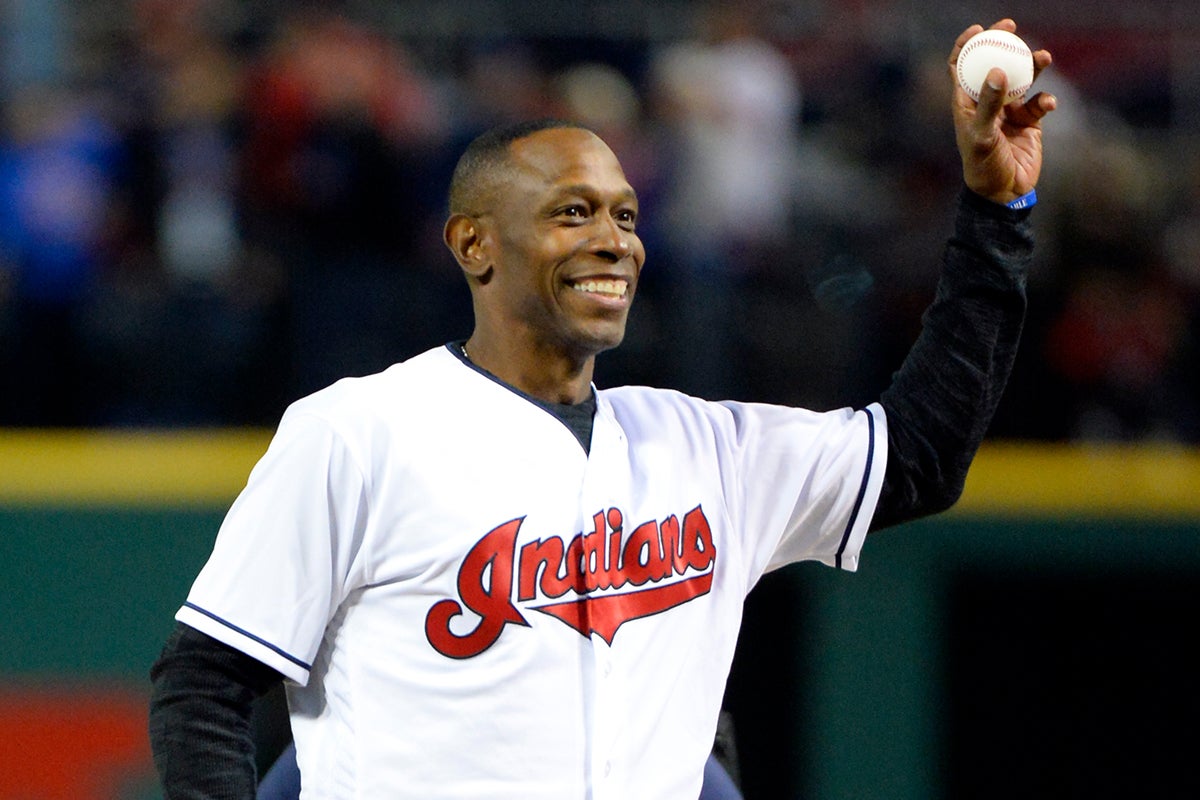
Lofton retired with a .299 batting average, 2,428 hits, 1,528 runs scored, 383 doubles, 116 triples, 130 home runs, 781 RBI, 945 walks and 622 steals (15th all time). A six-time All-Star and four-time Gold Glove Award winner, Lofton played in 95 postseason games, totaling 97 hits, 65 runs scored and 34 steals – which rank first on the all-time list, one better than Rickey Henderson’s 33 stolen bases.
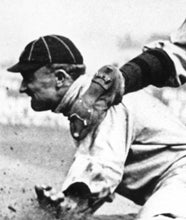
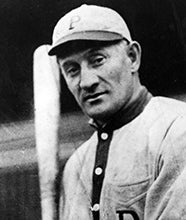
He is one of five players in history with at least 300 doubles, 100 triples, 100 home runs and 600 steals. The other four – Lou Brock, Ty Cobb, Tim Raines and Honus Wagner – have all been elected to the Hall of Fame.
And though he never posted the 100-steal season seemingly prophesied by the Cleveland Stadium scoreboard in 1992, Lofton left his mark – especially along the shores of Lake Erie.
“Kenny’s talent speaks for itself,” Indians pitcher Charles Nagy told Thomson News Service when Lofton was traded to the Braves in 1997. “He’s like a human highlight film.
“If it was a perfect world, we would be together for our entire careers.”
Craig Muder is the director of communications for the National Baseball Hall of Fame and Museum