#Shortstops: A Shining Keepsake
On July 13, 1976, baseball arrived in Philadelphia for an All-Star Game that doubled as a national birthday party. Nine days earlier, the country had marked its 200th birthday, and the City of Brotherly Love, where the Declaration of Independence had been signed two centuries before, was the natural host for both the Bicentennial summer and the Midsummer Classic.
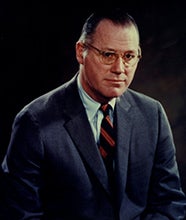
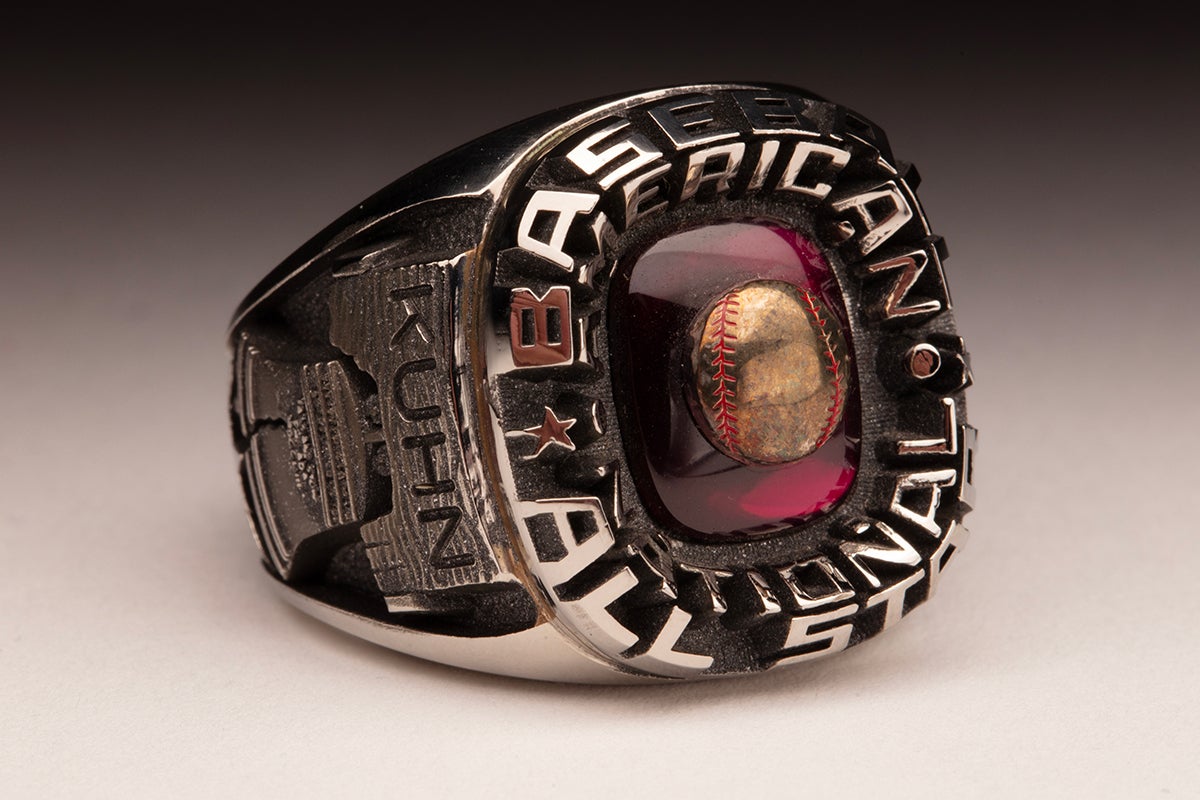
Looking on from the stands was the man whose office helped stage the celebration: Commissioner Bowie Kuhn. The ring presented to Kuhn for the occasion is made of Celestrium, a silver-like alloy resistant to tarnish, and set with a simulated garnet. The engraving reads “Kuhn / 1976.”
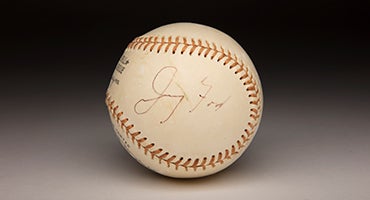
Veterans Stadium hosted 63,974 fans that Tuesday night, the third-largest crowd in All-Star Game history to that point. President Gerald Ford threw out the first ball, and for the first time both “O Canada” and “The Star-Spangled Banner” were performed in pregame ceremonies. The night also marked the 100th anniversary of the National League, and the Senior Circuit responded in kind. The NL won 7-1, with Cincinnati’s George Foster homering, driving in three runs and taking home Most Valuable Player honors. Detroit’s 21-year-old rookie Mark Fidrych, nicknamed “The Bird” for the on-mound antics that included talking to the baseball, drew the AL starting assignment and took the loss.
For Kuhn, the night was a celebration in a 15-year tenure marked by both growth and turmoil. A lawyer by training, he had started his baseball life working the scoreboard at Washington’s Griffith Stadium for a dollar a day. After serving as a league lawyer, he took office in 1969 and oversaw the introduction of divisional play, the first League Championship Series, the debut of night games in the World Series and the expansion of the major leagues into Montreal, Seattle, San Diego and Kansas City.
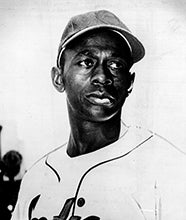
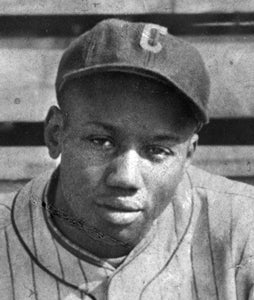
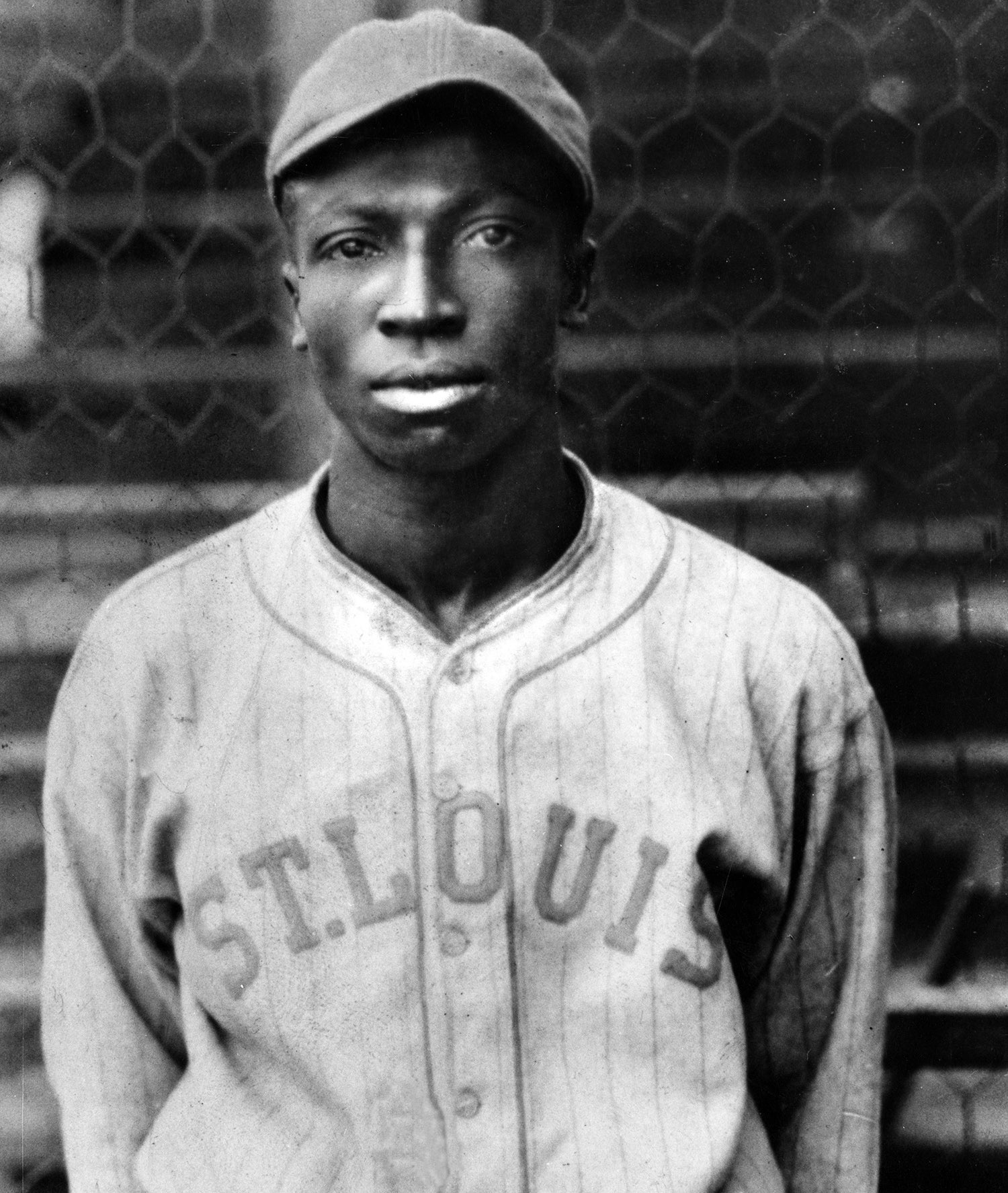
He stood firm through the player strikes of 1972 and 1981 and ensured the World Series was played each year. Beginning in 1971, he also pushed for the inclusion of Negro League players in the Hall of Fame, helping to create the committee that opened the door for Satchel Paige, Josh Gibson, Cool Papa Bell and many others.
The 1976 ring captures Kuhn at the midpoint of that tenure, and his time as commissioner ended in 1984. In 2008, Kuhn himself was inducted into the Hall of Fame, the fourth commissioner to receive the honor.
His 1976 All-Star Game ring is preserved in the Hall of Fame’s collection.
Sam Oestreicher is a 2026 Public Programming intern in the Frank and Peggy Steele Internship Program for Leadership Development