#CardCorner: 1991 Topps Mike LaValliere
Mike LaValliere came as close to the World Series as a player can when Sid Bream beat his tag at home plate in Game 7 of the 1992 NLCS.
Randy Marsh – who began the game as the first base umpire – called Bream safe in a bang-bang play, one that LaValliere often claimed should have been ruled an out. If Marsh had made a different call, the legacy of LaValliere – and those 1990s Pirates – would have been quite different.
But one moment could never diminish LaValliere’s spot in Pittsburgh baseball history.
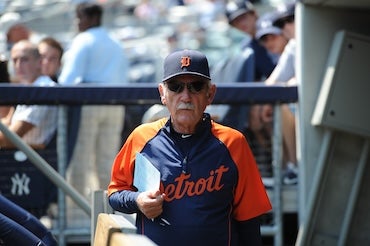
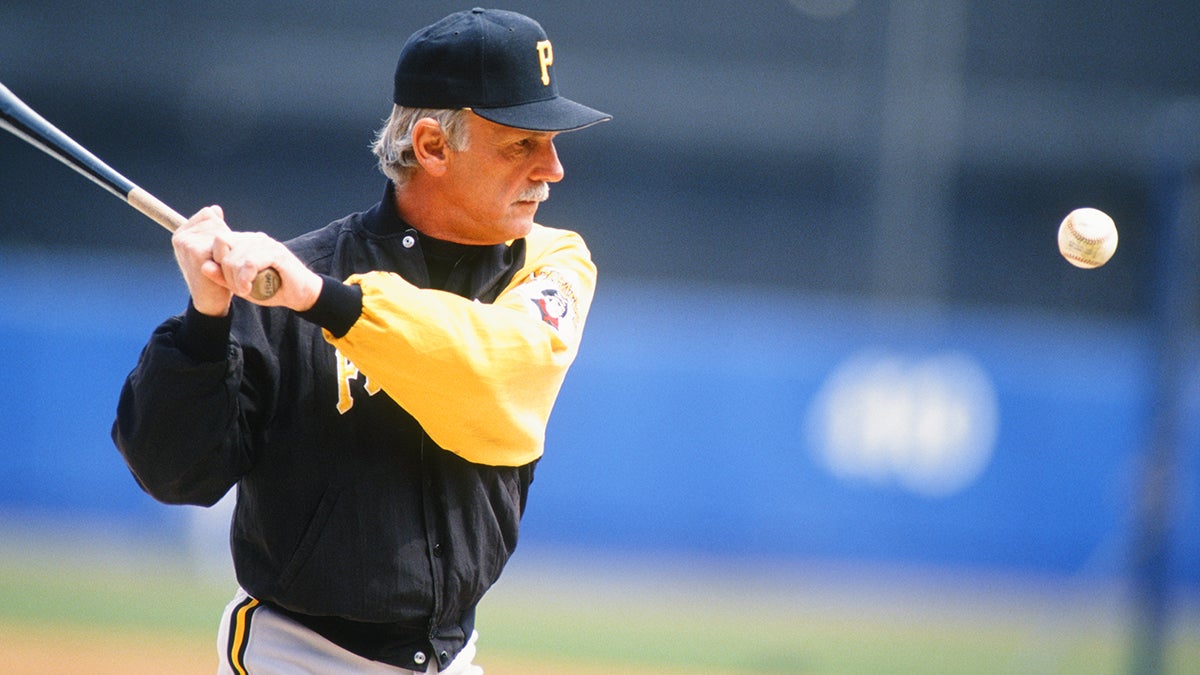
“He’s a dirt farmer,” Pirates manager Jim Leyland said about LaValliere in 1988. “He’s the guy that gets in the dirt back there, rolls in the mud, blocks the ball and throws guys out.”
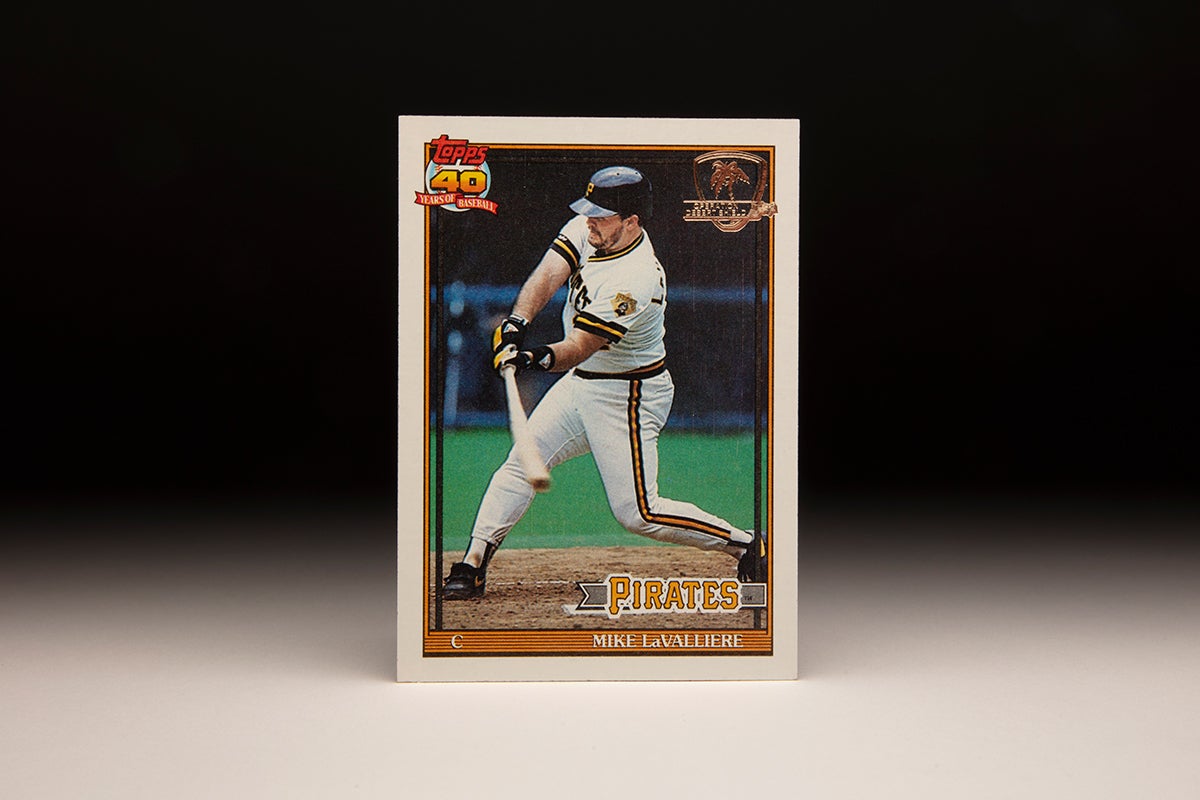
Born Aug. 18. 1960, in Charlotte, N.C., Michael Eugene LaValliere grew up in Manchester, N.H., where he dreamed about becoming the next Carl Yastrzemski. But he was also a gifted hockey player.
“I could, as they say, put the biscuit in the basket,” LaValliere told the Bradenton (Fla.) Herald of his hockey skills.
LaValliere was a local star by the time he got to high school. He tied a record with three wins – all complete games – in the 1976 Babe Ruth World Series, pitching a six-hitter in the championship game win over Honolulu en route to being named the tournament’s outstanding player. His picture from that team graced a National Baseball Hall of Fame and Museum exhibit that honored the winners of annual amateur baseball tournaments.
A four-sport letter winner at Trinity High School (baseball, soccer, football and ice hockey), LaValliere was undrafted out of high school. He had turned down a chance to play junior hockey before his senior year in order to keep playing baseball, and he kept his dream alive by enrolling at the University of Massachusetts-Lowell with the intention of playing baseball and hockey.
But he left the hockey team before the start of what would have been his freshman season.
“I hit .400 in fall ball,” LaValliere told the Bradenton Herald. “I never hit .400 in high school. I thought that was pretty cool.”
A shortstop in high school despite his 5-foot-9 frame that carried about 190 pounds, LaValliere began his collegiate career at third base before moving back to shortstop. It was also at UMass-Lowell where LaValliere acquired the nickname “Weeble.”
“Like the toy,” UMass-Lowell head baseball coach Jim Stone told the Columbia Missourian. “You know, ‘Weebles wobble but they don’t fall down.’
“He’s a natural athlete. He was the best shortstop we had. He always had great hands.”
Eventually, LaValliere would be rechristened “Spanky” in the big leagues – a nickname that stuck with him for the rest of his playing days.
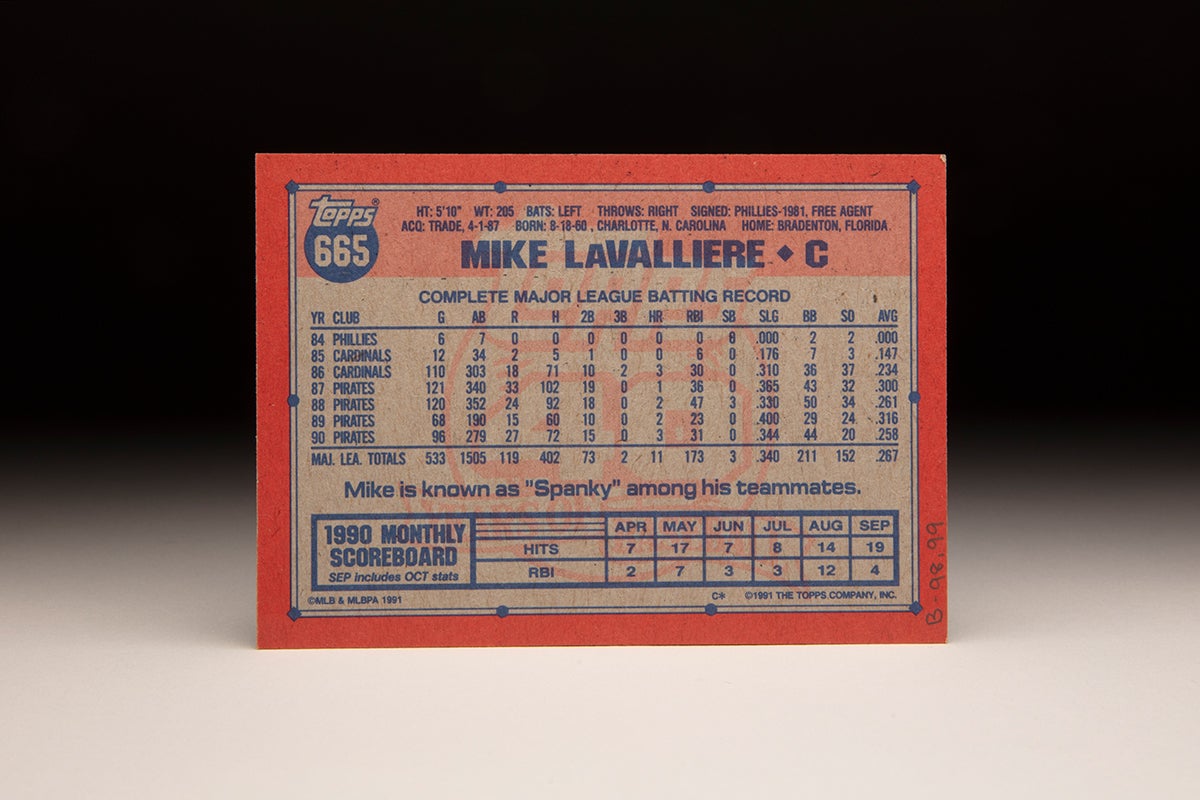
He was named the designated hitter on the 1980 Intercollegiate Baseball Association’s Division II team at UMass-Lowell but again went undrafted following his senior season. But LaValliere played in the Cape Cod League that summer and was spotted by a Phillies scout. LaValliere signed on July 12, 1981, and reported to Spartanburg of the Class A South Atlantic League, where he hit .268 in 39 games at third base and DH.
He was promoted to Peninsula of the Class A Carolina League in 1982, a season when the Phillies moved LaValliere behind the plate – hoping to create that rare commodity: A lefty-hitting big league backstop. He again showed the ability to put the bat on the ball by hitting .275 though his home run (2) and RBI (23) totals were exactly the same from the previous season.
Moving up to Double-A Reading in 1983, LaValliere hit .294 with 16 doubles in 81 games. He returned to Reading in 1984 and was later promoted to Triple-A Portland, demonstrating what would be the most power of his career when he launched 11 home runs and hit a combined .279.
The Phillies took notice and promoted LaValliere to the majors that September, where he went 0-for-7 in six games. Notably, the first two starts of his career came against the Pirates.
On Dec. 3, 1984, the Phillies sent LaValliere to the Cardinals for a player to be named who was reported to be pitcher Jeff Lahti. But just 10 days later, the Cardinals returned LaValliere to Philadelphia after learning that he had had arthroscopic surgery on his right knee in Manchester. The Phillies reportedly did not know about the procedure.
“Mike had the surgery done on his own,” Phillies vice president for public relations Larry Shenk told the Philadelphia Daily News. “The ballclub knew nothing about it.”
But in the interim, the Phillies had filled LaValliere’s spot on their 40-man roster. With no room for LaValliere, the Phillies released him on Dec. 23. A month later, the Cardinals signed LaValliere.
“I got the approval (from the Phillies for the operation),” LaValliere told the Morning News of Wilmington, Del., after signing with the Cardinals. “I can’t blame the Phillies for anything. They have their priorities on who they want to catch and I didn’t have anything to say about it. The Phillies were great to me and I’m not mad at them.”
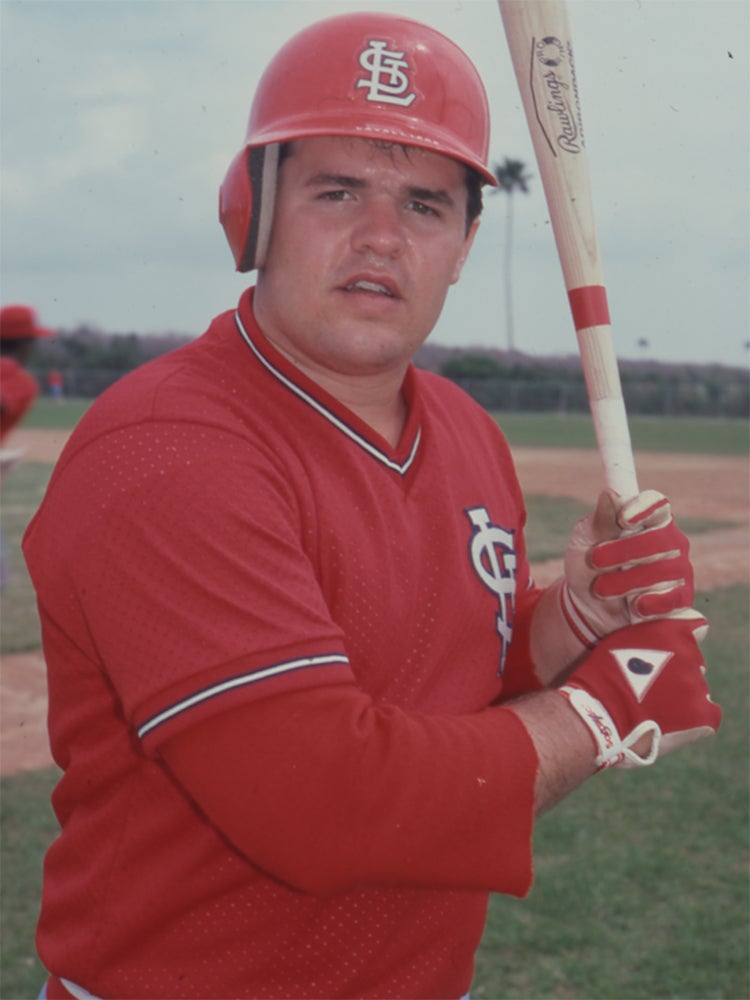
The Cardinals brought LaValliere to their Spring Training camp in 1985 as a non-roster player and assigned him to Triple-A Louisville. But when starter Darrell Porter was sidelined with a broken toe after just two games, the Cardinals recalled LaValliere.
“I’ll do my best to make it a permanent situation rather than a temporary one,” LaValliere told the St. Louis Post-Dispatch. “You never know in baseball. You must always expect the unexpected.”
After playing just six innings in Triple-A to start the season, LaValliere found himself starting against Pittsburgh on April 13. He played regularly over the next two weeks but was hitting just .147 in 12 games when the Cardinals sent him back to Louisville. But LaValliere did have seven walks and six RBI in those 12 games, showing that he could handle MLB pitching.
He hit .203 in 83 games in Triple-A that year (but with a .336 on-base percentage) and was not expected to make the Opening Day roster for the Cardinals in 1986. But after losing 25 pounds while playing winter ball in Venezuela, he impressed manager Jim Fregosi, who also managed LaValliere at Louisville.
“I went from prospect to no-prospect to liability,” LaValliere told the Post-Dispatch of his 1985 season. “I really wanted to go down to winter ball and get rid of the bad season I had. I wanted to come to camp and start new.”
Then in Spring Training, LaValliere’s fundamentals once again made an impression on Cardinals skipper Whitey Herzog. St. Louis traded backup catcher Tom Nieto to the Expos on March 31 and waived Brian Harper the next day, leaving LaValliere and Mike Heath as the only two catchers in camp.
Heath started on Opening Day but was hitting .073 through May 3. From that point, LaValliere’s playing time increased significantly and he finished the season as the Cardinals’ regular catcher – hitting .234 with three homers and 30 RBI in 110 games. He was named to Baseball America’s Rookie All-Star Team.
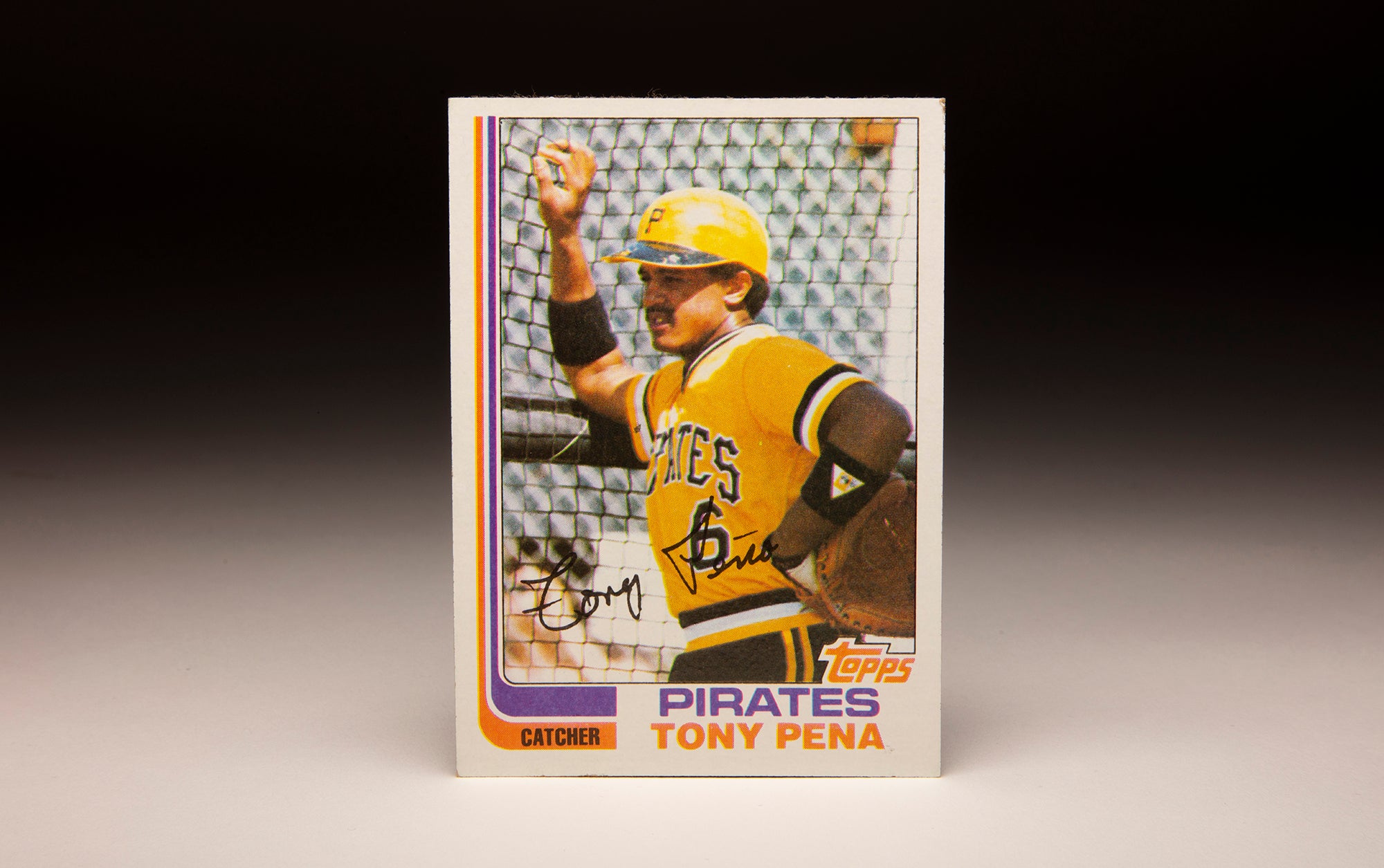
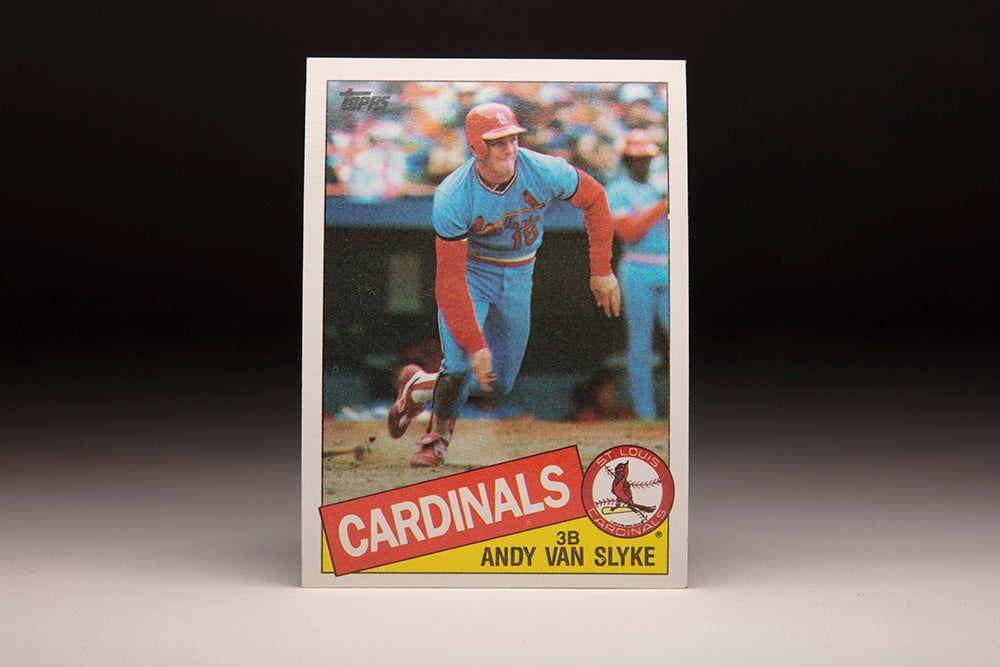
The Cardinals, however, went from National League champions in 1985 to 79-82 in 1986. Seeking to make a move to shake up the lineup, general manager Dal Maxvill pulled off a blockbuster trade when he acquired All-Star catcher Tony Peña from the Pirates on April 1, 1987, in exchange for Mike Dunne, Andy Van Slyke and LaValliere.
It was a trade that shocked Pittsburgh – because Peña was a fan-favorite. But the deal put the foundation in place for the Pirates’ three straight National League East champions of the 1990s.
“We always had high regard for LaValliere,” Pirates general manager Syd Thrift told the Associated Press. “He has a good swing and we’re trying to get him to use the entire field.”
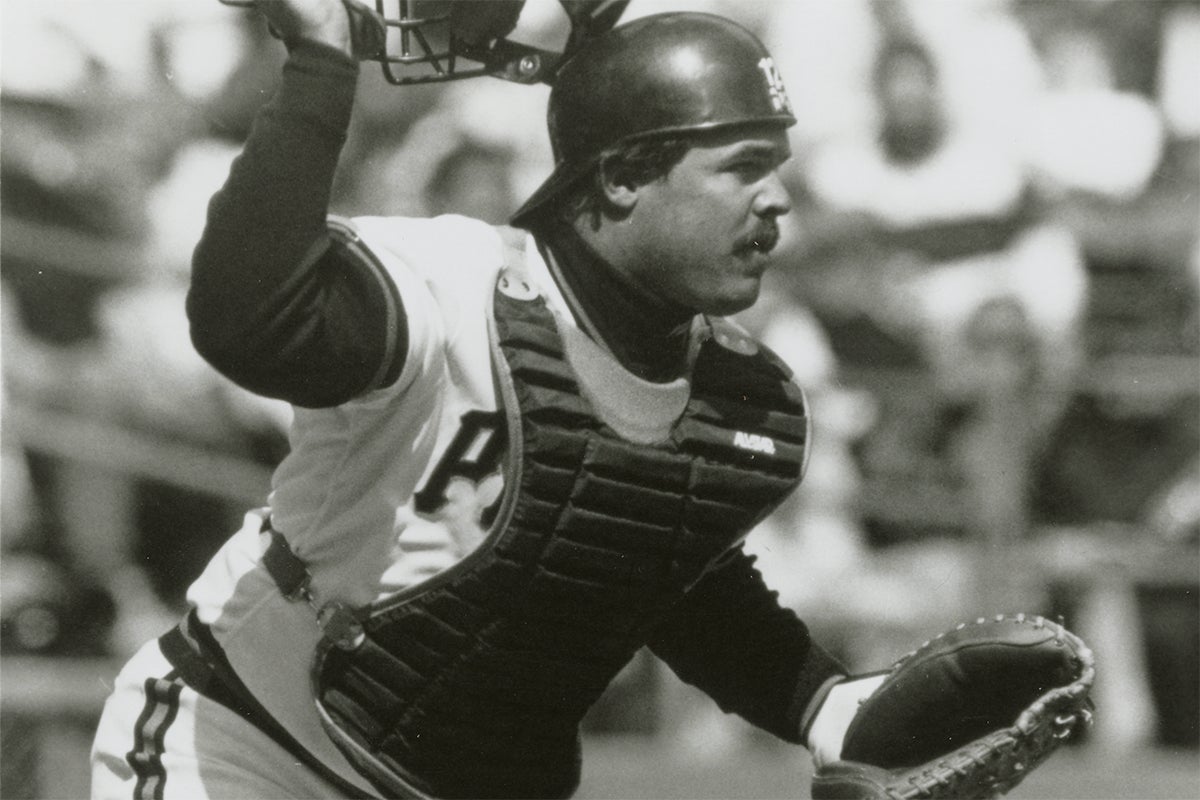
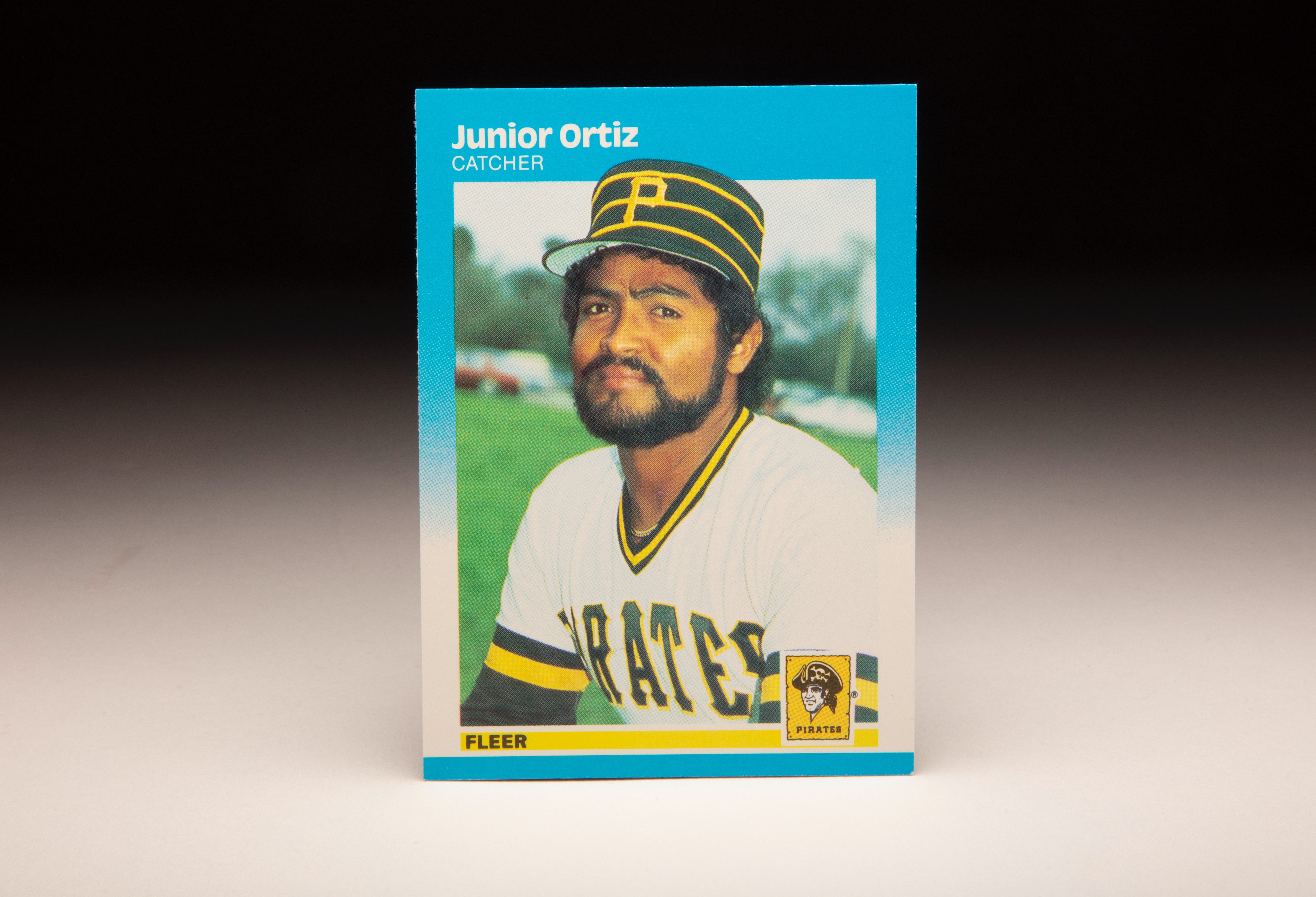
LaValliere quickly became a favorite of manager Jim Leyland in Pittsburgh, batting .300 with 19 doubles, a home run and 36 RBI in 121 games in a platoon with right-handed hitting Junior Ortiz. LaValliere also drew 43 walks (good for a .377 OBP) and was named the National League’s Gold Glove Award winner at catcher after throwing out an NL-best 45.2 percent of runners who tried to steal.
“I was pretty upset about leaving St. Louis,” LaValliere told the Columbia Missourian. “I wish I would have known then that things were going to work out so well – it would have eased a few sleepless nights.”
In 1988, LaValliere experienced some regression at the plate – a result of his BABIP (Batting Average on Balls In Play) going from .326 in 1987 to .281. But he still hit .261 with 18 doubles, two homers, 47 RBI and 50 walks in 120 games. Once again platooning with Ortiz, LaValliere helped the Pirates finish second in the NL East.
“With Mike behind the plate, you know you can throw a nasty slider even if a guy is on third,” reliever Jim Gott, who had 34 saves for the Pirates in 1988, told the Columbia Missourian. “He’s the best.”
LaValliere was also adept at keeping his teammates loose – even as the target of their good-natured ribbing.
“He’s a real treat for pitchers to throw at,” Van Slyke told the Missourian. “When he squats down, all they see is two circles – him and the glove. So they just throw to the little circle. It’s like a target.”
But the Pirates found out just how valuable LaValliere was in 1989 when he missed two-and-a-half months following left knee surgery. Ortiz was not effective in full-time duty, and by the time LaValliere returned to action in July the Pirates were out of contention. LaValliere hit .316 over 68 games but the Pirates finished 74-88 and in fifth place in the NL East.
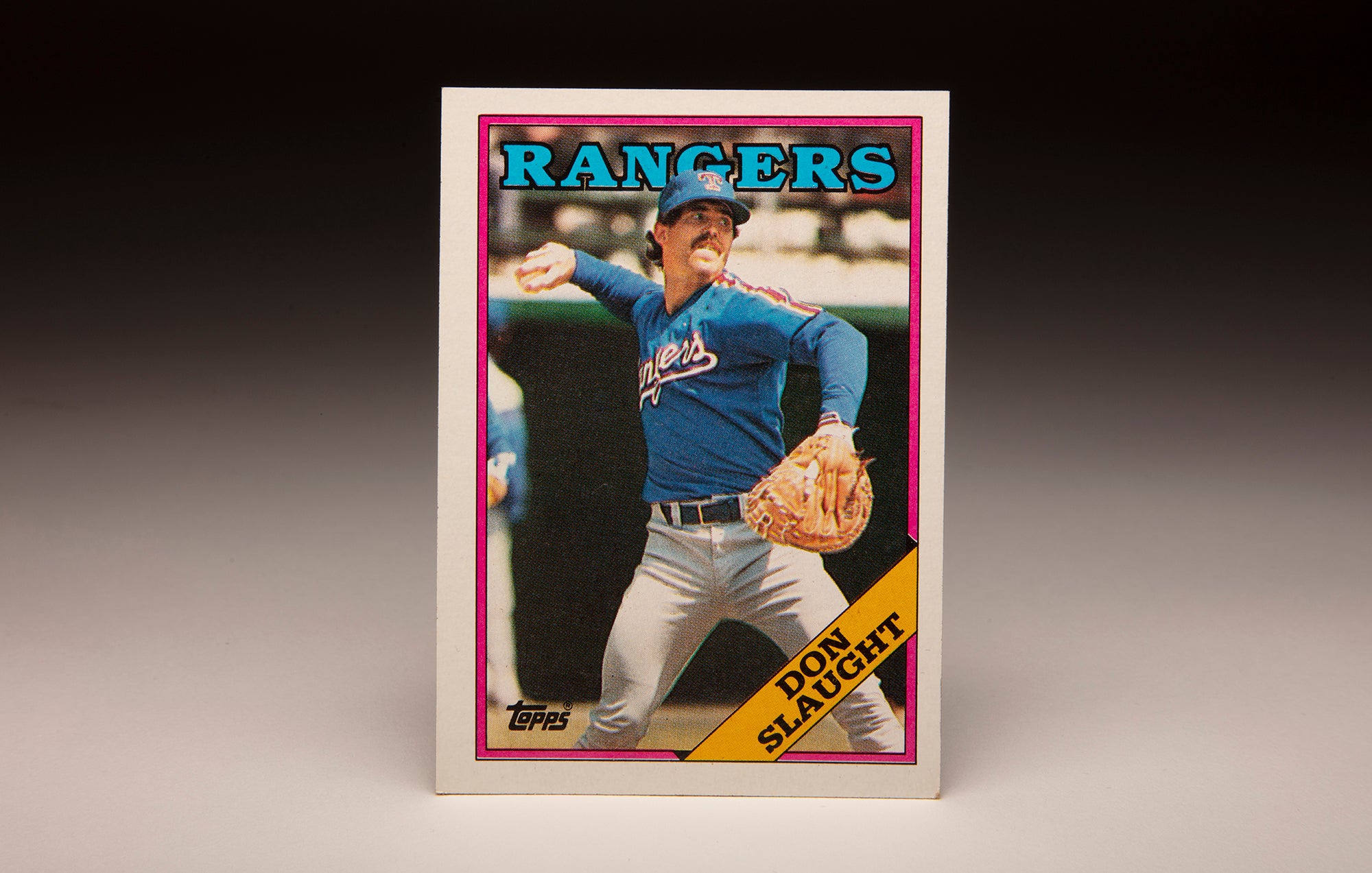
In the offseason, Pittsburgh traded for right-handed hitting catcher Don Slaught to platoon with LaValliere. It would be a pairing that would result in three straight division titles for the Pirates.
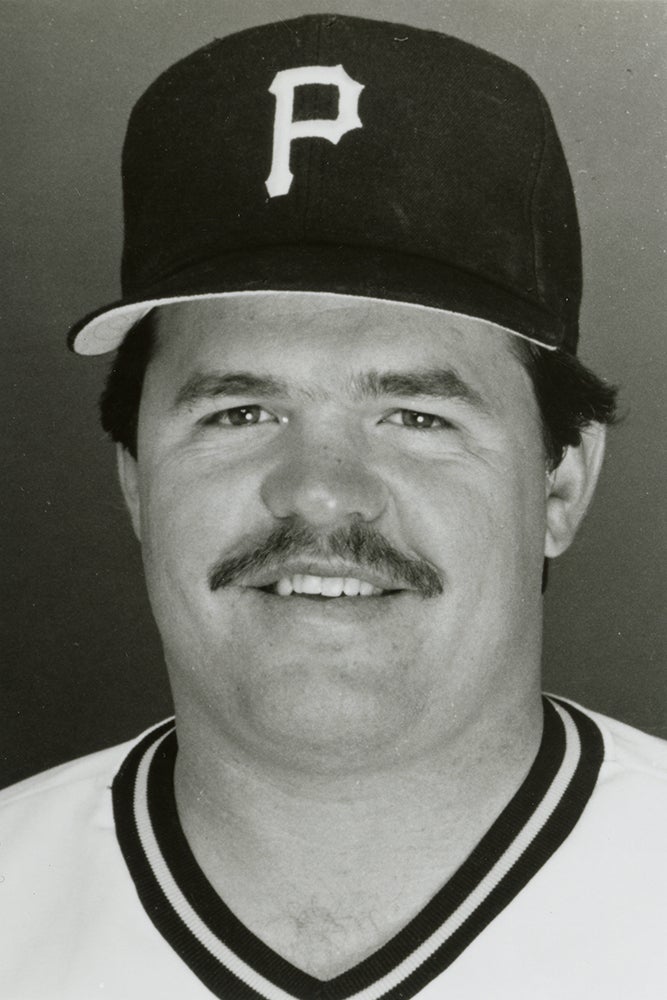
In 1990, the Pirates and LaValliere settled on a $575,000 salary before the case went to arbitration. LaValliere proceeded to hit .258 (Slaught hit .300) with three homers, 31 RBI and 44 walks in 96 games as the Pirates outlasted the Mets to win the NL East.
But in the NLCS vs. the Reds, LaValliere went 0-for-6 (drawing three walks) in three games as Cincinnati defeated Pittsburgh 4-games-to-2.
LaValliere’s salary was nearly doubled to just over $1 million in 1991, and once again he delivered his steady play: He led all big league catchers with a .998 fielding percentage (while being charged with just one error all year) and batted .289 with three homers, 41 RBI and 33 walks in 108 games. It marked the fifth straight season LaValliere had walked more than he struck out.
But every now and then, LaValliere’s contact-first approach at the plate would result in a little power – like on April 20, 1991, when his first career grand slam home run powered Pittsburgh to a 9-3 win over the Cubs.
It was LaValliere’s 12th big league homer in 1,535 at-bats.
“I don’t hit many of them, so I knew that one was out right away,” LaValliere told the Associated Press. “Now, I’ve got to forget about that and go back to hitting line drives, singles and doubles, and get back in the groove.”
Pittsburgh’s second straight NL East crown resulted in an NLCS matchup vs. the Braves. LaValliere appeared in only three games due to Atlanta’s left-handed starting duo of Tom Glavine and Steve Avery but hit .333 with two walks. In Game 4, he singled off Mark Wohlers in the top of the 10th (while pinch-hitting for Slaught) to score Andy Van Slyke and give Pittsburgh a 3-2 win.
It was a matchup of two New England athletes, as Wohlers was from Holyoke, Mass.
“It was kinda neat,” LaValliere told the Boston Globe about the showdown. “(Wohlers) throws hard and I just wanted to get my bat on the ball. The pitch was down and in, basically the same pitch I’d taken for a strike.”
The series went to Game 7, where John Smoltz shut out the Pirates to send Atlanta to the World Series.
A free agent following the season, LaValliere and the Pirates quickly agreed to a three-year deal worth a reported $6.3 million.
“I really love (Pittsburgh),” LaValliere told the Pittsburgh Post-Gazette. “I have a place there – the Clark Bar and Grill. We have a place up in (suburban) Wexford. And I like playing for Jimmy (Leyland).
“I want a (World Series) ring, and I think this organization has come an awful long way.”
In 1992, LaValliere and the Pirates would come achingly close to his goal.
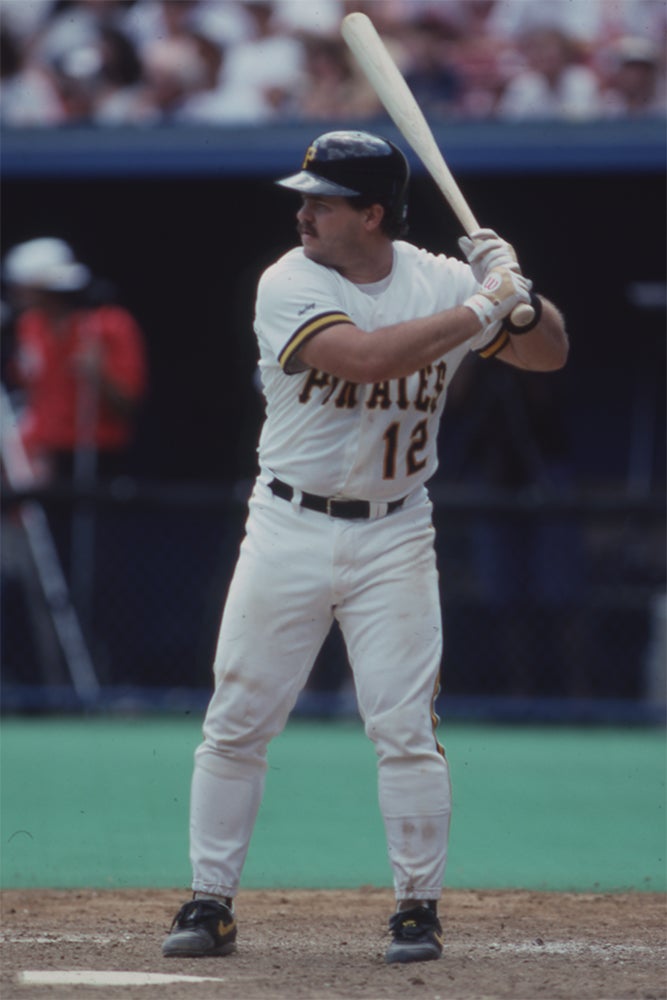
LaValliere hit .256 with two homers, 29 RBI and 44 walks in 1992 while Slaught hit .345. Pittsburgh and Atlanta repeated as division champions, and once again LaValliere was limited to three games in the NLCS as Atlanta’s lefties resulted in Slaught starting four games.
But in Game 7, Pirates ace Doug Drabek faced Smoltz, and Pittsburgh scored one in the first and another in the sixth to take a 2-0 lead. In the seventh, LaValliere led off with a single off lefty reliever Mike Stanton but was stranded at third (with the bases loaded) when Van Slyke flew out to deep right-center against Avery to end the inning.
It would prove to be a run the Pirates could have used.
Drabek cruised through the eighth inning but allowed a double to Terry Pendleton to lead off the bottom of the ninth. An error by second baseman José Lind put runners on the corners, and Drabek then walked Bream to load the bases and end his night.
Stan Belinda relieved Drabek and allowed a sacrifice fly by Ron Gant to cut Pittsburgh’s lead to 2-1. Damon Berryhill then walked to reload the bases, but pinch-hitter Brian Hunter was retired on an infield pop-up.
That brought up pinch-hitter Francisco Cabrera, who lined a 2-1 pitch to left field. David Justice, who had reached on Lind’s error, scored easily, and the slow-footed Bream followed him home. LaValliere appeared to be making no play on Barry Bonds’ throw home, which bounced on the grass directly in front of the plate. But with one quick motion, LaValliere thrust his glove to the right to catch the ball, then lunged left to tag Bream.
Bream’s left foot beat LaValliere’s tag, which was applied to the back of Bream’s calf. Marsh responded with an emphatic “safe” call, sending the Braves players into a delirious celebration.
LaValliere got to his feet and walked off the field. He would later claim that Bream’s foot never actually touched the plate, and replays – without the benefit of high-definition video – are somewhat inconclusive. But what is for certain is that Marsh was not supposed to be in that position to make that call.
Crew chief John McSherry began Game 7 as the home plate umpire but was forced to leave the game after the top of the second inning when he became ill and began suffering from dizzy spells.
“How far up the line was the throw? Probably just a little too far,” LaValliere told the San Francisco Examiner after the game. “Since I’m 5-foot-8 and a half, it was probably half an inch too far. I tagged (Bream), but I didn’t know if he had crossed the plate. Barry made a heck of a play to even make it close.”
Bonds and Drabek left Pittsburgh via free agency following the season, and the Pirates embarked on what became 20 straight losing seasons.
“This is without question the toughest loss I’ve ever had to handle,” Leyland told reporters. “I’m in shock, I think.”
The shocks would continue in 1993. After starting the Pirates’ season opener, LaValliere did not play in any of the next four games. And following Pittsburgh’s 4-3 loss to San Francisco on April 11, the organization announced that LaValliere had been given his unconditional release via waivers.
The move, which meant the Pirates were obligated to pay the remaining $4.6 million on LaValliere’s contract, stunned the rest of the team. The Pirates had been carrying three catchers to that point in the season but needed a roster spot for a pitcher and were unwilling to expose prospect Tom Prince to waivers to send him back to the minors.
“Our biggest concern is we run Prince through (waivers) and lose him,” said Pirates general manager Ted Simmons. “Then Slaught gets hurt, and the question then becomes can Prince go back there and catch every day for a month or two months. We feel he can. We feel uncertain whether Spanky could do that for us.”
After clearing waivers, LaValliere signed with the White Sox on April 23 – reuniting him with manager Gene Lamont, who had served as Pittsburgh’s third base coach from 1986-91. The move gave Chicago depth behind Ron Karkovice and Carlton Fisk, who was playing in his last big league season.
LaValliere hit .258 in 37 games for the White Sox and threw out 75 percent (24 of 32) runners who attempted to steal. It was a bargain for the White Sox, who only had to pay the MLB minimum of $109,000 for LaValliere’s services.
The White Sox won the American League West, giving LaValliere a trip to the postseason for the fourth straight year. He appeared in two games in the ALCS vs. the Blue Jays, going 1-for-3 with a walk in Chicago’s six-game loss.
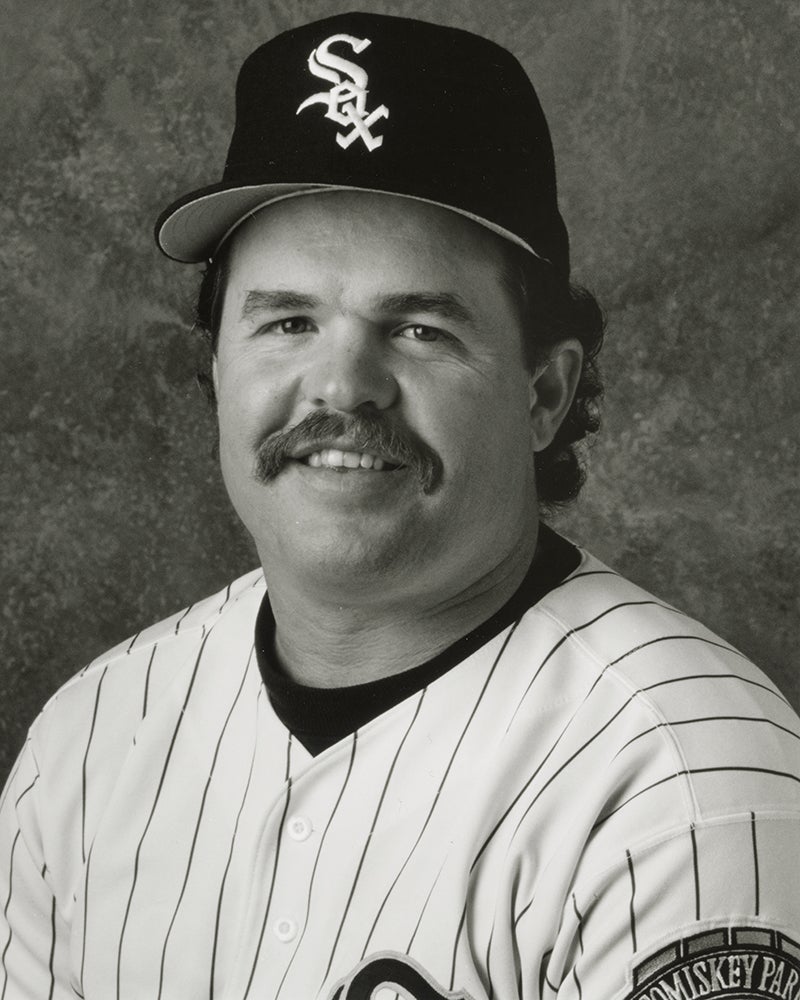
LaValliere played in 59 games in the strike-shortened 1994 season, batting .281 with a .368 OBP. The White Sox picked up the option year on his contract for 1995 and he served as Karkovice’s backup for the third straight season, hitting just .245 while battling a groin pull and a rib cage injury. But he still led the AL by throwing out 53.3 percent of baserunners. And he hit his 18th-and-final big league home run in the 11th inning on Sept. 5 against the Rangers’ Ed Vosberg to give Chicago a 2-1 win.
With his contract expired, LaValliere worked out at the Pirates’ complex in Bradenton, Fla., during the offseason. But he soon decided to retire.
“The writing was on the wall,” LaValliere told the Bradenton Herald in the spring of 1996. “I was not healthy enough to help the team. I didn’t want to be an embarrassment.
“I was very fortunate. I’ve been taken care of very well. I think of how fortunate I was to spend as much time as I did in the majors, and to just make it to the big leagues.”
LaValliere owned a marketing company during his first years away from the game before becoming the head baseball coach at St. Stephen’s Episcopal School in Bradenton in 2002. He later coached the school’s golf team to a state title and was a frequent coach at Spring Training for the Pirates.
He finished his 12-year career in the big leagues with a .268 batting average, a .351 OBP, 663 hits and 321 walks. And though he never got to the World Series as a player, he impressed teammates and managers with his sheer will to play the game.
“He looks like he should be tossing a big ol’ ball underhand on Sundays,” Andy Van Slyke told the Columbia Missourian about LaValliere in 1988. “He’s a hard-working, beer-drinking slob.
“He doesn’t have a major league body. But he gets major league ability out of it.”
Craig Muder is the director of communications for the National Baseball Hall of Fame and Museum