Fourth Right
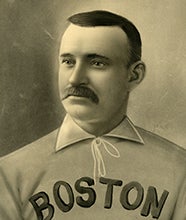
Mickey Welch, the only Hall of Famer with an Independence Day birthday, was one of the game’s early stars.
The saga of “Smiling” Mickey Welch is an American story of perseverance, tenacity and gumption, similar to the story of the country’s founding, a tale of of ultimately overcoming steep odds to become a success in a world of one’s own making.
It is fitting, then, that 83 years to the day after the United States declared its independence, Welch was born – and remains the only Hall of Famer with a July 4 birthday.
One of 63 major leaguers born on the Fourth of July – of the more than 23,000 to play at the big league level – Welch debuted in 1859 in Brooklyn, N.Y., in the Williamsburg section.
“We turned out ballplayers and prize fighters galore in those days,” Welch said.
Memories and Dreams
This story previously appeared in Memories and Dreams, the award-winning bimonthly magazine exclusively available to supporters of the Museum's Membership Program.
A small but athletic figure on his local sandlots, Welch was listed in his pro days at 5-foot-8 and 160 pounds.
Though undersized by modern standards, his strong right arm proved formidable in the burgeoning days of professional baseball, where his journey took him from New York outposts in Poughkeepsie and Auburn before a stint in Holyoke, Mass., showcased his ability and a pathway to Troy, N.Y., and the National League. Success at the game’s top level soon followed.
“We had some good players in baseball then – just as many as there are today – and some good hitters that I would like to see banging away at this lively ball,” Welch said in a 1933 interview. “We had a dead ball then, and those fellows used to hit it a long way. Give them, when they were in their prime, a crack at the kind of ball in use today and they would have hit it just as far as the home run hitters of today – except, maybe, Babe Ruth. Babe is a powerful, big fellow and his timing is perfect and maybe he can hit a ball farther than the players of my time could, but I don’t think any of the others can.”
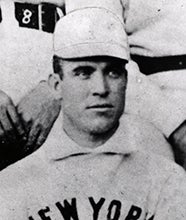
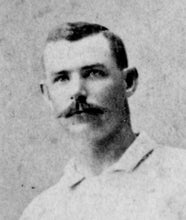
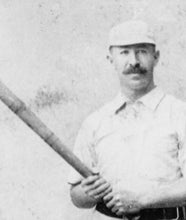
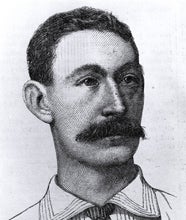
After three seasons with the Troy Trojans, where his teammates included future Hall of Famers such as first baseman Roger Connor, catcher Buck Ewing and pitcher Tim Keefe, Welch had compiled a 69-64 record, including 34 wins and a 2.54 ERA in his rookie season of 1880. The Trojans disbanded after the 1882 campaign, and the star quartet would eventually all sign with the newly former New York National League squad, a successful team soon to be known as the Giants.
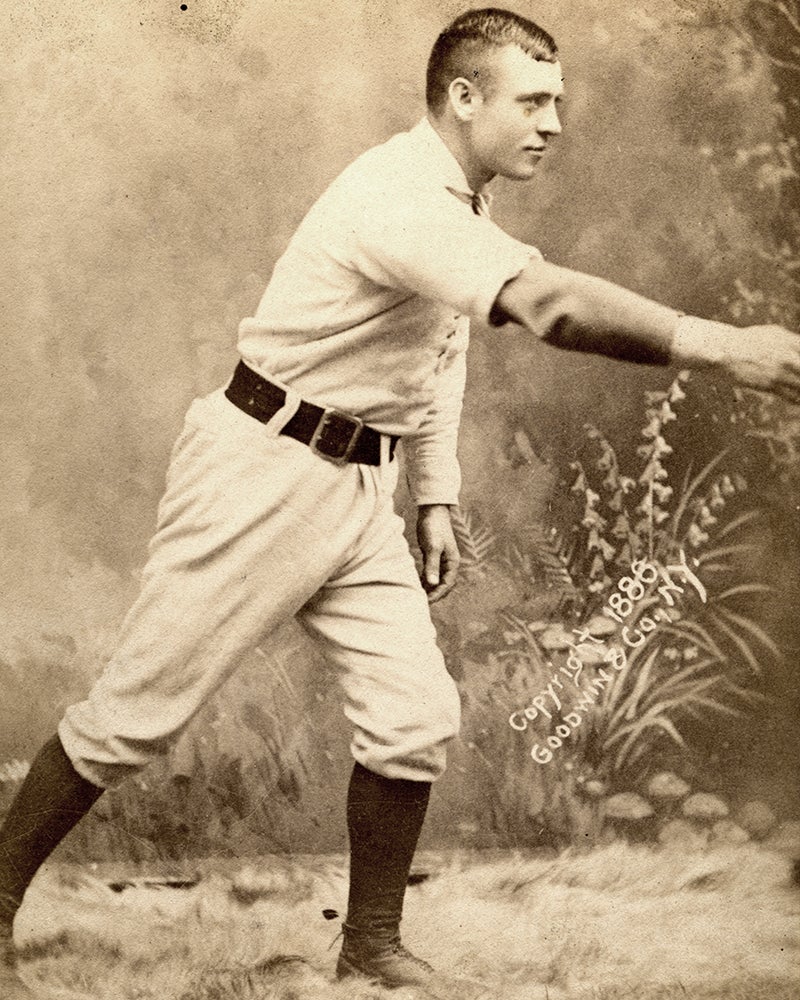
Few ball players were more popular in their heyday than Welch, a hard worker who pitched often. Pitching in New York City only added to his mystique. Even his nickname, “Smiling Mickey,” bestowed on him by cartoonist R.V. Munkittrick, was a tribute to his bemused grin, ever-present both on and off the diamond. Welch was never known to frown nor look displeased.
“Then, as now, there were some big, strong pitchers who got by on brute strength, as you might say, overpowering the hitters with their tremendous speed,” Welch said in 1933. “Those fellows didn’t have to know anything. But I was a little fellow, and I had to use my head. I studied the hitters and knew how to pitch to all of them, and I worked hard to perfect my control. I had a pretty good fastball, but I depended chiefly on change of pace and an assortment of curveballs.
“And I had a fadeaway, although I didn’t call it that. I didn’t call it anything. It was just a slow curve that broke down and in on a righthanded hitter, and I got a lot of good results with it in the 10 years I pitched for the Giants. Not until Matty (Christy Mathewson) came along and they began to write about his fadeaway (screwball) did I realize that I had pitched it for years. I learned it within a couple of years after I started to play ball, and I had no copyright on it.”
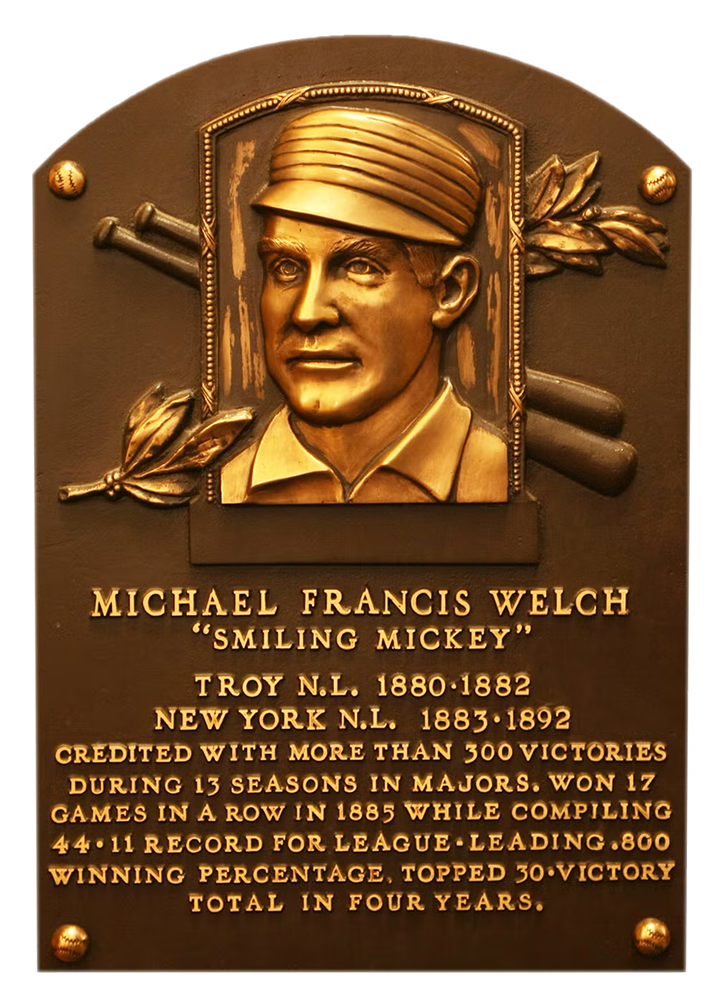
Welch flourished with the Giants, averaging 30 wins over his first seven seasons with the club, which included a 44-11 won-loss record and a 1.66 ERA in 1885.
“Within reason, and always saving the exception, the more you use an arm the stronger it gets,” said Welch in 1939. “Say, just thumb back through those records. You’ll find on July 3, 1885, I pitched for the Giants against Chicago. It was a scorching hot day. The game went 10 innings and I shut them out, 1-0. There were no ‘breathers’ in that Chicago lineup, all good hitters, .300 and .400 babies.
“Well, we hopped a train. You can imagine how sooty and uncomfortable trains were in 1885, none of that soft mattress, air-conditioned stuff. We bounced over to Buffalo on July 4. It was my birthday.
“We had a morning and afternoon game scheduled, and believe me, they could hit! They had fellows like Dan Brouthers, good sluggers, or tricky hitters who’d bunt you dizzy one minute and slap the ball down your throat the next.
“Well, I won the morning game, 6-0, and I won the afternoon game, 6-2. I won three games in two days against two of the heaviest hitting lineups in the country.”
According to Welch, the next spring he insisted on a clause in his contract forbidding his manager to start him “oftener than every other day.”
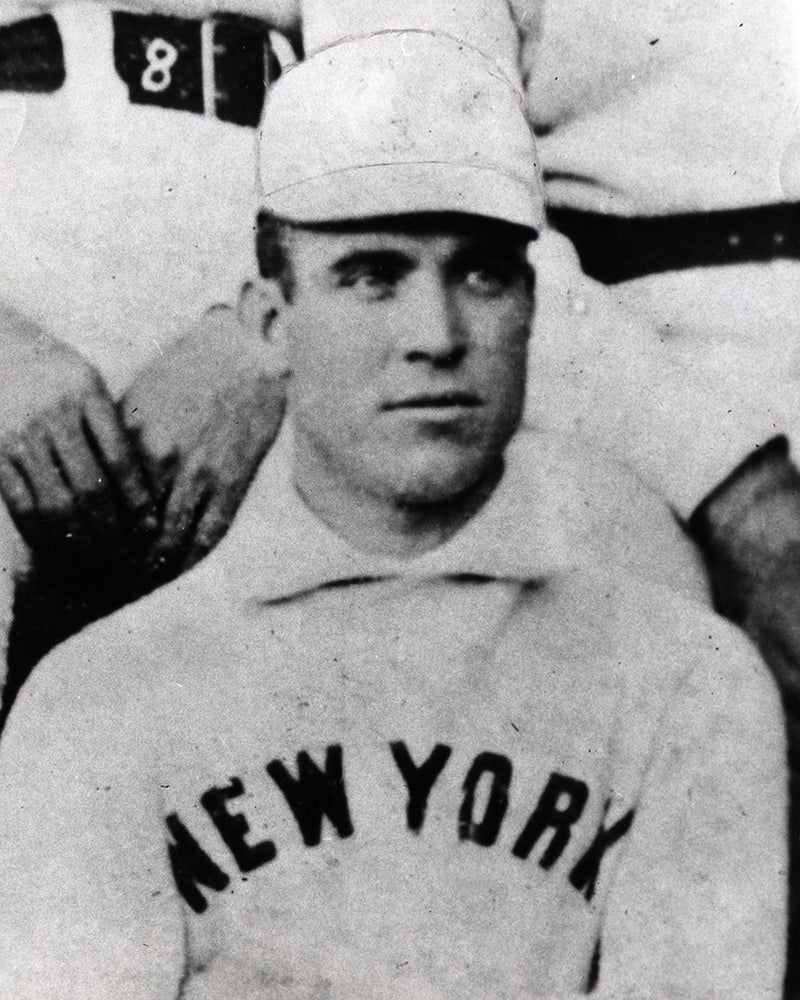
Personal accolades were nothing new for Welch. That same year, 1885, he won 17 straight games, a streak that ran from July 18 to Sept. 4. The season prior, on Aug. 28, 1884, he struck out the first nine Cleveland Blues batters he faced.
What makes Welch’s mound career even more impressive was his ability to adapt to a multitude of pitching rule changes. These included the 1880 standard, when the pitcher’s box was 6 feet long by 6 feet wide, the front line being 45 feet from the center of the home plate. Hurlers were compelled to throw the ball underhand, while batters had the privilege of asking for the pitch where they wanted it. In 1881, the pitcher was moved back 5 feet, making the distance from home plate 50 feet. In 1887, the dimensions of the box were reduced to 5½ feet by 4 feet, and the pitcher was compelled to keep his foot on the rear line and was allowed only one step in delivering the ball.
“Pitching in those days wasn’t any different from what it is today, except in one respect,” Welch said in 1933. “The pitching distance was only 45 feet, and that gave the pitchers more of an edge than they have today, with the distance 60 feet, 6 inches. But the big thing then, as now, was control. That’s the basis of the art of pitching. It’s more important than knowing what to pitch, because although you may know how to pitch to a hitter, it doesn’t do you any good unless you can keep the ball where you want it.”
Longtime Chicago outfielder Jimmy Ryan once recalled a unique aspect of Welch’s pitching style.
“Mickey Welch – Smiling Mickey – was a great pitcher,” said Ryan. “He could fool the best of them, and I have had my troubles with him…Mickey Welch, though, was an artist. When he and Tim Keefe were alternating for New York, it was tough-picking for any club to have to take on a three-game series with New York.
“I’ll never forget the afternoon Mickey Welch made an assist with his back. Fact. Absolutely correct. He was pitching his hardest, and Chicago was doing its best to win. The bases were crowded at a critical moment. Two out. [Cap Anson] came to bat. The thousands held their breath and Mickey let go the ball. Welch had an odd habit, as soon as he released the ball, of turning in the box and walking up two or three paces, with his back to the plate. On this occasion, he shot in the ball like a bullet, whirled and started his promenade. [Anson] met that ball full on the end of the big wagon tongue and drove it out with such force it seemed just one blur. It hit Welch square in the pants and his feet flew out from under him. He let go a mingled roar of rage and pain, and reached for the ball, which was rolling past him. Mickey sent it over to first; [Anson] was out; the game was lost to Chicago; and Welch, rubbing the injured spot vigorously, was yelling for witch hazel.”
In 13 seasons, ending in 1892, Welch had a 307-210 record with a 2.71 career ERA. He had 525 complete games in his 549 starts, with 41 shutouts.
Welch and Keefe were the dominant pitching duo that led New York to titles over American Association pennant winners in 1888 and 1889.
“I have always thought our old New York Giants of ’88 and ’89 composed the best club in the history of the game,” Welch said. “We won the pennant rather easily in the National League in ’88 and fully as easily beat out the St. Louis Browns for the world’s flag. But the next season of ’89, we had to go some right up to the very last notch to pull away from the Bostons in the National League, the championship not being decided until the final day of the season.”
In 1908, Welch was asked to compare the players of his era to those of the early 20th century. He did not hesitate in praising his contemporaries.
“Where, for instance, is there today any greater baseball player than Buck Ewing was? Ah, he was the greatest of ’em all,” Welch said, “indeed the grandest that the game has ever known. Universally acknowledged by all followers of the sport as the king of the catchers. I’m throwing no bouquets at myself, but have there been any better pitchers than Tim Keefe, John Clarkson and Charlie Radbourn? I say ‘no’ emphatically.”
Baseball’s third 300-game winner, Welch passed away at the age of 82 on July 30, 1941. He was elected to the Hall of Fame in 1973.
“Baseball is the one great game of this country,” Welch said, “and I shall never lose my interest in it.”
Bill Francis is the senior research and writing specialist at the National Baseball Hall of Fame and Museum