#CardCorner: 1969 Topps Cleon Jones
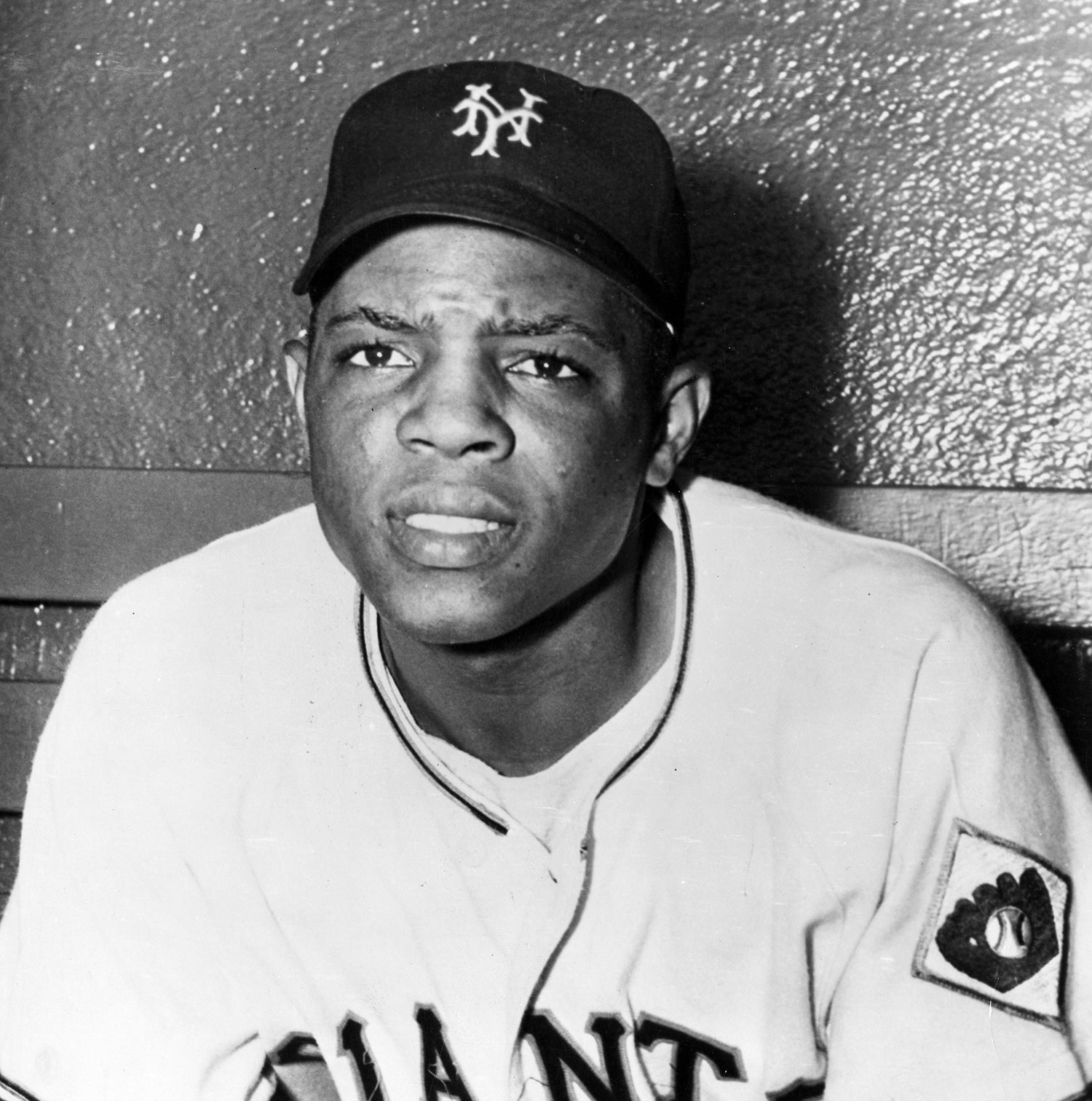
Cleon Jones drifted back and to his left in pursuit of Davey Johnson’s fly ball, stopping right on the edge of the Shea Stadium left field warning track.
The ball came to rest in Jones’ glove, and Jones smoothly dropped to his left knee – almost bowing to the “miracle” he had just witnessed. The New York Mets had won the 1969 World Series, and Jones had helped make it happen.
The most improbable championship of all-time will live forever in that moment centered on the outfielder from Mobile Bay.
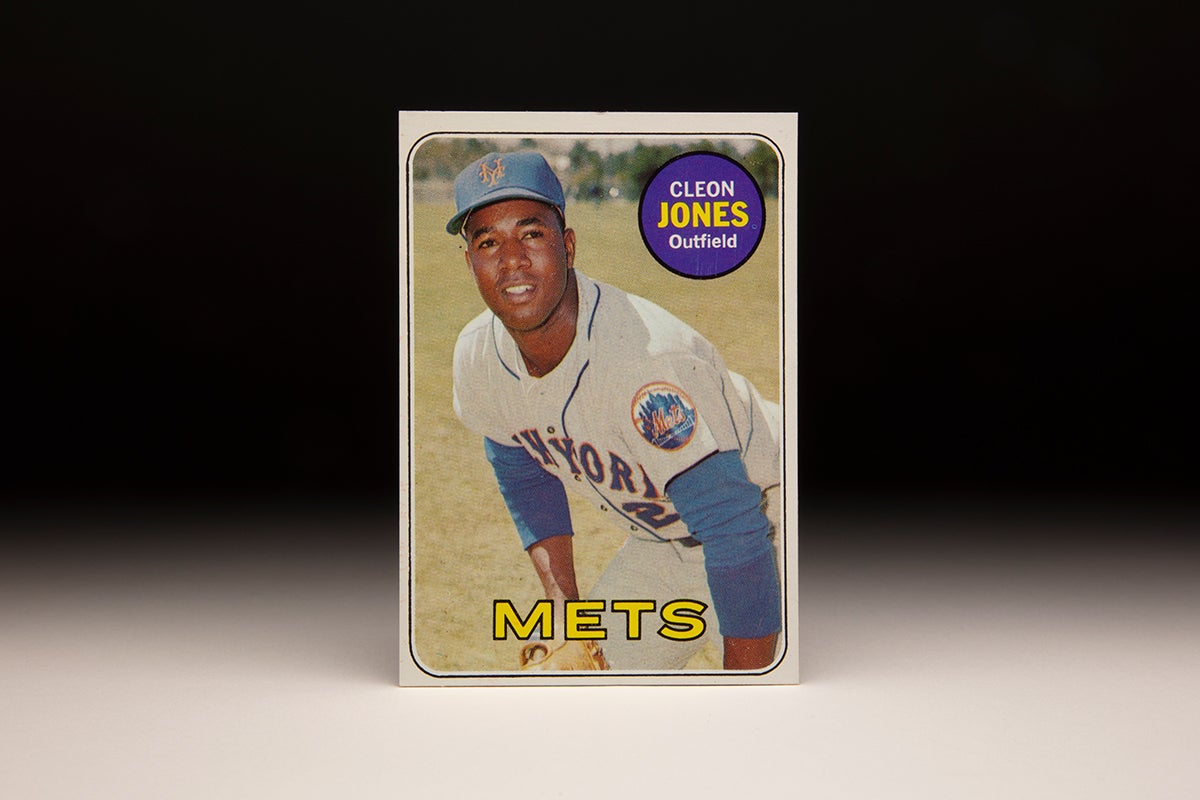
Born June 24, 1942, Cleon Joseph Jones grew up in the segregated town of Plateau, Ala. – just outside of Mobile. A natural left-hander, Jones learned to hit from the right side while continuing to throw from the left.
“We didn’t have any Little League or any other organized baseball for kids,” Jones told the Des Moines (Iowa) Register. “There weren’t any coaches to tell me that the percentage favors the left-handed hitter. We just went out and played pickup games on vacant lots.
“I did everything else left-handed, but as far back as I can remember, I batted right-handed. Maybe it was because all the other kids batted right-handed.”
One of Jones’ teammates was his fellow future Mets outfielder Tommie Agee, who was born a month and a half after Jones in Magnolia, Ala., and grew up in Mobile. Both Agee and Jones excelled in baseball, football, basketball and track.
“Cleon was a shade faster than me in the 100 (yard dash),” Agee told the Register. “He could run it in nine point seven seconds. But I could beat him in the 220.”
Jones set an Alabama high school record with 26 touchdowns as a high school senior in 1960. After graduating from Mobile County Training School High School, Jones enrolled at Alabama A&M University and played football as a freshman.
“I made the first offensive team by the third game and had 14 TDs that season,” Jones told the Star-Ledger of Newark, N.J., in 1969. “I used to think football was my thing. Now, though, I’m sure I made the right decision.”
An auto accident in 1962, however, led Jones to reconsider his career path. With bills from his injuries piling up, Jones signed with the Mets for a modest bonus in the summer of 1962.
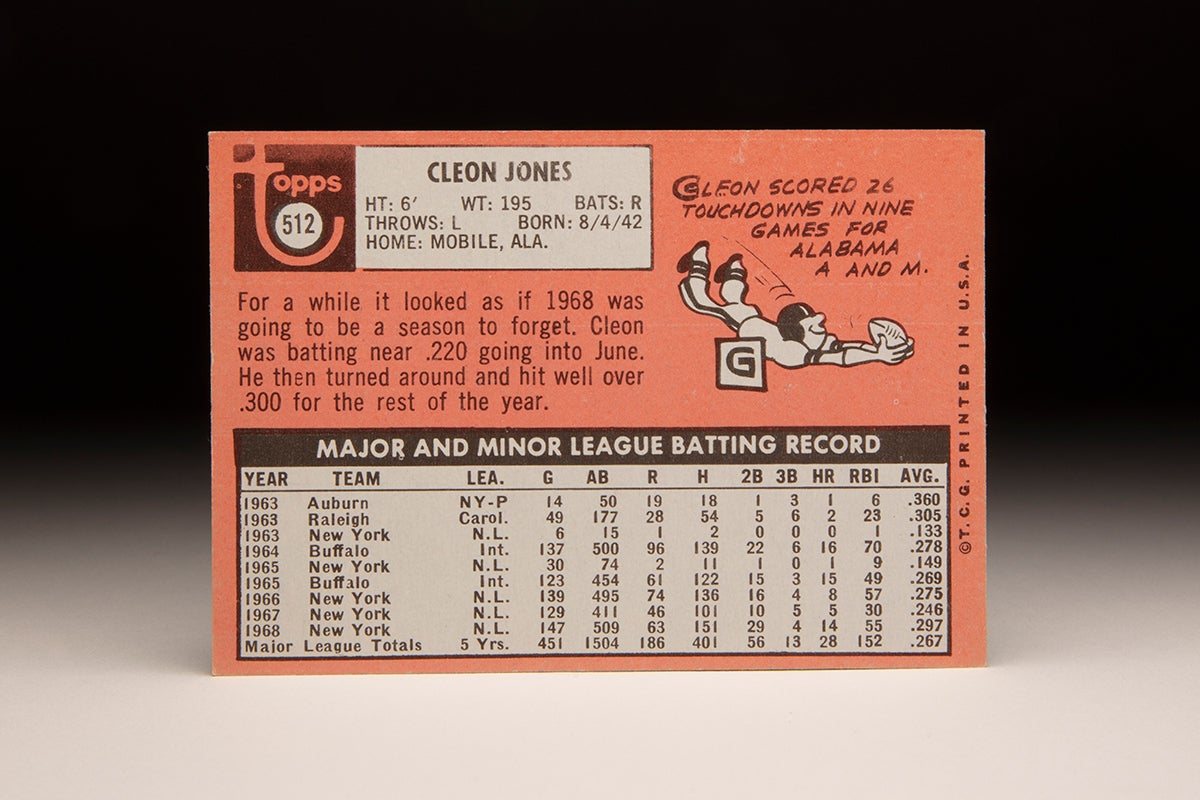
Jones began his pro career with Auburn of the New York-Penn League in 1963, hitting .360 in 14 games before earning a promotion to Class A Raleigh of the Carolina League. He missed time there after undergoing an operation to correct chronic hemorrhoids but returned to hit .305 with 20 steals in 49 games, earning a late-season promotion to the Mets. He made his big league debut as a defensive replacement in center field against the Astros on Sept. 14 and appeared in six games down the stretch, going 2-for-15.
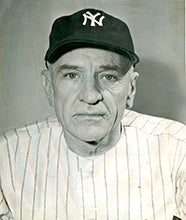
“Didn’t see enough of him to form a judgment,” Mets manager Casey Stengel told the Buffalo News about Jones. “But he must be pretty good on what (Buffalo Bisons manager) Kerby Farrell told me.”
Jones spent the entire 1964 season with Triple-A Buffalo, batting .278 with 16 home runs, 70 RBI, 96 runs scored and 12 stolen bases. He continued to burnish his top prospect reputation after the season in the Florida Winter Instructional League, hitting .294 with a .381 on-base percentage in 33 games.
Jones made the Mets’ Opening Day roster in 1965 but was hitting .156 through his first 13 games when the team sent him back to Buffalo on May 6 for more seasoning. He batted .269 in Triple-A with 15 homers and 49 RBI in 123 games before returning to the Mets in September. Jones then played winter ball in Puerto Rico and hit .309.
Jones credited former Mets teammate Joe Christopher with helping him while he was in Puerto Rico.
“We talked baseball all the time down there,” Jones told the New York Daily News about his time with Christopher in Puerto Rico. “He gave me this book he had on hitting that Paul Waner wrote. He told me things, too, like picking a spot in front of the plate and hitting the ball when it reached there.”
The Mets had toyed with the idea of making Jones a switch-hitter, but after his performance in winter ball he was a right-handed batter for good.
“He seems to have straightened himself out right-handed,” Mets manager Wes Westrum, who took over for Stengel during the 1965 season, told the Daily News. “And I don’t want to demoralize him by trying to change it now.”
After working on his defense with Reds outfielder Vada Pinson, Jones was confident that his all-around game would make him the Mets’ center fielder in 1966.
“I know I’m going to make this club this time,” Jones told the Daily News in the spring of 1966. “What I’m aiming for is more than that. I expect to be the regular center fielder.”
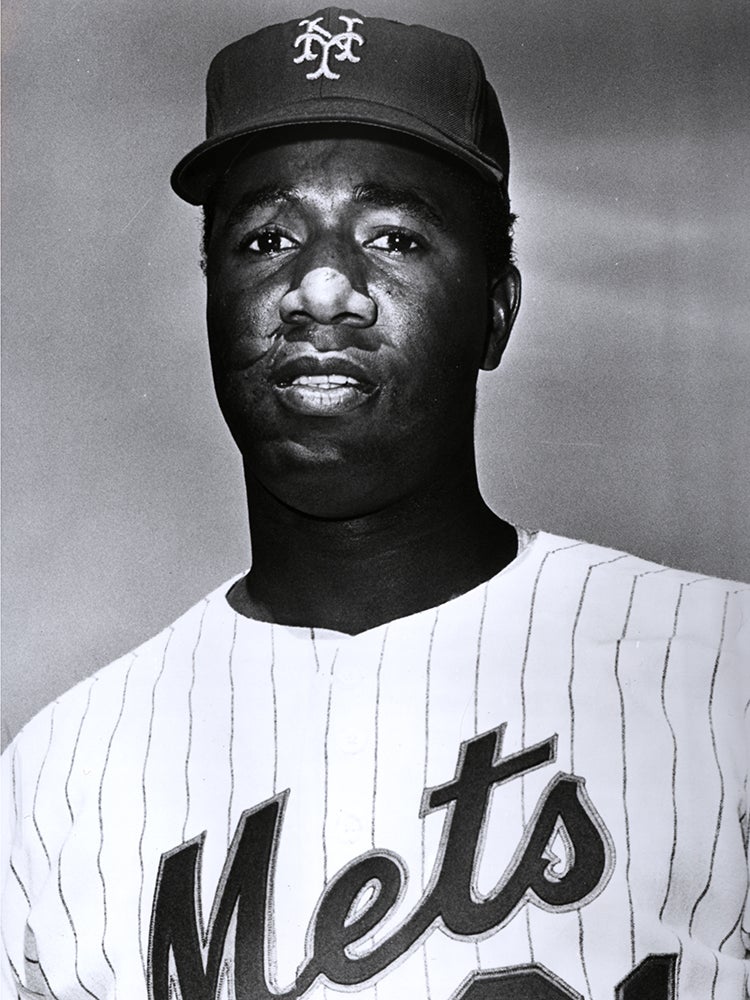
Jones was in right field with Jim Hickman in center on Opening Day against the Braves as Jones homered in the Mets’ 3-2 loss. But Westrum soon flipped the two players as Jones got hot at the plate, recording hits in his first 11 starts. His batting average remained in the .280 to .290 range for most of the summer as he finished the season hitting .275 with 16 doubles, eight homers, 57 RBI and 16 steals in 139 games.
The performance earned Jones a fourth-place finish in the National League Rookie of the Year voting.
But after hitting .386 during Spring Training games in 1967, Jones went into a deep slump to start the regular season. He was hitting .106 through May 10 and was under the .200 mark as late as July 26.
“How can you explain it?” Westrum rhetorically asked the Jersey Journal as the Mets were en route to a 101-loss season. “I’ve got to believe that when Jones gets started things will be a lot better. They can’t be any worse.”
Jones improved in August and September and finished with a .246 batting average, five home runs and 30 RBI in 129 games. Westrum did not make it through the season as the Mets’ manager, however. The team eventually swung a deal for Senators’ skipper Gil Hodges on Nov. 27, 1967.
It turned out to be a trade that would launch a miracle.
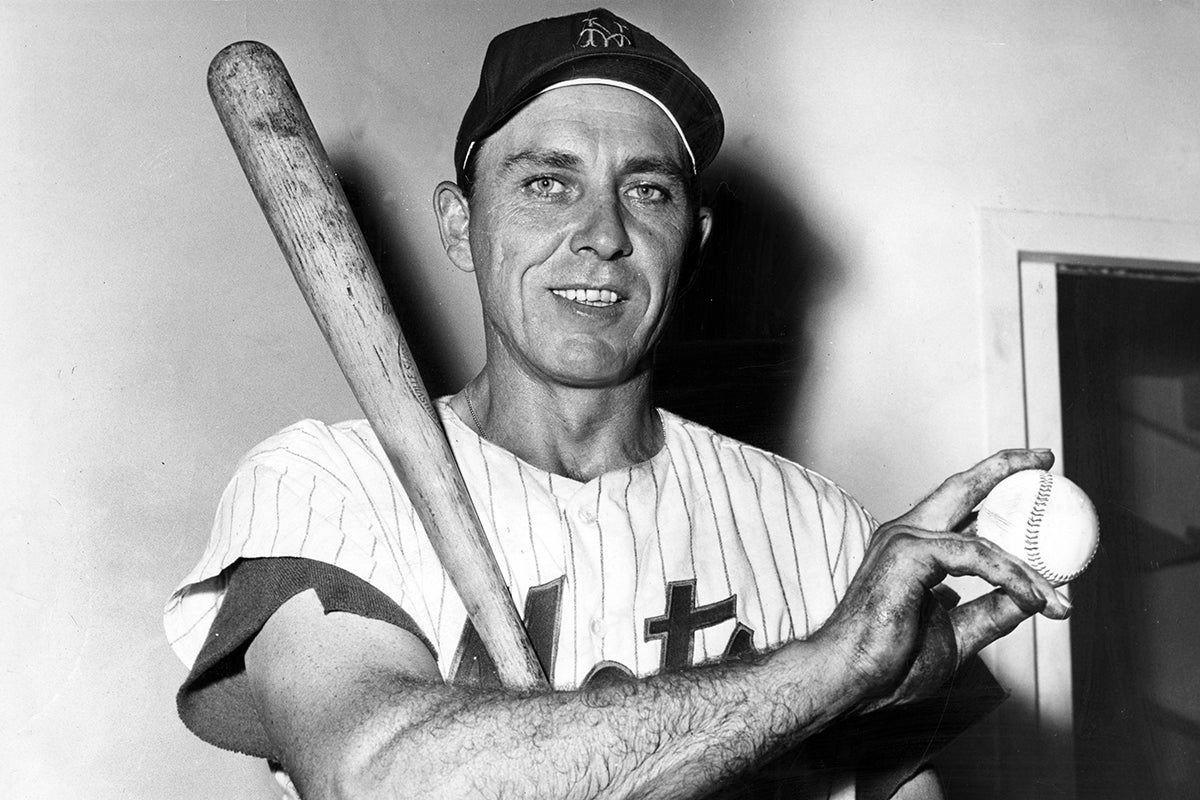
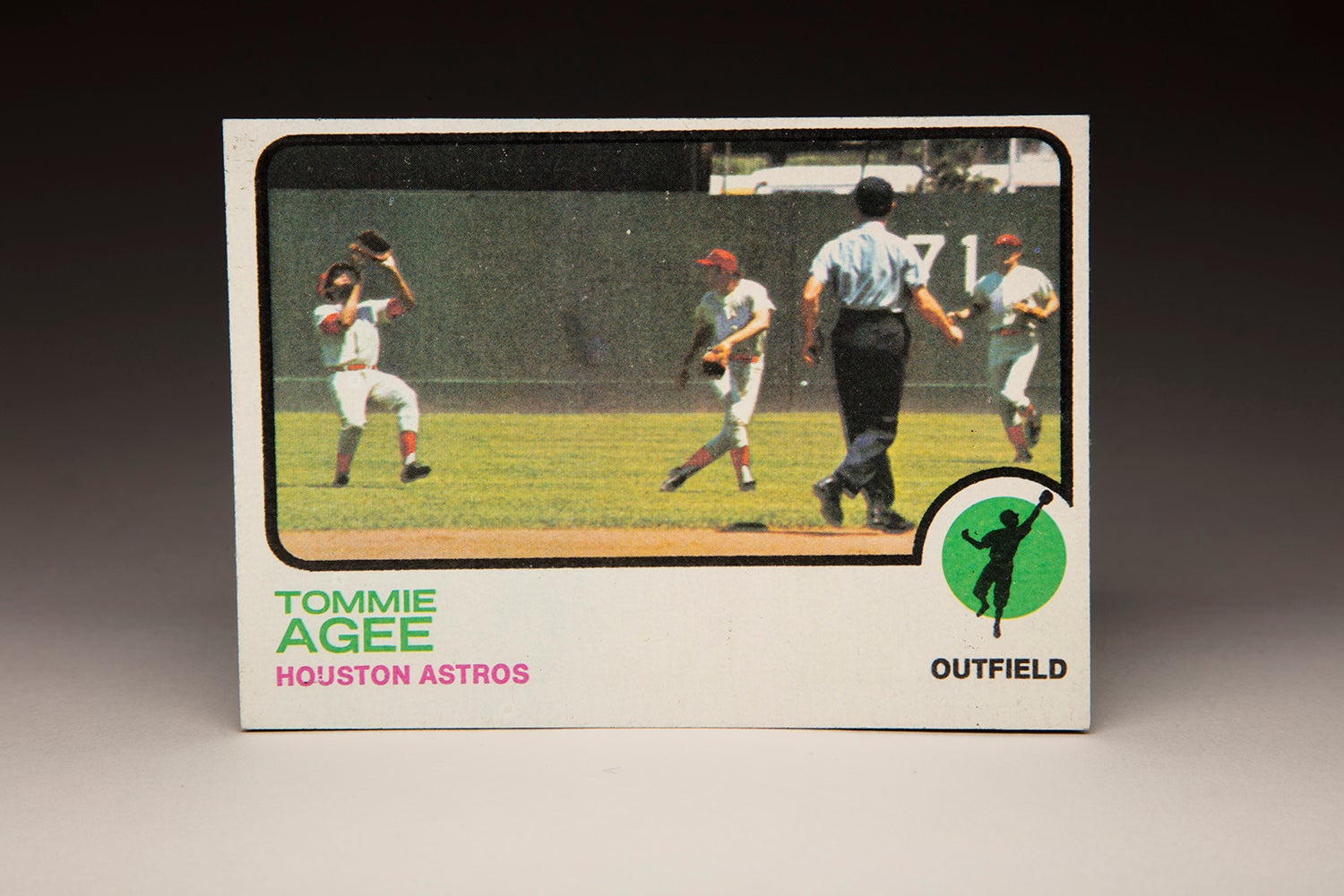
The Mets made another key deal three weeks after getting Hodges, acquiring Tommie Agee and Al Weis from the White Sox in exchange for Buddy Booker, Tommy Davis, Jack Fisher and Billy Wynne. Agee, who had won the 1966 American League Rookie of the Year Award, was a Gold Glove Award-winning center fielder, which meant Jones – his childhood chum – would play a different position in 1968.
Hodges experimented with Jones at first base in the spring of 1968 before sending Jones to left field. With Ron Swoboda firmly entrenched in right field, the Mets now had an outfield that would take them to the World Series.
Jones once again started slowly in 1968 but – unlike much of the rest of the league – found his batting stroke as the weather broke. He finished with a .297 average (sixth in the NL) with 29 doubles, 14 home runs, 55 RBI and 23 steals in 147 games.
In the spring of 1969, Jones once again feasted on Grapefruit League pitching. But this time, he was determined to carry the success over into the regular season.
“I’m not going to let it happen again this year,” Jones told the Staten Island Advance. “When I play the game now, I keep saying to myself: ‘Concentrate, Cleon, concentrate.’
“It’s not easy. You try and concentrate four times every game, six months a year, 162 games a year. It’s not easy.”
But Jones made it look easy in 1969. He hit .340 with 92 runs scored, 25 doubles, 12 homers, 75 RBI, 16 steals and 64 walks – all good for a .422 on-base percentage and a .904 OPS. He was named to what would be his only All-Star Game that season, starting in left field and recording two hits and scoring two runs in the NL’s 9-3 victory.
His 7.0 Wins Above Replacement figure was easily the best among the team’s position players and trailed only Cy Young Award winner Tom Seaver’s 7.2.
As was the case with many of the 1969 Mets, Jones credited Hodges for his stellar season.
“Most players make a manager, but this time the manager made the players,” Jones told Gannett News Service. “Gil reached inside of each one of us and made us better players. He instilled a winning attitude in us and gave us confidence. We didn’t know what we could do until he showed us.”
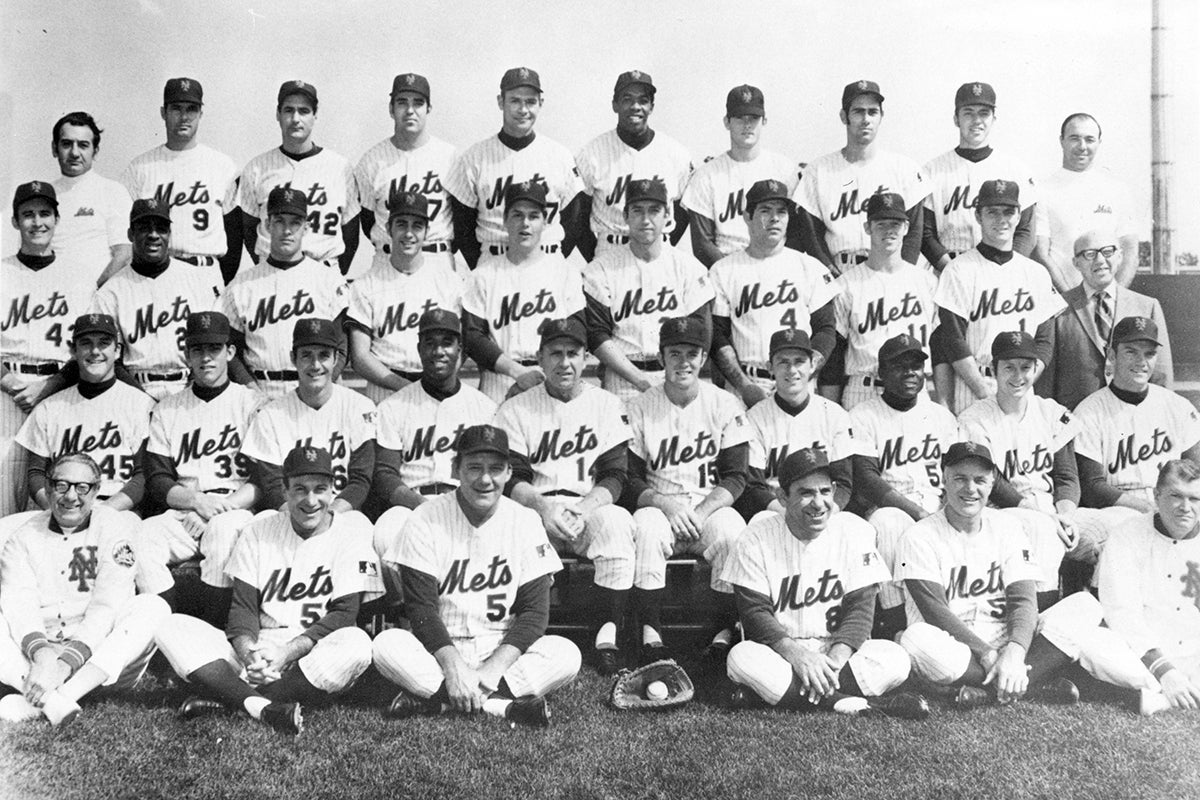
Hodges also inspired the Mets with his no-nonsense approach – something Jones discovered firsthand on July 30, 1969. The Mets were 55-41 that day entering a doubleheader against the Astros at Shea Stadium. After losing the first game 16-3, the Mets trailed 7-0 in the bottom of the third of Game 2 when Johnny Edwards doubled to left to score Doug Rader. Hodges walked from the dugout all the way to left field to talk to Jones, then returned to the dugout with Jones following him. Swoboda immediately replaced Jones, and the Mets lost the game 11-5.
The media speculated that Hodges had removed Jones for lack of hustle, and Jones was still recovering from an earlier leg injury and might have been cautious on what was a water-soaked field. Though neither party would discuss what happened, most of the Mets later agreed that the moment was a turning point for the team.
From that point, the Mets went 45-19 to win the NL East title. And they did much of that work without a healthy Jones, who missed about three weeks’ worth of games in September with hand, leg and rib injuries.
“There were times…when Cleon was the only thing keeping us in the league,” Agee told the Star-Ledger.
Healthy again for the NLCS vs. the Braves, Jones keyed a Game 1 rally when he singled off Phil Niekro in the eighth inning to drive in Wayne Garrett and tie the game at 5. Jones later stole third base and scored when Orlando Cepeda threw home on a grounder by Ed Kranepool and was charged with an error, giving New York a 6-5 lead that would turn into a 9-5 victory.
In Game 2, Jones went 3-for-5 with three RBI and two runs scored in New York’s 11-6 win. Then in Game 3, Jones had two more hits and scored a run as the Mets beat Atlanta 7-4 to sweep the series. Jones finished the series batting .429 with four runs scored, four RBI, a home run and two steals.
“We’re the greatest team in the world right now,” Jones told the Associated Press after Game 3. “Nobody can stop us… Atlanta, Baltimore… nobody. We’re gonna win it all.”
The Orioles had swept the Twins in the ALCS and were heavy favorites in the World Series after rolling to 109 regular season wins. But Jones and the Mets were not to be denied.
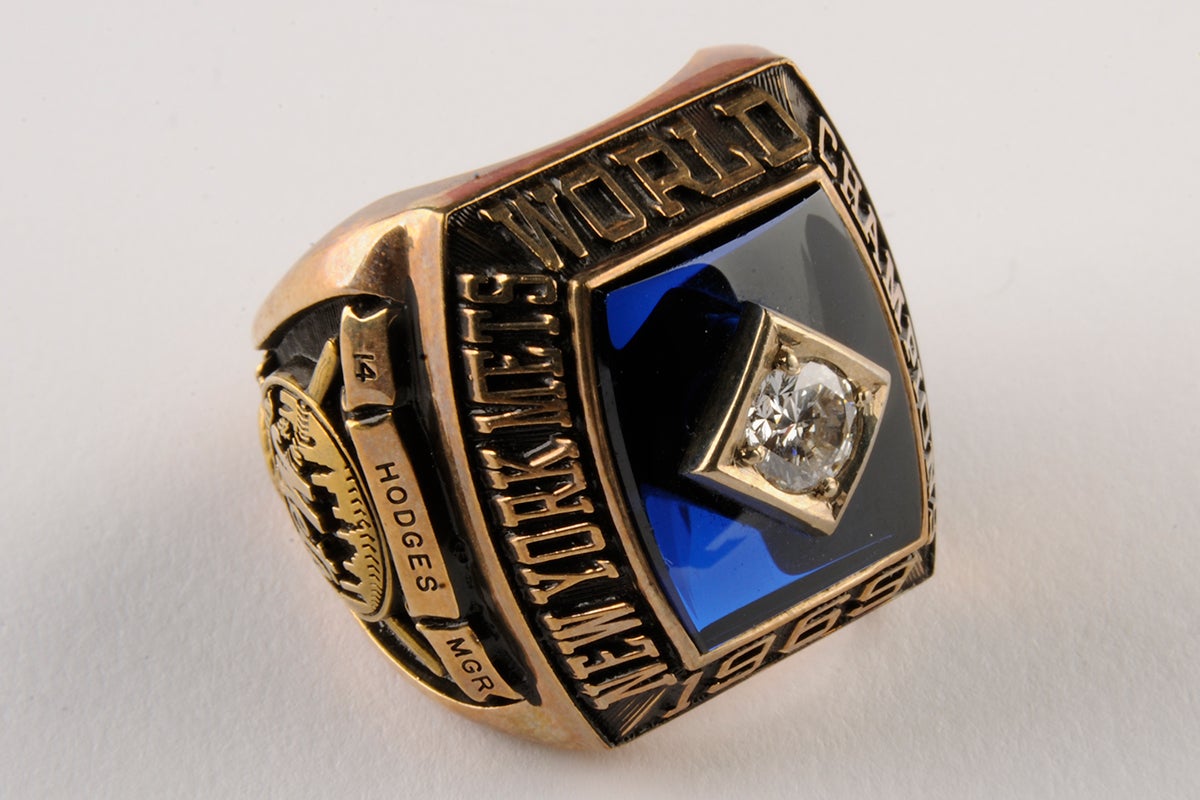
After losing Game 1, the Mets showed their resiliency by taking Game 2 despite Jones going 0-for-4. Jones was also hitless in Game 3 (a 5-0 Mets win) and had one hit in four at-bats in Game 4 (a 2-1 Mets win).
But in Game 5 – with New York one win away from the title – Jones returned to center stage. The Orioles were leading 3-0 in the bottom of the sixth when Jones led off against Dave McNally. A pitch in the dirt that was originally ruled a ball by plate umpire Lou DiMuro rolled into the Mets dugout. Mets catcher Jerry Grote picked up the ball and noticed a smudge that he attributed to shoe polish from Jones’ shoe.
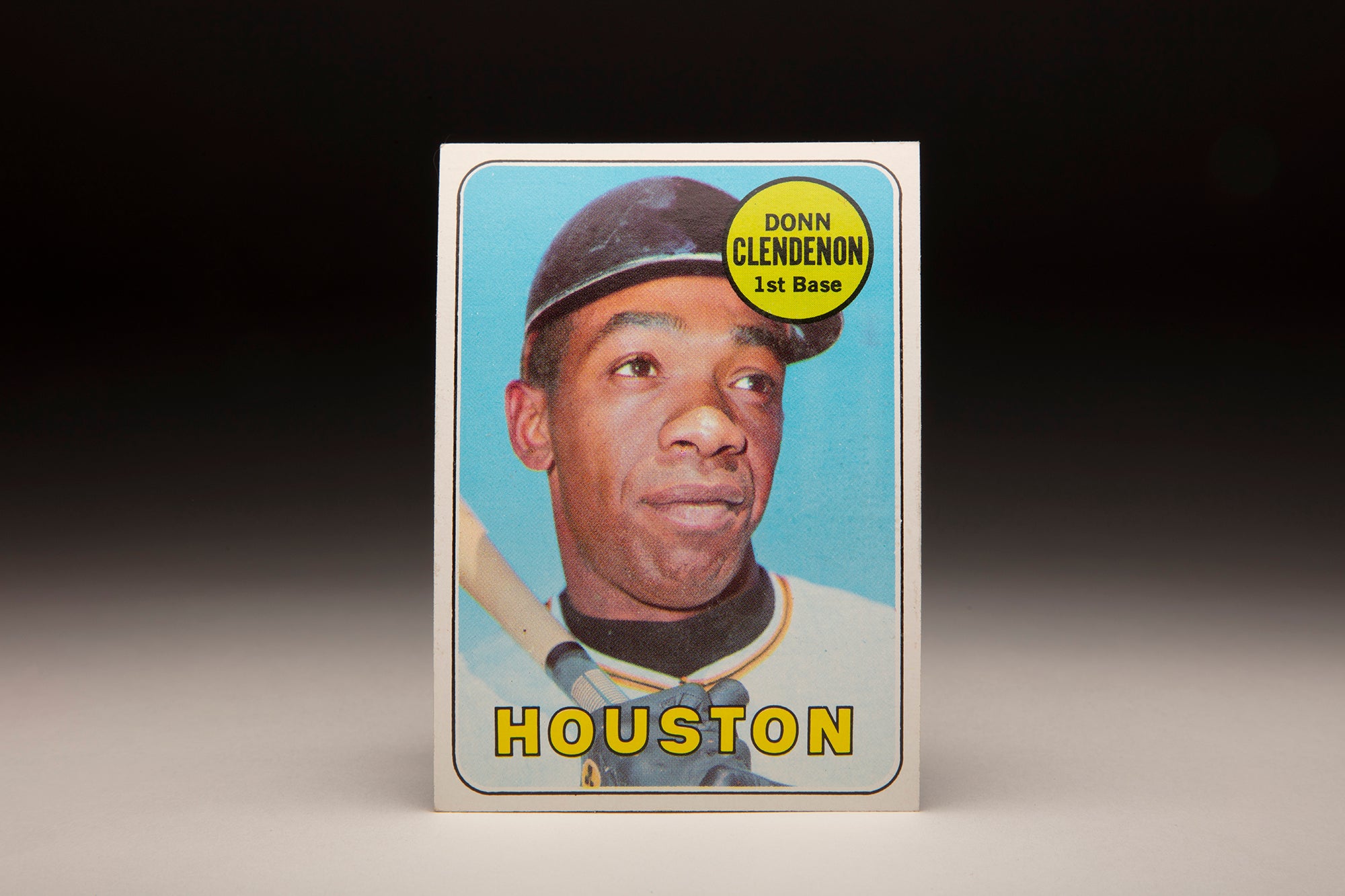
Hodges grabbed the ball and presented the “evidence” to DiMuro, who awarded Jones first base on the hit by pitch. Donn Clendenon followed Jones to the plate and hit a two-run homer, putting the Mets right back in the game.
New York tied the game in the seventh and then scored two more in the eighth – with the go-ahead run scoring when Swoboda doubled home Jones, who had doubled off the center field wall to lead off the inning.
“That trick is as old as the hills,” Orioles pitcher Jim Palmer told the Jersey Journal after Game 5. “You’ll never convince me Hodges didn’t apply the polish while he was coming out of the dugout.”
But the Orioles had no appeal. And when Davey Johnson’s fly ball landed in Jones’ glove in the top of the ninth, the Mets were World Series champions.
Jones got a raise from $30,000 in 1969 to $53,000 in 1970 but started slowly that year – as did the entire Mets team, which was 27-29 in mid-June. Jones was hitting .210 at that point and Hodges was indicating that he might bench his No. 3 hitter to try to give him some time off.
“I didn’t get enough work in Spring Training. I didn’t play enough,” Jones told the Daily News. “I’ve been fighting it ever since.”
Jones found his stroke late in the season, however, and pushed his average into the .280s with a then-franchise record 23-game hitting streak from Aug. 25-Sept. 15.
“Maybe things will work in reverse this season,” Jones told the Star-Ledger during his hot streak. “I had a horrible first half but now I’m helping the club again.”
Jones finished the season with a .277 batting average, 25 doubles, 10 home runs, 63 RBI and 12 steals – but the Mets fell to 83-79 and finished third in the NL East. Jones returned to his 1969 form in 1971, batting .319 with 24 doubles, 14 home runs and 69 RBI while recording what would be a career-high 239 total bases. The Mets, however, went 83-79 and finished in third again.
Then in 1972, Hodges suffered a heart attack just before the season and passed away on April 2. He was replaced by Yogi Berra, but a pall hovered over the Mets for much of the year. And Jones was not spared.
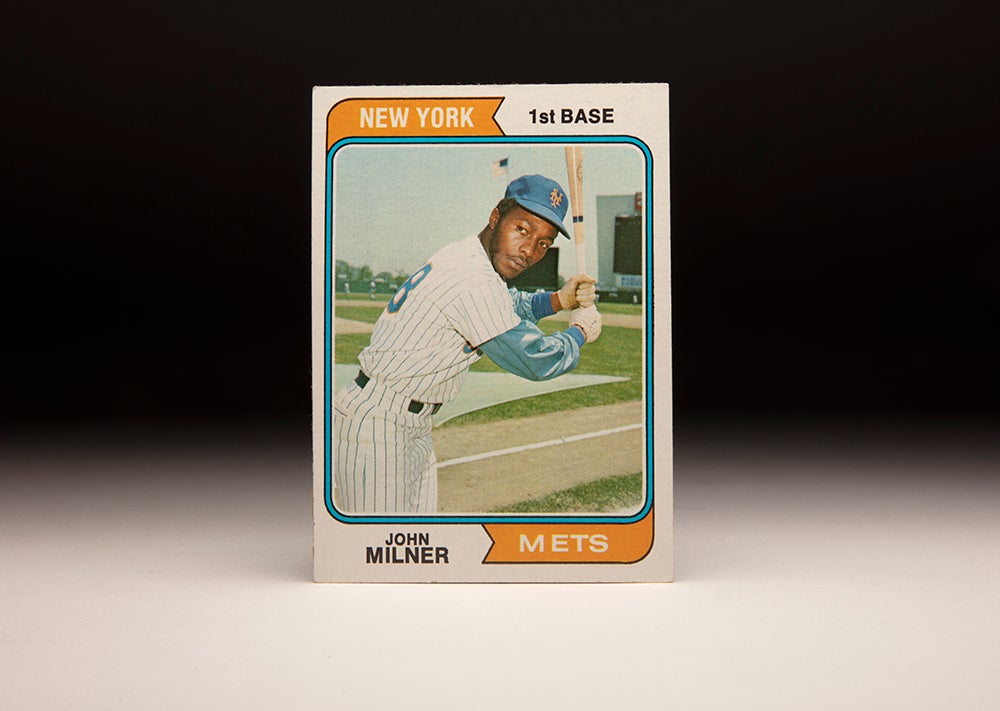
He was sidelined with a thumb injury in May and when he returned his batting average dropped from well over .300 and never recovered. Rookie John Milner filled in as the Mets’ left fielder when Jones was out, and Berra began platooning the lefty-hitting Milner with Jones.
Milner finished the season with 17 home runs and finished third in the NL Rookie of the Year balloting. Jones hit .245 with five home runs and 52 RBI in 106 games – and the Mets won 83 games for the third straight season while again missing the postseason.
In 1973, the Mets won one fewer game – but this time it was enough for the division title. The season, however, was anything but smooth for the Mets and Jones.
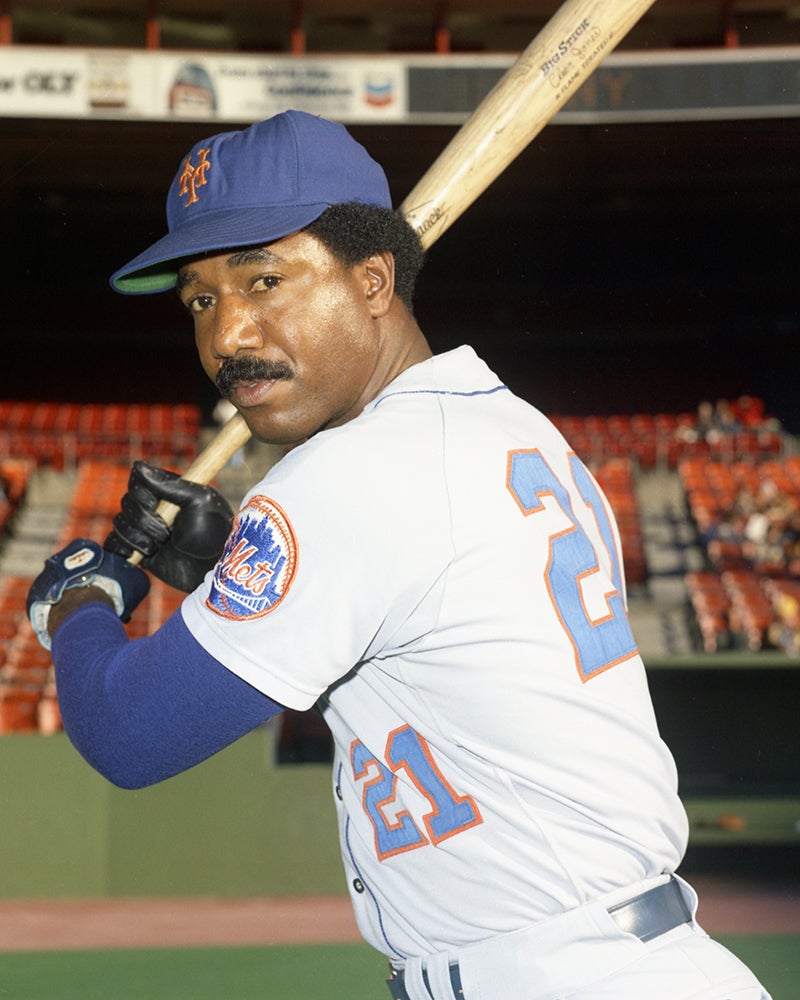
Jones hurt his right wrist early in the season while making a diving catch – an injury that was misdiagnosed. He was told he could play through the pain but was eventually placed on the disabled list in late May. He was fitted for a cast and did not return to action until July.
By then, the Mets were 10 games under .500 and seemingly out of the pennant race. But when no other team took control of the NL East, the Mets found themselves in contention in September. Heading into play on Sept. 20, the Mets were 75-77 and in third place, a game-and-a-half behind the Pirates. The game was tied at 3 (Jones had singled in a run in the sixth inning) in the top of the 13th with Pittsburgh’s Richie Zisk on first base when Dave Augustine hit a ball that appeared headed over the left field wall at Shea Stadium. Jones retreated to the wall – and the ball bounced off a board at the very top of the wall, a board that was angled back toward the field.
The ball fell to Jones, who fired it to cutoff man Wayne Garrett who relayed it to catcher Ron Hodges. Zisk was easily out at the plate, and the Mets won the game in the bottom of the inning when Hodges singled home Milner.
“I never saw anything happen like that before,” Jones told the Staten Island Advance.
Suddenly, the Mets were recapturing their 1969 magic.
“We can’t lose now,” the Mets’ Duffy Dyer told the Advance.
The next day, Tom Seaver pitched the Mets past the Pirates 10-2 – Jones had two hits and two RBI – and into first place. They would remain there for the rest of the season as Jones hit six home runs and drove in 14 runs in his final 10 games.
“The last couple years,” Jones told Gannett News Service after homering to help the Mets clinch a tie for the division title, “you didn’t see the real Cleon Jones.”
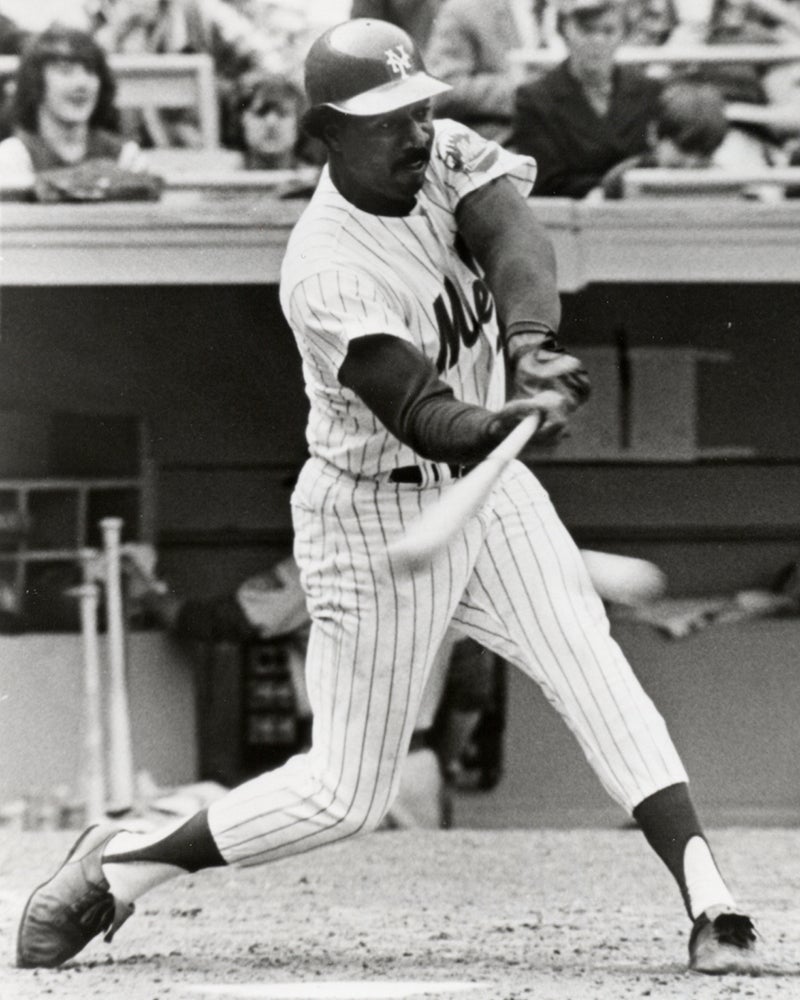
Jones finished the regular season with a .260 batting average, 11 homers and 48 RBI in 92 games. He started each of the five NLCS games vs. the Reds, powering New York to a 7-2 win in Game 5 with three hits and two RBI – including a tie-breaking RBI double in the fifth inning that gave the Mets the lead for good.
Jones continued his hot hitting through the first five games of the World Series against Oakland, scoring the Mets’ only run in a 2-1 loss in Game 1; going 3-for-5 with three runs scored in a 10-7 victory in Game 2; and scoring the game’s first run in a 2-0 win in Game 5 that put the Mets one win away from the title.
But Oakland’s pitching held Jones hitless over seven at-bats in the final two games as the A’s rallied to win the title.
For Jones, it was the last of his 20 postseason games where he totaled 14 runs scored, two home runs and eight RBI and a .284 batting average.
With Willie Mays having retired after the 1973 season, the Mets toyed with the idea of moving Jones back to center field – where he hadn’t played regularly in seven years – in 1974.
“Cleon’s an athlete,” Berra told the Star-Ledger at the dawn of Spring Training. “He can play anywhere.”
But Don Hahn was in center on Opening Day, with Jones in left field and hitting cleanup. He enjoyed his last season as a regular player that year, hitting .282 with 13 homers and 60 RBI in 124 games despite chronic flat feet that often dictated time off.
In 1975, a knee injury kept Jones out of action at the start of the season. He was rehabbing at the team’s Spring Training facility when he was arrested in St. Petersburg, Fla., when he was found asleep with a woman in a van. The woman was charged with indecent exposure and possession of marijuana, but charges were not brought against Jones.
Still, the Mets fined Jones $2,000 for “failure to abide by training rules.”
“I wish to apologize publicly to my wife and children, the Mets ownership and management, my teammates, to all my fans and to baseball in general for my behavior in St. Petersburg on the night of May 3,” Jones said in a statement. “I am ashamed of what I have done, but I can assure you I have never used drugs or marijuana in any way, shape or form.”
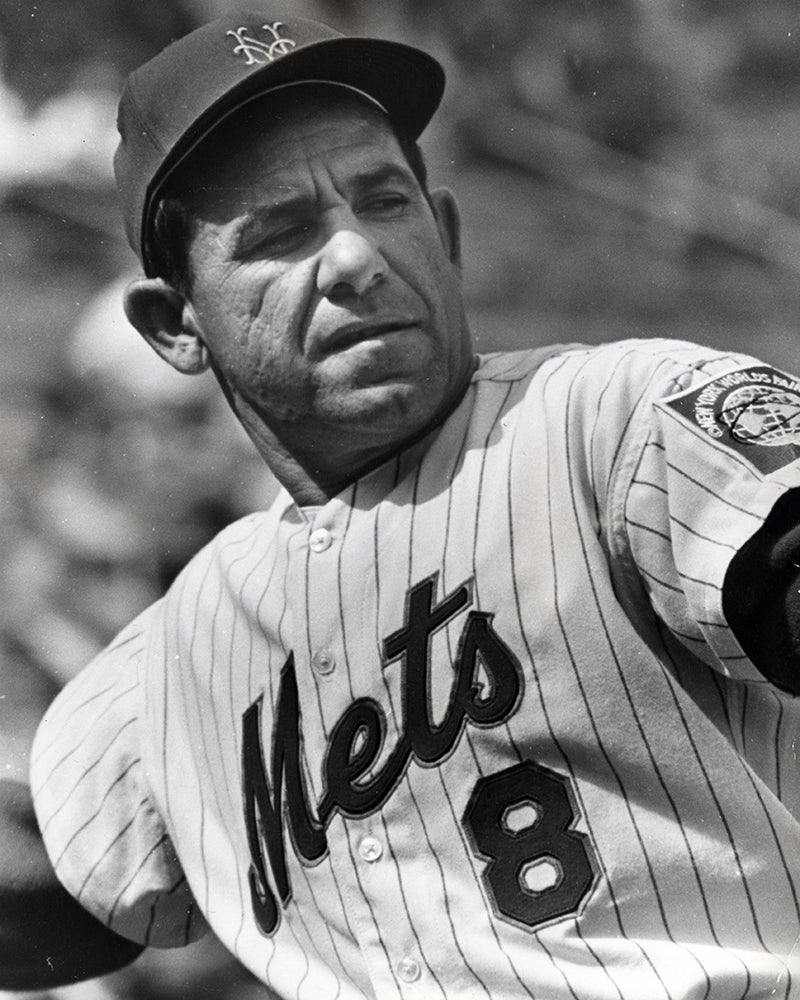
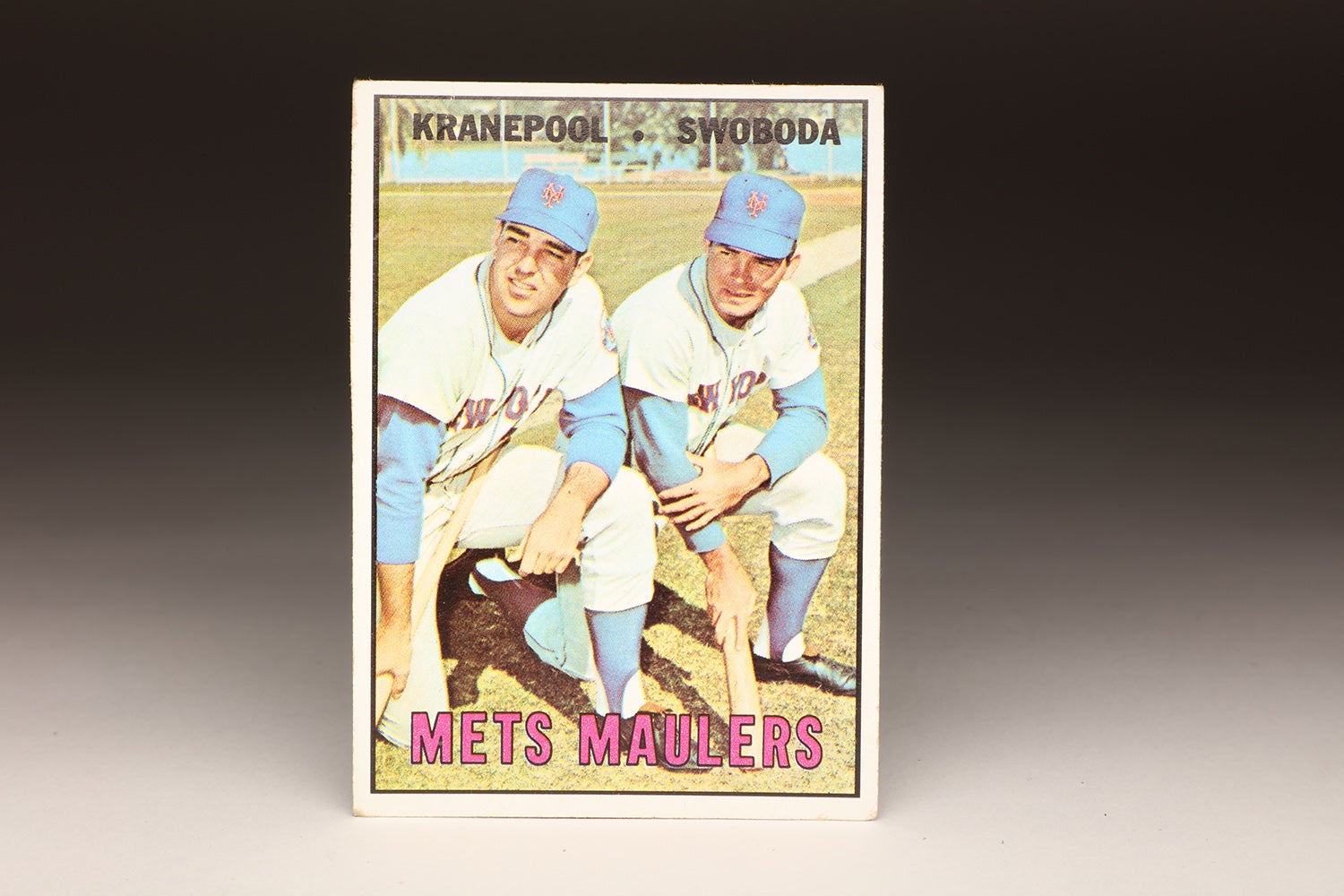
Jones didn’t make his season debut until May 27. He was serving in a bench role when Berra called on him to pinch-hit for Kranepool on July 18 against the Braves. After taking two strikes from Tom House, Jones lined out to shortstop.
Berra then told Jones to take over in left field. But Jones balked, shouted at Berra, grabbed his glove and left the dugout.
“I never play in the field without my knee wrapped. I had no wrap,” Jones told the Daily News. “I can’t sit on the bench with it wrapped all night or it will swell up. I had no way of knowing I was going to play. I figured Yogi didn’t care about me, asking me to go out there without the knee wrapped.
“I’m no angel. But this time, I’m not the villain.”
It would be the last game Jones played for the Mets. Berra told the media on July 25 that it was “him or me” referring to Jones, and two days later the Mets released their longtime outfielder.
“Having exhausted all avenues in attempting to reconcile the problem, we are offering Cleon Jones his unconditional release,” the Mets said in a statement, noting they had explored deals with the Rangers and Angels that did not come to fruition.
The Mets agreed to pay the remainder of Jones’ $80,000 contract for 1975.
“People ask me where I’m going to play next,” Jones told The Record of Hackensack, N.J. “They want to know who my favorite team is. I’ve just left my favorite team. No matter where I end up playing, I’ll always wear my Mets World Series ring. I’ll always think of the Mets as my team.”
Jones did not find any offers for the rest of the 1975 season before signing with the White Sox as a minor league free agent in 1976. He made the Opening Day roster but after hitting .200 over 12 games in Chicago, Jones was released on May 2. He would not play in the major leagues again.
“He played hard,” White Sox manager Paul Richards told the Daily News. “He tried like hell. I’ll give him that. He just didn’t hit.”
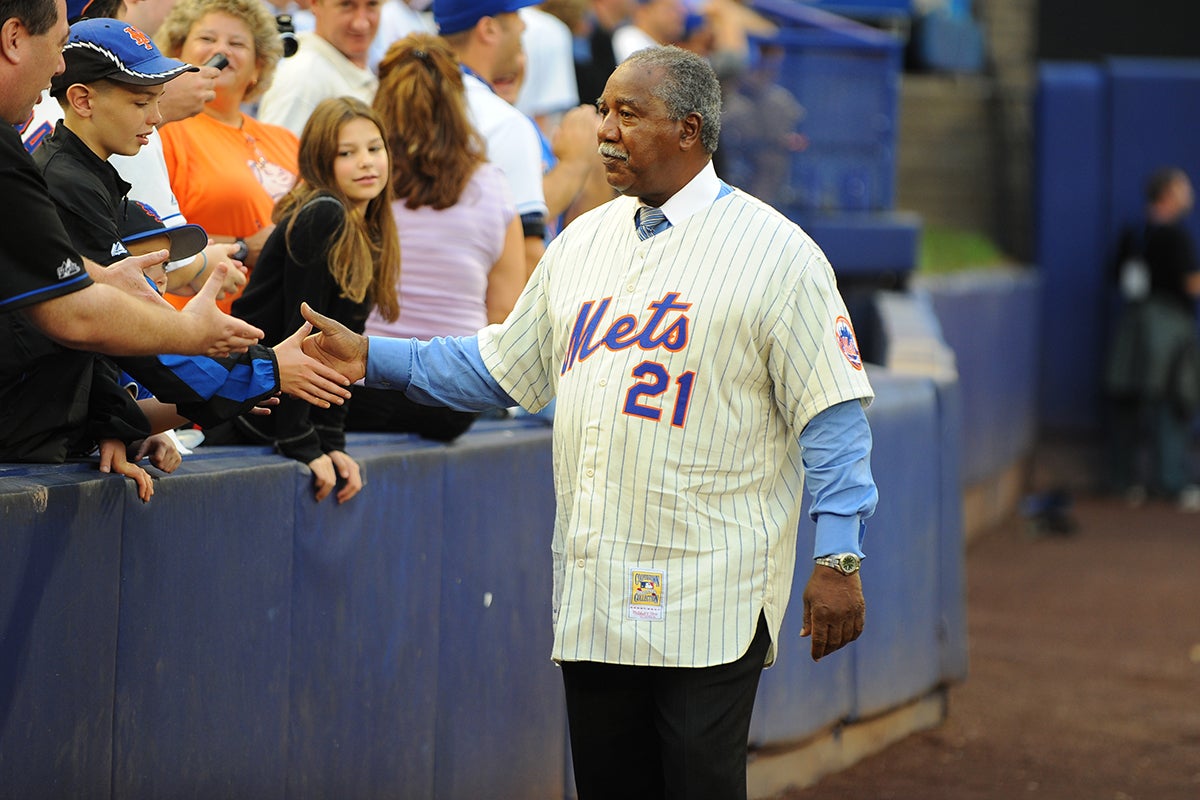
Jones returned to Mobile, where he ran a barbeque restaurant in 1977 and was fined that year for resisting arrest after a traffic stop. He later worked in community relations for the Mobile Parks and Recreation Department and served as the baseball coach at Bishop State Community College in Mobile.
In 1991, Jones was inducted into the Mobile Sports Hall of Fame and continued to support his hometown community by spearheading housing construction in economically challenged areas.
“It’s quite an experience,” Jones told the Mobile Register of his big league days while working at Bishop State in 1996. “You don’t ever outgrow those memories.”
Jones played 13 years in the big leagues, batting .281 with 1,196 hits, 183 doubles, 93 home runs, 524 RBI and 91 steals in 1,213 games. And though he never became the superstar some predicted, few players are more closely linked with the Miracle Mets than their hard-hitting left fielder.
“This man,” Gil Hodges told the Star-Ledger about Jones in 1970, “is one of the best hitters in the game when he is right.”
Craig Muder is the director of communications for the National Baseball Hall of Fame and Museum