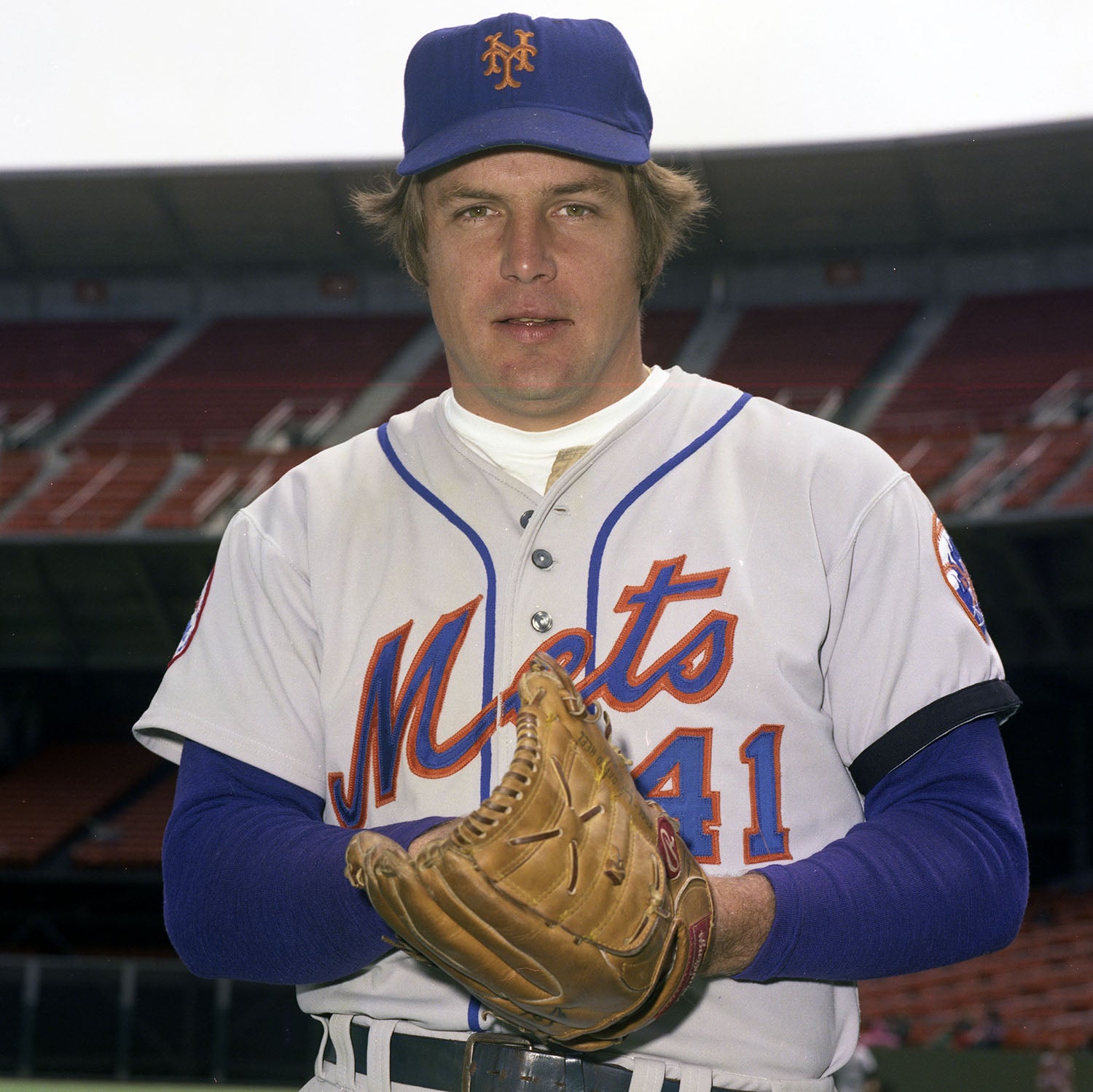
#CardCorner: 1972 Topps Tug McGraw
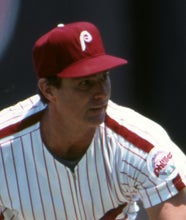
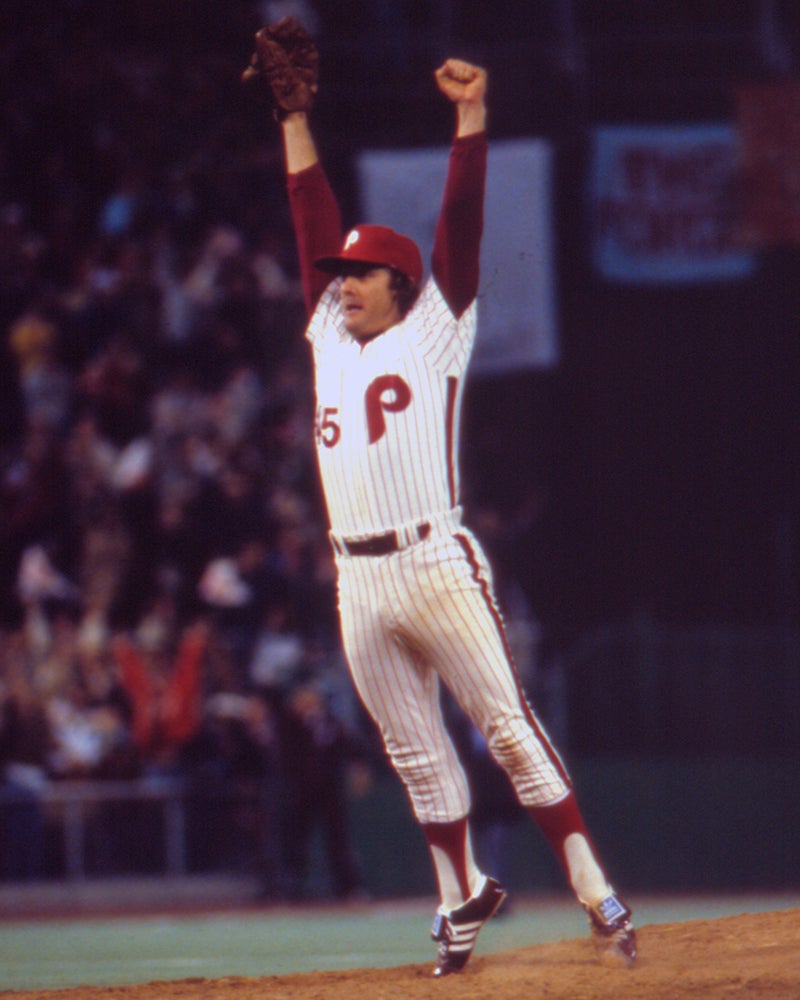
When Tug McGraw thrust his hands in the air after striking out Willie Wilson to end the 1980 World Series, the reaction from the Phillies’ stopper may have been as much about relief as it was celebration.
Perhaps no other closer in history carried the burden of his team in the postseason as McGraw did while the Phillies were fighting for their first World Series title in history.
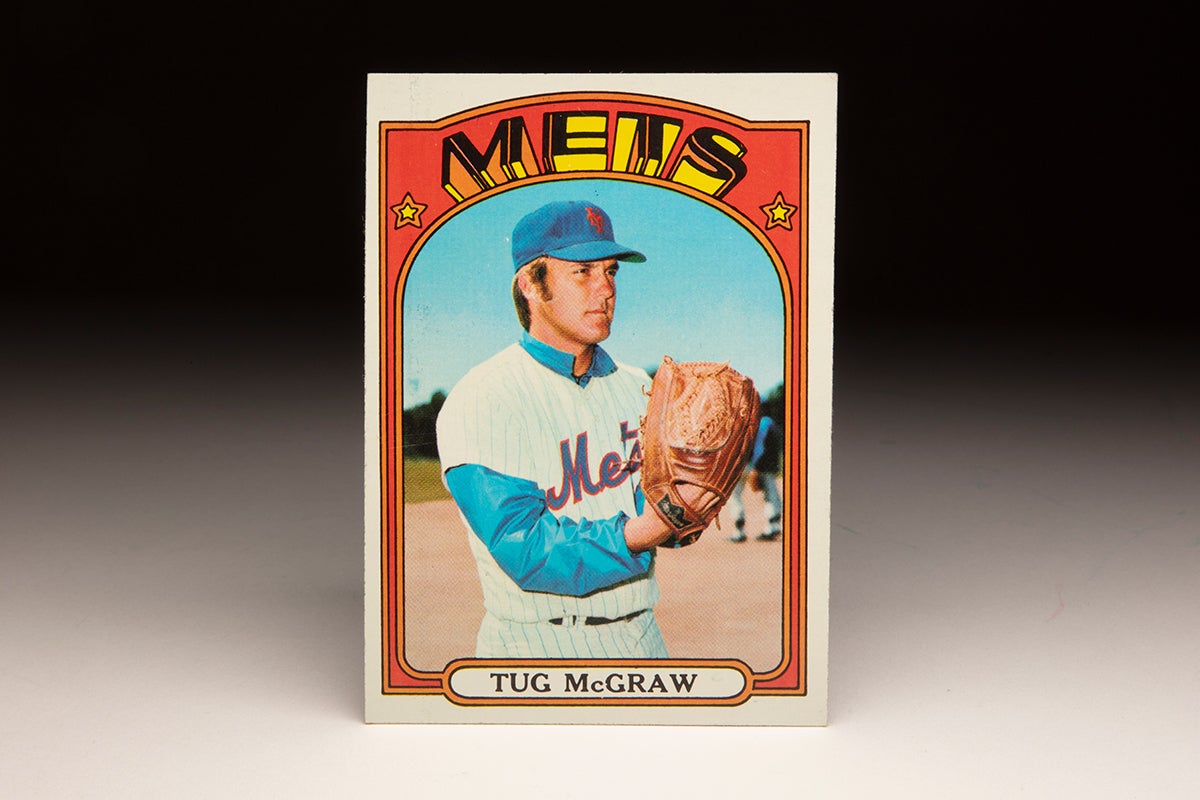
Born Frank Edwin McGraw on Aug. 30, 1944, in Martinez, Calif., he earned his nickname as an infant and never answered to “Frank” – which was also his father’s name. McGraw and his two brothers were raised by their father, who encouraged each of his sons to play sports.
McGraw starred in the Peanut League sponsored by the Vallejo (Calif.) Police Department and later played American Legion baseball. Meanwhile, Hank McGraw, who was 19 months older than Tug, was spotted by big league scouts during his high school days when he and Tug were making headlines in local newspapers on the St. Vincent’s High School team in Vallejo – located about 40 miles north of San Francisco’s Candlestick Park.
Tug was named a first-team All-Diablo Valley League East Bay Division selection as a junior outfielder before switching to the mound as a senior and striking out 77 batters over 59 innings. But he also walked 41, and he decided to continue his career at Vallejo Junior College (now Solano Community College).
In addition to baseball, McGraw sharpened his skills as a barber while in high school – a hobby he would continue to perfect (somewhat) at the big league level.
“In high school, my father used to cut my hair,” McGraw told The New York Times in 1967, “and one day I asked him if I could cut his. Ever since, I’ve been cutting hair – for free at first, then for $1 a head.”
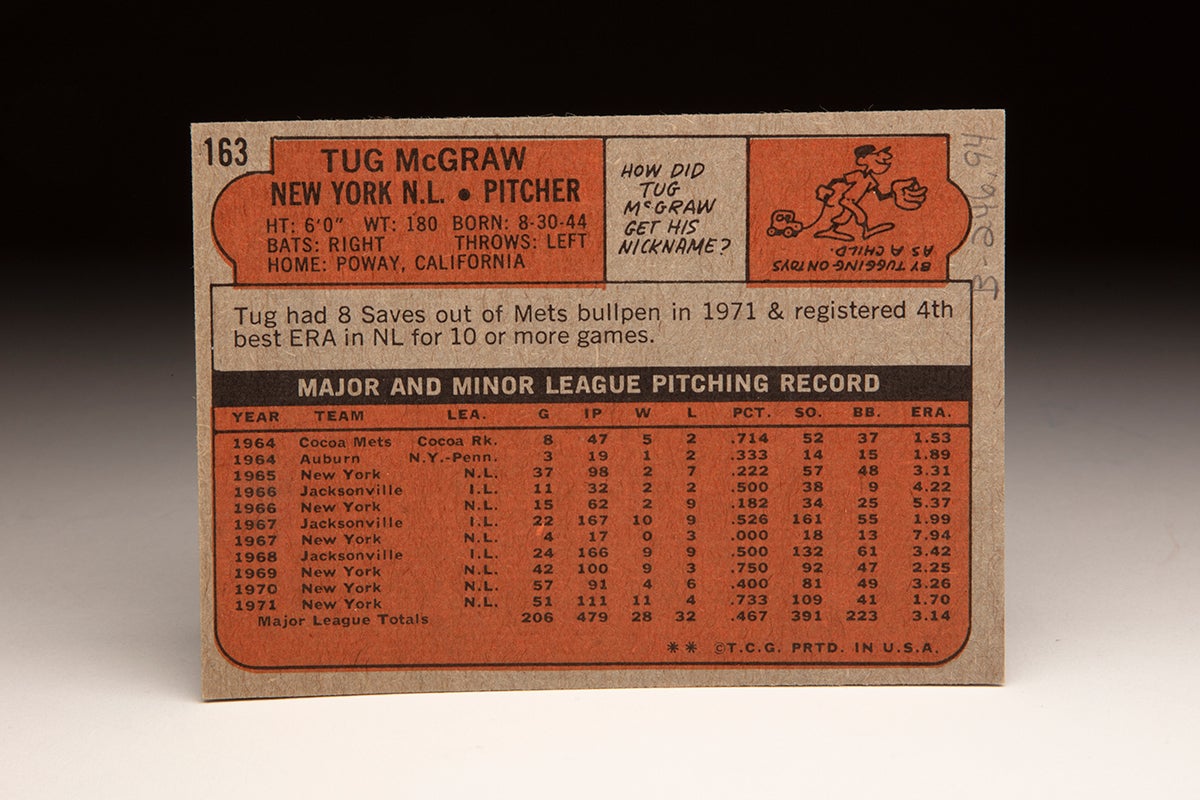
After playing semi-professional ball in Canada, McGraw signed with the Mets on June 12, 1964. The team gave him an $8,000 bonus and sent him to their team in the Cocoa Rookie League in Florida. He joined the same organization as his brother Hank, who was considered a better prospect and had signed with the Mets in 1961 before they began MLB play.
Hank, an outfielder, played 12 seasons in the minor leagues but never made it past Triple-A. Tug, on the other hand, pitched a no-hitter for the Cocoa Mets in his first professional start.
After going 6-4 with a 1.64 ERA between Cocoa and Auburn of the New York-Penn League, the Mets invited McGraw to pitch for their Florida Winter Instructional League team. And due to the size of his bonus, the team was obligated to put McGraw on the big league roster following the 1964 season or risk losing him in the draft.
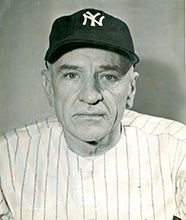
McGraw spent the entire 1965 season with the Mets, going 2-7 with a save and a 3.32 ERA over 97.2 innings. He also quickly developed a reputation as a character, using his nascent barbering skills on teammates while drawing attention from reporters looking for a story amongst the rubble of a team that lost 112 games during a year when manager Casey Stengel called it quits after 96 games.
“I hardly ever speak to Casey,” McGraw told the Newspaper Enterprise Association. “I feel uneasy about approaching him because he’s always got so many newspaper guys around him. And anyway, when we do talk he knows so much and goes so fast I can’t understand him.”
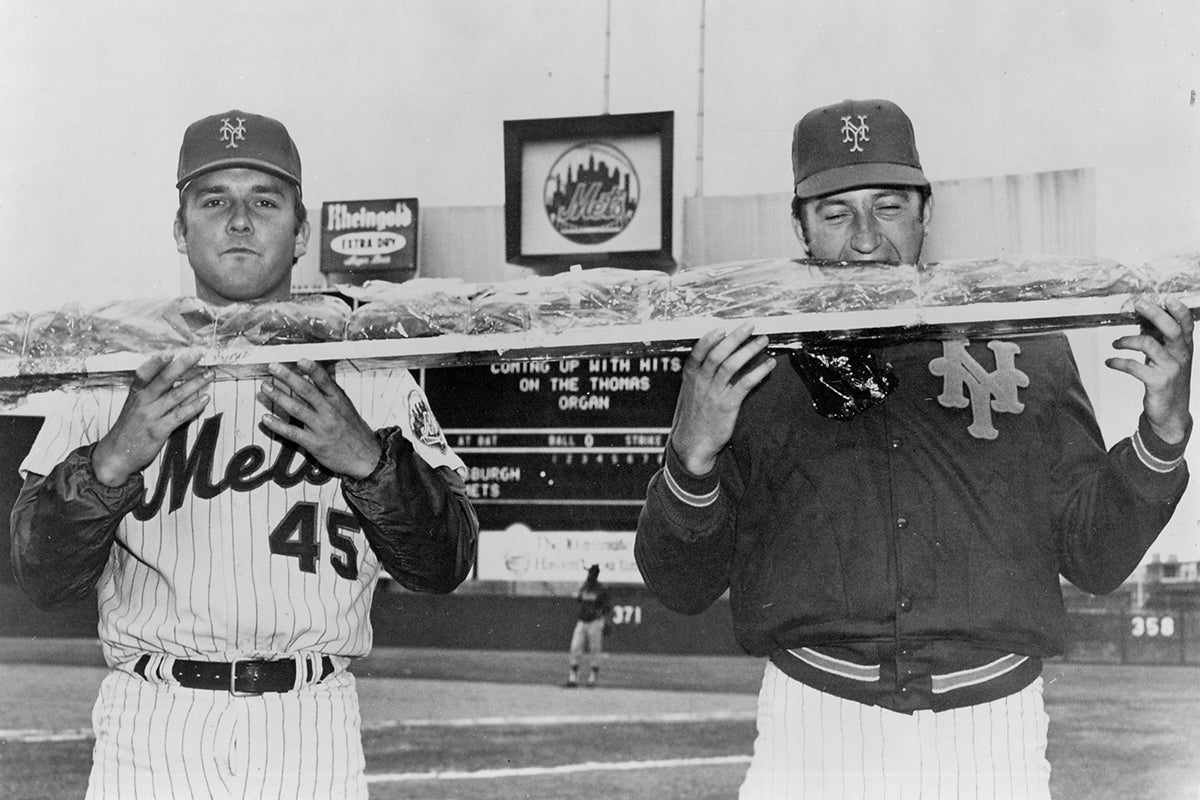
McGraw made the Opening Day roster again in 1966 but struggled after posting a win in his first start against the Braves on April 24. He was 1-4 with a 5.33 ERA in mid-May when the Mets sent him to Triple-A Jacksonville. He battled injuries throughout the season and was recalled in August, finishing 2-9 with a 5.34 ERA in 62.1 innings for the Mets.
But it was also in 1966 when McGraw began experimenting with a screwball. Following the advice of veteran Ralph Terry, McGraw worked on a pitch that was known to present arm problems for almost every hurler. But the pitch also baffled most batters, who expected a left-hander’s breaking ball to move away from lefty batters and toward right-handers.
The screwball broke the opposite way, and McGraw soon developed more confidence in the pitch than he had in his curveball.
In 1967, McGraw was sent back to Jacksonville to start the season. He wound up on the International League All-Star team, going 10-9 with a league-best 1.99 ERA over 167 innings. The Mets called him up to the majors for four appearances in September, but he went 0-3 with a 7.79 ERA in those four starts.
Entering the 1968 season, the Mets had a new manager in Gil Hodges. They also had one of the best young pitching staffs in the game, headed by Tom Seaver, Jerry Koosman and a young fireballer named Nolan Ryan. McGraw, who once seemed destined to be an anchor for the Mets’ rotation for years to come, was now on the outside looking in.
McGraw spent the entire 1968 season in Jacksonville and could not repeat his 1967 numbers. He went 9-9 with a 3.42 ERA in 166 innings and though the Mets brought him to New York in September, he did not appear in a game. He was available in the Expansion Draft following the season, but neither the Expos nor the Padres selected him.
But in 1969, a more mature McGraw reported to Mets camp in St. Petersburg, Fla. And Hodges, who was looking for relievers for his bullpen, took notice.
“He’s changed a lot,” Hodges told the Associated Press. “Last year, he was a little flighty, up in the air, happy-go-lucky. There’s nothing wrong with being happy-go-lucky, but he wasn’t concentrating. He wasn’t ready to play in the majors.”
But after picking up the win in the Mets’ second game of the season with 6.1 innings of one-run baseball in relief of Jim McAndrew, McGraw showed he was ready for prime time. And though the Mets moved McGraw into the rotation for a short time in May, Hodges soon became convinced that McGraw’s best deployment was out of the bullpen.
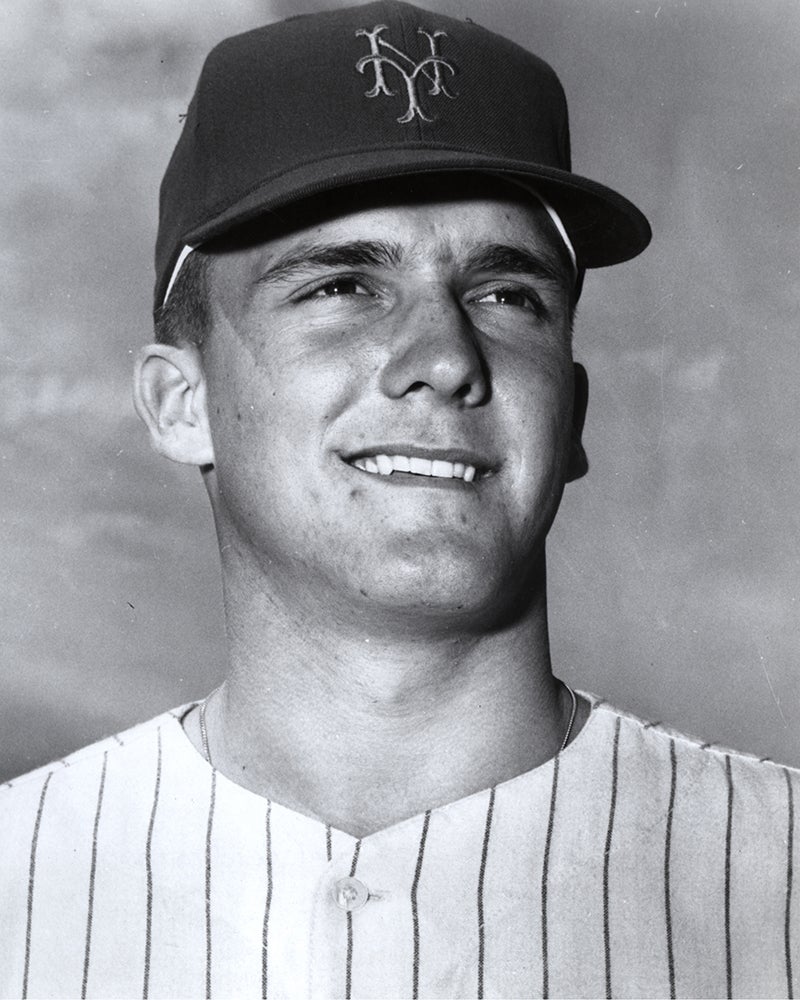
The Mets’ pitching helped the team catch the Cubs in the National League East race that summer, and on Sept. 23, McGraw’s four innings of scoreless relief to close the game gave New York a 3-2, 11-inning win over the Cardinals (Bob Gibson pitched all 10.1 innings for St. Louis before Bud Harrelson’s RBI single in the bottom of the 11th) and secured at least a tie with the Cubs for the division title.
The next night, the Mets blanked St. Louis 6-0 to clinch a spot in the National League Championship Series.
“Since he came up with that screwball, he’s a different pitcher,” Hodges told the Long Island Press.
McGraw finished 9-3 with 12 saves and a 2.24 ERA in 42 appearances. But thanks to the Mets’ dominant starters, McGraw only made one appearance in the postseason that year. It was, however, a critical one.
In Game 2 of the NLCS vs. the Braves, Koosman was knocked out of the game in the fifth inning after giving up six runs on seven hits. Ron Taylor recorded the next four outs before McGraw came in for the bottom of the seventh with the Mets leading 11-6. The game would end with the very same score as McGraw allowed just three baserunners (a walk, a hit and an error) over three shutout innings.
“This is a real pleasure, because I was here when the Mets were a joke,” McGraw told the Jacksonville Journal. “But we aren’t jokes any more.
“I like the bullpen because you can’t knock success. I’ll do whatever I’m doing best.”
McGraw did not pitch in the World Series against the Orioles as the Mets won four straight after dropping the opener. In Games 2 through 5, Mets starters worked 34.1 of 37 innings.
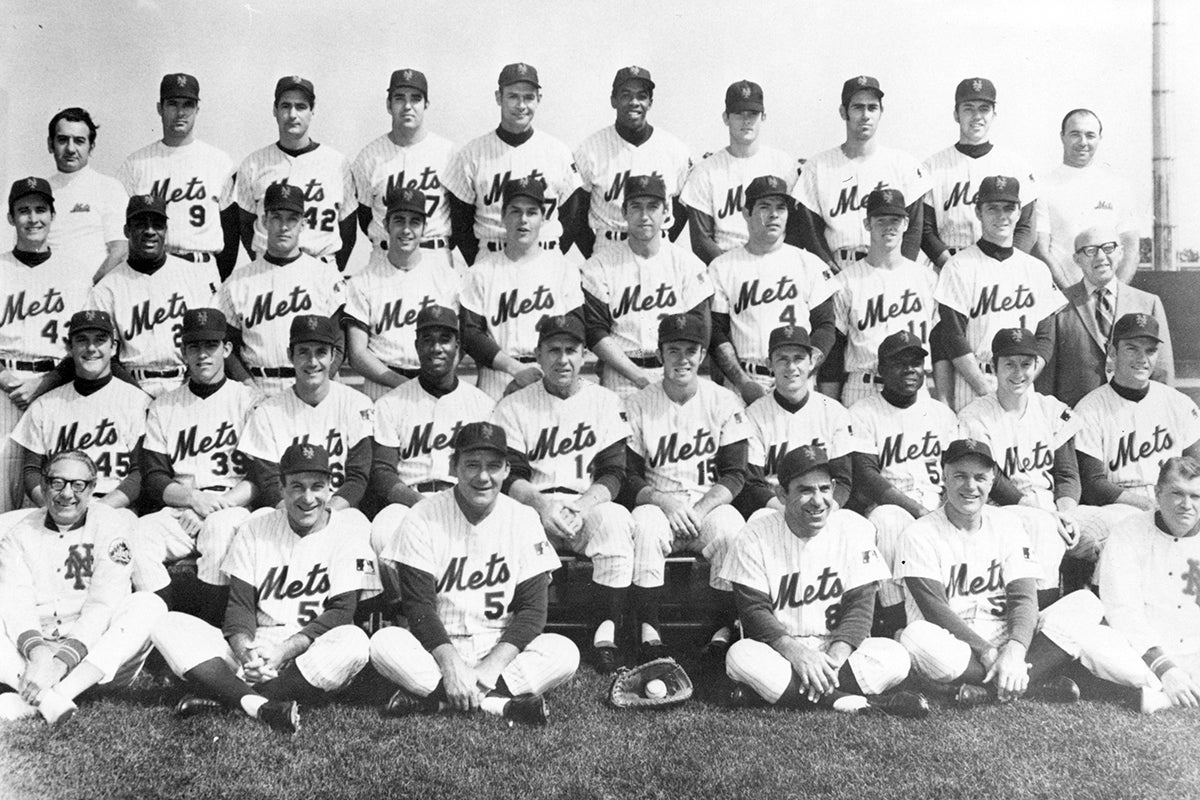
Now firmly established in the bullpen, McGraw went 4-6 with 10 saves and a 3.28 ERA in 1970 as he shared the late-innings role with Ron Taylor. Then in 1971, Danny Frisella took over the right-handed relief role from Taylor and led the Mets with 12 saves. McGraw, however, was more effective – going 11-4 with a 1.70 ERA and eight saves while striking out 109 batters in 111 innings.
When Hodges suffered a heart attack and died late in Spring Training in 1972, Yogi Berra took over as the Mets’ manager – and McGraw became his closer, saving 27 games and going 8-6 with a 1.70 ERA over 106 innings while earning his first All-Star Game selection. He picked up the win in the Midsummer Classic, working two scoreless innings before Joe Morgan’s bottom-of-the-10th single scored Nate Colbert with the winning run.
But the Mets failed to advance to the postseason from 1970-72 as Pittsburgh won three straight NL East titles. Following the 1972 campaign, however, Pirates star Roberto Clemente was killed in a plane crash. The tragedy derailed Pittsburgh’s hopes for a fourth straight crown and opened the door for a Mets team that rallied behind McGraw’s chant: “You gotta believe.”
After a solid first month of the 1973 season, McGraw hit a rough patch in May. Two months later, he was 0-3 with a 6.07 ERA after allowing seven runs in 1.1 innings against the Expos on July 3. That 19-8 loss to Montreal left the Mets at 33-42 and 11.5 games behind the first place Cubs in the division.
A week later, McGraw started to believe.
“We were all going horsebleep,” McGraw told the Times of Trenton, N.J. “The season was over, the manager was (going to be) fired. It was deadly. Well, we all go in the clubhouse and (Mets board chairman M. Donald Grant) gives us this pep talk. And would you believe, he starts this stuff about ‘You fellows got to believe in yourselves.’
“Now somebody says that’s what Tug McGraw’s been hollering all night.”
McGraw credited the “You gotta believe” phrase to his high school coach in Vallejo, Calif.
“Father Freehan convinced me I had to believe, above all,” McGraw told the Times of Trenton. “He was a very old man who loved baseball and just let us play the game at St. Vincent’s (High School).”
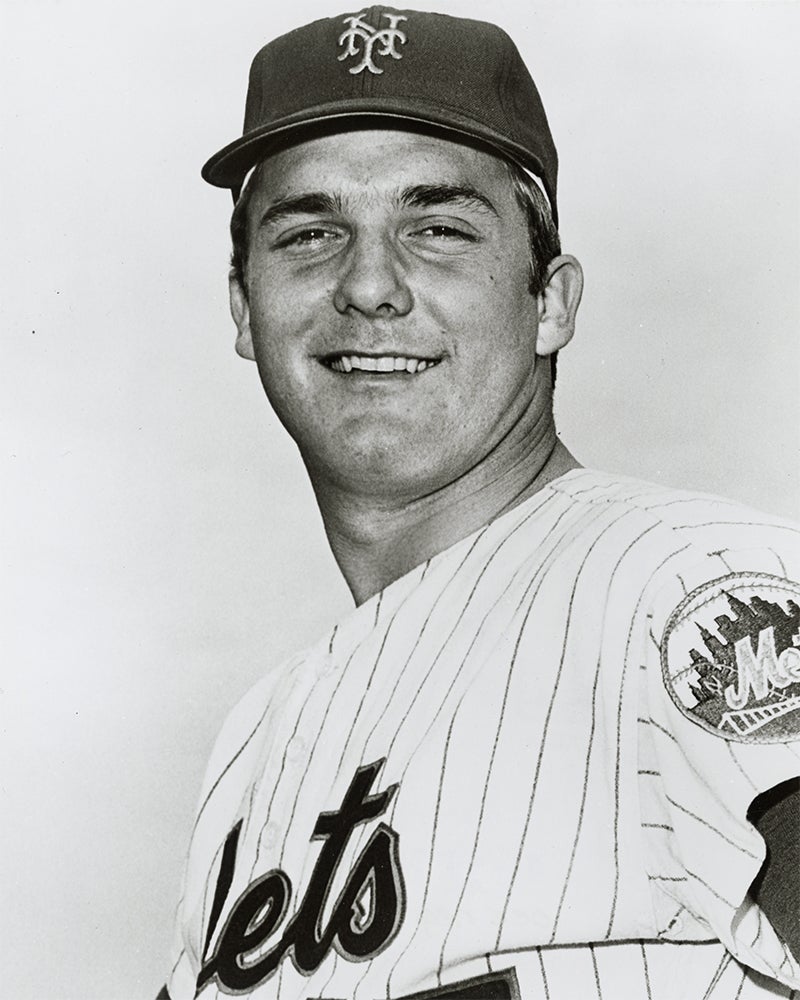
Following a 6-4 win over the Cardinals on Aug. 31 where McGraw was credited with the victory, the Mets were 62-71 and five-and-a-half games behind first place St. Louis (and only a half a game out of last place). From there, New York went 20-8 to win the division with just 82 victories. McGraw allowed just two earned runs over his final 14 games, recording three wins and 10 saves (without a loss) over that stretch.
The Mets clinched the division title on Oct. 1 as McGraw pitched three scoreless innings in relief of Seaver in a 6-4 win over the Cubs.
“Yogi, (coach) Rube (Walker) and (coach Joe Pignatano) stayed with me, and so did my roomie, who had to put up with a lot, the Kranes (Ed Kranepool),” McGraw told the Times of Trenton. “Willie Mays helped me a lot, too. He said to hang in, there’d be no reason why I wouldn’t get better.”
The Mets entered the NLCS vs. the Reds as decided underdogs but won Games 2 and 3 to take a 2-to-1 lead in the series. Then in Game 4, McGraw made his first appearance and worked 4.1 innings of scoreless relief. But he was lifted for a pinch-hitter in the bottom of the 11th, and Cincinnati scored in the 12th to win 2-1 and tie the series.
The next day, McGraw entered the game with the bases loaded and one out in the ninth with the Mets leading 7-2. He got Joe Morgan to pop out and Dan Driessen to ground to first, with John Milner flipping the ball to McGraw for the forceout to end the game and the series.
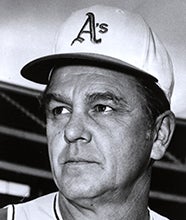
The World Series was awash in chaos. The Oakland A’s were the defending champions but had battled through a season of internal strife as the players feuded with owner Charlie Finley. The Mets took advantage by winning three of the first five games.
McGraw pitched in Game 1, working two scoreless innings in a contest won by Oakland 2-1. A day later in Game 2, McGraw entered the game in the sixth inning with the Mets leading 6-3. He allowed a run in the seventh before Oakland scored twice in the bottom of the ninth to tie the score and send the game to extra innings.
Neither team scored in the 10th or 11th as McGraw and Rollie Fingers faced off, but in the 12th the Mets pushed four runs across with the help of two errors by Oakland second baseman Mike Andrews. McGraw allowed the first two Oakland batters to reach in the bottom of the 12th before George Stone put out the fire in a 10-7 victory. McGraw had pitched six-plus innings, allowing four runs while striking out eight to earn the win.
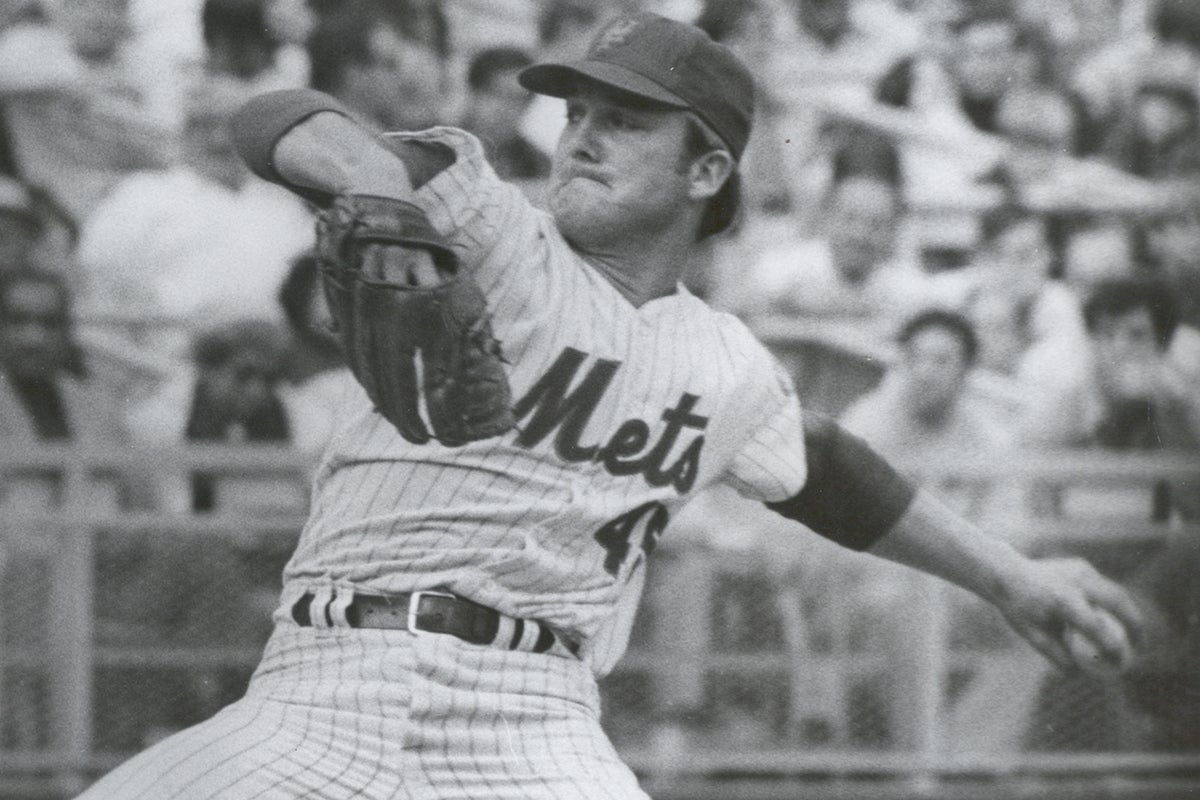
With a day off for travel, a refreshed McGraw worked two scoreless innings in Game 3 before the A’s rallied to win 3-2 in the 11th. He did not pitch in New York’s Game 4 victory but returned in Game 5, earning the save with 2.2 hitless innings in a 2-0 win.
The Mets were now one game away from another World Series title.
“I didn’t have time to be cute,” McGraw told United Press International of his escape from a bases-loaded, one-out jam in the seventh. “I knew (Oakland batters Ángel Mangual and Bert Campaneris) were looking for screwballs so I mixed fastballs with curves.”
Berra had no doubts about McGraw, who had worked 12.2 innings over the first five games of the World Series.
“I think McGraw is the best relief pitcher in baseball,” Berra told UPI after Game 5. “And I think he proved it tonight.”
The Athletics, however, did not enjoy McGraw’s emotional celebrations on the mound.
“Our distracted play continued into Game 5,” wrote Athletics manager Dick Williams in his 1990 autobiography “No More Mr. Nice Guy: A Life of Hardball” – “during which we could manage just three hits off Jerry Koosman and that hot dog Tug McGraw, who would irritatingly slap his glove against his thigh after big outs, causing our dugout to collectively want to slap a glove against his head.”
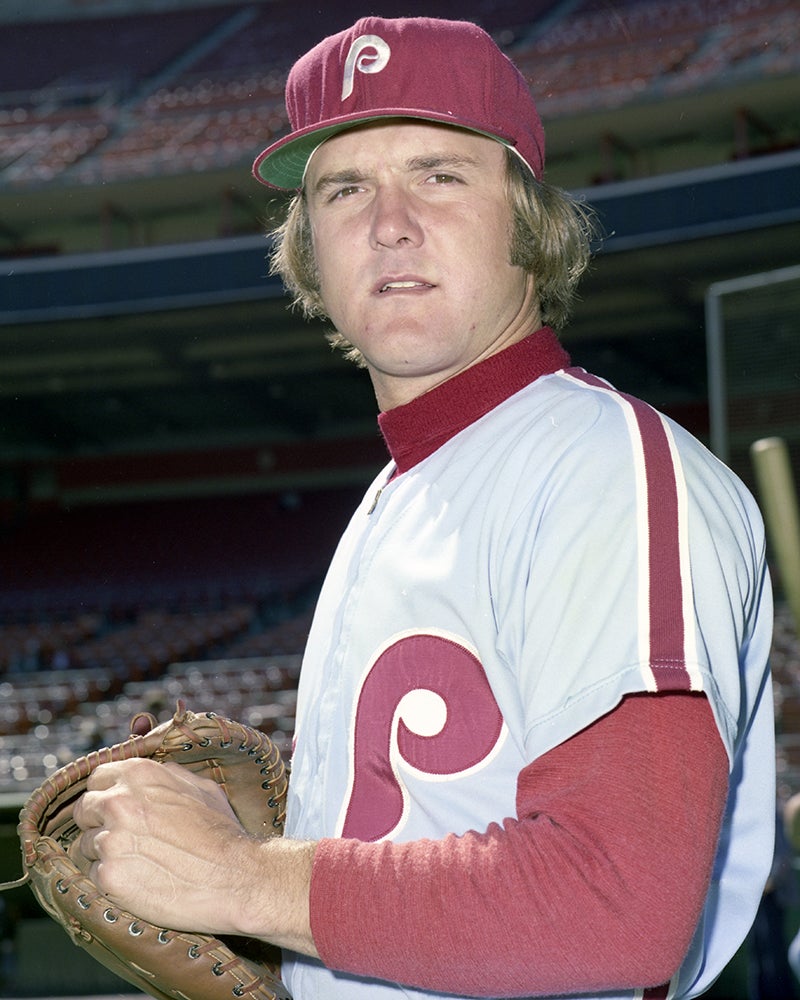
McGraw returned in Game 6 in relief of Tom Seaver, who was starting on three days’ rest. Seaver allowed two runs over seven innings, and McGraw allowed an unearned run in the eighth as Oakland won 3-1 to tie the series.
McGraw did not pitch in Game 7 as the A’s scored four runs in the third inning to take command in a game they would win 5-2.
For McGraw, it was the end of a seven-week stretch where he nearly pitched the Mets to a championship.
“That slump (in early 1973) helped me find out a lot of new things about myself,” McGraw told the Central New Jersey Home News in the spring of 1974. “I know myself as an athlete, a ballplayer and a person fairly well. You can learn a lot about yourself when things are going poorly.”
Following the 1973 season, McGraw authored “Screwball” with Joseph Durso of The New York Times. The book captured McGraw’s non-baseball life and told the story of his childhood in California.
“The people who meant the most in my life,” McGraw wrote, “were probably my brother Hank, who was suspended from baseball because his hair was too long; my mother and father, who were divorced when I was growing up; and Gil Hodges, who died when he was my boss, at the age of 47.”
McGraw suffered from back and shoulder pain in 1974 and appeared in only 41 games, going 6-11 with three saves and a 4.16 ERA. Then on Dec. 3, the Mets sent McGraw, Don Hahn and Dave Schneck to the Phillies in exchange for Mac Scarce, John Stearns and Del Unser.
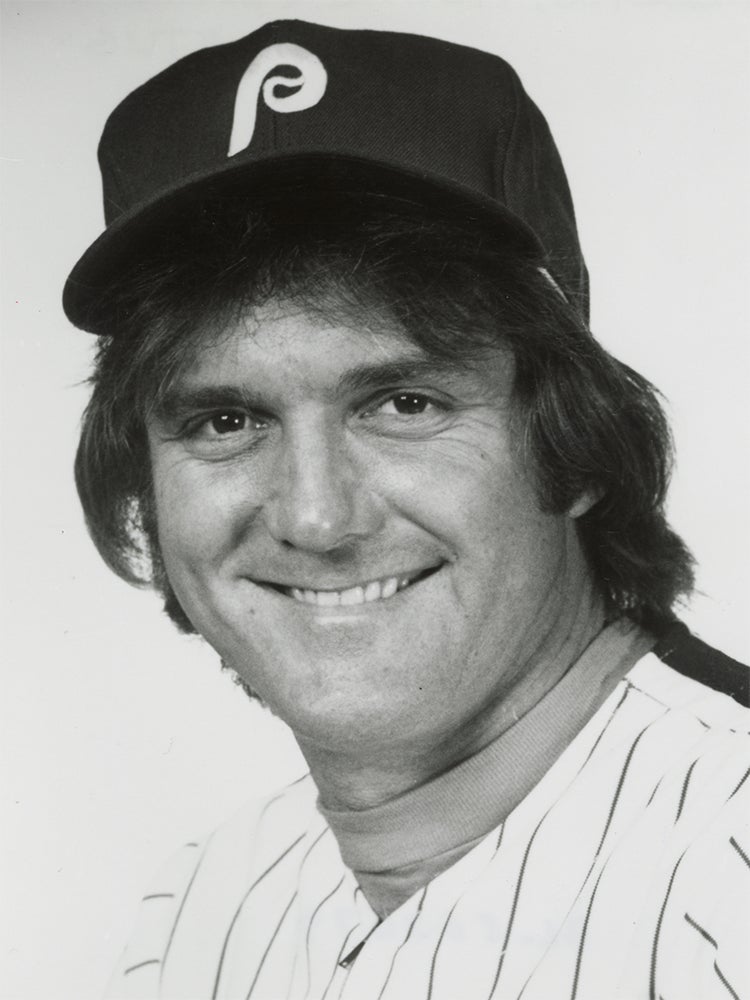
McGraw was thrilled with the trade despite the fact that the Phillies had once cut his brother, Hank, because they believed his hair was too long.
“There were rumors during last season that the Phils were interested in me,” McGraw told the Camden (N.J.) Courier-Post. “I admit there was some animosity on my part because of what happened to Hank. He told me that he really liked how (general manager) Paul Owens treated players…He told me: ‘Don’t let my problem with one man (a minor league manager) turn you against them.’
“Everything good that I have came as a result of the Mets and their fans. Yet, all baseball players know that someday they’ll be traded. You can only hope the trade will be one you’ll like. And I like this one very much.”
McGraw joined a young Phillies team that had not had a winning season in seven years but was 80-82 in 1974. McGraw returned to his effective ways in 1975, going 9-6 with 14 saves and a 2.98 ERA in 56 games while helping the Phillies finish 86-76 and in second place in the NL East.
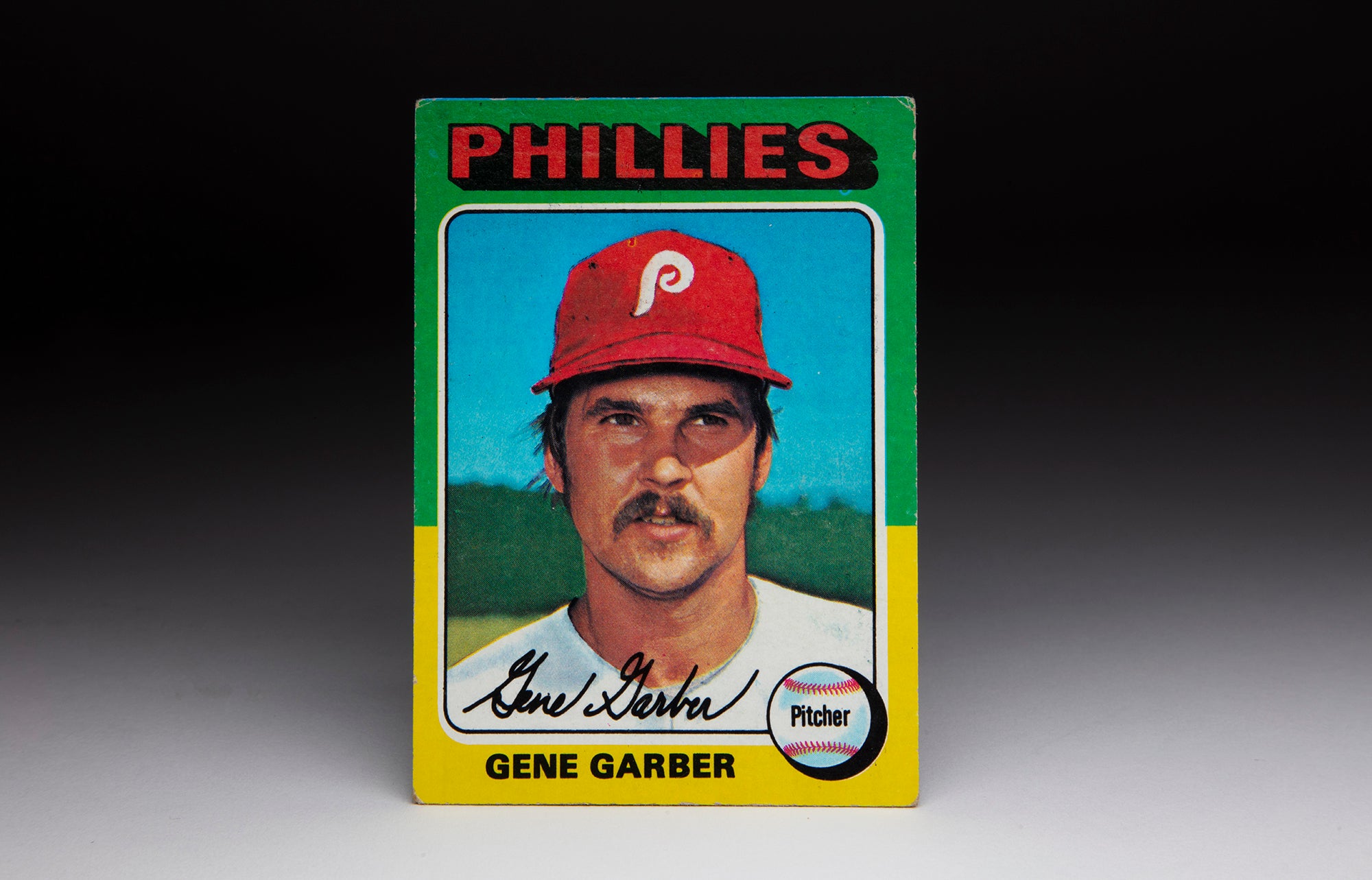
The next season, the Phillies won 101 games and advanced to the postseason for the first time since 1950. McGraw went 7-6 with 11 saves and a 2.50 ERA over 58 appearances, sharing the late-inning load with right-handers Ron Reed and Gene Garber. McGraw made two appearances in the NLCS vs. the Reds, allowing three earned runs in 2.1 innings as Cincinnati swept the series.
The following two seasons would look very much alike for McGraw and the Phillies. In 1977, McGraw was 7-3 with nine saves and a 2.62 ERA in 45 games as Reed and Garber combined for 34 saves. The Phillies won the NL East and advanced to the Championship Series against the Dodgers, where McGraw recorded the save in Game 1. But the Dodgers won the next three contests – McGraw pitched two scoreless innings in Game 4 – to claim the pennant.
In 1978, McGraw was 8-7 with nine saves and a 3.21 ERA in 55 games. The Phillies once again won the division and faced the Dodgers in the NLCS, and once again Los Angeles won the series in four games. This time, McGraw allowed a total of one run over four innings in the first two games (both Los Angeles wins). After the Phillies won Game 3, McGraw entered Game 4 in the bottom of the ninth with the score tied at three. He pitched a perfect ninth but Philadelphia failed to score in the 10th, and McGraw went back out to the mound.
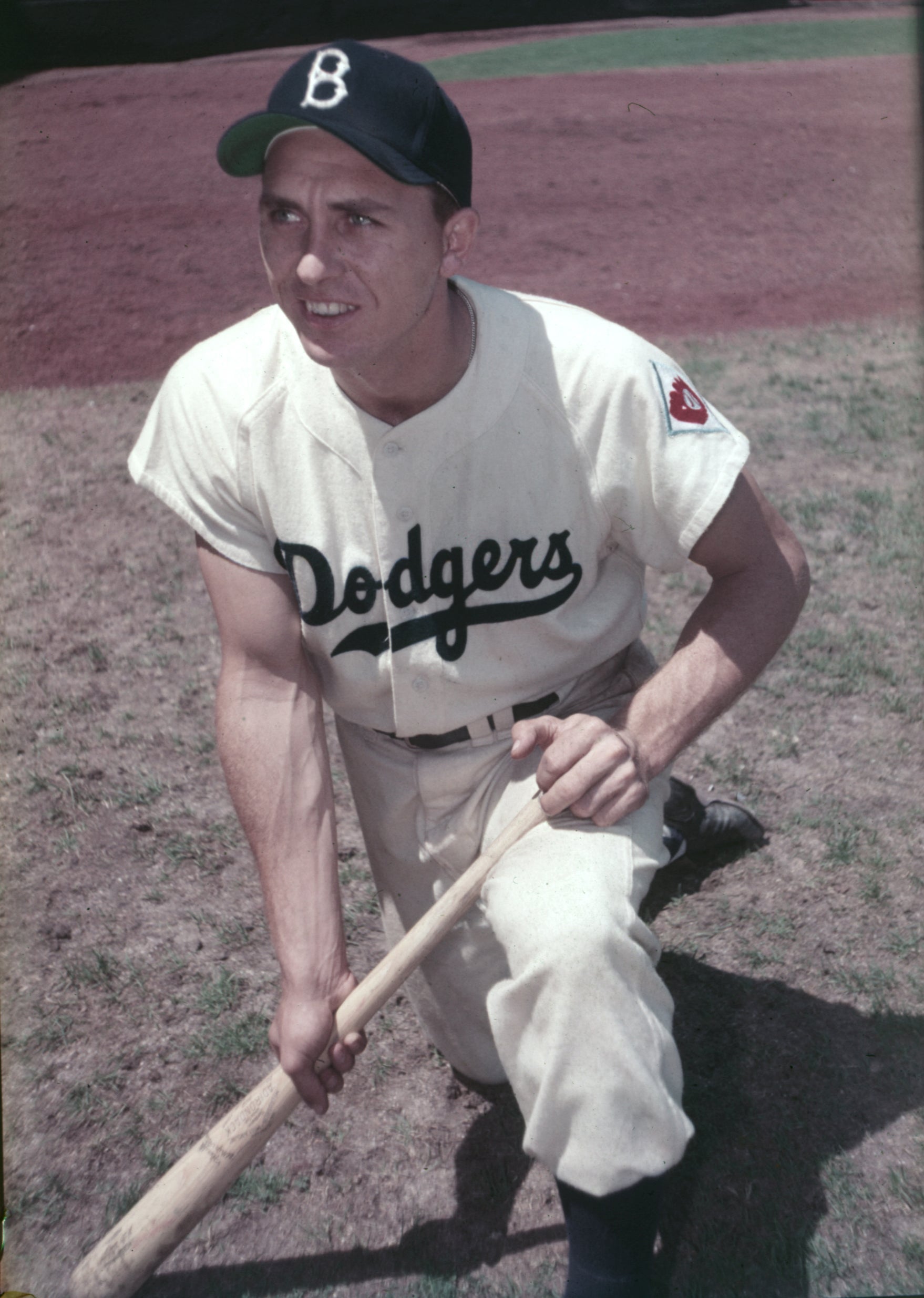
After retiring Reggie Smith and Steve Garvey to start the frame, McGraw walked Ron Cey. Dusty Baker then followed with a sinking fly ball to center, but Gold Glove outfielder Garry Maddox dropped the ball, allowing Cey to reach second. With two on and two out, Bill Russell singled to center. Maddox tried to scoop and throw to get Cey – a notoriously slow runner – at the plate, but the ball skidded under his glove to allow Cey to score the winning run.
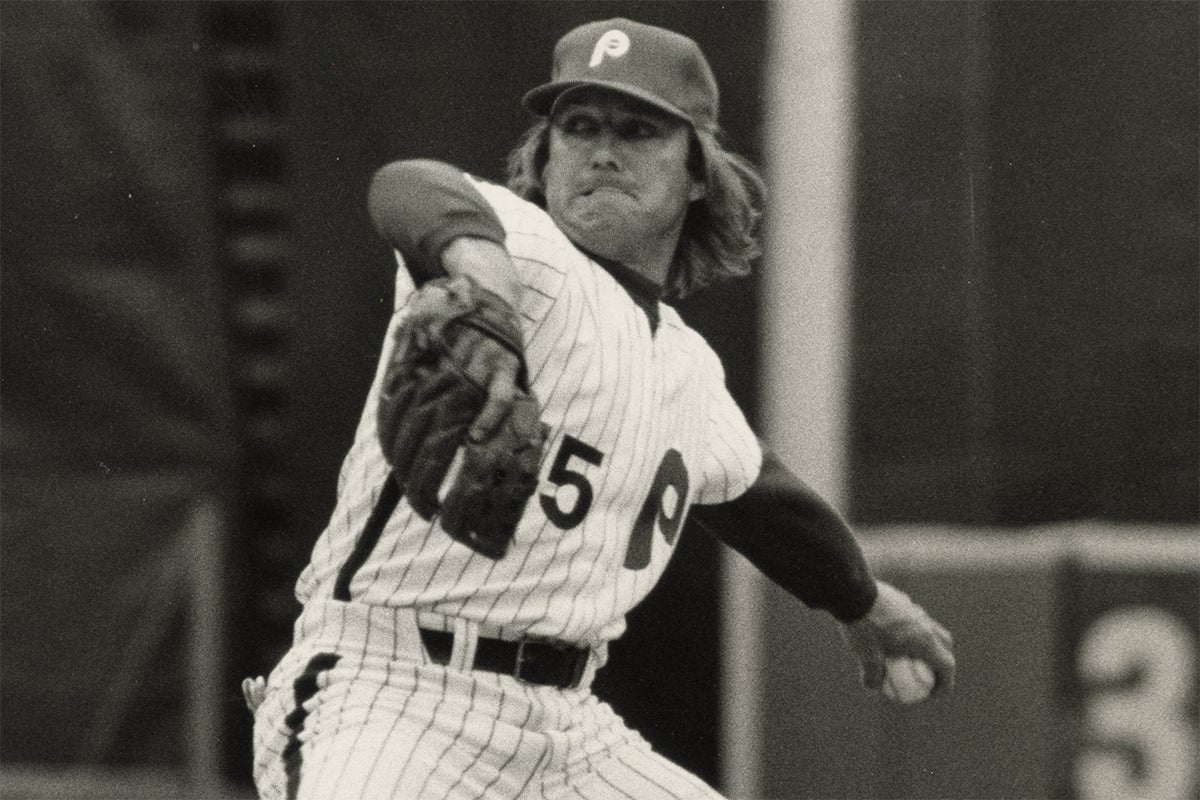
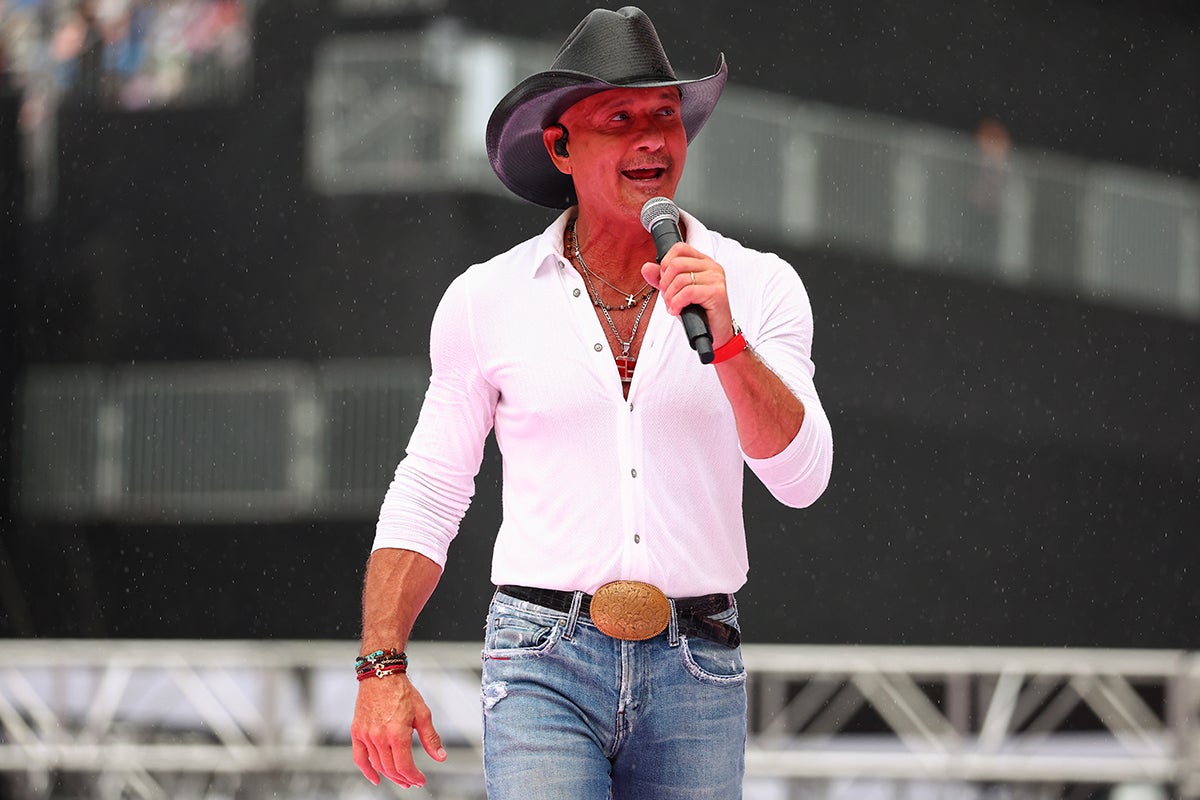
McGraw continued to be a popular figure, partnering with illustrator Michael Witte on the syndicated comic strip “Scroogie” that was loosely based on McGraw and ran in newspapers for two years. The venture served as additional income for McGraw, whose growing family eventually included three children with his wife, Phyllis. Another son, Tim McGraw, was born in 1967 after his father’s relationship with a woman in Jacksonville, Fla. Tim McGraw would one day become a country music superstar.
After three near-misses at a pennant, the Phillies stumbled in 1979, finishing in fourth place. McGraw struggled throughout the season, going 4-3 with 16 saves and a 5.16 ERA in 65 games.
At age 35 entering the 1980 campaign, McGraw and the Phillies – who had a new manager, Dallas Green – seemed to have missed their championship window. But McGraw would almost singlehandedly change that narrative.
“Sometimes it’s so much fun to plan a series of pitches and have everything go right,” McGraw told the Philadelphia Inquirer in 1980. “It makes you go crazy.”
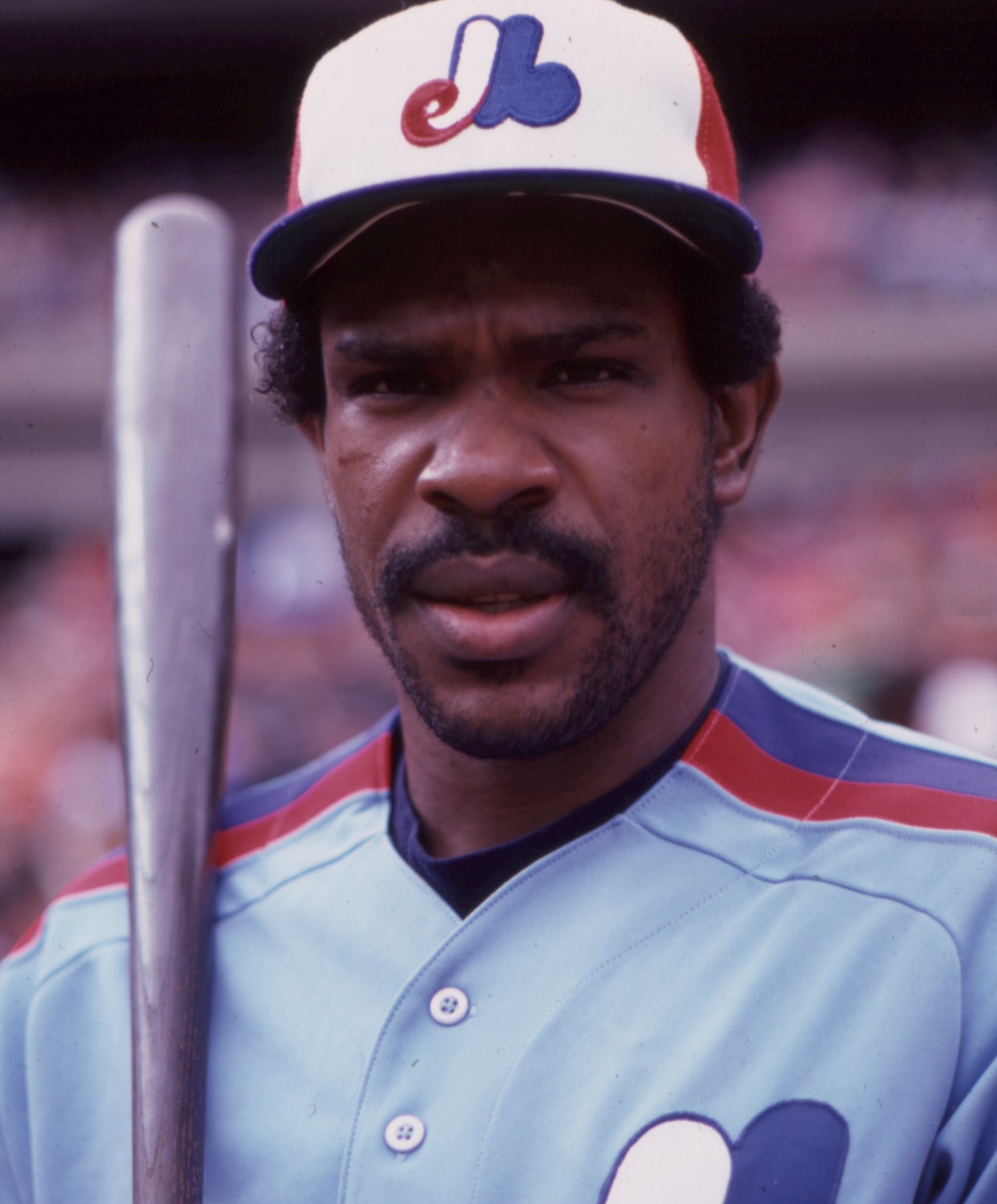
The Phillies and Expos battled for the NL East lead for much of the season, and the teams were tied at 89-70 entering the final three games at Montreal’s Olympic Stadium. McGraw, who had allowed just one earned run since Aug. 10, entered the first game on Oct. 3 in the top of the eighth with the Phillies leading 2-1. He struck out Bob Pate, Andre Dawson and Gary Carter, then retired the side in order – with two more strikeouts – in the bottom of the ninth to notch his 20th save of the season.
The next night, McGraw entered the game in the bottom of the ninth with the score tied at four. Two more scoreless innings followed before Mike Schmidt homered in the top of the 11th to give Philadelphia a 6-4 lead. McGraw pitched a perfect 12th – totaling 6.2 innings of work over three days – to pick up the win and give the Phillies the division title.
Incredibly, McGraw’s workload would only increase from there.
In the NLCS vs. the Astros, McGraw pitched in each of the five games as the teams battled through one of the most hotly contested series in history. After saving Game 1, McGraw allowed one run in Game 2 and then was saddled with the loss in Game 3, keeping the game scoreless through the ninth and 10th innings before Houston scored on a Denny Walling sacrifice fly in the 11th.
But McGraw came right back in Game 4 to get the save, working a scoreless 10th in a 5-3 win. Then in Game 5, the Phillies rallied for five runs in the eighth inning to take a 7-5 lead. McGraw entered the game in the bottom of the eighth but could not close the door, allowing two runs to tie the game. In what became the fourth extra inning game of the series, the Phillies won 8-7 to advance to the World Series.
“I’m just so proud to be a Philadelphia Phillie,” McGraw told UPI after Game 5.
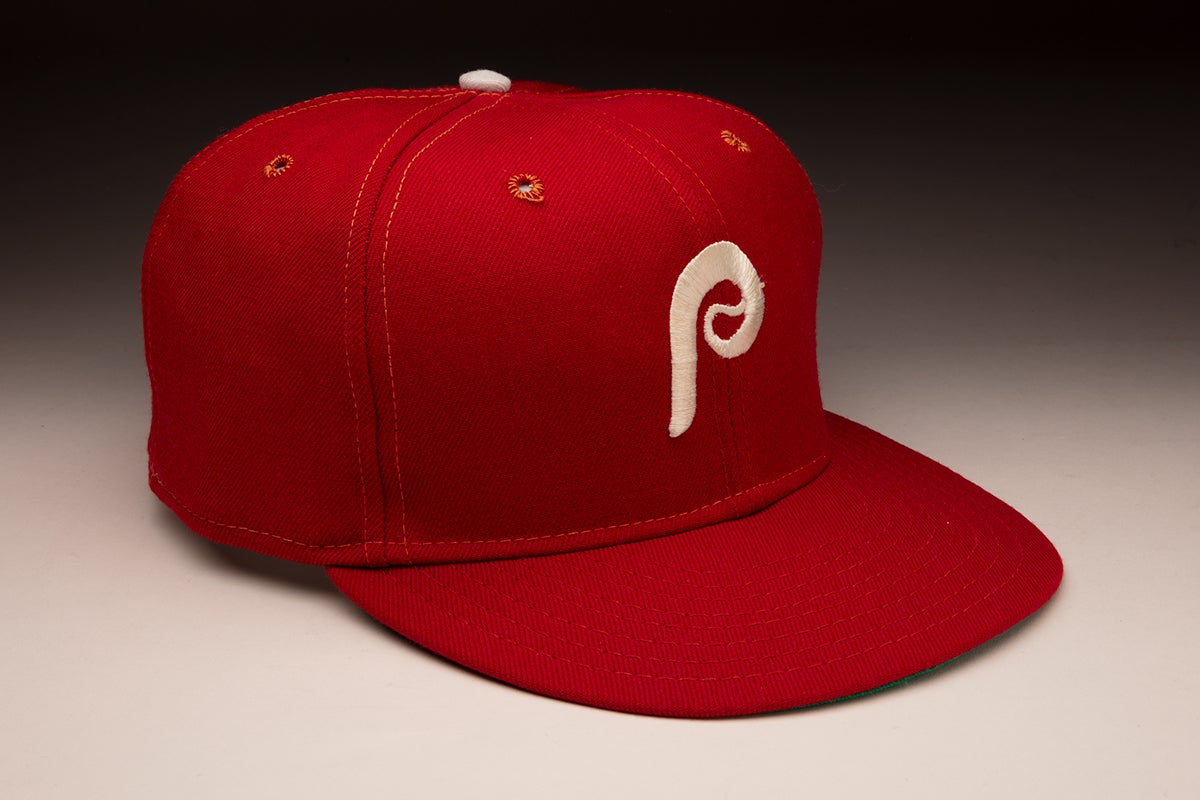
But there was almost no time to celebrate. With only one off day between the end of the NLCS and the start of the World Series, the Phillies turned to rookie Bob Walk to start Game 1. The Phillies were leading 7-4 in the eighth when Walk allowed a two-run home run by Willie Aikens, prompting Green to call on McGraw. With the help of a double play, McGraw faced the minimum six batters in the eighth and ninth to save the 7-6 victory.
McGraw returned in Game 3 but took the loss, allowing an RBI single by Aikens in the bottom of the 10th to give Kansas City a 4-3 win and cut the Royals’ series deficit to 2-games-to-1. McGraw did not pitch in Game 4 – a Royals win – but entered the critical Game 5 in the seventh inning with Kansas City leading 3-2. He pitched two scoreless innings before the Phillies rallied in the ninth for two runs.
Virtually gassed, McGraw slogged through the ninth – walking three batters before striking out José Cardenal to end the game and send the series back to Philadelphia with the Phillies leading 3-games-to-2.
With one day off to rest, McGraw was called on again in Game 6. The Phillies were leading 4-0 in the eighth with Steve Carlton on the mound, but the Royals put two on base to lead off the inning – and Green called on McGraw. A U L Washington sacrifice fly scored one run, but McGraw got Hal McRae to ground out to second base with the bases loaded to end the threat.
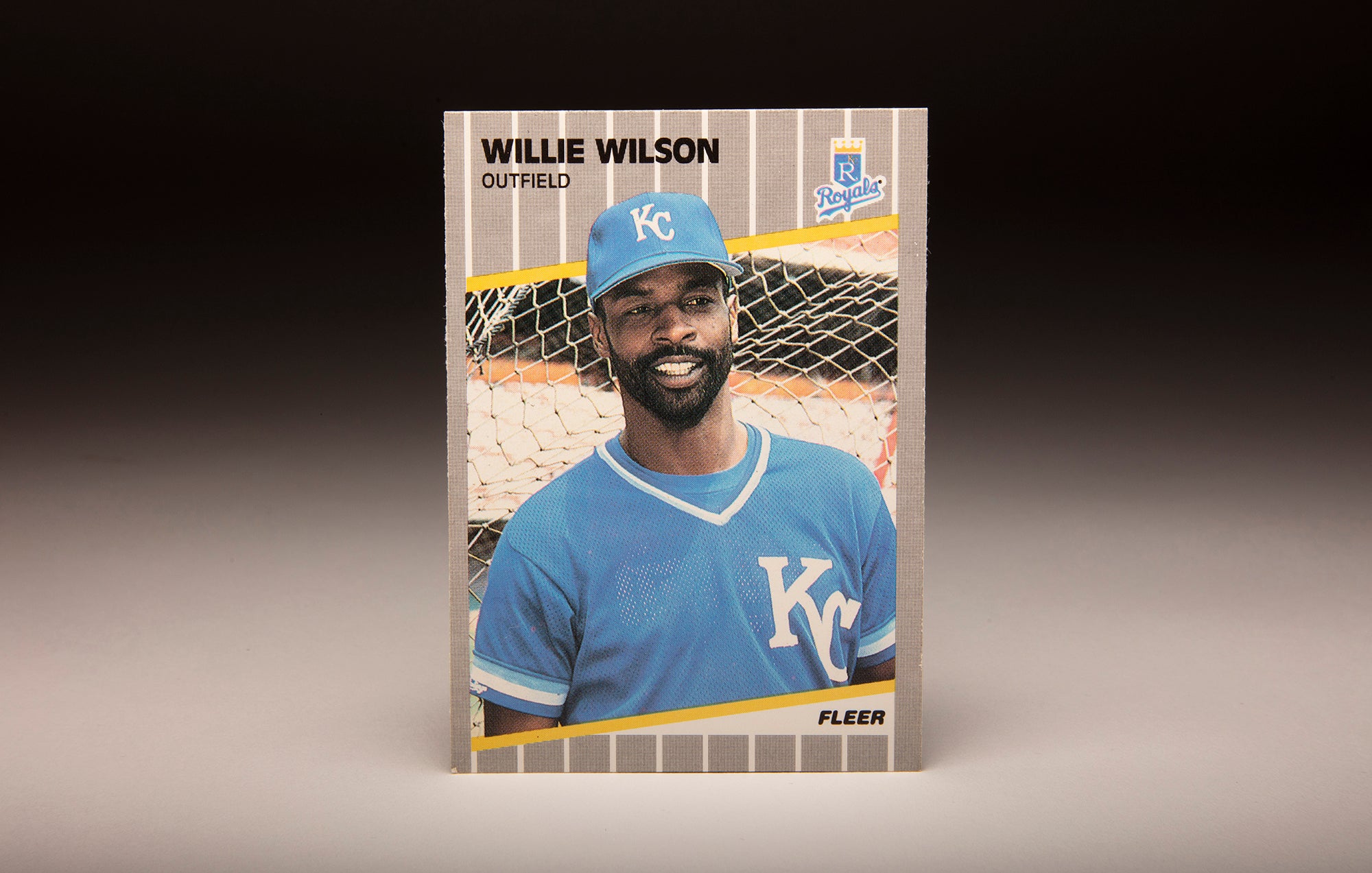
In the ninth, a walk and two singles for the Royals loaded the bases again before McGraw got Frank White to foul out. McGraw then fanned Willie Wilson – Wilson’s 12th strikeout of the series – to end the game and give the Phillies their first World Series title.
“My knees were shaking, like after running wind sprints in the summer,” McGraw told the Los Angeles Times-Washington Post News Service about the final at-bat of the World Series. “And my stomach was fluttering. I was short of breath.”
But when Wilson fanned, adrenaline carried McGraw up and off the mound.
“I’ve been a part of the last six years of Phillie history, and I saw only six years of frustration,” McGraw told the Times-Herald of Vallejo. Calif. “But it’s over now. Over and forgotten.”
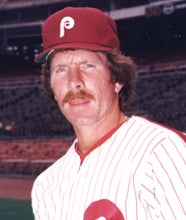
Mike Schmidt, who hit .381 in the World Series, was named Most Valuable Player. But it could have easily been McGraw, who went 1-1 with two saves and a 1.17 ERA in four games. In nine games in the postseason, McGraw worked 15.2 innings while totaling four saves and a win.
A free agent following the World Series, McGraw was not selected in the Re-Entry Draft – with teams apparently feeling like he had left it all on the field in 1980. But the Phillies were happy to bring him back, signing McGraw to a four-year deal worth a reported $1.7 million.
“I can’t see any reason why we shouldn’t repeat,” McGraw told the Los Angeles Times-Washington Post News Service. “The nucleus is the same and it’s very strong.”
The Phillies made it back to the postseason in 1981 but lost to the Expos in the National League Division Series. McGraw, who was 2-4 with 10 saves and a 2.66 ERA in the regular season, appeared in two games of the NLCS. He pitched three scoreless innings in Game 4 to earn the win, but the Expos won Game 5 to advance to the NLCS.
It would be the final postseason game of McGraw’s career.
He would pitch three more seasons but total only five more saves as injuries and the acquisition of Al Holland pushed him into a set-up role. On Valentine’s Day 1985, McGraw announced his retirement.
“We would have never (won the World Series) without Tug,” Dallas Green told the Philadelphia Daily News when McGraw retired. “He gave us every inch, every last ounce of strength. No other relief pitcher has ever had a run like that.”
McGraw worked in television during his retirement and later returned to the Phillies as a Spring Training instructor. While in Clearwater, Fla., in March 2003, McGraw was diagnosed with a glioblastoma brain tumor. He died a little more than nine months later at the age of 59.
“He put up a gallant fight,” Mike Schmidt told the AP after McGraw passed away on Jan. 5, 2004. “Publicly, he never let on that he had gotten a raw deal. He was Tug through the entire thing. As he always said, ‘I front-loaded my life, just like my contract.’”
McGraw pitched 19 seasons in the big leagues, going 96-92 with 180 saves (eighth-most in history when he retired) and a 3.14 ERA.
Tom Seaver, who was McGraw’s teammate with the Mets, remembered McGraw’s competitive spirit.
“He just had a joy for life and living,” Seaver told the AP when McGraw died. “But what people sometimes overlook because he was always happy-go-lucky was what kind of competitor he was on the mound. No one competed with more intensity than he did.”
For McGraw, it was an intensity that helped him earn two World Series rings while letting laughter diffuse the pressure of life in the big leagues.
“The height of nervousness,” McGraw told The New York Times, “is probably stepping onto a pitcher’s mound in the big leagues for the first time.”
Craig Muder is the director of communications for the National Baseball Hall of Fame and Museum